



Table of Contents
- Why a General Home Inspection Is Not Enough for Your Roof
- Signs of Storm Damage on Roof and Other Common Issues
- Roof Inspection Checklist for Buyers
- When to Hire a Certified Inspector vs. DIY Assessment
- Average Cost of Roof Inspection and What Affects Pricing
- What to Do If Roof Fails Inspection
- The Inspection Period: Your Window for Due Diligence
- Roof Inspection for Home Buyers: Key Takeaways
Last Updated: August 25, 2026
Why a General Home Inspection Is Not Enough for Your Roof
A standard home inspection covers the roof but rarely provides the depth needed to identify emerging problems before they become expensive failures. General inspectors spend minutes on your roof during a broader walkthrough, noting obvious damage and moving on. A certified roof inspection focuses exclusively on structural integrity, material condition, and hidden vulnerabilities that a generalist would miss.
Roofs fail in stages. Early warning signs, curling shingles, granule loss, flashing separation, or compromised underlayment, often go unnoticed in a cursory inspection. By the time a general inspector flags a problem, you may already be facing water damage, mold growth, or imminent failure. At that point, your negotiating power evaporates and insurance may deny claims for pre-existing conditions.
Rescue Roofing conducts thorough roof inspections that examine not just visible damage but what’s happening underneath: underlayment condition, attic ventilation, and structural support. This detail protects you during the inspection period, when you still have power to renegotiate or walk away.
The inspection period is your window for due diligence. Most purchase agreements give you 7-10 days to complete inspections (realtor.org). A roof inspection during this window reveals whether you’re buying a sound investment or inheriting deferred maintenance (nachi.org). Skip this step, and you’re gambling with one of the property’s most expensive components.
Signs of Storm Damage on Roof and Other Common Issues
Storm damage manifests in specific ways. Hail leaves divots and cracks in shingles. Wind tears edges, lifts flashing, and removes entire sections. Heavy rain exposes weak spots in valleys and around penetrations. Knowing what to look for gives you credibility in negotiations and helps you understand inspection reports.
What to Look For on Asphalt Shingles
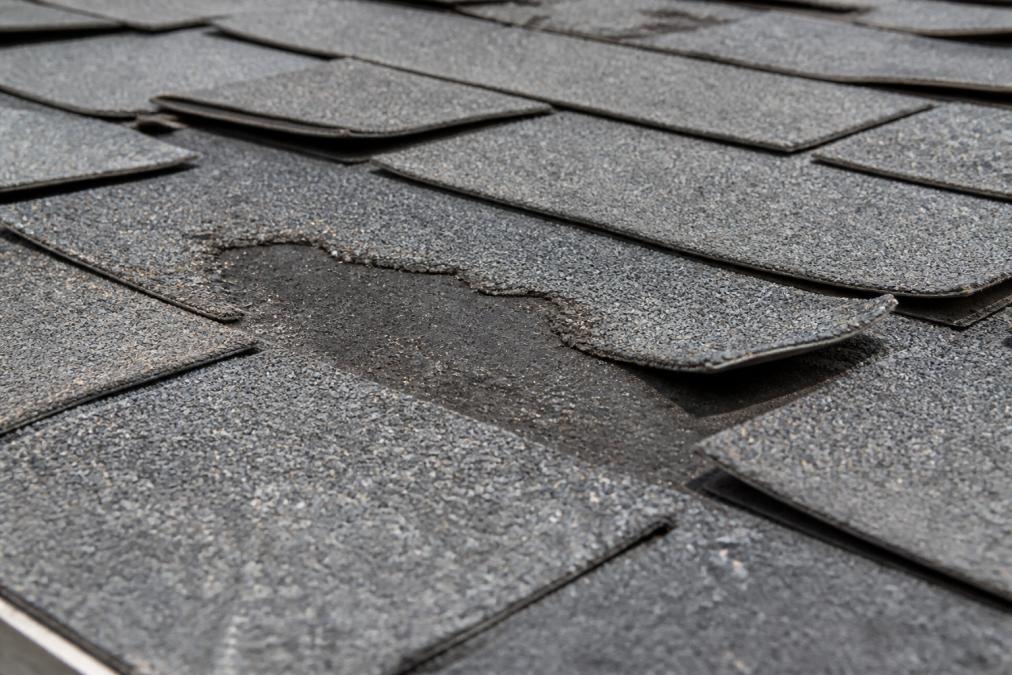
Asphalt shingles are the most common residential roofing material (census.gov). Curling shingles, where edges lift from the roof surface, signal age or moisture penetration. Granule loss, where the protective mineral coating washes away, exposes asphalt to UV damage and accelerates deterioration. Both are red flags during a roof inspection.
Blistering, small bubbles in the shingle surface, suggests trapped moisture. Over time, these rupture, creating water entry points. Missing shingles, cracks, splits, and missing tabs indicate age or storm damage. Damage concentrated on one side suggests directional wind exposure; scattered damage suggests age or hail impact.
Flashing, Gutters, and Underlayment Concerns
Flashing is metal trim that directs water away from roof penetrations like chimneys, vents, and skylights. When flashing fails, water runs behind shingles into the structure. Flashing can separate, rust, or become unsealed. A roof inspection should include close examination of all flashing joints and seams.
Gutters and downspouts channel water away from the foundation. Clogged or damaged gutters cause water to back up under the roof edge, rotting fascia and underlayment. Sagging gutters indicate inadequate support or debris load. Leaking seams mean water pours behind the gutter into the soffit and fascia.
Underlayment is the water barrier beneath shingles. A professional inspector will check it where visible, in the attic, under eaves, or where shingles are missing. Deteriorated underlayment signals the roof is near the end of its useful life, even if shingles appear acceptable.
Roof Inspection Checklist for Buyers
A comprehensive roof inspection checklist ensures nothing is overlooked.
| Item | What to Check | Why It Matters |
|---|---|---|
| Shingle condition | Curling, missing, cracked, blistered | Indicates age, storm damage, or poor installation |
| Granule loss | Bald spots or excessive granules in gutters | Shows UV exposure and remaining lifespan |
| Flashing seals | Separation, rust, or gaps at penetrations | Water entry point; expensive to repair |
| Gutter condition | Sagging, leaking, clogged, damaged seams | Causes water damage to fascia and foundation |
| Underlayment | Visible deterioration or moisture stains | Indicates roof is nearing end of life |
| Attic ventilation | Proper soffit and ridge vents, no blockage | Prevents moisture buildup and premature aging |
| Roof pitch and structure | Sagging, uneven surfaces, structural issues | Indicates settling, water pooling, or damage |
| Roof age and material | Type of shingles, installation date if available | Determines remaining lifespan and replacement cost |
| Chimney and vent penetrations | Flashing condition, seals, structural integrity | Common leak sources |
| Moss, algae, or mold growth | Growth patterns, extent, underlying moisture | Indicates poor drainage, ventilation, or age |
This checklist guides a professional roof inspection or helps you understand what an inspector’s report should cover.
When to Hire a Certified Inspector vs. DIY Assessment
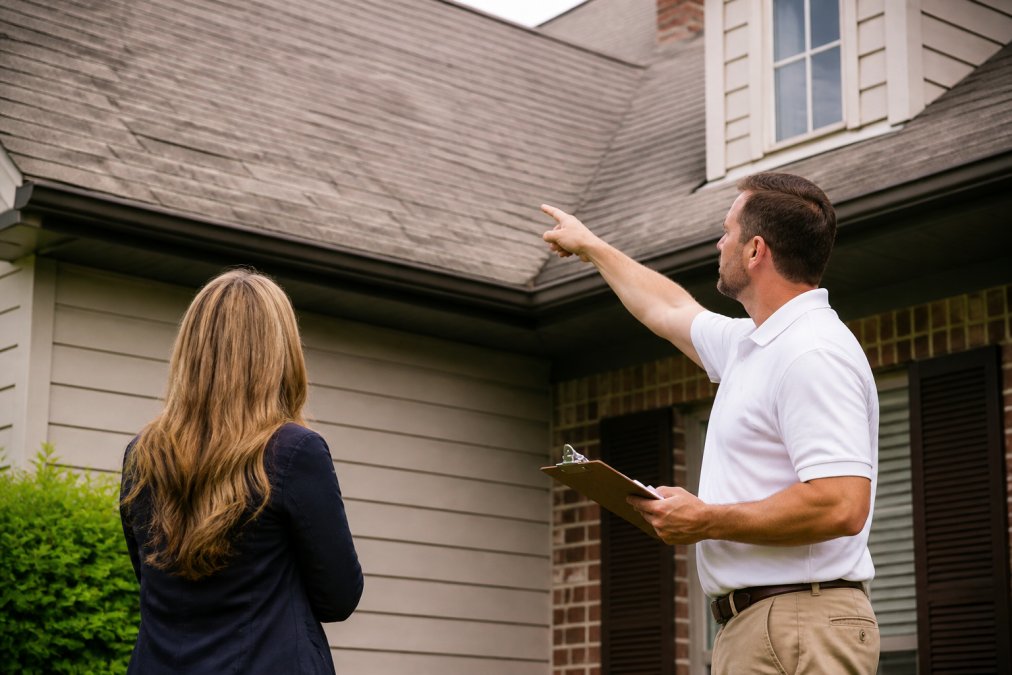
A DIY visual assessment from the ground can identify obvious problems: missing shingles, visible damage, sagging areas, storm damage, age-related wear, and gutter issues. If the roof looks reasonably maintained, a DIY walkthrough might suffice to decide whether a professional inspection is necessary.
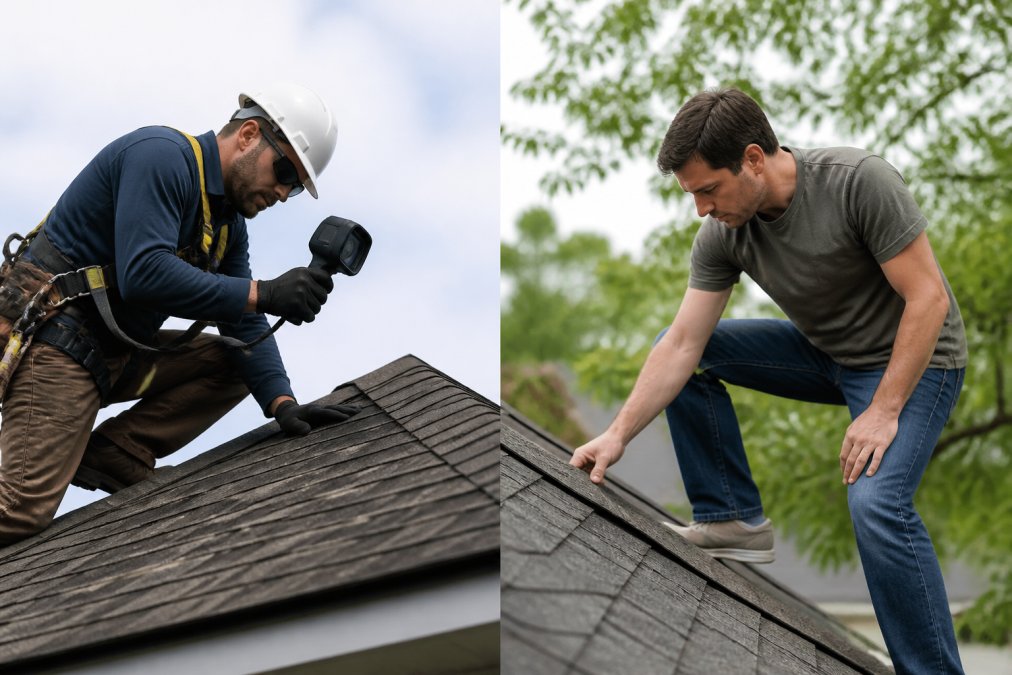
A certified roof inspector brings tools, training, and liability insurance that a homeowner cannot replicate. Thermal imaging cameras detect moisture and heat loss invisible to the naked eye. Professionals safely access areas you cannot, examine underlayment, check attic ventilation, and provide detailed written reports that hold up in negotiations. They also carry insurance, protecting you if they damage your roof during inspection.
Hire a certified inspector if:
- The roof is over 15 years old
- You see signs of storm damage or leaks
- The inspection period is limited
- The property has multiple stories or complex roof geometry
- You plan to use the inspection in negotiations
A certified inspector’s report becomes evidence during negotiations. If the roof fails inspection and needs repairs, the seller’s contractor must fix it to the inspector’s standards. Without a professional report, you’re negotiating from weakness.
Rescue Roofing provides certified roof inspections with detailed assessments to identify issues before they become liabilities.
Average Cost of Roof Inspection and What Affects Pricing
Roof inspection pricing varies based on roof size, complexity, accessibility, and equipment used. A single-story ranch costs less to inspect than a multi-story property with multiple peaks, valleys, and penetrations.
Factors influencing cost include:
- Roof size and pitch: Larger roofs and steeper pitches take longer to inspect safely
- Roof complexity: Multiple penetrations, valleys, and architectural features increase time
- Accessibility: Difficult access or safety hazards require more time and equipment
- Inspection depth: Basic visual inspection costs less than thermal imaging or moisture testing
- Location and demand: Urban areas and peak seasons may have higher pricing avoiding overpaying for homes.
Contact local certified inspectors for quotes specific to your property. Rescue Roofing offers accurate aerial quotes that clarify scope and cost before committing to a full inspection.
A roof inspection can save tens of thousands in unexpected repairs or help you renegotiate the purchase price downward if problems are found.
What to Do If Roof Fails Inspection
If the roof inspection reveals significant damage, structural issues, or remaining lifespan of fewer than 5-10 years, you have three primary options: request that the seller repair the roof before closing, request a credit toward repairs you’ll handle after closing, or walk away from the deal.
Negotiating Repairs and Seller Disclosure
Your negotiating position depends on issue severity and the local real estate market. In a seller’s market, the seller may refuse repairs. In a buyer’s market, they may comply to avoid losing the sale. Your roof inspection report is your evidence. A detailed report from a certified inspector carries more weight than a general home inspection note.
Review the seller’s disclosure statement carefully. If it contradicts your inspection findings, document the discrepancy. Your inspector’s report becomes evidence if you need to pursue a claim later.
Insurance Implications and Coverage
Your homeowner’s insurance policy may exclude coverage for pre-existing roof damage or require replacement of roofs over a certain age. Before closing, contact your insurance company about coverage limits and exclusions related to your roof’s condition and age.
If the roof fails inspection and you proceed, disclose the condition to your insurance company. Failure to disclose known damage can void coverage. Some insurers require repairs or replacement within a specified timeframe before continuing coverage.
Storm damage is typically covered by homeowner’s insurance, but only if it occurs after your policy is in force. Damage existing before purchase is your responsibility. A thorough roof inspection establishes baseline condition before you assume liability.
The Inspection Period: Your Window for Due Diligence
The inspection period in your purchase agreement, typically 7-10 days, is your legal window to investigate the property’s condition without penalty. Once this period closes, you lose the right to renegotiate based on inspection findings.
Schedule your roof inspection early in the inspection period. This gives you time to review the report, get repair estimates, and negotiate with the seller before the deadline. Don’t wait until day 9 to schedule an inspection.
Use the inspection period strategically. If the roof fails inspection and repairs are needed, the seller must complete them to the inspector’s standards before closing or provide a credit. This protects you from inheriting roof problems. After closing, the roof is your responsibility.
Rescue Roofing can often accommodate inspections on short notice, and our detailed reports provide documentation for confident negotiation during the inspection period.
Roof Inspection for Home Buyers: Key Takeaways
A roof inspection for home buyers is a focused assessment of one of the property’s most critical systems. Unlike a general home inspection, a dedicated roof inspection examines shingle condition, flashing integrity, underlayment, gutters, and structural support in detail. This protects you during the inspection period, when you still have power to renegotiate or walk away.
Common roof issues, curling shingles, granule loss, flashing separation, and gutter damage, are visible to a trained eye. A certified inspector uses specialized tools to identify problems a generalist would miss. The cost of a professional inspection is modest compared to discovering roof failure after closing.
Schedule your roof inspection early, review the report carefully, and use findings to negotiate repairs or credits with the seller. If the roof fails inspection, you have options: request repairs, request a credit, or renegotiate the purchase price. Your inspector’s report is your evidence.
Storm damage, age-related wear, and deferred maintenance are common reasons roofs fail inspection. Understanding what to look for gives you confidence and helps you make an informed decision about the property.
A roof inspection during your inspection period gives you the information needed to protect your investment. Rescue Roofing provides certified roof inspections with detailed reports and accurate assessments of repair or replacement needs. If you’re buying a property in the area and need a professional roof inspection, contact Rescue Roofing to schedule an assessment. Our team can help you understand the roof’s condition, assist with insurance claims if storm damage is present, and provide guidance on repair options and financing. Call today to get started with a thorough inspection that protects your purchase.
Frequently Asked Questions
How much does a professional roof inspection cost for home buyers?
Roof inspection pricing varies depending on roof size, pitch, and accessibility. Steeper roofs or larger homes may cost more. Some inspectors charge per square foot or offer bundled pricing with general home inspections. For accurate pricing specific to your property, contact a licensed contractor in your area who can provide a detailed quote based on your roof's complexity and condition.
Is a separate roof inspection necessary if I already have a general home inspection?
A general home inspection covers the roof but often lacks the depth a dedicated roof inspection provides. General inspectors may not detect early signs of water damage, flashing issues, or deferred maintenance that affect roof lifespan. A certified roof inspector uses specialized equipment like thermal imaging and can assess structural integrity, attic ventilation, and material-specific concerns. For major purchases, a separate inspection offers stronger negotiation leverage and protects against costly surprises after closing.
What happens if a roof inspection reveals significant damage before closing?
If inspection uncovers major damage, you have several options: request the seller make repairs before closing, negotiate a credit toward repair costs, or renegotiate the purchase price. Document all findings in writing and provide the inspection report to your real estate agent. You may also involve your lender, as significant roof damage can affect loan approval. This discovery is why the inspection period exists, to conduct due diligence and protect your investment before committing to purchase.
What are the biggest red flags to look for during a roof inspection?
Major red flags include curling or missing shingles, visible granule loss, sagging sections indicating structural issues, water stains in the attic, mold growth, flashing gaps, and gutter deterioration. Storm damage like dents or punctures requires immediate attention. A roof nearing the end of its lifespan (15-20 years for asphalt shingles) signals replacement costs ahead. Deferred maintenance and improper repairs are also concerns. A certified inspector can identify these issues and estimate remaining roof lifespan and replacement costs.
This article was written using GrandRanker