



A low roof quote isn’t automatically a fair one. To learn how to get a fair price on a new roof, compare written estimates for the same work, materials, and removal of the old roof. A second opinion from a roofing professional can help you identify gaps, understand price differences, and weigh replacement against further repairs.
It’s reasonable to want a clear answer to the biggest question: what will a replacement cost? The total depends on factors such as roof size and shape, material choice, existing damage, and the work included. A price is meaningful only when you know exactly what it covers.
This guide explains the main cost factors, what to look for in a written estimate, and when replacing an aging or damaged roof may make more sense than continuing repairs. You’ll also learn how a roofing inspection can clarify the scope and help you compare proposals with confidence.
Key Takeaways
- Compare estimates by checking that each one covers the same scope of work, materials, and removal of existing roofing.
- Use inspection findings to weigh whether ongoing repairs make sense or a full replacement is the more practical option.
- Understand how roof design, access, and underlying damage can affect the labor included in an estimate.
- Make sure the written agreement clearly describes materials, tear-off, repairs, and other work included in the project.
- A roofing professional’s second opinion can help clarify the roof’s condition and give you a sounder basis for comparing estimates.
When replacement may be more cost-effective than repairs
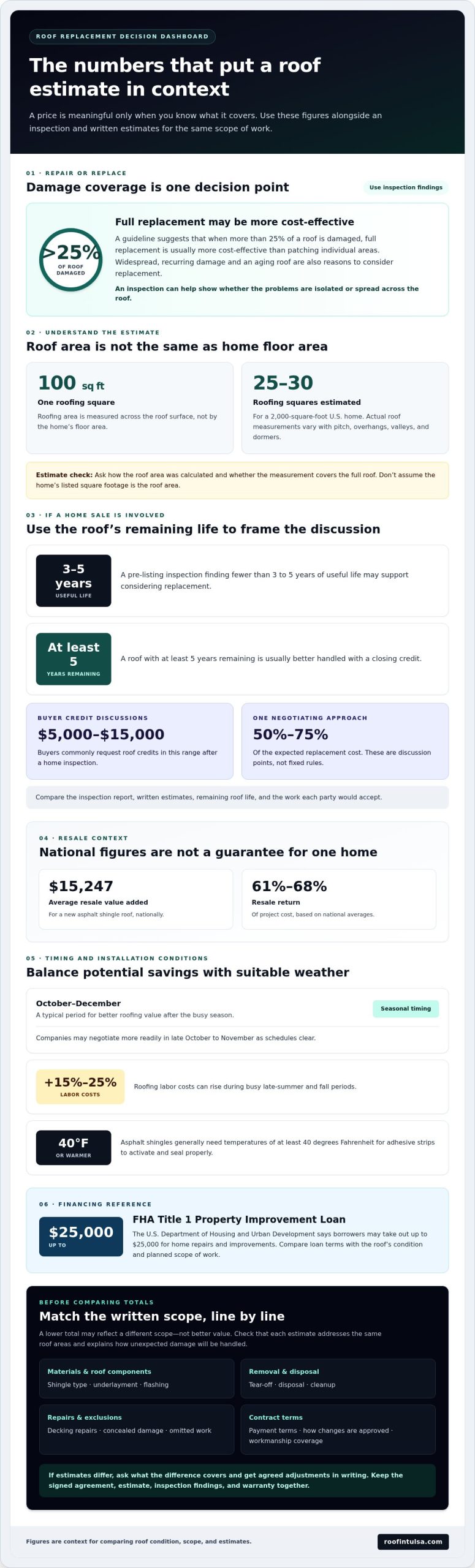
Replacement becomes worth considering when damage is widespread, recurring, or tied to an aging roof. Asphalt shingle roofs have a limited useful life, so age can be one factor when weighing repairs against replacement. A guideline suggests that when more than 25% of a roof is damaged, full replacement is usually more cost-effective than patching individual areas. An inspection can show whether problems are isolated or spread across the roof.
Do I need a permit to replace my roof, and what local rules apply? Permit requirements vary by jurisdiction, so check with your city or county building department before work begins.
Can homeowners insurance or tax credits help pay for a new roof? Coverage depends on your policy and the cause of damage, so distinguish sudden storm damage from routine aging. Tax credits aren’t automatic for a standard replacement; eligibility depends on applicable programs and qualifying work.
When a home sale is involved, inspection findings can support a repair request, a credit, or a shared replacement cost. Buyers commonly request roof credits of $5,000 to $15,000 after a home inspection. One negotiating approach is to ask for 50% to 75% of the expected replacement cost. These figures are discussion points, not fixed rules. The buyer and seller can compare the inspection report, written estimates, remaining roof life, and the work each party would accept.
Before listing, weigh the roof’s condition against resale timing. A pre-listing inspection that finds fewer than 3 to 5 years of useful life may support considering replacement. A roof with at least 5 years remaining is usually better handled with a closing credit. A new asphalt shingle roof adds an average of $15,247 to a home’s resale value nationally, with a resale return of 61% to 68% of project cost. Those figures describe national averages, not a guaranteed result for an individual home.
Timing can affect scheduling and installation conditions. October through December is a typical period for better roofing value after the busy season, while companies may negotiate more readily in late October to November as schedules clear. Roofing labor costs can rise by 15% to 25% during busy late-summer and fall periods. Asphalt shingles generally need temperatures of at least 40 degrees Fahrenheit for adhesive strips to activate and seal properly, so seasonal savings must be weighed against suitable installation weather.
For homeowners weighing financing, the U.S. Department of Housing and Urban Development says the FHA Title 1 Property Improvement Loan allows borrowers to take out up to $25,000 for home repairs and improvements. Compare the loan terms with the roof’s condition and the planned scope of work before deciding whether repairs or replacement better fit the property.
How much does a roof replacement cost?
A roofing estimate depends on the measured roof area, materials, complexity, and work included. To compare proposals, focus on their scope and assumptions, not just the final total.
Estimates and Negotiated Contract Terms
A roofing estimate describes the proposed work and expected cost; the contract records the agreed scope and terms. This distinction matters because a low estimate may leave important work undefined. Before agreeing, compare materials, removal, disposal, repairs, payment terms, and how changes will be approved. Ask for agreed adjustments in writing. Clear terms help prevent misunderstandings about what the project includes.
Roof area is measured across the roof surface, not by the home’s floor area. One roofing square equals 100 square feet, and a 2,000-square-foot U.S. home is estimated to have 25 to 30 roofing squares. Roof pitch, overhangs, valleys, and dormers affect the measured surface and project complexity. Ask how the estimate calculates the roof area and whether its measurement includes the full roof, rather than assuming the home’s listed square footage is the same figure.
Comparing Quotes Line by Line
A line-by-line comparison matches each estimate’s work items, quantities, and materials. This can reveal whether a lower total reflects a different scope rather than better value. Compare the shingle type, underlayment, flashing, tear-off, disposal, decking repairs, and cleanup. Check that each quote covers the same roof areas and explains how unexpected damage will be handled. If a line appears in only one estimate, ask what work it covers before comparing totals.
How can you compare roofing quotes line by line? Put the estimates side by side and match materials, quantities, removal, repairs, disposal, and exclusions. Before hiring, ask who manages the work, how changes are documented, and what workmanship coverage applies. Be cautious of pressure to sign immediately, vague scopes, or payment demands without a written agreement. A detailed estimate and clear answers make the proposal easier to assess.
An inspection report can support a discussion about the proposed work by connecting observed damage to specific tasks. Match each recommended repair or replacement item to the report, then compare estimates for the same scope. If one estimate includes decking work and another excludes it, the totals aren’t directly comparable. Ask for the difference in writing, including how concealed damage could affect the contract. This gives everyone a shared basis for discussing the terms.
Read the workmanship warranty alongside the material specifications. The warranty should identify the work covered, exclusions, and the process for raising a concern. Manufacturer coverage for shingles and a contractor’s workmanship warranty address different parts of the project, so don’t treat them as interchangeable. Keep the signed agreement, estimate, inspection findings, and warranty together. If roof condition is still unclear, a professional roof inspection can help clarify the work being considered.
Cost factors that increase labor
Labor costs reflect more than the time spent installing shingles. Roof shape, access, tear-off work, and the home’s size all affect how a roofer plans the job and estimates the crew’s work.
Roof Complexity and Labor Costs
Roof complexity describes how features such as steep slopes, valleys, dormers, and skylights affect installation. Changes in roof plane require careful fitting and flashing, while tight spaces can make material handling more difficult. A simple roof lets a crew work across broad, consistent sections. A roof with several valleys and skylights requires more transitions, cuts, and detail work, so compare estimates for the same features. For homeowners also upgrading overhead glazing during a project, architectural specialists like View Glazing emphasize that seamless integration and quality flashing around rooflights are essential for preventing leaks.
Home Size and Roof Costs
Home size affects the amount of roof surface a crew must prepare and cover, but floor area alone doesn’t determine labor. Roof pitch, overhangs, and layout change the actual surface area. For example, a roof replacement on a 2,500-square-foot house takes one to three days for asphalt shingles when weather cooperates and the crew is experienced. Treat the schedule as a project example, not a fixed duration for every home.
Factors That Add Labor
Labor needs can increase when a job requires extra preparation, difficult access, or removal of additional layers. A roofer may need to protect landscaping, move materials around obstacles, or do detailed flashing work near chimneys and skylights. Existing damage can also mean repairs once the roofing is removed. Ask the estimator to separate planned work from labor that depends on conditions beneath the shingles.
Labor’s share helps explain why two estimates can differ even with similar shingles. In the United States, roof replacement labor typically accounts for 60% of total cost. A 2026 roofing survey found labor accounted for 65% of total roof replacement project costs. These figures use different descriptions, but both show why crew requirements and installation scope matter when comparing proposals.
Access also matters. A narrow driveway, limited staging space, or landscaping close to the house can affect how crews move shingles and debris. On a home with several roof levels, workers may need to reposition equipment and materials as work progresses. Ask how the estimate accounts for access and property protection, especially if features restrict movement around the building.
Weather and work sequencing also affect labor planning. Asphalt shingles need suitable conditions for the adhesive strips to seal properly, and rain can interrupt roof work. The estimate should clearly describe the included work, while the project schedule should account for weather interruptions. Compare the assumptions behind each proposal rather than treating a faster projected schedule as proof of lower labor needs.
For a fair comparison, note the roof’s slopes, valleys, dormers, skylights, access points, and visible damage. Then check whether each estimate reflects those conditions. Different labor costs may be reasonable when scopes differ; unexplained omissions make the total harder to assess.
Putting roof work and materials in writing
A written scope clarifies the roofing work and selected materials before work begins. It also gives you a practical way to compare proposals beyond their totals.
Material Prices and Roof Size
Material and roof size shape the amount and type of roofing supplies needed, so recording both helps explain estimate differences. A larger roof generally requires more shingles and underlayment, while valleys, dormers, and skylights add cuts and finishing details. Roofing material prices were reported to be 40% to 60% higher than in 2018, making a clearly stated material specification especially useful.
List the shingle type and the work covered alongside it. Three-tab asphalt shingles typically last 15 to 20 years, while architectural asphalt shingles typically last 25 to 30 years. Metal roofs typically last 40 to 70 years. These lifespan differences help frame material choices, but the right option also depends on the roof structure and project goals.
To assess affordability, compare materials based on the project requirements and expected service life, not just initial cost. A lower-cost option may have a shorter typical lifespan, while a longer-lasting material may require a larger upfront commitment. Make sure the agreement identifies the selected material and type, and describes alternatives separately. This prevents an estimate for one option from being mistaken for another.
Labor and Material Cost Shares
Cost shares describe how much of a roof project’s total is attributed to labor versus other components. They matter because two estimates can use similar materials but differ in preparation, installation scope, or crew requirements. In the United States, roof replacement labor typically accounts for 60% of total cost. A 2026 roofing survey found labor accounted for 65% of total roof replacement project costs.
Broad benchmarks aren’t a formula for pricing an individual roof. The written scope should separate labor from materials where practical and identify removal, disposal, underlayment, flashing, and any decking work. If several tasks are grouped together, ask for clearer descriptions. This helps you understand what the project includes without assuming every roofer organizes costs the same way.
Before signing, make sure the agreement records the roof area, material type, installation scope, and how changes will be documented. It should also describe cleanup and the handling of concealed damage. If an estimate uses general labels such as “premium shingles” or “standard installation,” request specific descriptions. Clear terms make it easier to compare the same materials and work across proposals.
Getting a roofing professional’s second opinion
A second opinion can clarify whether the proposed work addresses the roof’s actual condition. Understanding how to get a fair price on a new roof starts with comparing assessments, not just totals.
Comparing Multiple Roofing Estimates
Multiple estimates provide separate assessments of the roof and proposed scope, helping you spot differences that deserve explanation. Homeowners are advised to request quotes from at least 3 roofing contractors—whether consulting local specialists or established family-owned contractors like Mike and Mike Roofing. Give each roofer the same inspection notes and describe the same concerns, so their recommendations address comparable conditions.
How many roofing estimates should homeowners get? Request at least 3 quotes. If one roofer recommends replacement and another suggests repairs, ask each to explain the observations behind that recommendation. Compare what each assessment says about the roof’s condition, urgency, and proposed work. Agreement can strengthen your understanding, while differing conclusions point to questions worth resolving before you decide.
Use a second opinion to examine the reasoning, not to pressure a roofer into matching another total. Ask which visible conditions support the proposed work and what remains uncertain until the roofing is removed. If assessments differ on whether damage is isolated, for example, ask each roofer to describe the evidence and explain how it affects the scope. This helps keep the discussion focused on the roof’s condition.
To understand how to get a fair price on a new roof, compare what each estimate includes and excludes. Check whether one proposal assumes additional work that another omits, and ask for important assumptions in writing. If a recommendation changes after inspection, ask what new finding prompted the change. A clear explanation helps distinguish differences in assessment from differences in presentation.
Checking Roofer Credentials
Credential checks help you identify the business responsible for the work and review its documentation. Ask for the roofer’s legal business name, applicable license details, proof of insurance, and references for comparable projects. Check licensing information with the relevant state or local agency, and confirm that the names on the estimate and documents match.
How do I check a roofer’s license, insurance, and references? Compare the business name with licensing records, review insurance documents, and contact references about completed projects. Ask whether the finished work matched the agreement and how changes were handled. Keep your notes with the estimates so you can compare both the proposal and the roofer’s documentation.
Pressure to sign before reviewing the scope, vague descriptions, and verbal promises without written terms deserve caution. Ask for clear answers about materials, exclusions, and how changes will be approved. A second opinion is most useful when it provides a careful assessment and clear explanations, helping you decide what work your roof needs.
Rescue Roofing Tulsa: Residential Roof Replacement
Rescue Roofing Tulsa provides residential roof replacement when an inspection indicates that repairs may not address the roof’s overall condition. If damage appears limited, roof repair may be the more appropriate option. A roof inspection can help clarify what work is needed and give you a clearer basis for reviewing the proposed scope and materials. Comparing that information with written estimates can make the next decision more manageable, whether you’re weighing repair or planning a full replacement. For help with your roofing decision, visit Rescue Roofing Tulsa.
Move Forward With a Clear Roofing Plan
Knowing how to get a fair price on a new roof means more than choosing a number. It means understanding the roof’s needs and the work you’re agreeing to. Before moving ahead, gather your inspection notes, estimates, and questions in one place. This gives you a practical starting point for discussing next steps and deciding whether the roof needs repair or replacement.
Rescue Roofing Tulsa offers residential and commercial roof replacement, as well as roof repair. Whether you’re planning a full project or addressing a specific problem, clear information can help you have a focused conversation about the work involved.
Contact Rescue Roofing Tulsa to discuss your roofing needs. A thoughtful next step can make the decision feel more manageable.
Frequently Asked Questions
Is It Cheaper to Put New Shingles Over Old Shingles?
Adding shingles over an existing layer can cost less initially because it avoids some tear-off and disposal work. However, an overlay won’t fix problems hidden beneath the old shingles, such as damaged decking, and it adds another layer to the roof. The right choice depends on the roof’s condition, existing layers, and local requirements. An inspection can help determine whether an overlay is suitable or removal is needed.
What is the average cost to replace a roof in the U.S.?
There isn’t one dependable average that reflects every U.S. roof replacement. A small, simple roof and a larger roof with several levels require different amounts of material and labor. Material choice and underlying damage also affect the scope. A project-specific quote depends on the roof’s size, design, materials, and required work, and is provided after a quote request. Compare estimates based on matching work, not totals alone.
How much does roof replacement cost per square foot by material?
There isn’t one per-square-foot figure that applies to every material and roof. Asphalt shingles, metal, tile, and slate differ in material requirements and installation details. The actual project quote also depends on roof dimensions, shape, tear-off, and any needed deck work. Ask whether a stated per-square-foot amount covers installation and removal or only materials. A project-specific quote depends on the roof and is provided after a quote request.
What factors affect the price of a new roof?
Roof size, slope, design, material, access, and existing damage all affect the scope and price. For example, a roof with skylights and multiple valleys needs more detailed fitting than a broad, simple roof. The number of existing layers affects removal work, while damaged decking may require additional repairs. Compare estimates to ensure they describe the same roof areas and proposed work.
What should a roofing estimate include?
A useful estimate identifies the roofing material and describes the included work, such as removal, installation, flashing, disposal, and cleanup. Look for the measured roof area, listed exclusions, and a process for documenting changes if concealed damage appears. The estimate should also state payment terms and applicable workmanship coverage. Keep it with your inspection notes so you can connect each proposed task to the roof’s observed condition.
When is the best time of year to replace a roof for a fair price?
October through December is a typical period for better roofing value after the busy season, and late October to November may bring more room to negotiate as schedules clear. Weather still matters: asphalt shingles generally need temperatures of at least 40 degrees Fahrenheit for adhesive strips to activate and seal properly. Compare seasonal scheduling with suitable installation conditions, rather than choosing a date based only on a possible discount.