




Table of Contents
- Roofing Contractor vs General Contractor: Core Differences
- Roofing Contractor Licensing Requirements and Qualifications
- Project Scope and Specialization: What Each Can Handle
- Cost Comparison: Overhead, Markup, and Total Investment
- Questions to Ask Before Hiring a Roofer
- Hiring a Roofing Company for Storm Damage and Insurance Claims
- When to Choose a Roofing Specialist vs a General Contractor
- Conclusion
Last Updated: August 27, 2026
Roofing Contractor vs General Contractor: Core Differences
A roofing contractor vs general contractor represents a fundamental choice in how your home or building gets repaired. The difference isn’t just about job titles, it’s about specialization, licensing, oversight, and who bears responsibility when something goes wrong. At Rescue Roofing, we work with homeowners and property managers who’ve often confused these two roles, leading to costly delays or subpar work.
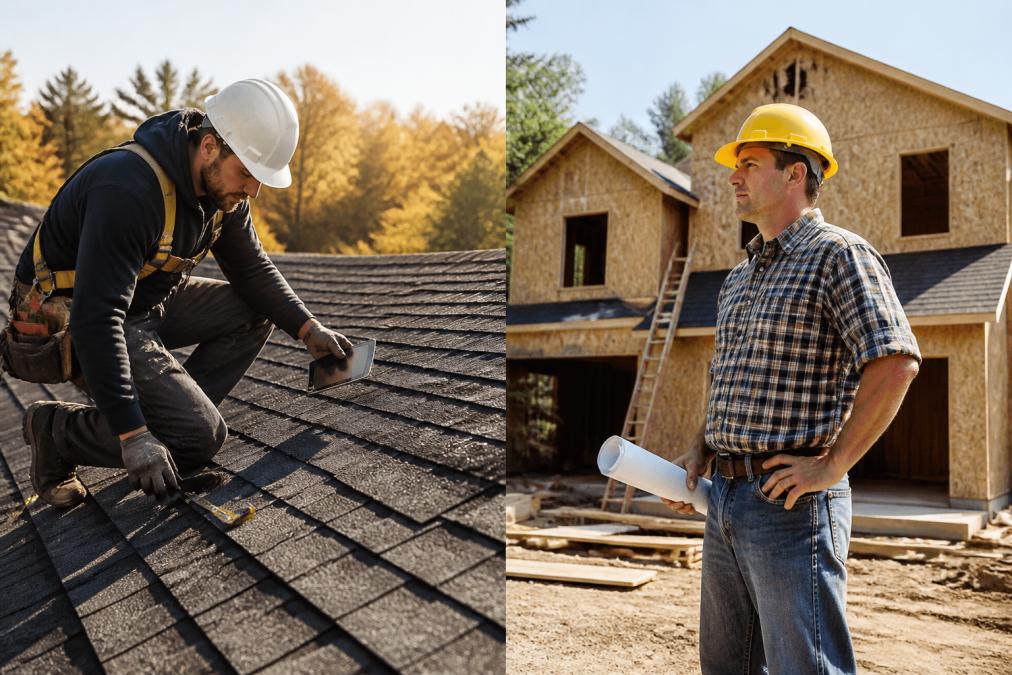
The core distinction: a roofing contractor specializes exclusively in roof work, repairs, replacements, inspections, and storm damage restoration. A general contractor manages broader construction projects and typically subcontracts roofing work to specialists. For a roof-specific issue, hiring a roofing specialist directly gives you expertise and accountability. For a multi-trade renovation, a general contractor coordinates the entire project.
Understanding this difference matters because it affects your timeline, warranty coverage, insurance claim handling, and total project cost. When you hire the wrong contractor type, you risk paying more for less specialized attention.
Roofing Contractor Licensing Requirements and Qualifications
A roofing contractor must meet specific state and local licensing requirements that vary by jurisdiction. Most states require roofing contractors to pass a trade examination, maintain active general liability and workers compensation insurance, and carry a valid contractor’s license. Some jurisdictions also require a roofing contractor to post a performance bond, which protects homeowners if the contractor fails to complete work.
Roofing contractor qualifications typically include:
- Active state contractor license (verified through your state’s licensing board)
- General liability insurance (minimum coverage varies by state, often $500,000 to $1,000,000 per occurrence) (the CDC)
- Workers compensation insurance for all employees (required in most states)
- Trade-specific knowledge of building codes, roofing systems, and installation standards
- Often, membership in roofing trade associations or manufacturer certifications
A roofing contractor’s license focuses narrowly on roofing work. They’re trained in shingle installation, flat-roof systems, flashing, ventilation, and leak detection. When you hire a licensed roofing contractor, you’re hiring someone whose entire professional focus is your roof.
General contractors, by contrast, hold a broader license that allows them to manage multiple trades. They may have limited hands-on roofing knowledge and typically hire roofing subcontractors to handle the actual roof work. This creates a middle layer, the general contractor oversees the roofing contractor, adding cost and potential communication delays.
Project Scope and Specialization: What Each Can Handle
Roofing Contractor Expertise
A roofing contractor handles roofing systems exclusively. Their scope includes:
- Full roof replacements (residential asphalt shingles, metal, tile, or flat-roof systems)
- Roof repairs and leak detection
- Storm damage assessment and restoration
- Gutter installation and maintenance
- Roof inspections and condition reports
- Insurance claim documentation and communication with adjusters
- Flashing repairs and ventilation work
Roofing contractors develop deep expertise in roofing materials, installation techniques, and building code compliance. They understand how different roofing systems interact with your home’s ventilation, insulation, and water management. This specialization translates to faster diagnostics, fewer surprises during installation, and higher-quality workmanship.
For roof-specific projects, a roofing contractor’s narrow focus is an advantage. They’ve installed thousands of roofs, seen every leak pattern, and know exactly how to prevent future problems. Their warranty on workmanship reflects that confidence.
General Contractor Capabilities
A general contractor manages construction projects that span multiple trades. Their scope includes:
- Coordinating roofing, siding, framing, electrical, and plumbing work
- Managing project timelines and budgets across multiple subcontractors
- Obtaining building permits and ensuring code compliance
- Overseeing inspections and quality control
- Handling change orders and project modifications
General contractors excel at complex renovations where roofing is one piece of a larger project. If you’re replacing your roof, siding, gutters, and windows simultaneously, a general contractor coordinates all trades and ensures they work together seamlessly.
However, for a roof-only project, a general contractor adds a markup layer without specialized roofing expertise. They hire a roofing subcontractor to do the actual work, but the general contractor manages the relationship, which can slow communication and increase costs.
Cost Comparison: Overhead, Markup, and Total Investment
The cost difference between hiring a roofing contractor directly versus through a general contractor reflects overhead and profit margins. A roofing contractor quotes a price for labor and materials. A general contractor quotes the same roofing work but adds overhead and profit on top of the roofing subcontractor’s price.
When you hire a roofing contractor directly, you pay for:
- Labor (skilled installation and inspection)
- Materials (shingles, flashing, underlayment, fasteners)
- Equipment and tools
- Insurance and licensing
When you hire a general contractor for roofing work, you pay for all of the above, plus:
- General contractor overhead (office staff, vehicles, administrative costs)
- General contractor profit margin (typically 10-20% of the roofing subcontractor’s bid)
- Project management and coordination
For a roof-only project, this markup can add thousands to your total investment. For a multi-trade renovation, the general contractor’s coordination may justify the additional cost by preventing scheduling conflicts and ensuring quality across all trades.
A roofing contractor’s estimate is typically more transparent because there’s no middleman. You see labor, materials, and a reasonable profit margin. A general contractor’s estimate includes hidden layers, making it harder to compare pricing.
Questions to Ask Before Hiring a Roofer
Before committing to any roofing contractor, ask these critical questions to assess their qualifications, process, and reliability:
- Are you licensed and insured? Request proof of active contractor’s license, general liability insurance, and workers compensation coverage. Verify the license through your state’s licensing board.
- What’s your warranty on workmanship? A reputable roofing contractor often offers a multi-year warranty on labor, which can range from 2 to 10 years, and sometimes longer (nrca.net). Compare warranties carefully, they vary widely.
- How do you handle insurance claims? Ask whether they document damage, communicate directly with adjusters, and assist with claim filing. This is critical for storm damage work.
- What’s your timeline? Understand how long the project will take, when work starts, and how weather delays are handled.
- Can you provide references? Ask for at least three recent residential or commercial projects similar to yours. Contact those references and ask about quality, timeline adherence, and warranty follow-up.
- How do you estimate costs? Do they use aerial measurement technology or physical inspection? Accurate estimates prevent surprises mid-project.
- What materials do you use? Understand the roofing system, shingle grade, and manufacturer. Confirm whether the manufacturer’s warranty transfers to you as the homeowner.
- Do you obtain permits? Confirm that the roofing contractor pulls all required building permits and schedules inspections.
These questions separate experienced, professional roofing contractors from less reliable operators. A roofing contractor who answers confidently and provides documentation is worth hiring.
Hiring a Roofing Company for Storm Damage and Insurance Claims
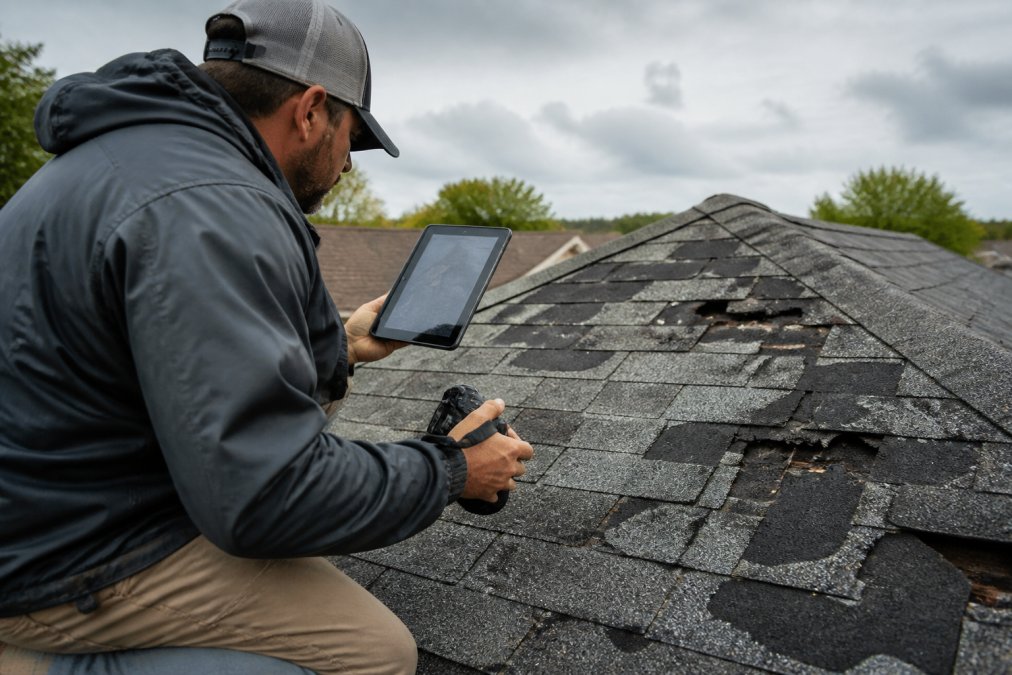
Storm damage creates urgency and complexity that makes hiring the right roofing contractor essential. When hail, wind, or falling trees damage your roof, your insurance policy typically covers the repair or replacement. However, navigating the claims process requires expertise.
A specialized roofing contractor assists with insurance claims by:
- Documenting damage with photographs and video
- Preparing detailed damage reports that support your claim
- Communicating directly with insurance adjusters to explain the scope of damage
- Providing supplemental estimates if adjusters underestimate repair costs
- Explaining coverage details and helping you understand your deductible
This support is critical because insurance adjusters often underestimate roofing damage. A roofing contractor’s documentation and expert testimony can justify higher claim payouts, sometimes covering additional damage discovered during the repair process.
A general contractor can coordinate with an insurance adjuster, but a specialized roofing contractor has the technical credibility to challenge an adjuster’s assessment. They’ve documented thousands of storm damage claims and understand exactly what adjusters look for.
When hiring for storm damage, verify that the roofing contractor has experience with insurance claims in your area. Ask for examples of supplemental estimates they’ve submitted and outcomes they’ve achieved.
When to Choose a Roofing Specialist vs a General Contractor
The decision hinges on project scope and complexity. Here’s a practical framework:
Choose a roofing contractor if:
- Your project is roof-only (repair, replacement, or inspection)
- You need fast turnaround and direct communication
- You want the lowest total cost for roofing work
- You’re dealing with insurance claims and need expert documentation
- You value deep roofing expertise and accountability
Choose a general contractor if:
- You’re doing a multi-trade renovation (roof, siding, windows, gutters, etc.)
- You need one point of contact managing multiple subcontractors
- You want coordinated scheduling across all trades
- You’re building new construction or major structural work
For most homeowners with a roof-specific issue, a roofing contractor is the right choice. You get specialized expertise, faster completion, and lower cost. For complex renovations, a general contractor’s coordination pays for itself.
| Criteria | Roofing Contractor | General Contractor |
|---|---|---|
| Specialization | Roofing only | Multiple trades |
| Licensing | Roofing-specific | Broad construction |
| Cost for roof work | Lower (no markup) | Higher (overhead added) |
| Timeline for roof-only | Faster | Slower (coordination layer) |
| Insurance claims | Expert documentation | Basic coordination |
| Multi-trade projects | Subcontracts other trades | Manages all trades |
| Warranty | Deep roofing expertise | General oversight |
| Best for | Roof-specific work | Complex renovations |
Conclusion
The distinction between a roofing contractor and a general contractor directly impacts your project’s cost, timeline, and outcome. For roof-specific work, whether repairs, replacements, or storm damage restoration, a specialized roofing contractor delivers expertise that a general contractor cannot match. They navigate insurance claims, document damage accurately, and complete work faster.
Rescue Roofing brings this specialized focus to every project. Our team provides accurate aerial quotes, assists with insurance claim filing, and communicates directly with adjusters to ensure you receive fair claim payouts. We offer flexible financing options and maintain 24-hour availability for emergencies. When you need roofing expertise backed by professional accountability, contact Rescue Roofing for a thorough inspection and transparent estimate tailored to your specific needs.
Request proof of licensing and insurance before signing any contract. Verify the contractor’s license through your state’s licensing board and confirm that general liability and workers compensation coverage are current. This single step prevents hiring unlicensed operators.
For roof-only projects, hire a roofing contractor directly. For multi-trade renovations, a general contractor coordinates multiple subcontractors. The wrong choice costs time and money.
Common Questions About Roofing Contractors vs General Contractors
Can a general contractor do roofing work without hiring a subcontractor?
Some general contractors employ in-house roofing crews, but most subcontract roofing to specialized roofing contractors. When a general contractor subcontracts, you’re paying a markup on top of the roofing contractor’s price. For roof-only projects, hiring the roofing contractor directly eliminates this middleman cost.
What’s the difference in warranty coverage between a roofing contractor and a general contractor?
A roofing contractor typically offers a workmanship warranty of varying lengths, often ranging from 2 to 10 years, and sometimes longer, backed by their roofing expertise and accountability. A general contractor often offers a shorter workmanship warranty, typically around one year, because they’re not the skilled roofing installer. The manufacturer’s material warranty remains the same regardless of who installs the roof, but the labor warranty differs significantly.
How do insurance claims differ when hiring a roofing contractor vs a general contractor?
A roofing contractor documents storm damage, communicates with adjusters, and submits supplemental estimates when initial assessments underestimate damage. A general contractor coordinates with the adjuster but lacks the technical roofing expertise to challenge assessments. For insurance claims, a roofing contractor’s involvement typically results in higher claim payouts because they can justify additional damage with expert documentation.
Should I get multiple quotes from roofing contractors?
Yes. Obtain at least three estimates from licensed roofing contractors. Compare their scope of work, materials proposed, warranty terms, and timeline. Avoid choosing based solely on price, the lowest bid often reflects lower-quality materials or rushed installation. A mid-range estimate from an experienced, well-reviewed roofing contractor is typically the best value.
What should I do if a general contractor and a roofing subcontractor disagree about scope or quality?
This is a common problem when hiring through a general contractor. You’re caught between two contractors with competing interests. When you hire a roofing contractor directly, there’s no middleman to create conflict. If disputes arise, you have direct recourse with the contractor responsible for the work.
=== FAQ ANSWERS (audit these too, same rules) ===
[1] Q: Can a general contractor replace a roof?
A: A general contractor can technically oversee roof replacement by subcontracting the work to a licensed roofing specialist. However, general contractors typically lack the specialized expertise, tools, and trade knowledge that dedicated roofing contractors possess. For roof replacement, hiring a licensed roofing contractor directly ensures a better workmanship warranty, faster project completion, and more accurate cost estimates. General contractors add overhead and profit margins when subcontracting, increasing your total cost.
[2] Q: Do roofing contractors need a different license than general contractors?
A: Yes, roofing contractors require a separate, specialized license distinct from general contractor licensing in many states. Roofing licenses vary by state and often require specific training, insurance, and bonding related to roofing systems. A general contractor license does not automatically qualify someone to perform roofing work. Always verify that any roofing contractor holds current licensing, workers compensation insurance, and general liability coverage before hiring them for your project.
[3] Q: What questions should I ask before hiring a roofer?
A: Ask about licensing and insurance verification, years of experience with your specific roof type, warranty coverage on both materials and workmanship, timeline and project management approach, how they handle building permits and inspections, their process for material procurement, and whether they assist with insurance claims. For storm damage, ask specifically about their experience with insurance adjusters and supplement documentation. Request references and clarify the cost estimate breakdown to avoid hidden charges mid-project.
[4] Q: What is the difference between overhead and profit in roofing estimates?
A: Overhead covers a contractor’s operating costs: office staff, equipment maintenance, insurance, vehicles, and administrative expenses. Profit is the margin above overhead. Roofing contractors typically mark up for profit and overhead combined. General contractors subcontracting roofing work may add additional markup on top, increasing your total cost. Understanding this distinction helps you evaluate whether hiring a roofing specialist directly or through a general contractor offers better value for your specific project.
Frequently Asked Questions
Can a general contractor replace a roof?
A general contractor can technically oversee roof replacement by subcontracting the work to a licensed roofing specialist. However, general contractors typically lack the specialized expertise, tools, and trade knowledge that dedicated roofing contractors possess. For roof replacement, hiring a licensed roofing contractor directly ensures a better workmanship warranty, faster project completion, and more accurate cost estimates. General contractors add overhead and profit margins when subcontracting, increasing your total cost.
Do roofing contractors need a different license than general contractors?
Yes, roofing contractors require a separate, specialized license distinct from general contractor licensing in many states. Roofing licenses vary by state and often require specific training, insurance, and bonding related to roofing systems. A general contractor license does not automatically qualify someone to perform roofing work. Always verify that any roofing contractor holds current licensing, workers compensation insurance, and general liability coverage before hiring them for your project.
What questions should I ask before hiring a roofer?
Ask about licensing and insurance verification, years of experience with your specific roof type, warranty coverage on both materials and workmanship, timeline and project management approach, how they handle building permits and inspections, their process for material procurement, and whether they assist with insurance claims. For storm damage, ask specifically about their experience with insurance adjusters and supplement documentation. Request references and clarify the cost estimate breakdown to avoid hidden charges mid-project.
What is the difference between overhead and profit in roofing estimates?
Overhead covers a contractor's operating costs: office staff, equipment maintenance, insurance, vehicles, and administrative expenses. Profit is the margin above overhead. Roofing contractors typically mark up for profit and overhead combined. General contractors subcontracting roofing work may add additional markup on top, increasing your total cost. Understanding this distinction helps you evaluate whether hiring a roofing specialist directly or through a general contractor offers better value for your specific project.
Additional Resources
For more information on selecting roofing contractors and understanding your options, consult these authoritative sources:
National Association of Home Builders standards for roofing installation
Occupational Safety and Health Administration guidelines for roofing work and fall protection
National Roofing Contractors Association best practices for residential and commercial roofing
This article was written using GrandRanker