



Table of Contents
- Start With a Ground-Level Assessment
- Signs of Hail Damage on Asphalt Shingles
- Your Hail Damage Roof Inspection Checklist
- Differentiating Hail vs. Mechanical Damage
- How to File a Roof Hail Damage Insurance Claim
- When to Call a Professional Roof Inspector
- Frequently Asked Questions
Last Updated: September 17, 2026
Start With a Ground-Level Assessment
Learning how to identify minor roof damage after hail starts on the ground, not on the roof. Most homeowners grab a ladder right away. That is a mistake. Your gutters, downspouts, and soft metal surfaces tell you plenty before you ever climb.
This guide from Rescue Roofing walks through each step. We have inspected storm-damaged roofs, and the pattern is often the same: the ground tells you where to look up.
Check Gutters and Downspouts for Granule Loss
Granule loss is your first real clue. Asphalt shingles have a protective layer of crushed stone on top. When hailstone impact knocks those granules loose, they wash into your gutters and pile up at the bottom of downspouts.
Run your hand along the inside of a gutter. A few loose granules are normal. A heavy, gritty buildup after a storm is not.
Check the ground below downspout openings too. If you see a pile of dark, sand-like grit, hail has been working on your roof.
Inspect Soft Metal Surfaces: HVAC Units and Vent Caps
Soft metal dents easily. That makes HVAC units, vent caps, and gutter aprons honest witnesses. If hail was big enough to dent these, it hit your shingles too.
Look for dents and dings on:
- The top of your air conditioning unit
- Metal vent caps and chimney flashing
- Gutter edges and downspout elbows
- Any metal roof accessories
Document what you find with photos.
Signs of Hail Damage on Asphalt Shingles
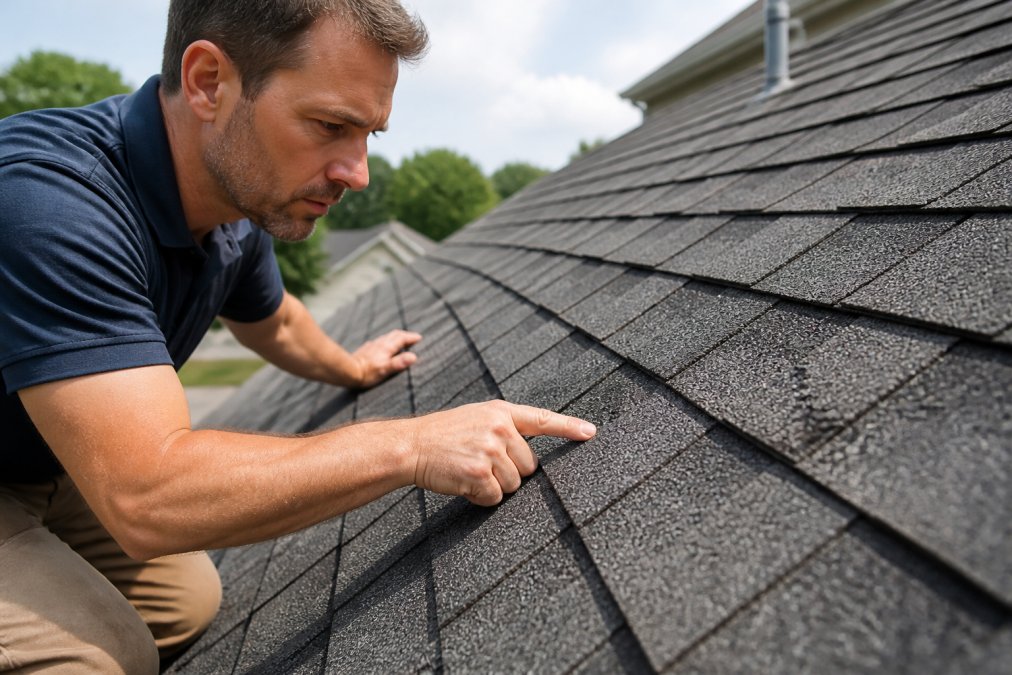
Asphalt shingles show hail damage in ways that are easy to miss from the ground. You need to get close. But you also need to know what you are looking at, because hail damage and old age look similar at a glance.
Identifying Shingle Bruising and Exposed Mat
Shingle bruising looks like a soft spot on a firm surface. The impact pushes the asphalt down, and the spot may feel spongy or look dark and shiny.
Curling Shingles, Fractures, and Cracks
Hail does not always leave a round dent. On older or brittle shingles, it causes fractures and cracks. These often run in a straight line where the shingle bent under the strike.
Look for:
- Cracks radiating from a single impact point
- Fractures along the shingle edge
- Blistering that looks like small, raised bubbles
- Missing granules in a scattered, random pattern
Your Hail Damage Roof Inspection Checklist
A hail damage roof inspection checklist keeps you organized and safe. Use this one before you call anyone. It also gives you a clear record for your property claim.
Work through it in order:
- Check gutters and downspouts for granule buildup
- Look for dents on HVAC units and vent caps
- Photograph every soft metal surface with dents
- Note any missing granules on visible shingle edges
- Check for cracks, fractures, and exposed mat
- Look for curling shingles and blistering
- Record the date of the storm and hail size
- Save all photos with timestamps
DIY Safety Protocols for Roof Access
Most guides skip this part. Do not. Falls from roofs send thousands of homeowners to the emergency room every year, and a quick look is never worth that risk.
Follow these rules if you go up:
- Never walk a roof alone
- Wait for dry, calm conditions
- Wear shoes with real grip
- Stay off steep roof pitches entirely
- Keep three points of contact on every ladder
- Skip the roof if you are unsure about your balance
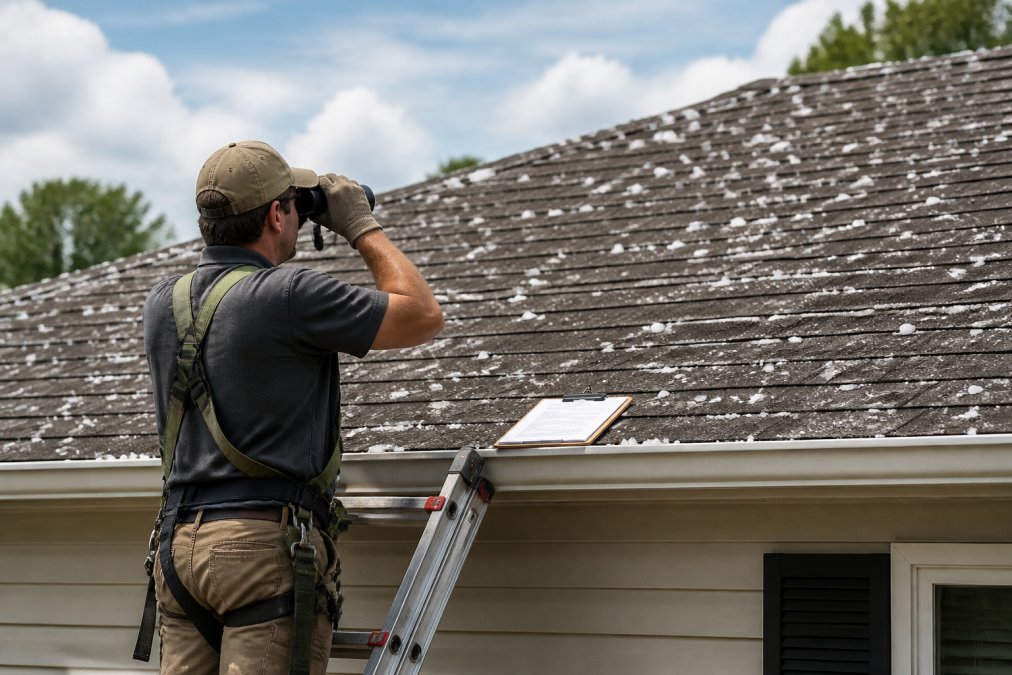
Walking a wet or steep roof is the single most common way homeowners get hurt during storm inspections. If you are not confident on a ladder, do not climb. A ground-level look with binoculars plus a professional inspection covers everything you need.
Ground-Based Inspection Methods That Actually Work
You do not need to climb to identify minor hail damage. In fact, the safest and often most thorough first pass happens entirely from the ground. Here is how to do it right.
What to look for from the ground. You can spot:
- Dark, irregular patches where granules are missing
- Shiny or bare spots that reflect light differently
- Dents on soft metal (HVAC, vents, gutter aprons)
- Granule piles in gutters and at downspout outlets
- Cracked or displaced shingles at the roof edge
A drone flight takes 10 minutes and gives you a permanent record of the roof’s condition before any repair work begins. Save the footage, it is the best evidence you can hand an adjuster.
When to Stop and Call a Pro
If your ground inspection turns up any of these, stop and call a licensed roof inspector:
- Dents on more than one soft metal surface
- Visible exposed mat or missing granules across multiple shingles
- Any active leak or water stain on interior ceilings
- Damage on a roof steeper than 6:12 pitch or higher than one story
- You are unsure whether the damage is hail or wear
A professional inspection costs far less than a fall. And many roofing contractors, including Rescue Roofing, offer free storm damage inspections with no obligation.
Differentiating Hail vs. Mechanical Damage
Hail damage and mechanical damage look alike, but they are not the same. This distinction matters, because your insurance adjuster will check it carefully. Getting it wrong can mean a denied claim or a repair bill you pay out of pocket.
Here is how to tell them apart:
| Feature | Hail Damage | Mechanical Damage |
|---|---|---|
| Pattern | Random, scattered | Clustered, along paths |
| Shape | Round or irregular dents | Scrapes, gouges, tears |
| Granule loss | Surrounds the impact point | Along a scrape line |
| Soft metal | Dented on top surfaces | Scratched or bent sideways |
| Timing | After a known storm | Any time, often from work |
Visual Comparison: What Each Type Looks Like Up Close
Hail impact. A fresh hail strike on an asphalt shingle looks like a small, round bruise. The surface may be soft to the touch, and the granules around the impact point are often knocked loose in a ring. On older shingles, the impact can fracture the mat, creating a crack that radiates outward. The key is randomness, hail does not care where it lands.
Why This Distinction Matters for Your Claim
Insurance policies cover sudden, accidental damage from hail. They do not cover damage from poor maintenance, foot traffic, or normal wear. If your adjuster finds mechanical damage, they may deny the claim or reduce the payout.
Random scatter = hail. Lines and clusters = mechanical. When in doubt, photograph the pattern and call a pro before you file.
How to File a Roof Hail Damage Insurance Claim
Filing a roof hail damage insurance claim is mostly about documentation and timing. Get both right and the process moves faster.
Understanding the Waiting Period and Adjuster Visit
The waiting period is the gap between filing your claim and the adjuster visit. It varies by insurer and by how busy the season is. Most guides never mention it, and that is a mistake.
Use that time well:
- Finish your photo documentation
- Get a professional inspection
- Keep every receipt and note
- Avoid any roof repairs before the adjuster sees the damage
Do not repair anything before the adjuster visits. Patches and replacements erase the evidence they need. If you have an active leak, tarp it and photograph the original damage first.
When to Call a Professional Roof Inspector
Call a professional roof inspector when you see dents on soft metal, exposed mat, or any active leak. Those three signs mean the damage is likely more than cosmetic.
Other reasons to call right away:
- Your roof is steep or more than one story
- You are unsure whether the damage is hail or wear
- Your insurer requires a contractor’s report
- You have found cracks or missing granules in several spots
Frequently Asked Questions
What does minor hail damage look like on a roof?
Minor roof hail damage often appears as small dark spots on asphalt shingles where granules have been knocked loose, exposing the roof felt underneath. You may also notice dents and dings on soft metal surfaces like vent caps and gutters. Shingle bruising, which looks like soft spots or indentations, is another common sign. These issues can be easy to miss from the ground, so a close inspection or professional assessment helps confirm whether damage is present.
Should I climb on my roof to check for hail damage?
Climbing on your roof after a storm is risky, especially if shingles are loose or the surface is wet. A safer approach is to start with a ground-level assessment using binoculars to check gutters, downspouts, and soft metal surfaces for dents and granule loss. If you suspect damage, call a professional roof inspector. They have the training and equipment to inspect safely and document findings for your insurance claim.
How do I document hail damage for an insurance claim?
Start by photographing any visible damage from the ground, including dents on gutters, downspouts, and HVAC units. Note the date of the storm and keep a written log of when you first noticed issues. Before filing, review your policy to understand your deductible and the waiting period for claims. A professional roof inspector can provide a detailed report with photos and measurements that support your property claim and help your insurance adjuster process it faster.
How long will a roof last after hail damage?
The impact on shingle lifespan depends on the severity of the hailstone impact and whether the protective layer of granules was compromised. Minor damage that only affects surface granules may not shorten roof life significantly if repaired promptly. However, shingle bruising or exposed mat can lead to water infiltration and premature failure. Having a professional assess roof integrity after a storm helps you decide whether repairs or replacement will protect your home long-term.
Hail damage rarely announces itself. The signs are quiet: a gritty gutter, a dented vent cap, a soft spot on a shingle. Catching them early is what saves a roof. Rescue Roofing offers 24-hour availability, accurate aerial quotes, and full help with your insurance claim from start to finish. Get started with Rescue Roofing and protect your home before the next storm.