


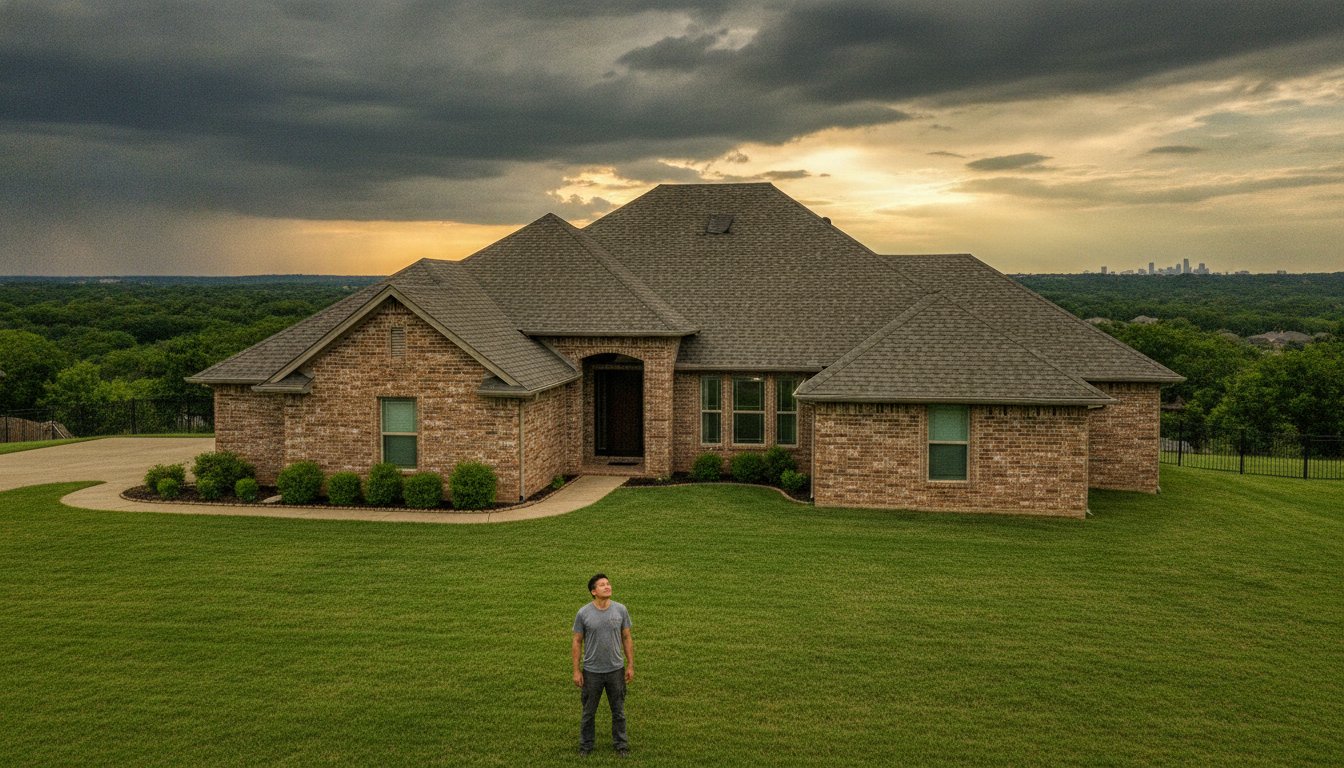

Could a single afternoon of Oklahoma gusts have compromised your home’s structural integrity without leaving a single shingle on your lawn? For many of our neighbors, the most dangerous roof damage is the kind you cannot see from the driveway. If you are concerned about wind damage roof repair tulsa, you aren’t alone in feeling a mix of urgency and hesitation. It is natural to worry about hidden leaks leading to mold or to feel skeptical about “storm chasers” who suddenly appear after a heavy front moves through the metro area.
We understand that your home is your sanctuary; dealing with the aftermath of severe weather is stressful enough without the added burden of complex paperwork. This guide provides a clear, step-by-step plan to help you recover with confidence. You’ll learn how to spot subtle signs of shingle uplift, navigate the updated 2026 Oklahoma insurance timelines, and understand the “25% rule” for repairs. We will also explain how new state laws, like House Bill 1628, now offer you better protection against unregistered contractors. By the end, you will have the knowledge needed to secure a successful insurance claim and ensure your roof remains a reliable shield for your family.
Key Takeaways
- Understand how Oklahoma’s unique “Wind Alley” environment creates uplift that compromises roof pitches and shingle seals.
- Learn to identify subtle signs of storm impact like horizontal creasing and hidden seal failures before they turn into major leaks.
- Navigate the complexities of wind damage roof repair tulsa by understanding the “25% Rule” and how shingle age affects your repair strategy.
- Master the updated 2026 insurance claim process, including new filing deadlines and the critical steps for documenting damage immediately.
- Discover how working with a locally owned expert can remove the administrative burden of insurance claims and protect you from “storm chaser” scammers.
Wind Damage in Tulsa: Understanding the Threat to Your Home
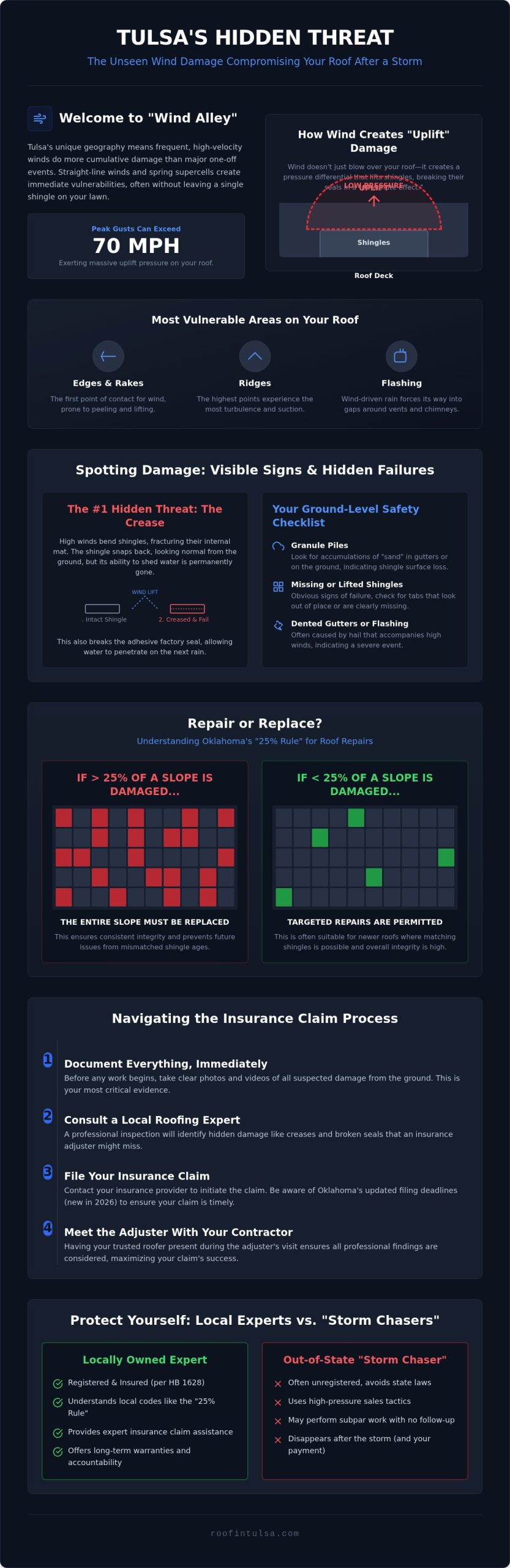
Tulsa sits in a unique geographic position often referred to as “Wind Alley.” This isn’t just a local nickname; it represents a real environmental challenge for your home’s exterior. While many homeowners expect damage only from massive tornadoes, the reality is that frequent straight-line winds and spring supercells do the most cumulative harm. If you are researching wind damage roof repair tulsa, you’re likely dealing with the aftermath of one of these high-pressure events. Unlike gradual wear, storm damage happens in an instant. It creates immediate vulnerabilities that your roof wasn’t designed to handle alone.
Tulsa’s Seasonal Wind Patterns
Our local weather follows a predictable yet punishing cycle. In the spring, supercells bring intense bursts of energy, while summer often introduces straight-line winds that can exceed 70 miles per hour. These aren’t just “breezes.” They exert massive pressure on your shingles. Even minor gusts can compromise the adhesive seals on an older asphalt shingle roof, leaving it “unzipped” and ready to fail during the next rain. Have you noticed a sudden increase in shingle granules in your gutters after a storm? Tulsa’s geographic position creates a relentless cycle of pressure and suction that forces residential roofs to endure more structural stress in a single season than most roofs face in a decade.
How Wind Interacts with Your Roofing System
Wind doesn’t just blow across a roof; it moves around it, creating areas of low and high pressure. This leads to “wind uplift,” where the air literally tries to peel the roofing material off the deck. This is often called the “parachute effect.” When a shingle edge is slightly loose, the wind gets underneath and lifts it up. If the shingle doesn’t blow away, it often snaps back down, but the internal seal is broken. Professional wind damage roof repair tulsa involves more than just swapping a few shingles; it requires a complete assessment of this uplift damage to ensure the entire system is still bonded.
Vulnerable areas typically include:
- Roof Edges and Rakes: These are the first points of contact for rushing air and are prone to peeling.
- Ridges: The highest points of your home experience the most turbulence and suction.
- Flashing: Wind-driven rain can be forced into tiny gaps around chimneys or vents that would normally stay dry.
Because wind damage is often “silent,” it is easy to confuse it with standard wear and tear. However, storm damage is a sudden-onset event that requires immediate attention. Waiting to address these issues allows water to penetrate the decking, leading to rot and mold. Taking quick action isn’t just about fixing a shingle; it’s about protecting the structural integrity of your entire home. Our goal is to act as your first line of defense, providing a “rescue” approach that stops damage before it migrates into your living room.
Spotting Wind Damage: Shingles and Hidden Seal Failures
Identifying roof damage after a storm isn’t always as simple as finding shingles in your yard. While missing tabs, torn flashing, or dented gutters are obvious signs, the most deceptive threat is the “crease.” This occurs when high-velocity winds lift a shingle upward, bending it until the internal fiberglass matting fractures. Once the wind subsides, the shingle often snaps back into place. From the ground, it looks perfectly intact. However, that horizontal line across the top of the shingle indicates a permanent failure. This hidden fracture is a primary reason why homeowners seek wind damage roof repair tulsa, as these shingles can no longer effectively shed water.
Another common but invisible issue is the loss of the adhesive bond. Every shingle relies on a factory seal to stay attached to the roof deck. The Insurance Institute for Business & Home Safety (IBHS) notes that once this seal is broken, the roof’s wind resistance drops significantly. These “unsealed” shingles are prone to fluttering during the next minor breeze, allowing rain to blow underneath. If you notice interior ceiling stains, peeling paint near the roofline, or unexpected dampness in your attic, the wind has likely already compromised your roof’s secondary defenses.
The Ground-Level Inspection Checklist
You don’t need to climb a ladder to perform an initial safety check. After the weather clears, use this checklist to spot early warning signs from the safety of your lawn:
- Granule Piles: Check the base of your downspouts. Large amounts of shingle granules indicate that the protective layer of your roof has been scrubbed away by wind and rain.
- Impact Debris: Look for fallen tree limbs, heavy branches, or even pieces of a neighbor’s fence that may have struck your roof surface. For those dealing with storm-damaged foliage, professional arborists like Statement Tree Care can safely remove hazards to prevent recurring impacts to your roofing system.
- Gutter Alignment: High winds can pull gutters away from the fascia, creating gaps where water can rot your home’s wooden framing.
Why Professional Inspections are Non-Negotiable
Hidden damage is the leading cause of denied insurance claims. If a homeowner waits months to report a leak, insurers may argue the damage was caused by neglect rather than a specific storm. Professional inspectors use specialized tools like moisture meters or thermal imaging cameras to find trapped water before it starts to drip. If you’re unsure if your roof is still protecting you, reviewing this checklist for signs you need a new roof can help you identify more subtle symptoms. Don’t let a “silent” leak turn into a costly mold problem; scheduling a professional inspection today can provide the peace of mind you need to move forward with your storm recovery.
Roof Repair vs. Full Replacement: Determining the Best Path Forward
Deciding between a quick patch and a total overhaul is one of the most significant financial choices you’ll make after a storm. In Oklahoma, the “25% Rule” acts as a primary guide for this decision. If wind damage impacts 25% or more of a specific roof section within a 12-month period, current building codes may require the entire section to be brought up to modern standards. This regulation exists to ensure your home remains safe during future high-wind events. When you are dealing with wind damage roof repair tulsa, knowing this legal threshold ensures you aren’t surprised during the insurance adjustment process. Work covering this much of a roof is considered significant and requires a licensed roofing contractor to ensure compliance with the International Residential Code.
When a Targeted Repair is Sufficient
A targeted roof repair is often the most sensible solution for newer roofs with isolated damage. We look for specific criteria to ensure a repair will actually hold and protect your equity. First, the surrounding shingles must be pliable enough to lift without breaking. Second, we must be able to find a color match that maintains your home’s curb appeal. The process involves carefully removing damaged tabs and “resealing” any wind-lifted shingles that haven’t yet creased. A well-executed repair can extend your roof’s functional life by five years or more. It is a cost-effective way to maintain protection without the commitment of a full construction project.
Signs a Full Replacement is Necessary
Sometimes, repairing a roof is like trying to patch a worn-out tire; the structural integrity just isn’t there anymore. If your shingles are brittle due to age or excessive sun exposure, they will likely fracture the moment a technician attempts to slide a new piece underneath. Widespread seal failure across multiple roof slopes is another clear indicator that the system has reached its limit. In these instances, a full replacement is safer and more economical in the long run. You can explore the differences in materials and total system requirements in our Tulsa roof replacement guide. Modern systems installed in 2026 include mandatory metal drip edges and enhanced underlayment that a simple patch cannot provide.
Think about the long-term ROI of your choice. While a repair stops an immediate leak, a new roof system offers a fresh warranty and significantly better resistance against future Oklahoma supercells. We focus on providing an honest assessment so you can choose the strategy that provides the best value for your specific situation. Whether it’s a minor fix or a total upgrade, our priority is ensuring your home stays dry and secure.
The Insurance Claim Process: A Homeowner’s Guide to Storm Recovery in Tulsa
Navigating an insurance claim can feel like learning a second language while your home is at risk. We believe that homeowners shouldn’t have to carry the administrative burden alone. Successful wind damage roof repair tulsa starts with a methodical approach to documentation. To ensure your claim is processed fairly and efficiently, follow these four foundational steps:
- Document everything: Take photos of your property from the ground and note the exact date the storm occurred.
- Contact an expert: Reach out to a tulsa roofing professional for a comprehensive damage assessment.
- File the claim: Submit the expert evidence to your insurance provider to initiate the process.
- The adjuster meeting: Ensure your contractor is present when the adjuster arrives to walk the roof.
Having a professional advocate by your side ensures that subtle issues, like the hidden seal failures we discussed earlier, aren’t overlooked by a busy adjuster. This collaboration helps streamline your wind damage roof repair tulsa project from the very beginning.
Understanding Your Policy: RCV vs. ACV
It’s essential to know if your policy is Replacement Cost Value (RCV) or Actual Cash Value (ACV). RCV policies are superior because they cover the full cost of repair or replacement at today’s market prices. In contrast, ACV policies only pay the depreciated value based on the age of your roof. This can leave a significant gap in funding for your project. You should also be aware that in Oklahoma, it is a violation of state law for a contractor to offer to “waive” or “cover” your deductible. This practice is considered insurance fraud. A trustworthy partner will always be transparent about these costs and help you understand your financial responsibilities clearly.
Working with Your Insurance Adjuster
When the adjuster visits, having a professional by your side changes the dynamic. Adjusters often handle dozens of files daily. A second set of expert eyes ensures no detail is missed. If a claim comes back underpaid, we can file a “supplement” to cover necessary items like mandatory drip edges or code-required underlayment. Under 2026 Oklahoma statutes, insurers must now acknowledge your claim within 14 days. They must also provide an estimate within 7 days of the inspection. The entire process should be completed within 90 days. We provide the precise documentation that adjusters trust to move these timelines forward efficiently. If you are ready to start your recovery, get a professional damage report to protect your claim’s success.
Expert Wind Damage Repair with Rescue Roofing Tulsa
When a storm passes, the immediate stress of protecting your family can be overwhelming. We started Rescue Roofing Tulsa to provide more than just a construction service. We offer a lifeline for homeowners in crisis. Our team provides 24/7 emergency tarping to stop active leaks immediately. This is followed by expert roof repair that restores your home’s integrity. By choosing a partner specializing in wind damage roof repair tulsa, you ensure that every shingle replaced meets our high standards for durability. We use only top tier materials designed to withstand Oklahoma’s relentless wind cycles. This ensures that the next storm doesn’t lead to a repeat of the same issues.
Our Local Tulsa Advantage
Unlike national “storm chaser” companies that disappear once the clouds clear, we are your neighbors. We have deep roots in the Tulsa metro area and a thorough understanding of local building requirements. We strictly adhere to the 2026 Tulsa building codes that prohibit “double layering” shingles and require metal drip edges on all eaves and rakes. Because we are locally owned, our warranty isn’t just a piece of paper. It is a promise from a company that will be here for years to come. We take pride in maintaining the beauty and safety of our community, one roof at a time.
The “Rescue” Repair Process
Our “Rescue” philosophy centers on simplicity and transparency. We handle the heavy lifting so you don’t have to. The process follows a methodical path to ensure no detail is missed:
- Initial Inspection: We identify both obvious and hidden failures using professional diagnostic tools.
- Insurance Claim Assistance: We provide the precise documentation adjusters need to remove the administrative burden from your shoulders.
- Precision Repair: Our crews install high quality materials that meet or exceed current International Residential Code standards.
- Final Cleanup: We perform a thorough sweep of your property to ensure your yard is safe for children and pets.
Our commitment to ethical business practices means we never cut corners on your safety. We focus on restoring your peace of mind by providing a roof that is stronger than it was before the storm. Don’t let wind damage linger and cause secondary rot or mold in your attic. Schedule your professional wind damage inspection today and let us bring your home back to its best.
Take Control of Your Storm Recovery Today
Recovering from a severe storm doesn’t have to be a source of constant anxiety. By understanding the silent threats of wind uplift and staying ahead of the 2026 Oklahoma insurance deadlines, you can protect your property’s value and your family’s safety. Whether you are dealing with a few missing shingles or widespread seal failure, a clear plan is your best defense against long-term structural issues. Identifying damage early prevents the moisture and mold that often follow a high-wind event.
When you need reliable wind damage roof repair tulsa, the right partner makes all the difference. We are locally owned and operated right here in Tulsa; we understand the unique pressure our weather puts on your home. Our team provides 24/7 emergency repair services to stop leaks immediately and offers expert insurance claim assistance to handle the complex paperwork for you. You don’t have to face the aftermath of a storm alone. We are here to restore your roof and your peace of mind.
Contact Rescue Roofing Tulsa for a Professional Wind Damage Inspection to ensure your home is fully protected for the seasons ahead.
Frequently Asked Questions
How do I know if I have wind damage on my roof?
You can identify wind damage by looking for missing shingles, torn flashing, or horizontal creases across shingle tabs. From the ground, you might notice “granule piles” at the bottom of your downspouts, which indicate the protective surface is failing. Look for shingles that appear slightly lifted or “puffy.” If you notice interior water stains on your ceilings or damp insulation in the attic, the adhesive seals have likely been compromised.
Does homeowners insurance cover wind damage roof repair in Tulsa?
Yes, most standard homeowners policies cover repairs for damage caused by sudden wind events or severe storms. You are typically only responsible for paying your policy deductible. It is important to know if you have a Replacement Cost Value (RCV) or Actual Cash Value (ACV) policy, as this determines your final payout amount. We provide insurance claim assistance to help you navigate the paperwork and ensure your claim is processed fairly.
How much wind does it take to damage a shingle roof?
Damage can occur at wind speeds as low as 50 to 60 miles per hour, especially on roofs that are more than 10 years old. While many shingles are rated for much higher speeds, the adhesive seal can fail sooner if the roof has endured multiple seasons of Oklahoma weather. In our local “Wind Alley,” even straight-line winds can create enough uplift to fracture shingle matting or pull at vulnerable roof edges.
What is a “storm chaser” and how can I avoid them?
A “storm chaser” is an out-of-state contractor who follows severe weather to find quick, high-volume work. You can avoid them by verifying a contractor’s Residential Roofing Endorsement at cib.ok.gov. Under Oklahoma House Bill 1628, which took effect July 1, 2026, all residential roofing contractors must hold this specific credential. Choosing a locally owned company ensures your warranty remains valid and your contractor is available for future support.
Can I just replace the shingles that blew off?
You can replace individual shingles if the surrounding material is still pliable and the damage is localized to a small area. However, if more than 25% of a roof section is damaged, Oklahoma building codes may require a full section replacement to ensure structural integrity. A professional inspection for wind damage roof repair tulsa will determine if a targeted patch is safe or if a larger system upgrade is necessary for your protection.
How long do I have to file a roof insurance claim in Oklahoma?
Under Oklahoma House Bill 3495, homeowners have up to 24 months from the date of loss to file a claim for hidden wind or hail damage. While you have a two-year window, it is best to act quickly. Filing sooner allows for faster processing under 2026 regulations, which require insurers to acknowledge claims within 14 days. Prompt action also prevents secondary issues like wood rot that insurance might not cover if neglected.
What should I do immediately after a wind storm hits my house?
Leaks often occur because of “unsealed” shingles or compromised flashing that looks normal from the ground. Wind uplift can break the adhesive bond, allowing rain to blow horizontally underneath the shingles. This is a common reason for wind damage roof repair tulsa. Additionally, high winds can force water into tiny gaps around chimney vents or pipe boots. Professional diagnostic tools can locate these hidden entry points before they cause major structural damage to your home.