



Table of Contents
- What Is a Roof Warranty and Why It Matters
- Roofing Workmanship Warranty vs Manufacturer Warranty
- How Long Do Roof Warranties Last
- Top Roofing Warranty Options Compared
- GAF Golden Pledge: Industry-Leading Material and Labor Coverage
- Owens Corning Platinum Protection: Lifetime Coverage for Long-Term Peace of Mind
- CertainTeed 5-Star SureStart Plus: Non-Prorated Protection Across the Board
- Malarkey Emerald Premium: Strong Wind and Algae Resistance
- IKO ShieldPRO Plus: Full System Coverage at Better Value
- Budget-Friendly Options: TAMKO and PABCO
- How to File a Roof Warranty Claim
- What Roof Warranties Cover and Common Exclusions
- Factors That Affect Warranty Validity and Duration
- Conclusion
Last Updated: August 23, 2026
What Is a Roof Warranty and Why It Matters
A roof warranty is a manufacturer’s or contractor’s promise to cover defects in materials or workmanship for a specified period. Understanding the difference is critical: one protects against factory defects, the other covers installation errors that could cause leaks and water damage.
Most people assume a roof warranty means complete protection. It doesn’t. Warranties come with exclusions, conditions, and time limits that dramatically affect claim approval. Some warranties are non-prorated, meaning you get full replacement value for the entire coverage period. Others are prorated, where your benefit decreases each year, a distinction that can cost thousands if you need a claim five years into a ten-year warranty.
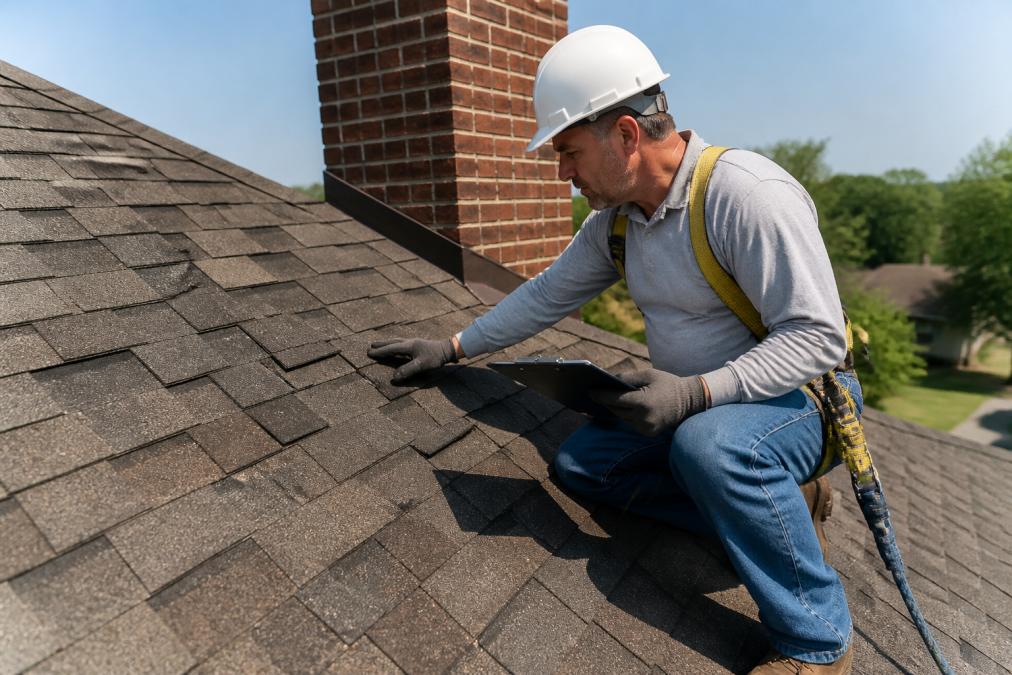
The best roofing warranty balances three factors: the length of non-prorated coverage, what’s actually covered (materials, labor, tear-off costs), and whether it transfers if you sell your home. Climate matters too. If you live in an area with high winds, hail, or algae growth, you need a warranty that specifically addresses those risks.
The best roofing warranty for homeowners covers both materials AND labor, remains non-prorated for at least 10-15 years, and explicitly includes common failure points like wind damage and algae resistance. Anything less leaves you exposed to unexpected costs.
Roofing Workmanship Warranty vs Manufacturer Warranty
These two warranties protect different things, and you need both for real coverage. Manufacturer warranties cover defects in the shingles or roofing materials themselves, factory flaws, granule loss, or material degradation. Workmanship warranties cover installation errors: improper fastening, inadequate ventilation, flashing mistakes, or other contractor mistakes that lead to leaks.
A manufacturer won’t cover a leak caused by poor installation, and a contractor won’t cover a leak caused by a defective shingle. You need both warranties active and transferable to have genuine protection.
Manufacturer warranties are backed by the shingle company and apply regardless of who installs the roof. Workmanship warranties are only as strong as the contractor backing them. If the contractor goes out of business, your workmanship warranty may be worthless. The best roofing warranty combines a strong manufacturer warranty with a contractor workmanship guarantee backed by a reputable, established company.
| Warranty Type | Covers | Duration | Transferable | Backed By |
|---|---|---|---|---|
| Manufacturer | Material defects, granule loss, shingle failure | 15-50 years | Often yes | Shingle company |
| Workmanship | Installation errors, flashing, fastening | 10-25 years | Sometimes | Contractor |
| Non-Prorated | Full replacement value | First 10-20 years | Varies | Both |
| Prorated | Decreasing value over time | After initial period | Varies | Both |
How Long Do Roof Warranties Last
Duration varies dramatically depending on the warranty type. Standard manufacturer warranties run 15-25 years on basic asphalt shingles (nrca.net). Premium warranties extend to 50 years or lifetime coverage on materials. Workmanship warranties typically max out at 25 years but often drop to 10-15 years for budget installations.
The critical distinction is between non-prorated and prorated periods. Non-prorated coverage means you get 100% of the replacement value for the entire period. Prorated coverage means your benefit shrinks each year. In a 25-year prorated warranty, a claim at year 15 might only cover 40% of replacement costs (the FTC).
Most homeowners don’t understand this until they file a claim and discover they’re responsible for thousands in costs they thought were covered. If you plan to stay in your home for 15+ years, the non-prorated period matters more than the total warranty length.
A prorated warranty on a 15-year-old roof often covers less than 30% of replacement costs. If your warranty doesn’t specify “non-prorated,” assume it’s prorated from day one.
Top Roofing Warranty Options Compared
The market offers several strong options, each with different strengths.
GAF Golden Pledge: Industry-Leading Material and Labor Coverage
GAF’s flagship warranty delivers comprehensive coverage including both materials and labor. The 50-year non-prorated material coverage combined with 25-year workmanship coverage sets a high standard. The WindProven protection extends 15 years with no wind speed limit when installation requirements are met. GAF Golden Pledge is only available through GAF Master Elite contractors, the top 2% of roofers, which typically means higher installation costs.
Best for: Homeowners planning long-term ownership who want the strongest possible coverage.
Pros:
- 50-year non-prorated material coverage
- 25-year workmanship coverage including labor
- Unlimited wind protection for 15 years
- Includes tear-off and disposal costs
- Transferable once to new homeowner
Cons:
- Only available through GAF Master Elite contractors
- Higher upfront cost
Owens Corning Platinum Protection: Lifetime Coverage for Long-Term Peace of Mind
Owens Corning Platinum Protection offers limited lifetime material coverage on eligible shingles with no expiration date on manufacturer defects. Workmanship coverage extends for the homeowner’s lifetime on single-family detached homes, though it becomes prorated after 25 years. Wind coverage extends to 130 mph, and labor, tear-off, and disposal are included during the non-prorated period.
Owens Corning Platinum Protection requires installation by an Owens Corning Roofing Platinum Preferred Contractor, which narrows your options.
Best for: Homeowners in their forever home who value maximum coverage.
Pros:
- Limited lifetime material coverage
- Lifetime workmanship coverage (prorated after 25 years)
- Covers labor, tear-off, and disposal
- Wind protection to 130 mph
- Transferable to new owner
Cons:
- Strictest contractor and product requirements
- Workmanship becomes prorated after 25 years
CertainTeed 5-Star SureStart Plus: Non-Prorated Protection Across the Board
CertainTeed’s SureStart Plus stands out for offering non-prorated coverage across the entire warranty period. Both materials and labor remain at 100% value for the full 25 years. This is rare and valuable. It’s exclusively offered by CertainTeed SELECT ShingleMaster PREMIER contractors and requires a complete CertainTeed Integrity Roof System.
Best for: Homeowners who prioritize non-prorated coverage for both materials and labor.
Pros:
- 25-year fully non-prorated coverage
- Includes labor, tear-off, and disposal
- No hidden prorated reductions
- Transferable to new owner
Cons:
- Requires complete CertainTeed Integrity system
- Only available through SELECT ShingleMaster PREMIER contractors
Malarkey Emerald Premium: Strong Wind and Algae Resistance
Malarkey’s Emerald Premium emphasizes what homeowners in high-wind or humid climates need: strong wind and algae coverage. The enhanced wind warranty covers speeds up to 130-140 mph for 15 years, and the limited lifetime algae protection addresses a real problem in warm, moist climates (nrca.net). Malarkey Certified Premium contractors are more widely available than Master Elite tiers, meaning more installer options and potentially lower costs.
Best for: Homeowners in wind-prone or humid climates seeking strong algae and wind coverage.
Pros:
- Strong wind warranty to 130-140 mph
- Lifetime algae protection with Scotchgard
- More installer options than premium competitors
- Good balance of protection and cost
Cons:
- Coverage details vary by shingle product
- Requires certified contractor for full benefits
IKO ShieldPRO Plus: Full System Coverage at Better Value
IKO’s ShieldPRO Plus delivers comprehensive system coverage, shingles, underlayment, ice shield, ridge cap, and ventilation, at a price point typically 10-15% lower than comparable GAF or Owens Corning warranties. The 50-year non-prorated system coverage with Iron Clad Protection provides genuine long-term protection without the premium cost. The 25-year combined material and workmanship coverage includes labor, and the warranty transfers once during the first 15 years with 60-day registration.
Best for: Homeowners seeking comprehensive system coverage at better value.
Pros:
- 50-year non-prorated system coverage
- 25-year material and workmanship coverage
- Full system included
- Often 10-15% less expensive than competitors
- Covers labor
Cons:
- Requires 60-day registration
- Only transferable once
Budget-Friendly Options: TAMKO and PABCO
TAMKO Heritage and PABCO warranties offer solid protection at lower price points. TAMKO provides a 10-year full start period (non-prorated) followed by prorated coverage, with wind protection to 130 mph. PABCO’s 20-year non-prorated coverage on select shingle lines is genuinely strong for the price point.
TAMKO Best for: Budget-conscious homeowners seeking basic protection with good wind resistance.
PABCO Best for: Homeowners wanting longer non-prorated coverage at a lower price.
Pros (both):
- Significantly lower cost than premium warranties
- Solid wind protection
- PABCO offers 20-year non-prorated coverage
- Both fully transferable
Cons:
- Shorter non-prorated periods than premium options
- Less comprehensive system coverage
| Warranty | Non-Prorated Period | Material Coverage | Workmanship Coverage | Wind Protection | Best For |
|---|---|---|---|---|---|
| GAF Golden Pledge | 50 years | Yes | 25 years | Unlimited | Long-term homeowners, premium protection |
| Owens Corning Platinum | Lifetime | Yes | Lifetime (prorated after 25y) | 130 mph | Forever homes, maximum coverage |
| CertainTeed SureStart Plus | 25 years | Yes | 25 years | Included | Non-prorated priority, complete systems |
| Malarkey Emerald | 10-20 years | Yes | 25 years | 130-140 mph | Wind/algae-prone areas, flexibility |
| IKO ShieldPRO Plus | 50 years | Yes | 25 years | Included | System coverage, better value |
| TAMKO Heritage | 10 years | Yes | Prorated | 130 mph | Budget-conscious buyers |
| PABCO Limited Lifetime | 20 years | Yes | Prorated | 110-130 mph | Budget with longer non-prorated coverage |
How to File a Roof Warranty Claim
Filing a warranty claim requires documentation, timing, and understanding what your specific warranty actually covers. Most homeowners fail claims not because the damage isn’t covered, but because they don’t follow the process correctly or lack proper documentation.
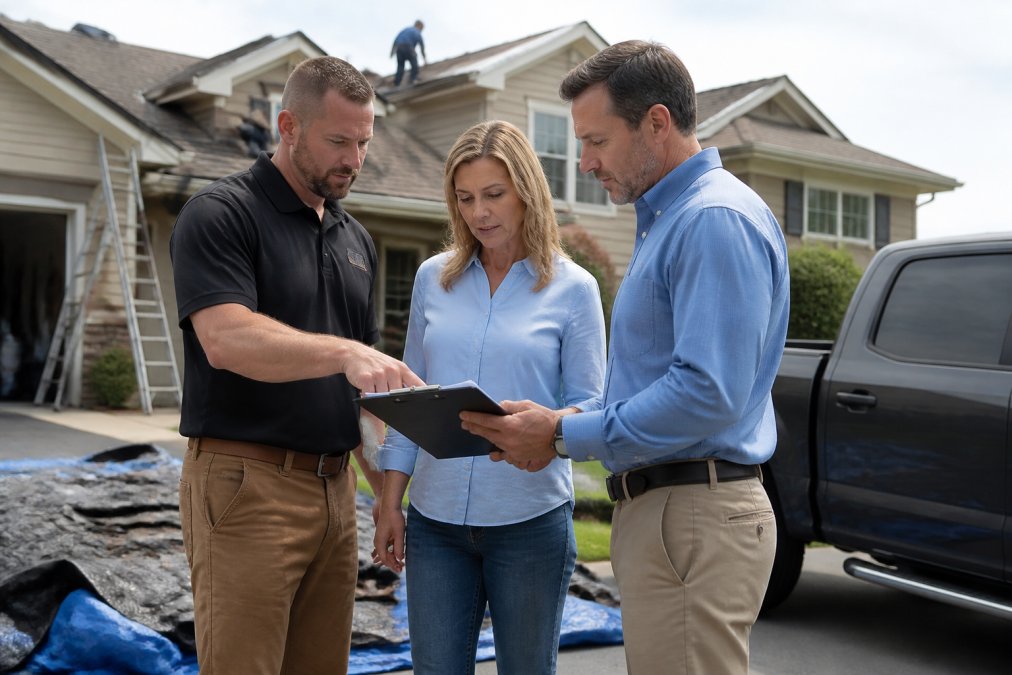
Document the damage immediately with photographs from multiple angles, including close-ups of the defect. Keep installation and maintenance records, as warranties often require proof of proper maintenance. Contact your warranty provider within the timeframe specified in your warranty documents, most require claims within a set period after discovering damage.
Get a professional inspection. Your contractor or the manufacturer’s representative will inspect the damage to determine if it’s covered. Provide all requested documentation: purchase receipts, installation records, maintenance logs, photographs, and the inspection report. Incomplete documentation is a common reason for claim denial.
File claims immediately after discovering damage. Delays of more than 30 days often result in denial, even for covered damage. Document everything with photographs and keep all receipts and maintenance records in one place.
What Roof Warranties Cover and Common Exclusions
Most homeowners are shocked to discover what their warranty doesn’t cover. A typical manufacturer warranty covers material defects: manufacturing flaws, granule loss, shingle cracking, or failure of the shingle itself. It does not cover installation errors, weather damage beyond specific parameters, or poor maintenance.
Wind damage coverage varies dramatically. Some warranties cover unlimited wind damage; others cap coverage at specific wind speeds (110 mph, 130 mph) or exclude wind damage entirely after the initial coverage period. Algae and mold growth are covered under some warranties and excluded under others.
Common exclusions across all warranties include poor maintenance, improper ventilation, improper installation, cosmetic issues, acts of God beyond specific thresholds, foot traffic damage, modifications without proper flashing, and tree damage. Read the fine print before signing and ask your contractor specifically what’s excluded.
Factors That Affect Warranty Validity and Duration
Several factors determine whether your warranty remains valid and how long it actually lasts.
Professional installation is non-negotiable. Most warranties require installation by a certified or approved contractor. DIY installation or work by an unlicensed contractor voids the warranty immediately.
Maintenance records prove you’ve upheld your end. Keep documentation of all roof inspections, cleanings, and repairs. Manufacturers can deny claims if they determine you failed to maintain the roof properly.
Climate affects warranty duration in practice. A roof in a harsh climate with high winds, hail, or intense UV exposure will reach the end of its functional life before a roof in a mild climate.
Transferability depends on the specific warranty. Some warranties are fully transferable to new owners. Others transfer only once or with reduced coverage.
Roof ventilation requirements are often overlooked. Many warranties require adequate attic ventilation, typically one square foot of ventilation per 150 square feet of attic space. Inadequate ventilation voids coverage.
Prorated periods kick in regardless of actual roof condition. A 25-year prorated warranty means full coverage for the first 10 years and declining coverage thereafter, even if the roof hasn’t experienced any damage.
Conclusion
Choosing the best roofing warranty for homeowners requires balancing coverage depth, duration, and cost. The strongest warranties offer 20+ years of non-prorated coverage on both materials and labor, include wind and algae protection, and are backed by established manufacturers or contractors who will honor claims years down the road.
Rescue Roofing helps homeowners navigate warranty selection and claim filing. Our team assists with insurance claim coordination, communicates directly with adjusters, and ensures you understand exactly what protection you have. We offer flexible financing options to make premium warranties accessible and provide the professional installation required to keep warranties valid. When you need a roof warranty claim handled correctly, call Rescue Roofing to protect what matters most.
Frequently Asked Questions
What is the difference between a manufacturer warranty and a workmanship warranty?
A manufacturer warranty covers defects in the roofing materials themselves, such as shingle deterioration or manufacturing flaws. A workmanship warranty covers installation errors made by the contractor, including improper nailing, flashing mistakes, or ventilation issues. Most comprehensive roofing warranties include both types of coverage. Manufacturer warranties typically last 20-50 years, while workmanship warranties often cover 10-25 years. Both are essential for complete roof protection.
How long does a 25-year roofing warranty really last?
A 25-year warranty does not guarantee your roof will last 25 years. The term refers to the coverage period for defects and workmanship. Most 25-year warranties are prorated after 10-15 years, meaning your coverage decreases over time. Actual roof lifespan depends on climate, maintenance, installation quality, and material type. Asphalt shingles typically last 15-20 years in real-world conditions. Non-prorated warranties offer better protection than prorated ones during the same period.
Are roofing warranties worth the cost?
Roofing warranties are worth the investment if you plan to stay in your home long-term and want protection against installation errors and material defects. They provide peace of mind and transfer value if you sell. However, warranties don't cover wear and tear, poor maintenance, or storm damage beyond coverage limits. Compare the cost of extended warranties against potential repair expenses. Professional installation by a certified contractor is often more valuable than an extended warranty alone.
What voids a roofing warranty?
Common voiding conditions include improper installation by non-certified contractors, failure to perform routine maintenance, foot traffic on the roof without protective coverings, and damage from severe weather beyond the warranty's wind or impact limits. Using unapproved materials or performing unauthorized repairs also voids coverage. Lack of proper roof ventilation, missing documentation of professional installation, and failure to register the warranty within required timeframes can eliminate coverage. Always review the specific voiding conditions in your warranty terms.
Can you transfer a roofing warranty to a new owner?
Most premium roofing warranties are transferable to a new homeowner, though some require a transfer fee or have specific conditions. Transferability typically applies once during the warranty period, and coverage may shift to prorated protection after transfer. Budget-friendly warranties may not be transferable at all. Check your warranty documentation for transfer eligibility and required steps. A transferable warranty increases your home's resale value and appeals to buyers seeking protection against roof defects.
This article was written using GrandRanker