



Table of Contents
- Roof Leak Repair vs Full Replacement: Key Differences
- Signs of Roof Water Damage That Determine Your Next Step
- When Roof Leak Repair Makes Sense
- When Full Roof Replacement Is Necessary
- Average Roof Replacement Cost vs Repair Expenses
- Roof Insurance Claim Process for Repairs and Replacements
- Repair vs Replacement: Decision Framework
- Conclusion
Last Updated: August 18, 2026
Roof Leak Repair vs Full Replacement: Key Differences
The decision between roof leak repair and full replacement determines your immediate expenses and long-term protection. Understanding when to repair versus replace requires evaluating the extent of damage, your roof’s age, materials involved, and insurance coverage.
At Rescue Roofing, we help homeowners navigate this decision through thorough inspection. A small, localized leak on a relatively new roof warrants targeted repair. But if your roof is aging, showing multiple problem areas, or has suffered significant storm damage, replacement often makes more financial sense over time.
This guide walks you through key indicators pointing toward repair versus replacement, breaks down cost dynamics, explains insurance claims for both scenarios, and provides a framework for making the right decision.
Signs of Roof Water Damage That Determine Your Next Step
Water damage appears in predictable patterns. Learning to read these signs tells you whether you’re dealing with a localized problem or widespread deterioration.
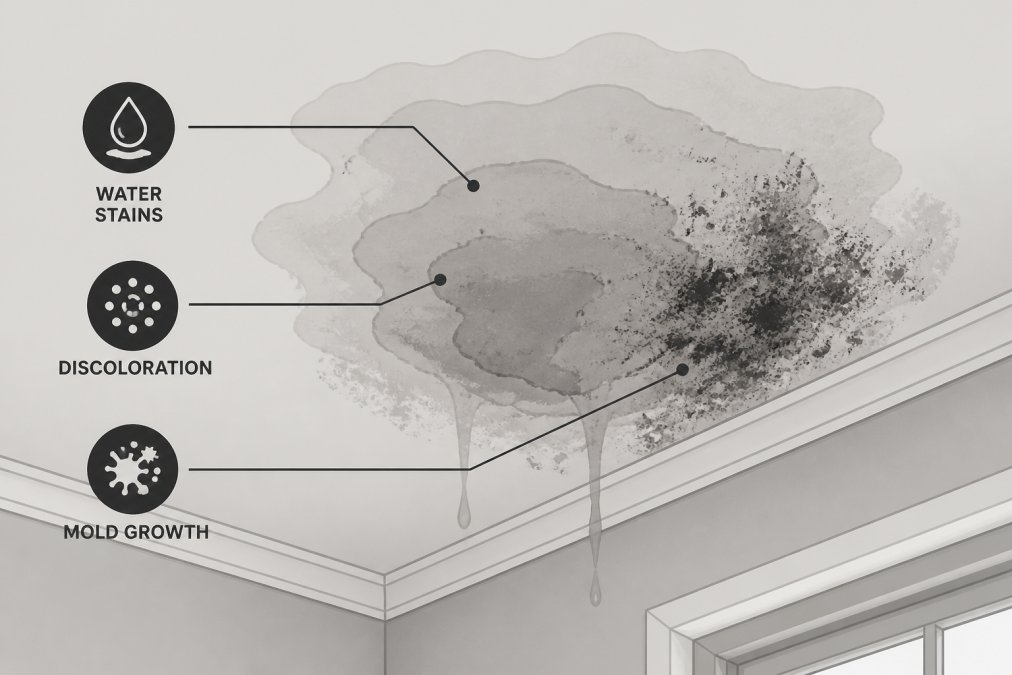
Interior indicators of active leaks
Water stains on ceilings and upper walls are obvious signals, but water often travels along structural members before dripping into living spaces. By the time you spot a stain, moisture may have already saturated the underlayment and affected framing above.
Soft spots in drywall indicate saturation. Press gently, if the material gives way or feels spongy, water has pooled there. Peeling paint, bubbling wallpaper, and musty odors in attics signal ongoing moisture and mold growth. Dark staining around roof penetrations (vents, chimneys, flashing) points to compromised sealing at those specific points. Scattered staining across multiple ceiling areas suggests broader roof failure rather than isolated flashing issues.
Exterior damage patterns and deterioration
Curling or cupped shingles indicate asphalt has lost flexibility and no longer sheds water effectively. Granule loss, visible as bare spots, accelerates deterioration and appears as granules collecting in gutters.
Missing or damaged flashing around chimneys, vents, skylights, and roof edges is a primary leak culprit. Visible gaps between flashing and roof material are red flags. Sagging roof sections indicate structural compromise from prolonged water exposure and typically require replacement. Widespread missing shingles expose the underlayment, causing rapid water infiltration.
When Roof Leak Repair Makes Sense
Repair is the right choice when damage is localized, your roof has years of serviceable life remaining, and repair costs are significantly less than replacement.
Extent of damage and localized problems
A single leak from failed flashing, a small puncture, or a few missing shingles in one area are classic repair scenarios. If damage is confined to less than 10 percent of the roof surface and the underlying deck and framing are sound, repair preserves your investment.
Repair makes sense when your roof is relatively young, typically under 15 years old for asphalt shingles. At that age, most of the roof’s lifespan remains. Spending a few hundred dollars to fix a localized problem makes sense when you have another decade of service ahead.
Storm damage often creates repair-eligible scenarios. If damage is contained and your insurance covers it, repair is economical. Your deductible and coverage limits determine whether you pay out of pocket.
Structural integrity and roof age considerations
Before committing to repair, verify the roof deck and structural framing are intact. A professional inspection using moisture detection tools can identify hidden water damage. If the deck is dry and structurally sound, repair is viable.
Asphalt shingles typically last 15-20 years; metal roofing lasts 40-60 years. If your roof is in the first half of its expected lifespan, repair makes financial sense. If your roof is approaching or past the midpoint, replacement may be more cost-effective than repairing a system that will need replacement within a few years.
When Full Roof Replacement Is Necessary
Replacement becomes logical when damage is extensive, your roof is aging, or multiple problem areas indicate systemic failure.
Multiple leaks and widespread damage
Two or more active leaks in different areas suggest the roof has lost its water-shedding capacity across a broader section. Widespread missing or damaged shingles across 20 percent or more of the roof surface indicate systemic failure. Patching individual spots becomes ineffective when the material has reached end of life.
Storm damage affecting multiple sections, scattered missing shingles, multiple flashing failures, and visible deck damage often justify replacement. Insurance may cover replacement if damage is severe enough, which can shift the financial equation dramatically.
Roof lifespan and material degradation
If your roof is 18+ years old (for asphalt shingles), replacement is worth serious consideration even with a single active leak. The remaining lifespan is short, and repair buys only 2-3 years before complete failure.
Curling, cupping, and granule loss across the entire roof surface indicate end-of-life degradation. Repair can’t restore the material’s original water-shedding capability. Visible algae or moss growth combined with other deterioration signs suggests moisture retention issues throughout the roof system, indicating systemic problems that replacement addresses.
Average Roof Replacement Cost vs Repair Expenses
The financial comparison depends on damage scope, roof age, insurance coverage, and long-term ownership plans.
Factors that influence repair and replacement pricing
Repair costs depend on damage type and location. Flashing repair is relatively straightforward and less expensive than extensive shingle replacement. The number of shingles needing replacement, accessibility, and whether the underlying deck requires repair all affect costs.
Replacement pricing depends on total square footage, roofing material selected, roof pitch and complexity, local labor costs, and whether old roofing needs removal. Material choice matters significantly, asphalt shingles are most affordable, while metal, tile, or composite materials cost more. Steep pitches, multiple levels, or difficult access points increase labor time and cost.
Cost-benefit analysis for long-term ownership
Consider how long you plan to stay in the home. If selling within three years, modest repair may suffice. If staying ten years or longer, replacement’s longer lifespan provides better value per year of protection.
Insurance plays a critical role. If your policy covers damage, replacement may cost only your deductible. Energy efficiency and home value matter too, a new roof improves curb appeal and can increase resale value. Financing options affect the decision; many contractors offer flexible financing for replacement, making monthly payments more accessible than large lump-sum repair costs.
Roof Insurance Claim Process for Repairs and Replacements
Insurance coverage can dramatically change the financial equation.
Filing a claim and working with adjusters
Contact your insurance company promptly after discovering damage. Document the damage with photos and video before making repairs. The insurance company will assign an adjuster to inspect damage, assess coverage, and determine the claim amount.
Get a written estimate from a qualified contractor. If the adjuster’s assessment and your contractor’s estimate differ, you can request a re-inspection or hire an independent adjuster to resolve the discrepancy. A detailed, professional estimate from a local contractor strengthens your position.
Coverage limits and deductible impacts
Your deductible is what you pay out of pocket. If repair costs are less than your deductible, you pay yourself. If costs exceed your deductible, insurance covers the difference up to your policy limits.
Some policies include separate deductibles for wind or hail damage. Coverage limits cap the maximum the insurer will pay. Depreciation affects claim payout, older roofs may receive actual cash value (depreciated) rather than replacement cost. Newer policies often include replacement cost coverage, which pays replacement cost without depreciation.
Repair vs Replacement: Decision Framework
Making the right choice requires evaluating multiple factors systematically.
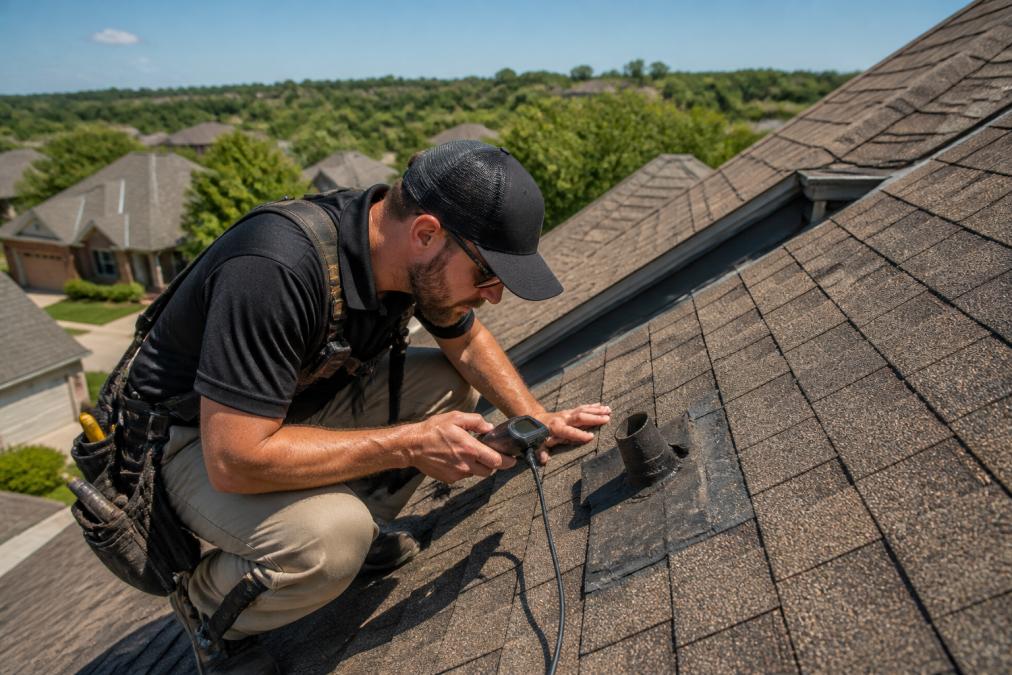
Assessment checklist and professional inspection
Start with a professional roof inspection. Rescue Roofing provides accurate aerial quotes and thorough inspections identifying both visible and hidden damage. An experienced inspector detects moisture in the roof deck, assesses structural integrity, and determines whether you’re dealing with localized or systemic failure.
Document your roof’s age and material type. Assess the extent of damage, is it confined to one area or scattered across multiple sections? Evaluate your roof’s condition beyond the current leak, looking for curling shingles, granule loss, or moss growth. Consider your timeline and how long you plan to stay in the home.
ROI calculation and warranty considerations
Calculate the cost per year of remaining roof life. If repair costs $500 and your roof has 10 years remaining, that’s $50 per year. If replacement costs $12,000 and adds 20 years, that’s $600 per year. Longer remaining lifespan improves replacement’s ROI.
Factor in financing, monthly replacement payments may be comparable to sporadic repair costs over time. Understand warranty coverage; new roofs typically come with manufacturer warranties (15-30 years for shingles) and contractor workmanship warranties (5-10 years). Repair work may carry shorter warranties. Ask about warranty transferability, which can add value if you sell the home.
The choice between roof leak repair and full replacement depends on damage scope, your roof’s age, insurance coverage, and long-term property plans. Localized damage on a relatively young roof warrants repair. Widespread deterioration, multiple leaks, or a roof nearing end of life points toward replacement. A professional inspection is essential, it provides the data needed to make a confident decision.
Rescue Roofing offers free inspections and accurate aerial quotes to help you understand your options. We assist with insurance claims, communicate directly with adjusters, and offer flexible financing for replacement projects. Whether your situation calls for repair or replacement, our 24-hour availability and detailed assessment process ensure you get the right solution. Contact Rescue Roofing today for a professional evaluation and clear guidance on your next steps.
Frequently Asked Questions
Is it better to patch a roof or replace it?
The choice depends on the extent of damage and your roof's age. Patching works for isolated leaks affecting less than 30% of the roof surface, especially on roofs under 15 years old. Full replacement becomes necessary when multiple leaks exist, the roof shows widespread deterioration, or it's nearing the end of its lifespan. A professional inspection identifies hidden structural damage that determines whether repair or replacement protects your home better long-term.
How do I know if my roof needs a full replacement?
Signs include curling or missing shingles, granule loss, sagging roof deck, multiple active leaks, mold growth in the attic, or an age exceeding 20 years. If water infiltration has caused dry rot, compromised ventilation, or attic insulation damage, replacement prevents recurring problems. The 25% rule states that if repairs exceed 25% of replacement cost, replacement is the smarter investment. Professional contractors use moisture detection and aerial quotes to assess whether your roofing system retains structural integrity.
Does homeowners insurance cover roof leak repairs and replacements?
Insurance typically covers sudden damage from storms, hail, or wind, but not wear-and-tear or neglect. Coverage depends on your policy limits, deductible, and the cause of damage. Filing a claim requires documentation, photos, and a contractor estimate. Insurance adjusters may require permits and building codes compliance. Deductibles often range from $500 to $1,500, reducing your reimbursement. Working with a contractor experienced in insurance claim navigation ensures proper documentation and maximizes your coverage benefits.
What factors affect the cost of roof repair versus full replacement?
Repair costs depend on damage location, leak severity, and material type (asphalt shingles cost less to patch than metal or slate). Replacement pricing reflects roof pitch, square footage, material choice, underlayment quality, flashing installation, and labor complexity. Storm damage, hidden structural issues discovered during work, and local building permits also impact final costs. Financing options and warranty coverage vary by contractor. Request detailed estimates from multiple professionals to compare pricing and understand what's included in each quote.
This article was written using GrandRanker