

Table of Contents
- Aerial Roof Quotes vs Traditional Inspections: Side-by-Side Comparison
- How Aerial Roof Quotes Work
- Understanding Drone Roof Inspection Cost
- Insurance Claim Roof Inspection Requirements
- How to Prepare for a Roof Inspection
- Safety, Speed, and Efficiency Comparison
- Limitations of Aerial Technology and When to Use Physical Inspection
- Thermal Imaging and Hidden Damage Detection
- Frequently Asked Questions
Last Updated: August 31, 2026
Aerial Roof Quotes vs Traditional Inspections: Side-by-Side Comparison
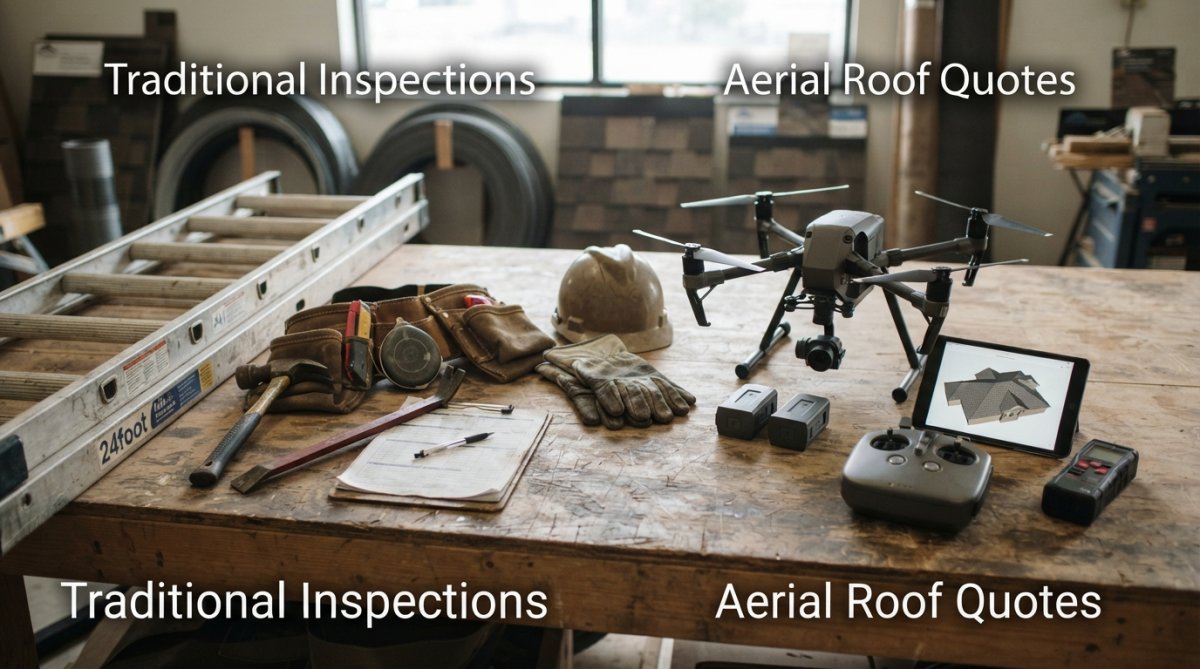
When your roof needs assessment, you’re facing a choice between aerial roof quotes and traditional inspections. Aerial roof quotes have transformed how contractors measure and estimate roofing projects, but they’re not a universal replacement for boots-on-the-ground inspections. The real question isn’t which method is “better”, it’s which one fits your specific situation, timeline, and risk tolerance.
At Rescue Roofing, we utilize accurate aerial quotes for initial estimates and insurance documentation, and conduct thorough inspections to identify damage that may not be visible from above. For most homeowners dealing with storm damage or insurance claims, combining both methods provides the most complete picture.
| Aspect | Aerial Roof Quotes | Traditional Inspections |
|---|---|---|
| Accuracy | 98%+ for measurements and area calculations | 100% for identifying granule loss, moss, flashing issues |
| Safety | No worker exposure to fall risk | Inspector on roof; requires fall protection |
| Speed | 24-48 hours for report | 1-2 hours on-site; scheduling may take days |
| Cost | Lower per-quote (pricing depends on provider) | Labor-intensive; higher upfront cost |
| Hidden Damage Detection | Limited; relies on visual surface analysis | Excellent; hands-on examination of all components |
| Insurance Claim Support | Excellent documentation; adjusters trust aerial data | Adjusters may request additional documentation |
| Weather Dependency | Requires clear skies; satellite imagery unavailable for new construction | Can work in most conditions; limited by safety |
| Best For | Quick estimates, insurance documentation, material ordering | Warranty verification, hidden damage assessment |
How Aerial Roof Quotes Work
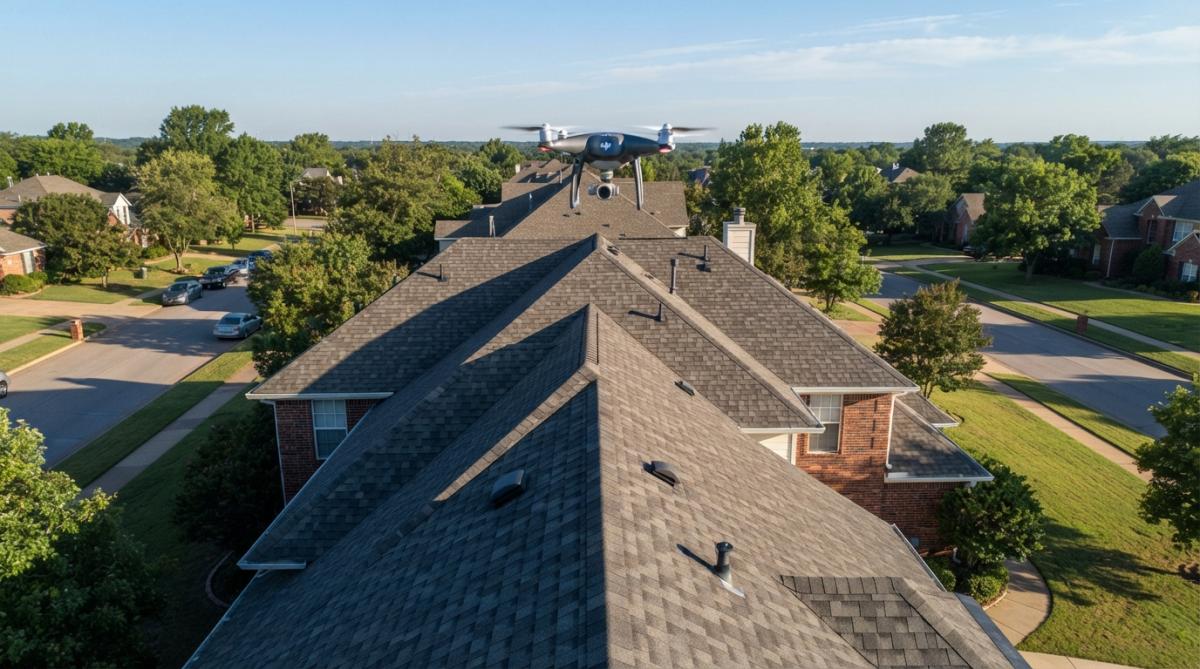
Aerial roof quotes use satellite imagery, drone photography, or smartphone-based 3D modeling to measure your roof without climbing. The technology generates precise dimensions, pitch calculations, and material estimates from a computer. Platforms like EagleView use validated satellite data to extract roof dimensions with 98.77% accuracy. RoofSnap uses a draw-it-yourself approach where contractors trace roof outlines on aerial photos, then software calculates materials. HOVER converts smartphone photos into 3D property models for ground-level measurement. DroneDeploy appeals to contractors operating their own drones, automating flight planning and capturing thermal data alongside visible-light imagery.
Accuracy and Data Quality
Aerial roof quotes are remarkably consistent. EagleView achieves 98.77% precision on residential properties, which matters for insurance claims where adjusters need confidence in damage assessment and material estimates.
However, accuracy has boundaries. Aerial systems measure visible roof surfaces, shingles, flashing, and geometry, but cannot detect rotted sheathing, moss in valleys, or whether previous repairs meet code. They see what a human on the ground would see from ten feet away: surface condition only.
For new construction without satellite imagery, aerial roof quotes become unreliable. HOVER and RoofSnap work around this limitation by relying on current photography rather than archived satellite data. EagleView explicitly notes that reports are “unusable” for properties without available imagery.
Data quality also depends on lighting and image resolution. Overcast days produce flat lighting that obscures details like granule loss. When you receive an aerial roof quote, check what source imagery was used, it directly affects reliability.
Understanding Drone Roof Inspection Cost
Cost varies significantly by platform. EagleView charges $15 to $87 per report depending on property complexity. RoofSnap offers $13 per report on a pay-as-you-go basis or $52 per user monthly. HOVER charges $29 per job or $999 annually for unlimited jobs. DroneDeploy costs $499 per month per user, billed annually.
For homeowners, contractors typically absorb aerial estimate costs as part of their bidding process. You shouldn’t be charged directly for an aerial estimate. The real cost question emerges when combining aerial estimates with traditional inspections. Rescue Roofing includes accurate aerial quotes as part of comprehensive assessment, so you’re not paying extra, it’s how we ensure precise material estimates and documentation that insurance companies trust.
Insurance Claim Roof Inspection Requirements
Insurance adjusters require clear, timestamped documentation showing your roof’s condition at the time of loss. For storm damage claims, this means photos of damage, measurements of affected areas, and repair cost estimates. Aerial roof quotes provide exactly this: high-resolution imagery with timestamp metadata, precise area calculations, and detailed reports that adjusters trust.
The American Insurance Association requires that damage assessment be “reasonable and supported by evidence (fbi.gov).” Aerial imagery satisfies this standard because it’s objective, repeatable, and creates a permanent record. An adjuster can review the same imagery months later and verify the original assessment.
Most adjusters accept both aerial and traditional documentation. However, they favor reports that include measurements and area calculations, exactly what aerial roof quotes provide automatically. For complex claims, large commercial roofs, or damage affecting multiple systems, adjusters often request drone footage or thermal imaging to reveal moisture trapped under the roof surface.
The approval process typically takes 3-5 business days once documentation is complete (naic.org). Aerial roof quotes don’t accelerate this timeline, but they reduce requests for additional information.
How to Prepare for a Roof Inspection
Clear your roof of obstacles before inspection. Branches, satellite dishes, or HVAC equipment can obscure roof sections in photographs. For traditional inspections, ensure the inspector has safe access with a ladder in good condition and clear gutters.
Document the current condition yourself with ground-level photos. If you notice specific damage, missing shingles, or areas of concern, note the location. This gives the inspector context and ensures they don’t miss what you’ve already spotted. aerial photography technology.
If filing an insurance claim, gather documentation of the event that caused damage: weather reports for storms, photos of fallen trees, or dated records of water intrusion. This context helps adjusters understand the claim.
For aerial roof quotes, check the weather forecast. Clear skies produce better imagery and faster turnaround. Ask the contractor whether they’ll use current satellite passes or older archived data.
Safety, Speed, and Efficiency Comparison
Aerial roof quotes eliminate the safety risk of climbing. The National Institute for Occupational Safety and Health reports that falls remain a leading cause of injury in roofing work (the CDC). By eliminating the need for workers on the roof during initial assessment, aerial quotes reduce injury risk.
Aerial roof quotes are objectively faster. Once imagery is available, measurement takes hours, not days. You can have a complete estimate within 24-48 hours. Traditional inspections require scheduling, waiting for availability, and conducting the on-site visit, 3-7 days minimum, often longer during peak seasons.
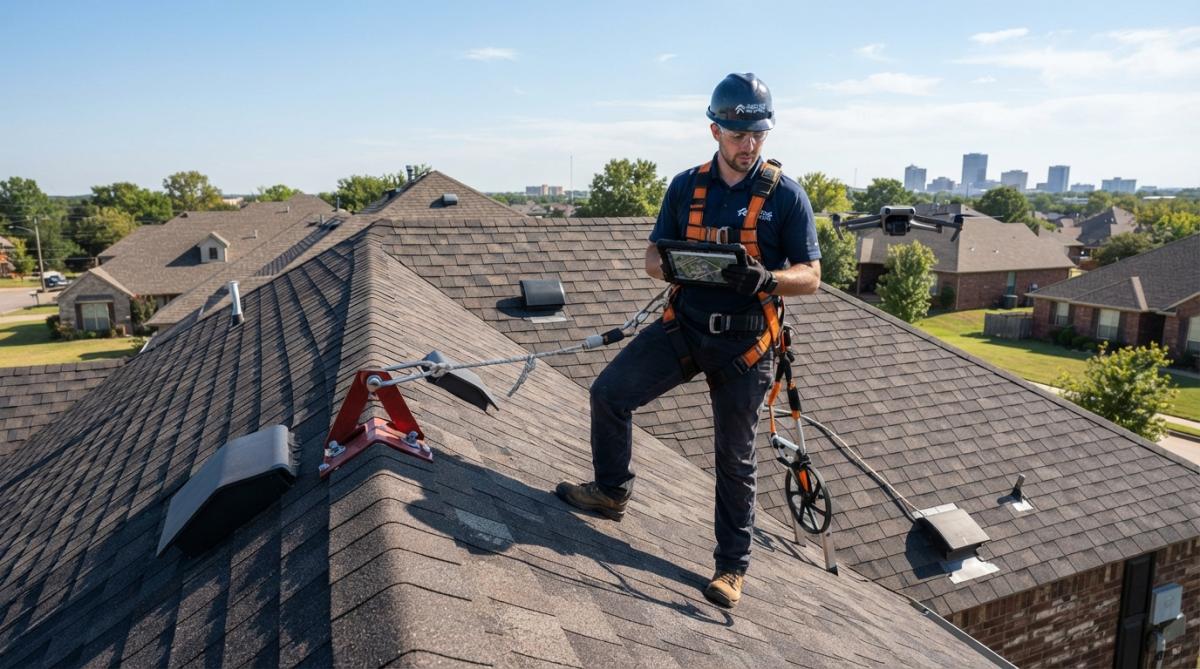
Traditional inspections require fall protection equipment and trained personnel, which takes time and adds cost. But this hands-on approach catches details no camera can: soft spots indicating rot, granule loss in gutters, and flashing integrity.
For speed-critical situations like storm damage assessments or tight insurance claim deadlines, aerial roof quotes are highly efficient. For thoroughness and confidence in identifying hidden deterioration, traditional inspections provide what aerial quotes cannot.
Limitations of Aerial Technology and When to Use Physical Inspection
Aerial roof quotes have genuine constraints. Satellite imagery cannot distinguish between minor granule loss and advanced deterioration, both may appear identical from above. Thermal imaging can help by revealing temperature variations, but basic visible-light imagery has limits.
Weather and seasonal factors affect data quality. Cloud cover, snow, or recent rain obscures detail. Satellite imagery is typically 2-4 weeks old; if significant weather has occurred since the last pass, imagery may not reflect current conditions. New construction properties have no available satellite data.
Aerial systems also struggle with complex roof geometry. Hip roofs, multiple valleys, dormers, and unusual angles require careful manual tracing or sophisticated 3D modeling.
Choose a traditional physical inspection when:
- Your roof has complex geometry or multiple structures
- You suspect hidden damage (water stains, soft spots, or previous poor repairs)
- The roof is newly constructed and satellite imagery doesn’t exist
- You need warranty verification or condition assessment for a property sale
- Weather conditions have changed significantly since the last available imagery
- Your roof has specialized materials (slate, tile, metal) requiring expert evaluation
- You’re dealing with an aging roof where deterioration may be internal
For most homeowners, combining both methods works best. Start with an aerial roof quote for fast, accurate measurement and documentation. Follow up with a traditional inspection if questions arise or if you’re planning major work.
Thermal Imaging and Hidden Damage Detection
Thermal imaging reveals what visible-light photography cannot: temperature variations indicating moisture, missing insulation, or material failure. Wet roof sections retain moisture longer than dry areas and appear distinctly different in thermal imagery. This technology identifies trapped water under the roof surface, pinpoints flashing problems before they become visible leaks, and reveals insulation failures.
DroneDeploy’s platform includes thermal passes as part of their drone operation suite. For complex claims or properties with suspected moisture issues, thermal imaging provides objective evidence of damage extent. Insurance adjusters recognize thermal data as credible evidence, which can accelerate claim approval.
The limitation of thermal imaging is that it shows temperature differences, not necessarily the cause. Interpreting thermal data requires expertise. For most residential roofs, thermal imaging isn’t necessary unless investigating water damage. For commercial properties or flat roofs where moisture infiltration is common, thermal imaging adds significant value.
Choosing between aerial roof quotes and traditional inspections doesn’t have to be either-or. The most thorough approach combines both: aerial roof quotes for fast, accurate measurement and documentation, followed by a physical inspection if questions remain or if you’re planning major work.
Rescue Roofing uses accurate aerial quotes as the foundation of every assessment, then conducts thorough inspections to verify findings and identify hidden damage. This combination gives you complete confidence in your roof’s condition and ensures your insurance claim is documented with precision. Contact Rescue Roofing for a comprehensive roof assessment that combines both methods, we’ll help you understand exactly what your roof needs and guide you through insurance claims with confidence.
Frequently Asked Questions
Q: Are aerial roof quotes as accurate as traditional on-site inspections?
A: Aerial roof quotes using high-resolution imagery and 3D modeling can achieve accuracy within a few inches for measurements and material estimates. Industry-standard platforms like EagleView report validated accuracy rates of 98.77%. However, traditional physical inspections detect granule loss, moss colonization, flashing condition, and subsurface damage that aerial imaging alone may miss. For comprehensive assessments, many insurers and contractors recommend combining both methods, especially for older roofs or storm damage claims.
Q: What factors affect drone roof inspection cost?
A: Drone roof inspection pricing depends on the service provider, property size, roof complexity, and whether thermal imaging is included. Aerial measurement services like RoofSnap charge $13 per report on pay-as-you-go plans, while HOVER charges $29 per job. Thermal imaging capabilities and detailed 3D modeling increase costs. For comprehensive inspections combined with traditional assessment, contact Rescue Roofing for a customized quote based on your property’s specific needs.
Q: What do insurance companies require for roof inspection documentation?
A: Insurance adjusters typically require high-resolution photos, measurements of damaged areas, documentation of roof age and condition, and detailed repair estimates. Many insurers accept aerial imagery and orthomosaic mapping as supporting documentation, particularly for hail or wind damage claims. However, they often require a traditional physical inspection by a licensed adjuster or contractor for final approval. Clear labeling of damage locations, roof pitch, and structural integrity assessment strengthens claims. Working with an experienced contractor like Rescue Roofing who communicates directly with adjusters ensures your documentation meets specific insurer requirements.
Q: How should I prepare my property for a roof inspection?
A: Before a roof inspection, clear gutters and downspouts of debris, trim tree branches overhanging the roof, and document any visible damage or water stains inside your home. Provide the inspector access to the attic or interior spaces if needed to check for moisture intrusion. Have your roof’s age and previous repair history available. For aerial inspections, ensure weather conditions are clear and remove any obstacles from the inspection area. For physical inspections, ensure safe access and clear pathways. Rescue Roofing’s team will guide you through preparation during the scheduling call.
Q: Can aerial inspections detect storm damage as effectively as manual inspections?
A: Aerial inspections excel at capturing large-scale damage patterns, hail impact distribution, and overall roof condition across the entire surface. Thermal imaging can reveal moisture trapped under shingles from wind damage. However, manual inspections on-site detect small tears, flashing damage, granule loss severity, and localized deterioration that drones may not clearly resolve. For comprehensive storm damage assessment, combining both methods, aerial documentation for scope and insurance claims, plus physical inspection for detailed damage identification, provides the most reliable damage report.
This article was written using GrandRanker