



Table of Contents
- What Causes Hidden Roof Deck Damage? The Usual Suspects
- Early Signs of Roof Deck Rot You Shouldn’t Ignore
- How Attic Ventilation and Roof Health Are Connected
- Why Small Leaks Lead to Major Structural Damage
- A Professional Roof Inspection Checklist for Homeowners
- How to Document Hidden Damage for Insurance Claims
- Conclusion: Protect Your Roof System Before It’s Too Late
- Frequently Asked Questions
Last Updated: September 4, 2026
What Causes Hidden Roof Deck Damage? The Usual Suspects
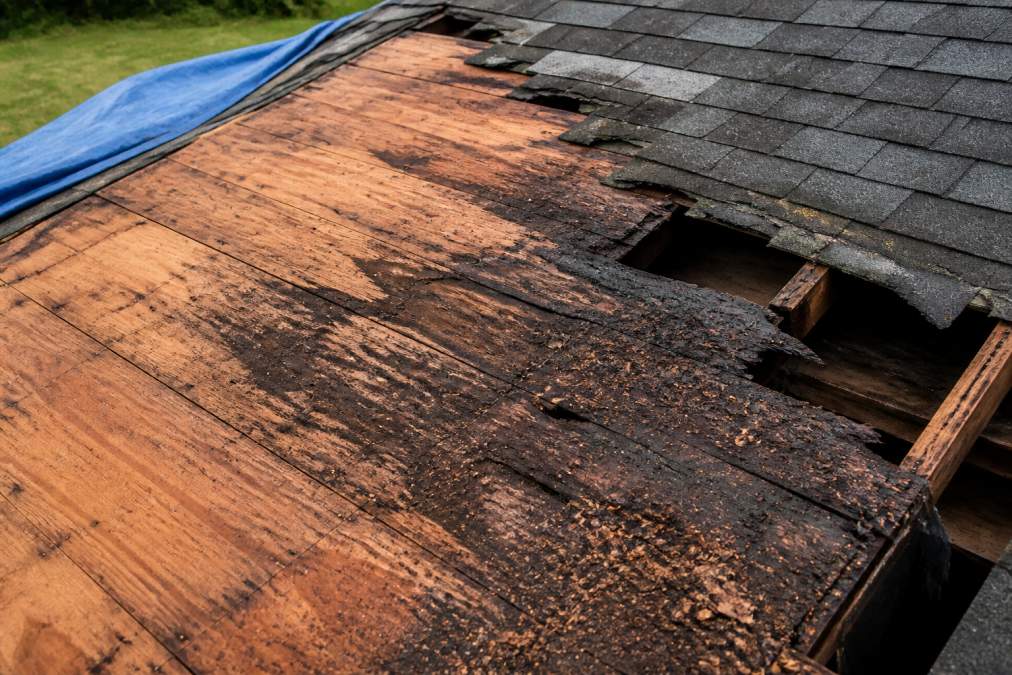
Roof deck damage is the silent failure that compromises your entire roof system, often before a single shingle looks out of place. At Rescue Roofing, we see homeowners discover this issue only after water stains appear on ceilings or a sagging roof line becomes visible from the street.
The most common culprits fall into two categories: water intrusion through failed components and moisture buildup from poor ventilation. Both create conditions where wood rot, delamination, and fastener corrosion take hold without obvious exterior warning signs.
Flashing Failure and Water Intrusion
Flashing is the metal barrier installed at roof valleys, chimneys, skylights, and wall intersections. When flashing corrodes, lifts, or was installed incorrectly, wind-driven rain finds its way beneath the shingles and saturates the roof decking below.
Water intrusion from flashing failure is deceptive. The leak path often travels along rafters or beams before dripping into your living space, meaning the entry point and the visible stain may be several feet apart. By the time you notice interior damage, the sub-roofing has likely been wet for months.
Attic Condensation and Thermal Bridging
Many homeowners assume all attic moisture comes from leaks. In practice, condensation from poor airflow causes as much hidden damage as direct water intrusion. Warm, humid air rising from living spaces meets the cold underside of the roof deck, soaking into the wood over time.
Thermal bridging accelerates this process. Where rafters connect to exterior walls, heat escapes and creates cold spots that attract condensation. The result is saturated wood, mold growth, and gradual structural weakening that mimics the effects of an active leak without a drop of rain involved.
Early Signs of Roof Deck Rot You Shouldn’t Ignore
Hidden roof deck damage sends signals long before structural failure occurs, but only if you know where to look. Early detection can mean the difference between a targeted repair and a full replacement.
Visual Cues from Inside Your Attic
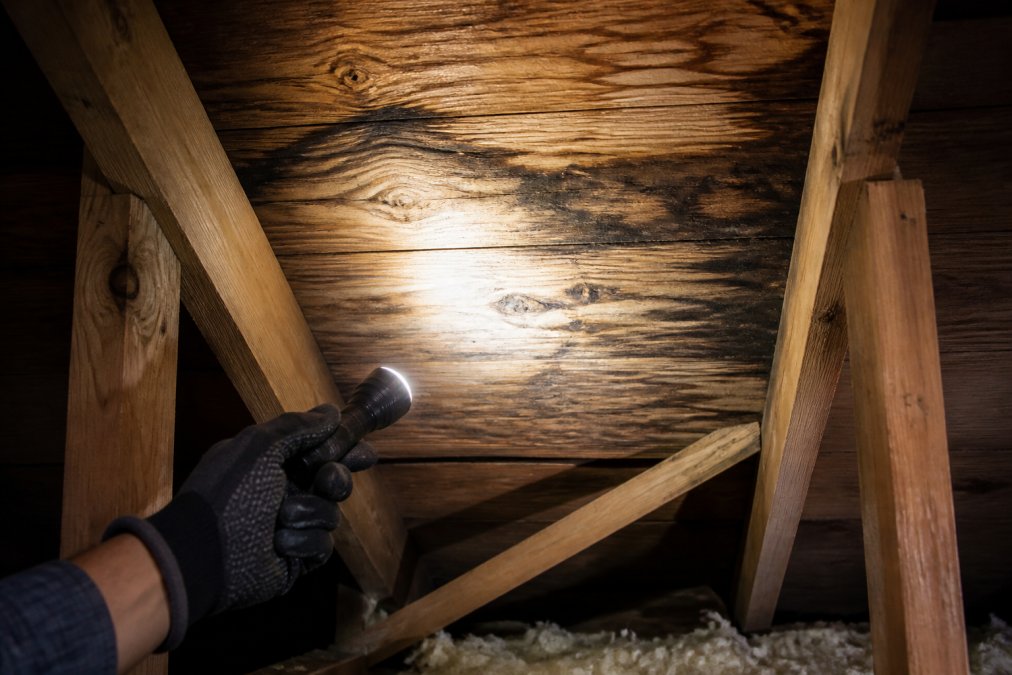
Your attic is the first place to check for signs of roof deck rot. Dark staining on the underside of the roof decking indicates past or ongoing moisture exposure. Warped or sagging panels suggest the wood has absorbed enough water to lose its structural integrity.
Soft spots, discoloration, or visible mold growth are clear indicators that decay has begun. Pay particular attention to areas around vents, chimneys, and exterior walls where condensation and thermal bridging concentrate.
Exterior Warning Signs on Shingles and Gutters
The exterior of your roof offers clues that hidden deck damage may be progressing. Curling or buckling shingles often indicate that the decking beneath has warped. Missing granules in specific zones can point to areas where moisture has compromised the shingle’s bond to the deck.
Check your gutters for granules and debris after storms, but also inspect the fascia boards where they meet the roofline. Rotting fascia frequently accompanies deck damage because both suffer from the same gutter maintenance failures and moisture exposure. Ice damming along the eaves during winter is another red flag, as it forces water back under the shingles and into the deck structure.
How Attic Ventilation and Roof Health Are Connected
Proper attic ventilation is the most underrated factor in preventing roof deck damage. Attic ventilation and roof health are directly linked: balanced intake and exhaust airflow keeps the underside of the roof deck dry and at a stable temperature, preventing the condensation cycles that rot wood from within.
A well-ventilated attic moves air continuously from soffit vents to ridge vents, carrying moisture vapor out before it can settle on cold surfaces. When ventilation is blocked by insulation, debris, or inadequate vent placement, humidity accumulates and attacks the structural components.
Signs of poor ventilation include excessive heat buildup in summer, frost accumulation on the underside of the deck in winter, and musty odors that persist despite cleaning. If you notice any of these, improving airflow should be a priority before you invest in any roof repair, since new shingles installed over a moisture-laden deck will fail prematurely.
Ignoring ventilation problems while replacing shingles is a wasted investment. New roofing installed over saturated or rotting decking will show signs of failure within a single season, and the underlying damage will continue spreading regardless of how fresh the exterior looks.
Why Small Leaks Lead to Major Structural Damage
A minor leak seems manageable, but the cascade of damage it triggers is anything but minor. Water that penetrates the shingle layer saturates the roof decking, which then transfers moisture to the rafters, beams, and eventually the walls of your home. The speed and severity of that damage depend heavily on what your roof deck is actually made of.
Material-Specific Vulnerability: OSB, Plywood, and Plank Decking
The three most common roof deck materials in American homes each fail differently when exposed to moisture. Understanding which one you have tells you how fast you need to act.
Oriented Strand Board (OSB): OSB is the most common decking material in homes built since the 1990s (nahb.org). Its greatest weakness is its edge. When OSB gets wet, the exposed edges absorb water rapidly and swell, creating a raised ridge along the panel seams, often visible from the attic as a grid of raised lines. Once swollen, OSB does not return to its original shape, permanently compromising the panel and creating a bumpy surface that telegraphs through new shingles. OSB also delaminates, where the layered strands separate and the panel loses rigidity. A small leak can render an OSB panel structurally useless within a single wet season.
Plywood: Plywood, common in homes built before the 1990s, is made of thin veneers of wood glued together in cross-laminated layers (apawood.org). It handles moisture better than OSB at the edges, but it is vulnerable to delamination and to mold and rot within its internal layers. The classic sign of plywood deck damage is a spongy feeling underfoot and visible separation of the veneers along the panel edges. Plywood also suffers from fastener corrosion more visibly, causing shingles to lift.
Plank Decking: Older homes, particularly those built before the 1950s, may have a roof deck made of individual wooden planks, typically 1×6 or 1×8 boards laid perpendicular to the rafters. Plank decking is more forgiving of minor moisture because the gaps between boards allow for some drying and the wood is often a rot-resistant species like cedar or fir. However, when plank decking does rot, the failure is localized to a single board or section, making repair more straightforward. The risk is that the gaps between boards provide a path for water to reach the attic directly.
The Progression of Damage: A Material-Specific Timeline
The progression of damage follows a predictable pattern, but the timeline varies by material. First, the protective coating on the wood breaks down. Next, the decking begins to delaminate or swell. Fastener corrosion follows, reducing the holding power of the nails. Finally, the wood loses enough mass that sagging roof sections become visible from the ground.
For OSB, this entire process can occur in as little as one to two years from the onset of a persistent leak. Plywood typically lasts longer, often three to five years, before structural failure becomes apparent. Plank decking, if the wood is naturally rot-resistant, can survive for decades with intermittent moisture exposure, but it will eventually fail if the source of water is not addressed.
What makes this dangerous is the timeline. A small flashing leak can go undetected for years while the deck slowly rots, and by the time interior staining appears, the structural damage has already reached a critical stage. The material of your deck dictates how much time you have, but it does not change the outcome: regular roof inspections catch these issues while they remain localized and repairable.
A Professional Roof Inspection Checklist for Homeowners
A systematic inspection checklist helps you catch roof deck damage before it becomes an emergency. Working through these areas annually, especially before spring storms and after severe weather, gives you a clear picture of your roof system’s health. However, a visual check alone will miss the hidden saturation that precedes visible rot.
DIY Diagnostic Tools: Moisture Meters and Thermal Imaging
Most homeowners stop at visual cues, but two affordable tools can reveal hidden moisture long before it becomes structural rot.
Moisture Meters: A pin-type moisture meter is your first line of defense. These devices have two small probes that you press into the wood surface. They measure electrical resistance, which drops as moisture content rises. For roof decking, a reading below 12% is considered dry and healthy (energy.gov). Readings between 12% and 16% indicate elevated moisture that warrants investigation. Anything above 16% signals active saturation requiring immediate attention.
When using a moisture meter, focus on areas where problems are statistically most likely: the perimeter of the attic floor, the underside of the deck near exterior walls, and the zones directly beneath roof valleys and chimney flashing. Take multiple readings in each area, because moisture can be localized.
Thermal Imaging Cameras: A step up in both cost and capability, an infrared camera lets you scan large areas of the deck quickly. Wet wood holds and transfers heat differently than dry wood, so saturated sections appear as cooler or warmer patches on the thermal image, depending on the season. In winter, wet areas appear colder; in summer, wet spots may appear warmer.
Entry-level thermal cameras that attach to smartphones are available from major hardware retailers and cost several hundred dollars. They are not a substitute for a professional-grade unit, but they are sensitive enough to detect the temperature differential caused by a damp deck section. Confirm any suspicious thermal anomaly with a moisture meter before assuming damage.
A moisture meter and thermal camera are diagnostic aids, not replacements for professional judgment. If your readings consistently show elevated moisture or you find soft spots, stop the DIY investigation and call a licensed roofing contractor. The cost of a professional assessment is far less than the cost of a full deck replacement.
The Professional Inspection Difference
DIY inspections are valuable for catching obvious problems and for monitoring known trouble spots, but they have limits. Most homeowners cannot safely access steep roof sections, and subtle signs of deck damage are difficult to distinguish from normal aging without experience. A professional brings calibrated tools and the training to interpret what they reveal in the context of your specific roof system.
A qualified inspector will also check the condition of the underlayment, verify that flashing details meet current code, and assess whether your ventilation system is balanced. They will document their findings with photographs and moisture readings, giving you a baseline for next year. Schedule professional inspections twice yearly, once in spring before storm season peaks and once in fall before winter temperatures create ice dam risks.
How to Document Hidden Damage for Insurance Claims
When hidden roof deck damage is discovered, proper documentation determines whether your insurance claim succeeds. Insurance companies require evidence that the damage resulted from a covered peril, such as a storm, rather than long-term neglect or maintenance failure.
Start by photographing everything before any repairs begin. Capture wide shots of the affected roof areas, close-ups of damaged decking, and images showing the interior water stains. Include a reference object like a ruler or coin in close-up photos to establish scale.
If you have maintenance records showing regular inspections and gutter cleaning, gather those as well. This documentation demonstrates that you maintained the roof and that the damage came from a specific weather event rather than deferred upkeep.
Professional contractors experienced with insurance claims can strengthen your case. They know what evidence adjusters look for and can communicate technical findings in language that supports your claim. This is where working with a contractor who handles insurance communication directly, rather than leaving you to manage the adjuster alone, makes a measurable difference in outcomes.
Conclusion: Protect Your Roof System Before It’s Too Late
Hidden roof deck damage does not announce itself loudly, but the consequences of ignoring it are unmistakable. Structural failure, sagging roof lines, and compromised safety are the end results of moisture problems that started small and went untreated.
When damage does appear, document it carefully and address it promptly before it spreads to the rafters, beams, and walls of your home.
At Rescue Roofing, we help homeowners identify hidden deck damage through thorough inspections and accurate aerial quotes that reveal the true condition of your roof system. Our team assists with insurance claim filing and communicates directly with adjusters, so you are never left navigating the process alone. With 24-hour availability and financing options, protecting your roof system is accessible when you need it most.
Frequently Asked Questions
What are the early warning signs of roof deck rot?
Early signs include dark streaks or stains on the wood decking, a musty odor in the attic, and visible sagging between the rafters. You may also notice spots of light coming through the roof boards or shingles that feel spongy underfoot. Inside, look for peeling paint on ceilings or walls, which can indicate a slow leak that is saturating the wood. Catching these signs early is key to preventing costly structural repairs.
How does poor attic ventilation contribute to roof deck damage?
Without proper airflow, hot and moist air gets trapped in your attic. This trapped moisture condenses on the cold underside of the roof decking during cooler months, similar to a glass of ice water sweating on a warm day. This repeated condensation keeps the wood damp, leading to rot, mold growth, and fastener corrosion over time. Attic ventilation and roof health are directly linked; balanced intake and exhaust vents help keep the decking dry and stable.
Does homeowners insurance cover hidden roof deck damage?
Coverage depends on the cause. Insurance typically covers sudden, accidental damage, such as a tree falling through the roof or wind-driven rain entering through a new opening. However, gradual damage from long-term neglect, poor maintenance, or chronic humidity is usually excluded. If you discover hidden roof deck damage, document everything with photos and contact your insurer. A professional inspection report detailing the cause of the damage is critical for filing a successful claim.
What is the difference between roof deck damage and shingle damage?
Shingle damage is cosmetic or protective-layer damage on the surface, like curling, cracking, or missing granules. Roof deck damage is structural, affecting the wood boards beneath the shingles. While shingles shed water, the decking provides the actual support for your roof. You can have perfectly fine-looking shingles over a rotting deck. Conversely, severe shingle damage can eventually lead to deck damage if water penetrates the protective layer and saturates the wood below.
The challenge with hidden roof deck damage is that you cannot see what you cannot access. Professional inspections catch problems early, accurate documentation strengthens your claim, and timely repairs extend the life of your entire roof system. Get started with Rescue Roofing and schedule an inspection that reveals what is actually happening beneath your shingles.
This article was written using GrandRanker