



Table of Contents
- Why Hail Damage Repair Can’t Wait
- Roof Hail Damage Signs Most Homeowners Miss
- Cosmetic Dents or Structural Damage? How to Tell the Difference
- How Unrepaired Hail Damage Affects Your Insurance Claim and Coverage
- Roof Replacement vs Repair: Making the Right Call After Hail
- The Hidden Costs of Waiting: Rust, Leaks, and Resale Value
- DIY vs Professional Hail Damage Repair: What You Risk
- Special Considerations for Leased Vehicles and Commercial Properties
- Frequently Asked Questions
Last Updated: September 15, 2026
Why Hail Damage Repair Can’t Wait
Ignoring a bruised roof just moves the bill to a later date, and that bill is almost always larger, that’s what happens if hail damage is not repaired. When you ask what happens if hail damage is not repaired, the short answer is this: small fractures in the shingle mat widen, water finds them, and damage spreads from the roof deck into your attic, insulation, and ceilings.
Homeowners who file early often spend less, while those who wait may pay out of pocket for problems a claim would have covered.
Here’s the part most people get wrong: hail damage rarely looks dramatic from the ground. There’s no missing shingle, no obvious hole. That’s exactly why it gets ignored.
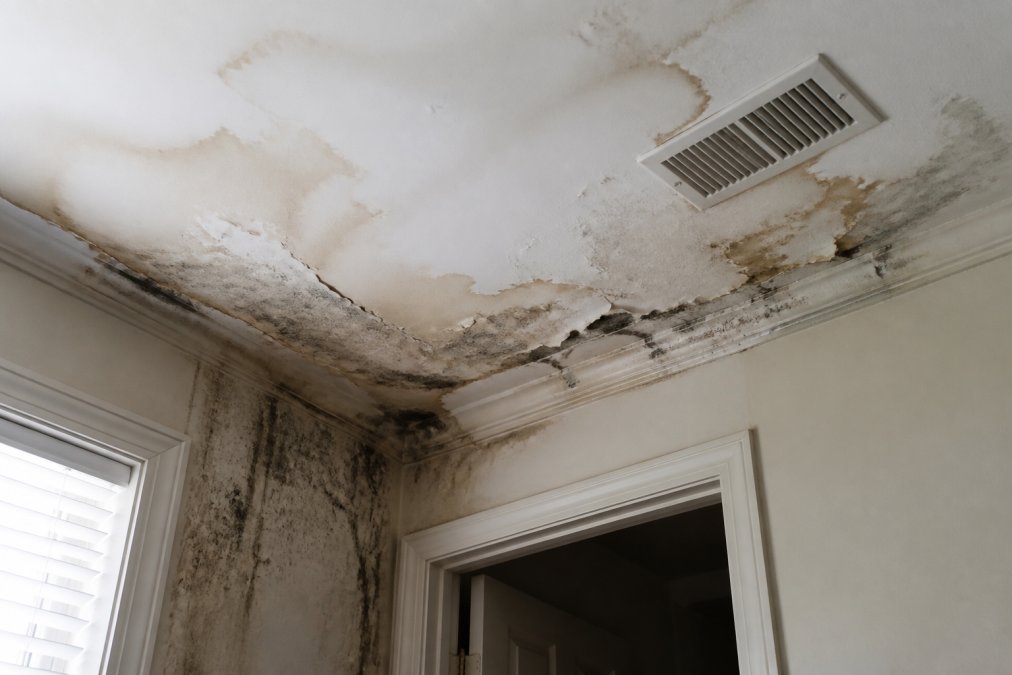
Waiting until a ceiling stain appears before calling anyone can be an expensive mistake. By then, water has usually been entering for months, and the interior repairs can cost more than the roof itself.
Roof Hail Damage Signs Most Homeowners Miss
The clearest sign of hail damage is granule loss. When hail strikes asphalt shingles, it knocks the protective granules loose and leaves soft, dark spots where the mat underneath is exposed. Those spots look minor. They aren’t.
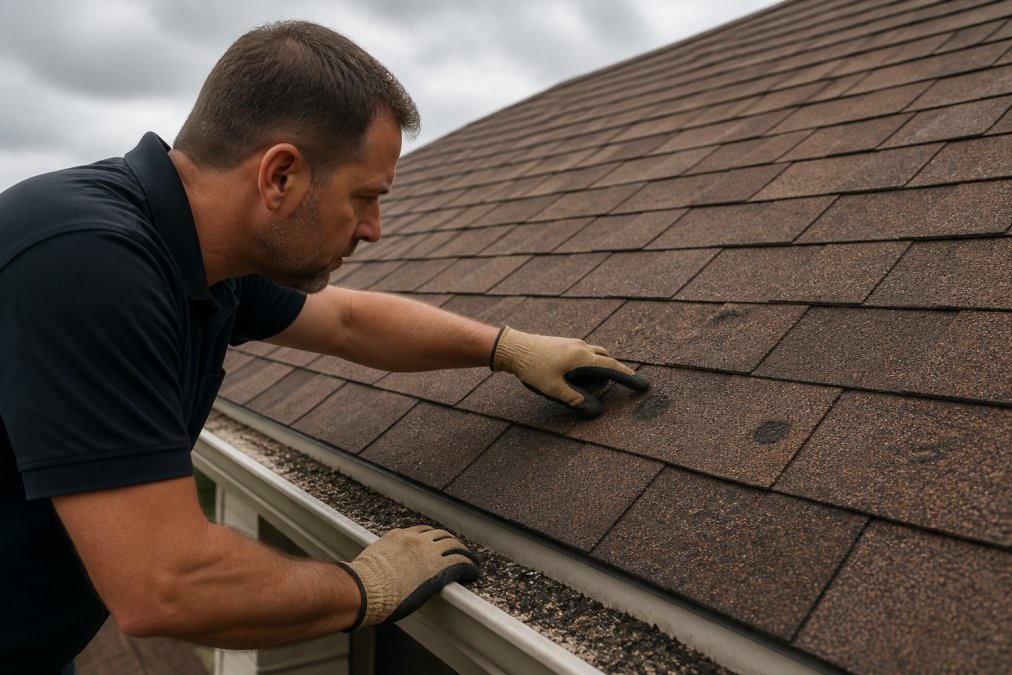
What to Look For After a Storm
Check these areas after any significant hailstorm:
- Gutters and downspouts: Piles of dark granules that look like coarse sand
- Shingle surfaces: Round, soft spots or dents, especially on south- and west-facing slopes
- Metal components: Dings on vents, flashing, and gutter aprons
- Soft metals: Dented downspouts and fascia trim, which confirm hail size
- Attic and ceilings: New stains, damp insulation, or daylight through the deck
Metal damage matters because it’s the easiest thing for an adjuster to verify. If your vents and gutters are dented, the shingles almost certainly took a hit too.
Cosmetic Dents or Structural Damage? How to Tell the Difference
Cosmetic damage affects appearance only; structural damage compromises the shingle’s ability to shed water, and that distinction decides whether a repair is optional or urgent. The useful part is understanding why a dent that looks cosmetic can already be structural.
An asphalt shingle is a composite: a fiberglass or organic mat core, coated in asphalt, then surfaced with mineral granules. The granules are the UV shield, the asphalt is the waterproofing, and the mat is the reinforcement that holds it together under wind uplift and thermal movement.
When a hailstone strikes, three things happen in sequence:
- Granule displacement. The impact knocks granules loose in a roughly circular pattern. That’s the dark, soft-looking spot you see from the ground. The asphalt underneath is now directly exposed to ultraviolet light.
- Mat fracture. On a direct hit, the impact can crack the mat core. This is the failure that matters. A fractured mat loses tensile strength, and the shingle can no longer resist the normal expansion and contraction of a roof deck through the day-night cycle.
- Seal break. The thermal seal strip that bonds one course of shingles to the next can be broken by impact. Once that seal is gone, wind gets underneath, and the shingle becomes a sail.
That sequence is why the cosmetic-versus-structural question is often the wrong one. A shingle with a fractured mat but intact granules can look fine and still be structurally compromised, while heavy granule loss with an intact mat may be ugly but functionally sound. You cannot reliably tell the difference from the ground, and often not from a ladder either.
Here’s what separates the categories in practice:
| Damage Type | What It Looks Like | What It Means |
|---|---|---|
| Cosmetic | Surface scuffs, minor granule loss, no mat exposure | Appearance affected, waterproofing intact |
| Structural | Exposed mat, cracked shingles, soft spots, broken seals | Water can enter, deck rot likely over time |
| Hidden | No visible surface damage | Underlayment or deck already compromised |
The Paint and Sealant Problem Nobody Talks About
On metal roof components, gutters, flashing, and vehicle panels, hail does something subtler than denting. It micro-cracks the paint and clear coat. Those cracks are often invisible at arm’s length, but they break the seal that keeps oxygen and moisture away from the metal underneath.
On a roof, exposed fasteners and flashing begin to corrode; on a vehicle, the same thing happens at a smaller scale. Corrosion starts under the paint film, spreads laterally, and by the time you see a rust blister, the metal beneath has already lost section thickness. A dent that looks purely cosmetic today can become a corrosion problem in three to five years.
A common pattern in homes that sat through multiple hail seasons without repair: the visible damage is granule loss and a few dents, but the real damage is at the seal strips and fasteners, where water has been wicking in slowly. By the time a ceiling stain appears, the deck has usually been wet for months.
If you can see dents on soft metals like vents, downspouts, or fascia trim, assume the shingles took comparable impact. Soft-metal damage is the easiest thing for an adjuster to verify, and it’s the strongest evidence that the roof damage is real rather than wear and tear.
An auto body technician can buff a dent and the panel is fine. A shingle doesn’t work that way. Once the mat is fractured, there’s no restoring it, and no sealant applied from a ladder will rebuild the tensile strength the mat lost.
How Unrepaired Hail Damage Affects Your Insurance Claim and Coverage
Unrepaired hail damage is the fastest way to lose your claim. Most policies require you to report and mitigate damage within a reasonable window, and “reasonable” is shorter than most homeowners assume.
Your policy is a contract with obligations on both sides: the insurer pays covered losses, and you report them promptly and prevent further damage. Let a damaged roof sit through two more storm seasons and you’ve arguably broken your half of that deal.
The Hail Damage Insurance Claim Deadline You Need to Know
There’s no single national deadline. Time limits are set by your policy language and by state law, and they vary. Some policies require notice within a year of the loss (naic.org). Others allow longer, but the practical window closes much sooner because evidence disappears.
Oklahoma Insurance Department consumer resources on filing claims publishes guidance on policyholder rights and complaint procedures, and it’s worth reading before you call your adjuster. For the statute of limitations that applies to your specific policy, check your declarations page or ask your insurer directly.
The real deadline isn’t the legal one. It’s the evidentiary one. Granules wash away, shingles deteriorate further, and a year from now your adjuster can’t tell hail damage from wear and tear.
Why Insurers May Deny Future Claims
A pre-existing condition exclusion ends most late claims. Once you’ve reported damage and not repaired it, the insurer has a record; file again later for related damage and you’ll likely hear the loss was already accounted for.
That denial doesn’t just affect the roof. A claim history with an unresolved loss can complicate future coverage decisions and, depending on your insurer and state, influence your premium at renewal. The policyholder who repairs promptly keeps a clean record. The one who waits builds a file that works against them.
Roof Replacement vs Repair: Making the Right Call After Hail
Repair makes sense when damage is limited to a small area and the rest of the roof has life left.
A few practical rules of thumb:
The Hidden Costs of Waiting: Rust, Leaks, and Resale Value
Unrepaired hail damage costs you twice: once in the repairs you eventually pay for yourself, and again in the price reduction a buyer demands when they discover it.
DIY vs Professional Hail Damage Repair: What You Risk
DIY Roof Repair: Why Patch Jobs Backfire
DIY Vehicle Repair: The PDR Trap
What goes wrong when an inexperienced person attempts PDR:
The Leased Vehicle Problem
The Warranty and Documentation Angle
Before attempting any DIY repair on a leased vehicle or a home with an active or potential insurance claim, get a professional assessment first. The cost of an inspection is trivial compared to the cost of a voided warranty, a denied claim, or a lease-end damage bill.
Special Considerations for Leased Vehicles and Commercial Properties
Frequently Asked Questions
How long will a roof last after hail damage if I don’t repair it?
An unrepaired roof with hail damage can fail years earlier than its expected lifespan. Hail bruises the shingles and breaks the bond between granules and the asphalt layer, leaving the underlying mat exposed to UV rays and water. Once that protective layer is compromised, leaks and rot develop faster. In many cases, a roof that should last 20 years may need replacement in 5 to 10 years if damage is ignored.
Is it ever too late to file a hail damage insurance claim?
Yes, there is a hail damage insurance claim deadline. Most policies require you to report damage within one year of the storm, though some states allow up to two years. If you miss that window, your claim will likely be denied. Even if you are within the deadline, waiting months to file gives the insurer room to argue the damage is pre-existing. File as soon as you notice roof hail damage signs.
Can minor hail damage lead to interior water leaks?
Minor dents and granule loss may look harmless, but they break the shingle’s seal and expose the underlying mat. Water seeps through these small breaches during rain, eventually reaching the decking and attic. Over time, that moisture causes wood rot, mold growth, and stained ceilings. What started as cosmetic damage often becomes a costly interior repair if left unaddressed.
Does homeowners insurance cover roof hail damage?
Most homeowners insurance policies cover hail damage to roofs under the dwelling coverage section, but only if you have comprehensive coverage and file within the deadline. Liability-only policies do not cover storm damage to your own property. After a storm, contact your insurer promptly and have a professional roofer document the damage before any repairs begin. Rescue Roofing can assist with the claim process from inspection to adjuster meeting.