



Table of Contents
- Metal Roof vs Asphalt Shingle Lifespan: The 40-Year Verdict
- Is a Metal Roof Worth It for Tulsa Homes? The Cost Breakdown
- How Hail Resistance of Metal Roofing Survives Oklahoma Storms
- Energy Efficiency, Insurance Premiums, and Resale Value
- Standing Seam vs. Exposed Fastener: What to Install
- The Hidden Costs: Noise, HOA Rules, and Installation Complexity
- Roof Replacement Financing Options for Tulsa Homeowners
- The Verdict: When Metal Makes Sense for Your Tulsa Home
- Frequently Asked Questions
Last Updated: September 6, 2026
Metal Roof vs Asphalt Shingle Lifespan: The 40-Year Verdict
The metal roof worth it question for Tulsa homes often starts with lifespan. A quality standing seam metal roof is rated to last 40 to 70 years, while asphalt shingles typically need replacement every 15 to 30 years (metalroofing.com). That means most Tulsa homeowners will replace an asphalt roof at least once, and often twice, within the service life of a single metal installation.
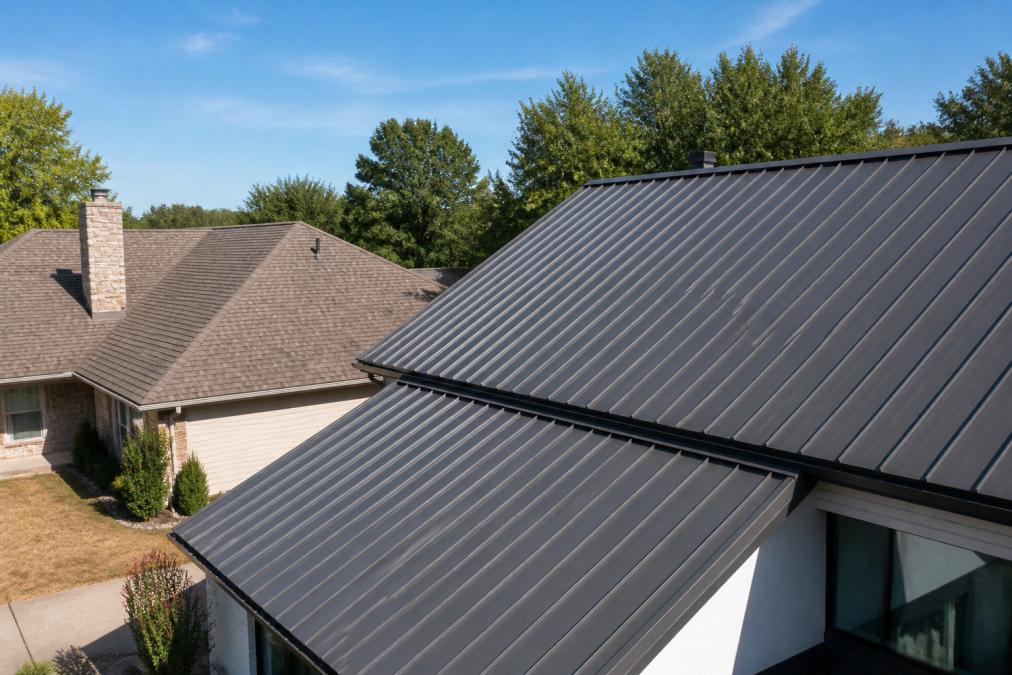
Asphalt shingles degrade through thermal cycling and UV exposure, while metal panels with galvalume coating resist corrosion and structural fatigue far longer. When you factor in the cost of a second roof replacement, the long-term investment case for metal strengthens considerably.
A metal roof will likely outlast two or three asphalt shingle roofs. Over a 40-year horizon, the total cost of ownership often favors metal despite the higher upfront price.
Is a Metal Roof Worth It for Tulsa Homes? The Cost Breakdown
A metal roof is worth it for many Tulsa homes when you measure cost across the full ownership period. Local project pricing for standing seam systems typically ranges from $24,000 to $48,000, while per-square-foot estimates often land between $8 and $12. Asphalt shingle replacement costs less upfront, but the break-even point arrives when you account for the second or third shingle roof you will purchase in the same timeframe.
Energy savings from reflective surfaces reduce summer cooling loads, and many homeowners find their insurance premiums drop because of the material’s impact resistance. The payback period varies by home size and roof pitch, but the math favors metal for owners who plan to stay in their home beyond ten years.
How Hail Resistance of Metal Roofing Survives Oklahoma Storms
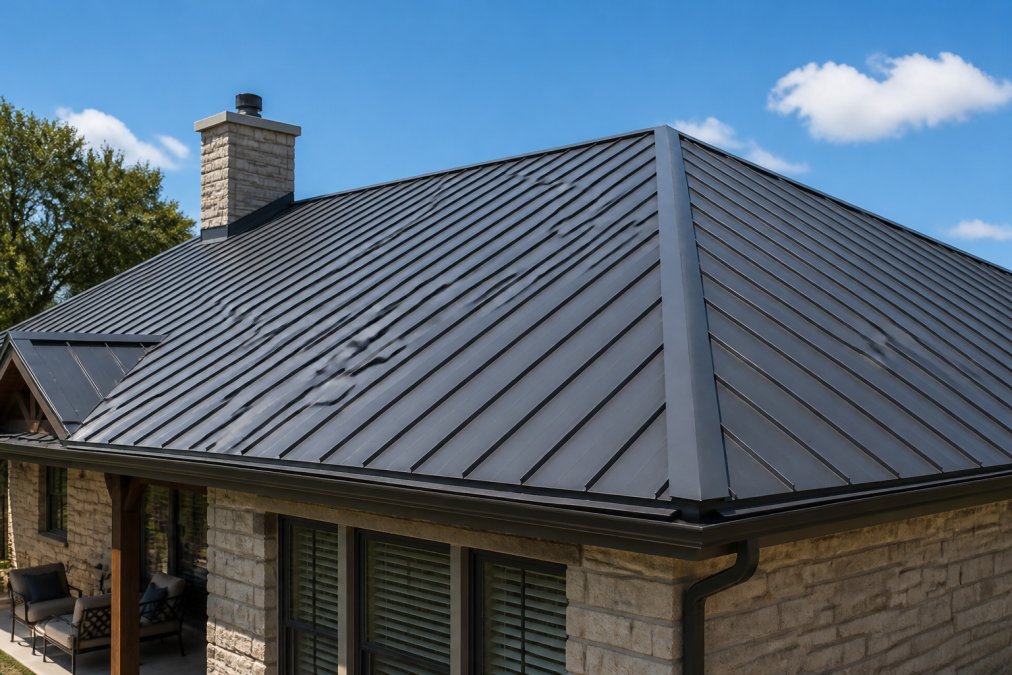
Hail damage is the primary driver of roof replacements in Oklahoma, and this is where metal separates itself from asphalt. A hailstone that fractures an asphalt shingle and exposes the underlayment often leaves a dent in metal but preserves the roof’s structural integrity. The impact resistance of 24 gauge and 26 gauge steel panels is substantially higher than what the National Weather Service storm damage guidance describes for typical shingle failure modes.
That durability translates directly into fewer insurance claims and less frequent emergency repairs. While severe hail can dent metal, the roof continues to shed water and protect the home, unlike asphalt which may begin leaking immediately after impact. For Tulsa homeowners tired of scheduling repairs after every spring storm, this resilience is often the deciding factor.
Not all metal roofs perform equally in hail. Exposed fastener systems with thin steel are more prone to denting and panel damage than standing seam systems using 24 gauge material. Verify the gauge before signing a contract.
Energy Efficiency, Insurance Premiums, and Resale Value
Metal roofing delivers three secondary financial benefits that many homeowners overlook. But the value here is not automatic, it depends on specific product choices, local utility rates, and how your insurance carrier underwrites risk in Oklahoma.
The Cooling Load Math Behind Energy Savings
The solar reflectance and thermal emittance of painted metal panels reduce heat transfer into the attic, lowering summer air conditioning demand. A standard dark asphalt shingle can reach surface temperatures above 160°F on a July afternoon, radiating heat downward (energy.gov). A cool-roof-rated metal panel with a reflective pigment stays closer to 120°F, reducing the temperature differential between the attic and the living space below.
Most practitioners find this translates to a 10% to 25% reduction in cooling costs during peak summer months, depending on insulation, ventilation, and roof orientation. Many metal products also carry an Energy Star rating. On a typical Tulsa home with $200 to $350 in average summer electric bills, the annual savings land in the $100 to $300 range. That alone will not justify the upgrade, but it narrows the payback gap.
Insurance Premiums: The Discount Most Articles Miss
Insurance companies increasingly recognize the storm resilience of metal roofing. Homes with impact-resistant metal roofs may qualify for reduced premiums in hail-prone regions, though discounts vary by carrier and policy. The key variable is whether your roof carries an impact rating from UL Solutions, specifically Class 4, the highest rating for hail resistance.
A common pattern among Tulsa-area carriers is a premium discount of 5% to 15% for Class 4 impact-rated roofing, applied to the dwelling coverage portion of your policy. On a typical homeowners policy with $2,500 to $4,000 in annual premiums, that discount is worth $125 to $600 per year. Over a 20-year period, the cumulative savings can reach $5,000 or more, a figure that belongs in your cost comparison but rarely appears in contractor marketing.
Not all metal roofs qualify for insurance discounts. The discount is tied to the specific impact rating of the panel system, not the material category. Confirm that your chosen standing seam product carries a UL Class 4 rating, and ask your insurance agent to document the discount in writing before you sign the contract.
Resale Value and Marketability
On the resale side, a standing seam metal roof appeals to buyers who want to avoid a roof replacement in their first decade of ownership. Real estate listings frequently highlight metal roofs as a premium feature because they signal lower future maintenance costs. The strongest signal is the transferable warranty, most quality standing seam systems carry 30- to 50-year warranties that can transfer to a new owner.
The resale premium is not uniform. A neutral color in a classic standing seam profile appeals broadly, while an unusual color or an exposed fastener system may narrow your buyer pool. The resale value argument works best when the metal roof looks intentional and complements the home’s architecture.
Standing Seam vs. Exposed Fastener: What to Install
The metal roof worth it decision hinges on which system you choose. Standing seam metal roofing uses concealed fasteners hidden beneath the panels, eliminating exposed screws that can back out over time and create leak points. This system also accommodates thermal expansion better and provides superior wind uplift resistance, making it the recommended choice for Tulsa’s severe weather.
Exposed fastener systems cost less because the screws are visible on the panel surface, but they require periodic maintenance to re-tighten or replace fasteners and their rubber washers. The hidden costs include a shorter service life and higher long-term maintenance. For most Tulsa homeowners, the premium paid for standing seam is justified by the extended lifespan and reduced upkeep.
| Feature | Standing Seam | Exposed Fastener |
|---|---|---|
| Fastener location | Concealed | Exposed with washers |
| Typical lifespan | 40-70 years | 20-30 years |
| Wind uplift resistance | Superior | Moderate |
| Maintenance needs | Minimal | Periodic fastener checks |
| Best for | Long-term homeowners | Budget-constrained projects |
The Hidden Costs: Noise, HOA Rules, and Installation Complexity
Three factors complicate the metal roof worth it equation that most cost comparisons ignore. Each can turn a well-planned project into a source of frustration if you do not address it before signing a contract. solar panel feasibility.
The Noise Myth, Debunked with Physics
Noise during heavy rain is the most common concern homeowners raise, and it is also the most misunderstood. The sound you hear inside a house with a metal roof has almost nothing to do with the metal itself, it is determined by what sits between the metal and your ears. Rain hitting a metal panel creates vibration energy that transmits into the roof deck, and from there into the attic and living spaces.
A metal roof installed over solid plywood or OSB decking with proper attic insulation performs comparably to asphalt in sound transmission. The decking mass absorbs and disperses the vibration before it reaches the interior. The problem cases you read about online almost always involve metal installed over open purlins, a common practice in barns and agricultural buildings where there is no solid deck.
If your contractor recommends installing metal directly over purlins or strapping without a solid deck, ask why. For a residential Tulsa home, solid decking with a quality underlayment is the standard that keeps rain noise comparable to asphalt shingles.
HOA Rules: Read the Fine Print Before You Fall in Love with a Panel
Homeowners associations may impose aesthetic restrictions on roofing materials, including color palettes and panel profiles. The most common restriction is not a ban on metal, it is a limitation on the finish. Many Tulsa-area HOAs require a matte or low-gloss finish because high-gloss panels create glare. Others restrict the color palette to earth tones or require that the roof color harmonize with the home’s exterior.
A less obvious restriction involves the panel profile. Some covenants specify that roofing must have a “residential appearance,” which can exclude the exposed fastener, corrugated look commonly seen on agricultural buildings. Standing seam panels with a subtle 1-inch or 1.5-inch rib profile generally pass architectural review, but you need to confirm this before you order materials.
Request the HOA’s architectural review guidelines in writing before you sign a roofing contract. If the covenants are ambiguous, ask the HOA board for a pre-approval letter for your specific panel profile and color. A 30-minute phone call now can prevent a costly re-roof later.
Installation Complexity: Why Local Expertise Matters
Installation also requires specialized skills that not every contractor possesses. Metal roofing has a much smaller tolerance for error than asphalt shingles. A nail placed slightly off the nailing stripe in an asphalt roof may not leak for years. A screw driven at the wrong angle in a standing seam panel can compromise the weather seal immediately.
The critical details include:
- Fastener placement and torque: Screws must be driven straight and to the correct depth. Over-torquing crushes the washer; under-torquing leaves gaps.
- Flashing details at valleys and penetrations: Metal expands and contracts with temperature swings far more than asphalt. Flashing must accommodate this movement without creating gaps.
- Panel handling and walking patterns: Walking on metal panels can oil-can or dent them if the installer does not follow the correct panel zones.
- Seam seaming quality: A standing seam roof is only as good as its seamed joints. An improperly seamed panel can fail in high wind events.
This is why selecting an experienced local installer matters as much as the material itself. A contractor who has installed 50 metal roofs in the Tulsa area has already solved the flashing details specific to Oklahoma’s freeze-thaw cycles and high-wind events. A contractor who primarily installs asphalt and is “willing to try metal” is a risk you should not take with a $30,000 investment.
Roof Replacement Financing Options for Tulsa Homeowners
The upfront cost of a metal roof leads many Tulsa homeowners to ask about roof replacement financing options. Most reputable contractors offer financing plans that spread the project cost across monthly payments. The specific terms, interest rates, and approval requirements vary by lender and credit profile.
Ask your contractor whether they communicate directly with your insurance company and adjuster. A roofer who handles the claim process on your behalf can simplify approvals and reduce the stress of navigating storm damage documentation yourself.
When comparing financing proposals, look beyond the monthly payment to the total interest cost and loan term. A shorter term with a slightly higher payment often saves thousands over the life of the loan. Some contractors also assist with insurance claim filing, which can offset a portion of the replacement cost if your roof sustained storm damage.
The Verdict: When Metal Makes Sense for Your Tulsa Home
Metal roofing makes the most sense for Tulsa homeowners who plan to stay in their home long-term, want maximum storm protection, and value reduced maintenance. If you expect to move within five to seven years, the upfront premium may not fully pay off, and asphalt shingles could be the more practical choice. But for owners who want a true long-term investment, the durability, energy savings, and resale appeal of standing seam metal are hard to beat.
The quality of installation ultimately determines whether you realize those benefits. Our expert team utilizes accurate aerial quotes and thorough inspections to ensure your property remains safe and visually impressive. We simplify the process by assisting with insurance claims and offering flexible financing options to help you protect what matters most.
Frequently Asked Questions
What is the biggest problem with metal roofs?
The upfront cost is the main drawback. A metal roof costs two to three times more than asphalt shingles. However, that higher initial investment buys a lifespan of 40 to 70 years, versus 20 years for shingles. When you factor in reduced maintenance, lower energy bills, and potential insurance discounts, the break-even point often arrives before the first shingle replacement is needed.
Are metal roofs good in Oklahoma weather?
Yes. Metal roofing handles Oklahoma’s severe storms well. Quality metal panels with impact resistance ratings withstand hail damage better than asphalt, and standing seam systems resist wind uplift at speeds far beyond what shingles can handle. The key is proper installation with the right gauge metal and fastener systems for the region.
What do insurance companies think of metal roofs?
Many insurers view metal roofs favorably because they reduce hail and wind damage claims. Some companies offer premium discounts of 5% to 35% depending on the material and impact resistance rating. Contact your agent before installation to confirm your policy details and ask about specific discounts for Class 4 impact-rated metal roofing.
Do metal roofs increase home resale value?
Metal roofs typically boost resale value. Buyers see a 40-year roof as a long-term investment that removes replacement costs from their planning. Real estate data shows metal roofs can recover a significant portion of their cost at sale. The improved curb appeal and energy efficiency also make homes more marketable compared to similar properties with aging shingles.
Can I finance a metal roof replacement?
Yes. Many local contractors offer roof replacement financing options to spread the cost over manageable monthly payments. Flexible financing plans are available. Contact Rescue Roofing to discuss current financing terms and what monthly payment fits your budget.
Choosing a roof is a decision about how you want to live for the next four decades. Rescue Roofing helps Tulsa homeowners navigate that choice with professional inspections, transparent aerial quotes, and hands-on insurance claim support. Get started with Rescue Roofing and find out whether metal is the right investment for your home.