




Did you know that the first estimate you receive from your insurance company isn’t necessarily the final word on your home’s safety? After a severe Oklahoma storm, it’s natural to feel overwhelmed by technical jargon like ACV, RCV, and supplements. You’ve paid your premiums for years, so the fear of a claim denial or a lowball offer adds unnecessary stress to an already difficult situation. Negotiating with insurance adjuster for new roof approvals is often more about providing undeniable evidence than just having a conversation.
We understand the specific challenges Tulsa homeowners face when dealing with wind and hail damage. This guide provides the expert strategies you need to master the insurance claim process and ensure your home receives the full coverage it deserves. You don’t have to face the bureaucratic hurdles alone. We’re here to help you secure a high-quality roof replacement with minimal out-of-pocket costs beyond your deductible.
We will explore how to document damage effectively, decode your policy’s fine print, and leverage professional inspections to provide the proof your insurer needs. This narrative guides you from the initial inspection to the final payment. By the end, you’ll have a clear path toward a stress-free process managed by local experts who speak the adjuster’s language.
Key Takeaways
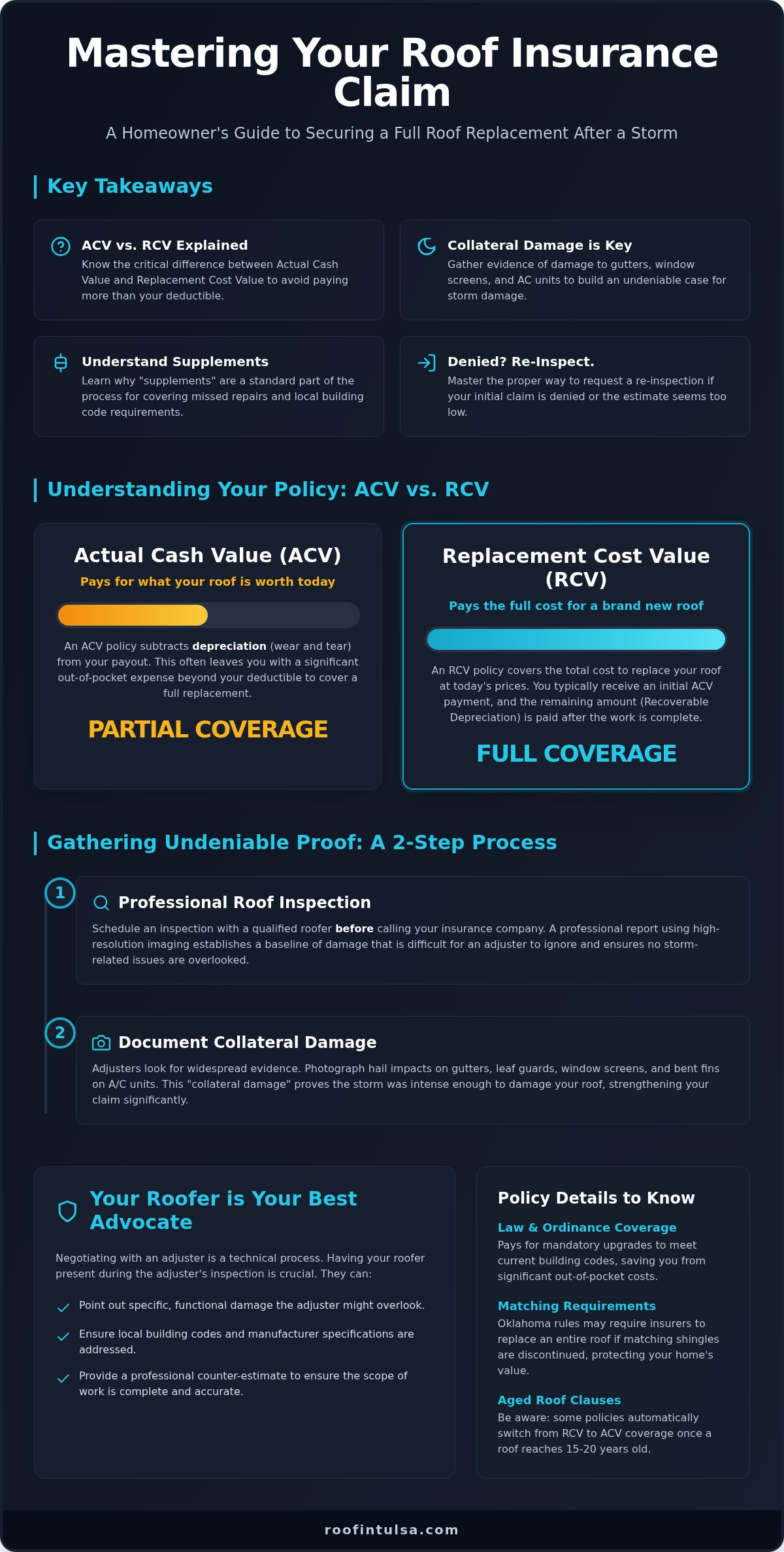
- Identify the critical difference between Actual Cash Value and Replacement Cost Value on your policy to avoid paying more than your deductible.
- Gather evidence of collateral damage on gutters and window screens to build a stronger, undeniable case for storm damage.
- Discover how professional representation simplifies negotiating with insurance adjuster for new roof claims by ensuring technical codes are properly addressed.
- Learn why insurance “supplements” are a standard part of the process for covering missed repairs and local building code requirements.
- Master the proper way to request a re-inspection if your initial claim is denied or the estimate seems too low to cover a quality replacement.
Understanding Your Policy: The Foundation of Successful Negotiation
Your policy’s Declarations Page is the most important document you own when starting a claim. It’s usually the first page of your insurance packet. This summary lists your coverage limits, policy period, and your deductible. Knowing your deductible is vital because it’s the only out-of-pocket cost you should expect for a covered replacement. If you can’t find this page, your insurance agent can provide a digital copy quickly. Understanding these details early makes negotiating with insurance adjuster for new roof approvals much smoother.
For many Tulsa homeowners with older properties, Law and Ordinance coverage is a lifesaver. Building codes change over time to improve safety. If your roof was built twenty years ago, it likely doesn’t meet current Oklahoma requirements. This coverage pays for the extra costs to bring your roof up to today’s safety standards during a replacement. Without it, you might be stuck paying for those mandatory upgrades yourself. It’s a small detail in your policy that makes a massive difference in your final bill.
ACV vs. RCV: What You’ll Actually Receive
Insurance policies typically fall into two categories: Actual Cash Value (ACV) or Replacement Cost Value (RCV). An ACV policy only pays for what your roof is worth today, which accounts for years of wear and tear. This reduction in value is called depreciation. In contrast, an RCV policy covers the full cost of a new roof regardless of its age. Recoverable Depreciation is the funds released after work completion. You can usually identify which coverage you have by looking for these acronyms on your Declarations Page. Knowing your policy type helps you set realistic expectations before the adjuster arrives.
Exclusions and Limitations to Watch For
Policies often contain specific limitations that can reduce your payout if you aren’t prepared. Some common exclusions include:
- Cosmetic Damage: Many policies won’t pay for dents in metal roofs if the damage doesn’t affect the roof’s ability to shed water.
- Aged Roof Clauses: Some insurers automatically switch coverage from RCV to ACV once a roof passes 15 or 20 years of age.
- Matching Requirements: Oklahoma regulations often require insurers to provide a uniform appearance for your home.
The matching requirement is particularly helpful for local homeowners. If your specific shingles are discontinued and a match isn’t available, the insurer may have to replace the entire roof instead of just a small patch. This protects your home’s curb appeal and resale value. Being aware of these local rules is a powerful tool when negotiating with insurance adjuster for new roof projects.
Preparation: Gathering Undeniable Proof of Storm Damage
After a severe Oklahoma storm, the quality of your evidence determines the outcome of your claim. Most homeowners start by taking a few photos with their cell phones from the ground. While this is a helpful first step, it rarely provides the technical proof an insurance company requires. You need to build a comprehensive Claim File. This organized record should contain every piece of correspondence, dated photos, and professional estimates in one place. Having this documentation ready is a critical part of negotiating with insurance adjuster for new roof approvals.
Step 1: The Professional Roof Inspection
You should always schedule a free inspection from Rescue Roofing Tulsa before you even pick up the phone to call your insurance company. Our team understands the difference between cosmetic blemishes and functional damage that compromises your home’s integrity. We use high-resolution imaging and drones to spot hidden leaks or shingle bruising that the naked eye might miss. By having a professional report in hand first, you establish a baseline of damage that is difficult for an adjuster to ignore. This proactive approach ensures that no storm related issues are overlooked during the official inspection.
Step 2: Documenting Collateral Damage
Adjusters don’t just look at your shingles; they look for signs that a storm was intense enough to cause significant damage. This is where collateral damage becomes essential. Evidence of hail impact on gutters and leaf guards or bent fins on an air conditioning unit provides clear proof of hail size and wind velocity. Collateral damage is often the ‘smoking gun’ for insurance adjusters because it confirms that the weather event was severe enough to warrant a full replacement. We also look for dings in soft metals like roof vents and flashing. If you aren’t sure what to look for, a professional roof inspection can identify these subtle but vital clues for you. These technical details provide the undeniable proof needed to justify your claim and protect your investment.
The Adjuster Meeting: Why Your Roofer Is Your Best Advocate
The moment the insurance adjuster pulls into your driveway, the atmosphere can feel tense. You’ve likely spent days worrying about whether they will see the same damage you do. This is why having a professional contractor present is your greatest advantage. It changes the dynamic from a homeowner asking for help to a peer-to-peer technical review. Successfully negotiating with insurance adjuster for new roof approvals often comes down to the details found during this specific hour of the claim process.
We speak the same language as the adjuster. Most insurance companies use a software called Xactimate to determine repair costs. By using these same industry standard codes, we prevent miscommunication before it starts. We ensure every necessary line item, from specialized ridge caps to high wind starter strips, is included in their initial scope. During the inspection, adjusters use a “Test Square” method, marking off a 10-by-10-foot area on various slopes to count hail hits. We’re there to ensure they select representative areas that reflect the true extent of the storm’s impact on your home.
Your role as a homeowner is simple: stay safely on the ground. Roof inspections are dangerous, and having too many people on the shingles can be distracting. Trust the professionals to handle the technical walk-through. You can focus on providing the adjuster with the Claim File you organized earlier, while we focus on the structural evidence above.
Leveling the Playing Field with Expertise
Adjusters generally respect contractors who provide detailed, code-compliant estimates. When Rescue Roofing Tulsa joins the walk-through, we often identify “missed” damage that a busy adjuster might overlook. This includes subtle bruising on shingles or damage to chimney flashing that isn’t visible from a distance. Our presence ensures the adjuster has a second set of expert eyes verifying every square foot of your roof. We provide the technical proof required to turn a simple repair recommendation into a justified full replacement.
The ‘Brittle Test’ and Repairability
One of the most important tools in our arsenal is the “brittle test.” If an adjuster suggests replacing only a few shingles, we must determine if the roof is actually repairable. We gently lift a surrounding shingle to see if it can be manipulated without breaking or losing its protective granules. If the shingle cracks or tears during this test, the roof is considered non-repairable by industry standards. This technical failure often triggers a full roof replacement in Tulsa. It’s a clear, objective way to prove that your home needs a complete new system to remain weather-tight.
Negotiating the Scope: Supplements and Code Compliance
The first check you receive from your insurance company is rarely the final payment for your project. This initial estimate is simply a starting point based on what the adjuster could see during their brief walk-through. Negotiating with insurance adjuster for new roof details involves a standard process called “supplementing.” A supplement is a formal request for additional funds to cover items that were missed, underestimated, or discovered during the construction process. It’s an expected part of the claim that ensures the job is done correctly.
Local building codes in Tulsa are your most powerful tool during this stage. If the City of Tulsa requires specific materials for safety, your insurance policy should pay for those mandatory upgrades. We use these legal requirements to ensure your new roof isn’t just a patch job but a fully compliant, modern system. By leveraging these technical requirements, we ensure your insurance company pays for a roof that meets 2026 safety standards without increasing your out-of-pocket costs.
Sometimes, the most significant issues aren’t visible until the old shingles are removed. Rotted decking or structural issues often hide beneath the surface where an adjuster cannot see them during a walk-through. When we find this hidden damage, we document it immediately with high-resolution photos. We then submit this evidence to your insurer to ensure the necessary repairs are added to the claim scope. This prevents you from being surprised by extra costs halfway through the project.
Commonly Missed Line Items in Initial Estimates
Adjusters often underestimate the complexity of a full replacement. They might overlook the “waste factor,” which accounts for the extra shingles needed to cover hips and valleys. Other frequently missed items include drip edge installation and modern roof ventilation upgrades required by today’s codes. Many older Tulsa homes also require specialized ice and water shields that weren’t standard when the original roof was installed. We review every line item to ensure these critical components are included in your payout.
How Rescue Roofing Handles the Supplement Process
We manage the entire supplement process so you don’t have to deal with the administrative headache. Our team communicates directly with your insurance carrier, providing the photo evidence and invoices needed to justify every additional dollar. We focus on ensuring you aren’t stuck with the bill for required safety equipment or debris removal fees. If you want a partner who handles the paperwork while you focus on your family, our insurance claim assistance team is ready to help. We advocate for your home’s safety until the final check is processed and the job is complete.
What to Do If Your Claim Is Denied or Underpaid
Receiving a denial notice or an estimate that barely covers a patch job feels like a personal setback. Don’t panic. Many initial denials happen because of a lack of technical proof rather than a lack of actual storm damage. If your adjuster was rushed or inexperienced, they might have missed the subtle shingle bruising or collateral evidence we documented in your claim file. Negotiating with insurance adjuster for new roof approvals often requires a second look to get the facts straight. A detailed second opinion from a Tulsa roofing contractor provides the professional leverage needed to reopen a closed file and correct the record.
If you and the insurance company simply cannot agree on the cost of the project, look for the “Appraisal Clause” in your policy. This is a formal dispute resolution tool designed to settle price disagreements without going to court. It allows both you and the insurer to hire independent appraisers to determine the fair value of the loss. This process ensures a neutral party reviews the evidence we’ve gathered and often leads to a much fairer payout for the homeowner.
The Power of a Re-Inspection
You have the right to request a re-inspection if you believe the first assessment was inaccurate. We recommend specifically asking for a supervisor or a more senior field adjuster for this second visit. It’s essential that your contractor is present during this walk-through to point out the specific evidence that was previously overlooked. Many approved claims started as initial denials. This second opportunity allows us to present our high-resolution photos and drone footage directly to someone with the authority to change the decision on the spot.
Next Steps: Professional Advocacy
For extremely complex disputes or cases of bad faith, you might consider hiring a Public Adjuster or a specialized attorney. Public adjusters are licensed professionals who represent policyholders for a fee, while attorneys handle the legal side of contract disputes. Rescue Roofing Tulsa supports you through this entire process by maintaining a meticulous paper trail of all damage and correspondence. We provide the technical documentation these advocates need to build a winning case. Once the claim is finally settled, we can transition immediately into your roof repair or replacement. Our goal is to ensure your Tulsa home is protected without you having to shoulder the administrative burden alone.
Secure Your Home with Calm Confidence
Mastering the insurance claim process is about preparation and professional partnership. You’ve learned that your policy is more than just fine print; it’s the rulebook for your home’s recovery. By gathering undeniable proof and having a professional advocate by your side during the inspection, you level the playing field. Negotiating with insurance adjuster for new roof approvals doesn’t have to be a battle of wills when you have technical evidence and local building codes on your side. Success comes from speaking the adjuster’s language and documenting every detail from the initial storm event to the final supplement.
As locally owned and operated A+ rated Tulsa roofing professionals, we’re dedicated to removing the administrative burden from your shoulders. We provide expert insurance claim assistance to ensure your property is restored to its best condition with minimal stress. Schedule your free, professional roof inspection with Rescue Roofing Tulsa today! We’re ready to guide you through every step with the calm confidence and local expertise you deserve. Your home’s safety is our top priority, and we’re here to help you get the full coverage you’ve paid for.
Frequently Asked Questions
Can I negotiate my insurance deductible for a new roof?
You cannot legally negotiate or waive your insurance deductible in Oklahoma. State law requires homeowners to pay the deductible amount specified in their policy directly to the contractor. Any offer from a company to cover your deductible is often a red flag for insurance fraud. We recommend checking your Declarations Page to confirm your exact responsibility before the project begins. Paying your deductible ensures your claim stays compliant with Oklahoma statutes and protects your warranty.
What should I say to the insurance adjuster when they arrive?
You should be polite and helpful, but you don’t need to lead the technical discussion. Point out any active leaks or interior water damage you’ve noticed since the storm. It is best to let your professional roofing contractor handle the technical walk-through. We speak the adjuster’s language and ensure every bruised shingle is documented correctly. Your main job is providing the adjuster with your organized claim file and answering basic questions about the storm date.
How do I convince my insurance company to pay for a full roof replacement?
Convincing an insurer requires undeniable technical evidence rather than just verbal requests. This involves providing high-resolution photos of hail impacts and collateral damage on vents or gutters. If the roof is too brittle to be repaired without causing more damage, we perform a brittle test to prove a full replacement is necessary. Successfully negotiating with insurance adjuster for new roof approvals depends on showing that a simple repair is not a viable or safe long-term solution.
What happens if the insurance estimate is lower than the roofing contractor’s bid?
This is a very common situation and usually happens because the adjuster missed specific line items or local building codes. We handle this through the supplementing process. We submit a revised estimate with photo evidence and code requirements to your insurer to justify the price difference. The goal is to ensure the insurance payout matches the actual cost of a quality roof replacement. This prevents you from paying unexpected costs for mandatory safety upgrades or materials.
Is it better to file a claim now or wait until the next storm?
It’s always better to file a claim as soon as you suspect storm damage. Waiting until the next storm can lead to interior leaks, mold growth, and structural rot that insurance might not cover if it’s considered neglect. Additionally, most policies have a specific time limit for filing claims after a weather event. Addressing the issue now protects your home’s value and prevents a small problem from becoming a costly emergency for your household.
Does a roof insurance claim increase my monthly premiums in Oklahoma?
Oklahoma law generally prevents insurance companies from raising your individual rates solely because you filed a weather-related claim. These are considered Acts of God and are outside of your control. However, premiums can increase for an entire zip code or region after a major storm event occurs. Filing your claim ensures you get the benefits you’re already paying for through your monthly premiums. You’re simply using the protection you’ve already funded through your policy.
How long do I have to file a claim after a storm in Tulsa?
Most Oklahoma policies give you one year from the date of the storm to file a claim. However, some policies may have shorter or longer windows depending on the carrier. It’s vital to check your specific policy language or ask your agent for clarification. We recommend getting a professional inspection immediately after a storm to document the date and extent of the damage while it’s still fresh. This timeline ensures you don’t lose your right to coverage.
What if my insurance company only wants to pay for a partial repair?
If a partial repair is suggested, we investigate if the existing shingles can be matched or if the roof is too brittle to survive a repair. Oklahoma’s matching regulations often require insurers to provide a uniform appearance for your home. If a matching shingle isn’t available, or if the repair process would damage surrounding shingles, we advocate for a full replacement. Negotiating with insurance adjuster for new roof coverage ensures your home’s integrity and curb appeal are fully restored.