



Last Updated: November 27, 2026
Quick Summary
Roof coating compatibility is whether a liquid coating will bond to, and stay bonded to, the specific membrane already on your roof. Two things decide it: the membrane’s chemistry and its current condition, so EPDM, TPO, PVC, modified bitumen and built-up roofing each behave differently under a coating. Get either wrong and the coating peels within a season.
- An intact, well-adhered membrane with under 25% localized issues is the zone where coating makes sense.
- TPO must be scrubbed, rinsed and fully dry before primer, or the coating fails at the seams.
- EPDM contains plasticizers and oils that migrate to the surface and interfere with the bond.
- A test patch takes under an hour and is the best predictor of whether the coating will hold.
- If two or more test spots fail, move to repair or replacement instead of coating.
Table of Contents
- Roof Coating Compatibility With Existing Membranes: What Decides It
- Roof Coating Compatibility With TPO Membrane
- Roof Coating Compatibility With EPDM Membrane
- Chemical Incompatibility and Plasticizer Migration
- Roof Coating Adhesion Test for Roofs: A Field Protocol
- Elastomeric Roof Coating Lifespan and What Shortens It
- Coating or Replacement: Making the Call
- Book a Roof Compatibility Inspection
- Frequently Asked Questions
Roof Coating Compatibility With Existing Membranes: What Decides It
Roof coating compatibility is whether a liquid coating will bond to, and stay bonded to, the specific membrane already on your roof. Two things decide it: the membrane’s chemistry and its current condition.
The stakes are real. The roof coatings market was valued at $5.7 billion in 2020 and is projected to reach $8.3 billion by 2030, according to Allied Market Research’s coating market forecast.
At Rescue Roofing, we inspect roofs in the Tulsa area, and the same question comes up often: can this roof be coated, or does it need to come off? Here is how to think it through.
Three factors decide compatibility:
- Membrane type. EPDM, TPO, PVC, modified bitumen, and built-up roofing each behave differently under a coating.
- Membrane condition. An intact, well-adhered membrane is a candidate. Widespread delamination is not.
- Coating chemistry. Acrylic, silicone, and polyurethane bond to different substrates and resist different things.
Commercial Roof Guide’s roof coatings and restoration guide puts a rough number on condition: less than 25% of the roof area with localized issues, and the existing membrane intact and well-adhered, is the zone where coating makes sense.
Roof Coating Compatibility With TPO Membrane
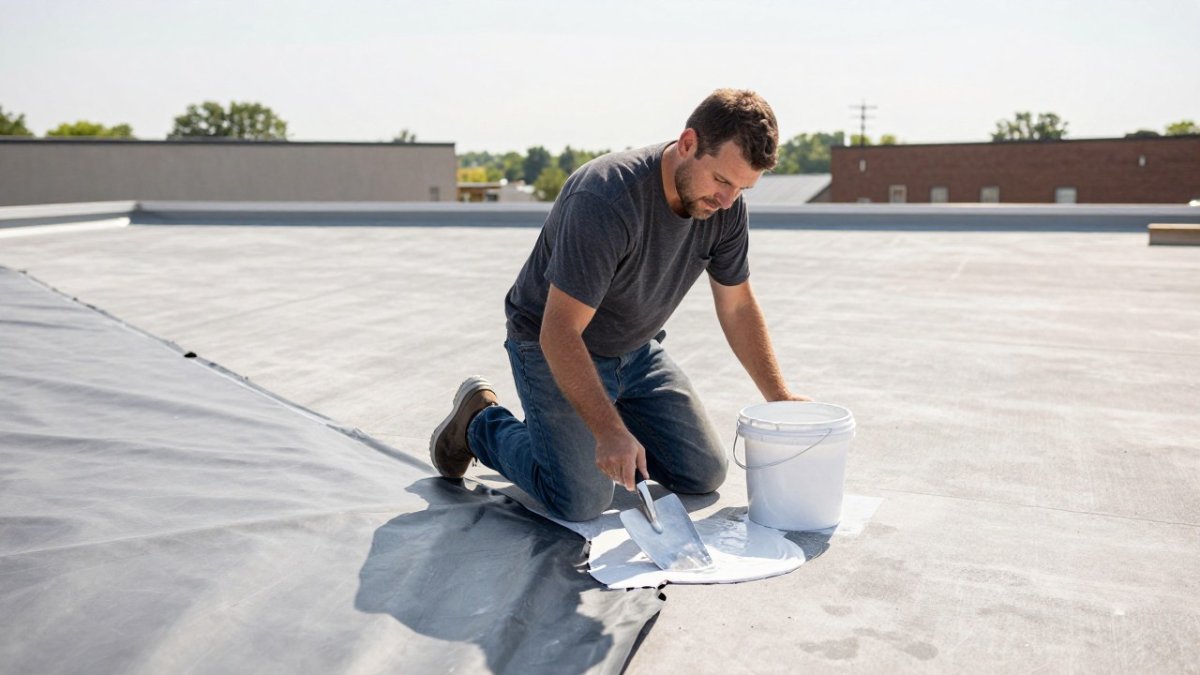
TPO is one of the more forgiving membranes to coat, but only after the surface is properly prepared. TPO is a single-ply membrane with a factory-applied top layer that can hold release agents and dirt. Coating over it without cleaning and priming is where most failures start.
What works on TPO:
- Silicone coatings bond well and handle ponding water, which TPO roofs often collect.
- Polyurethane coatings offer good adhesion and abrasion resistance on high-traffic areas.
- Acrylic coatings work on TPO but are the weakest choice for standing water.
The catch is prep. TPO must be scrubbed, rinsed, and fully dry before any primer goes down. Skipping that step is the most common reason a TPO coating fails at the seams.
Roof Coating Compatibility With EPDM Membrane
EPDM is the membrane that causes the most coating problems, and the reason is chemical. EPDM is a rubber membrane, and many rubber membranes contain plasticizers and oils that migrate to the surface over time. Those oils can sit between the membrane and the coating and interfere with the bond.
That does not make EPDM uncoatable. It makes EPDM a membrane you test before you commit.
What we look for on EPDM:
- Chalky or oily surface residue that wipes off on a rag, a sign of plasticizer at the surface.
- Shrinking or pulling at seams and edges, which means the membrane is moving under stress.
- Patches, repairs, or ponding that change how a coating will sit.
If the EPDM is clean, adhered, and passes an adhesion test, a silicone or polyurethane coating can work. If the surface is oily or the seams are failing, coating is money spent on a roof that will still leak.
Chemical Incompatibility and Plasticizer Migration
Plasticizer migration is the movement of oils and softeners out of a rubber membrane and up to its surface, where they form a barrier that prevents coating adhesion.
The warning signs:
- A slick or greasy feel on the membrane
- Dark, uneven staining that returns after cleaning
- Coating that bubbles or lifts in patches within months
Some coating chemistries also react badly with solvent residues or with certain asphalt-based patches already on the roof. Zinox Coating’s flat roof guidance makes the point plainly: compatibility depends on the existing system and roof conditions, and assuming universal compatibility is a mistake.
For reflective systems specifically, our article on whether reflective roof coatings are worth it for retail centers covers the payoff side. Before that, it helps to understand the risks of flat roof membranes that make coating risky in the first place.
Roof Coating Adhesion Test for Roofs: A Field Protocol
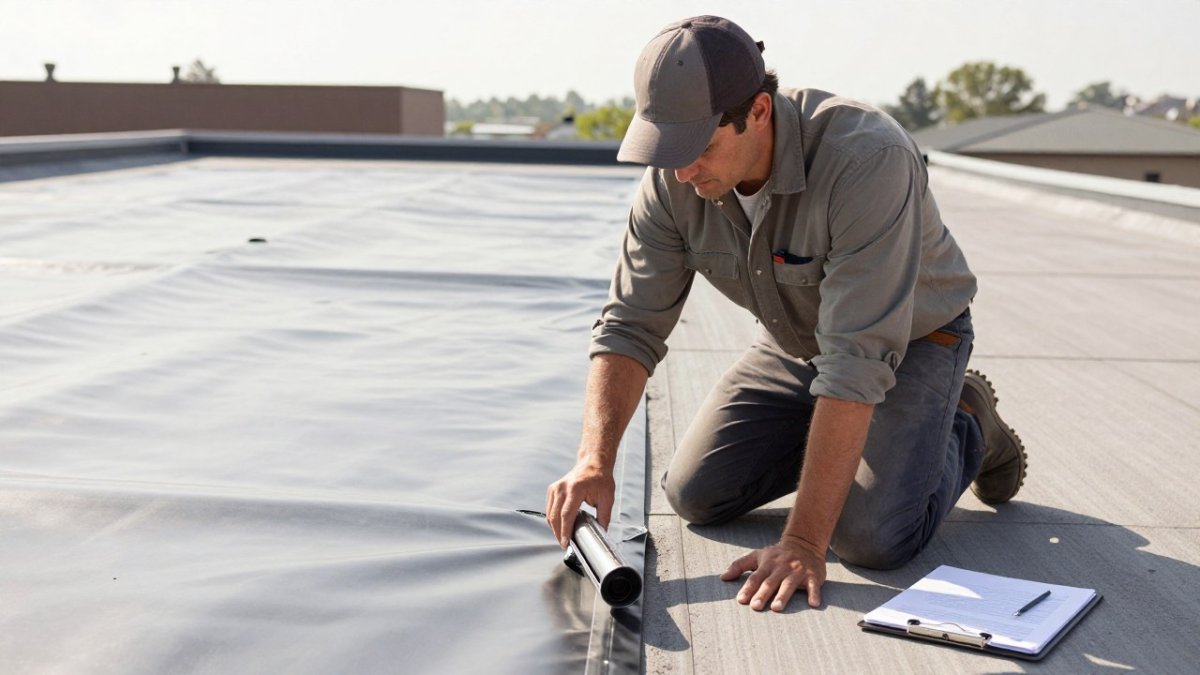
A roof coating adhesion test is a small, controlled trial of the coating on the actual roof before anyone commits to the full job. It takes under an hour and it is the single best predictor of whether the coating will hold.
Here is the protocol we use:
- Pick three test spots across different areas, including one near a seam and one in a low spot.
- Clean each spot the same way the full roof will be cleaned, then let it dry completely.
- Apply the primer specified for that membrane and coating system.
- Apply a small patch of the coating at the manufacturer’s specified thickness.
- Let it cure for the full cure window, not a shortened one.
- Score a small square through the coating with a utility knife.
- Pull the square back at a steady angle and note how it releases.
- Check the underside of the peeled patch for membrane residue.
Reading the Result: Pass, Fail, or Primer Needed
The steps only matter if you know what the result means. Use these criteria on each test patch:
- Pass. The coating resists firm pulling, tears the membrane surface, or leaves membrane residue on the underside of the peeled square. The system is bonding and the roof is a coating candidate.
- Primer needed. The coating releases cleanly from the membrane but the primer layer stays behind. That points to a primer-to-coating bond issue, not a membrane-to-primer issue. Re-test with the manufacturer’s specified primer for that membrane and coating pair.
- Fail. The coating and primer release cleanly from the membrane with no residue. The bond never formed. Do not proceed on that area, and re-check for oil, moisture, or contamination before testing again.
- Stop the project. If two or more test spots fail, or if the membrane is wet, delaminating, or pushing oil to the surface, coating is not the right call. Move to repair or replacement instead of spending the budget on a coating that will lift.
When to Use a Primer and When to Walk Away
Primer is not a universal fix. It is specified for a reason, and using the wrong one can make adhesion worse.
- Use primer when the manufacturer’s data sheet calls for it on that membrane, when the surface is porous or chalky, and when a test patch shows a clean release that a primer is designed to correct.
- Do not use primer as a substitute for cleaning. Primer over dirt, oil, or moisture traps the contamination under the film and fails at the same rate as an unprimed patch.
- Walk away when the membrane is saturated, when seams are failing across the roof, or when plasticizer keeps returning to the surface after cleaning. No primer solves a membrane that is actively rejecting the coating.
Skipping the test patch to save a day can leave owners with a full roof of coating that lifts early, and a manufacturer may not cover a failure traced to surface prep.
Elastomeric Roof Coating Lifespan and What Shortens It
Elastomeric roof coating lifespan depends on the coating type, the climate, and how well the roof was prepped. Silicone and polyurethane systems generally outlast acrylic in harsh sun and ponding conditions.
What shortens the service life fastest:
- Poor surface prep. Dirt, oil, or moisture under the coating.
- Coating over a wet or failing membrane. Trapped moisture finds a way out.
- Too thin an application. Underapplied coating wears through at seams and traffic paths.
- Ignoring ponding water. Standing water breaks down most coatings early.
- Skipping maintenance. Small cracks and blisters get worse, not better.
Warranty terms matter here too. Many coating failures trace back to application details the warranty excludes, which is why we tell owners to read the fine print before signing. Our breakdown of roof coating warranty traps for retail properties covers the exclusions that catch people.
The National Roofing Contractors Association’s 2026 applicator guidelines address coating compatibility across common substrates like single-ply membranes and built-up roofing, which is a useful reference when a manufacturer’s data sheet is unclear.
Coating or Replacement: Making the Call
Coating is the right call when the membrane is intact, well-adhered, and the problems are localized. Replacement is the right call when the membrane is failing broadly, saturated, or already at the end of its service life.
A simple way to decide:
| Situation | Better Option | Why |
|---|---|---|
| Intact membrane, under 25% localized issues | Coating | Lower cost, extends service life |
| Widespread delamination or saturation | Replacement | Coating will not bond or stop leaks |
| Failing seams across the roof | Replacement | Coating cannot fix structural movement |
| Sound membrane, minor surface wear | Coating | Good candidate after prep and testing |
| Repeated leaks after prior repairs | Replacement | Underlying problem is not on the surface |
Sure Roofing’s project account makes a point worth repeating: the first question is whether the existing membrane can support a coating at all, not whether coating is the cheaper option. We agree. Coating a roof that cannot hold it just delays the replacement and adds cost.
If you are weighing the two, our comparison of commercial roof restoration vs. replacement costs and lifespan lays out the trade-offs. And once you decide to coat, here is how to choose a commercial roof coating contractor so the job is done to spec.
Book a Roof Compatibility Inspection
The honest answer is that no article can tell you whether your specific roof will hold a coating. That takes eyes on the membrane, a moisture check, and a test patch.
At Rescue Roofing, we inspect flat and low-slope roofs and tell you plainly whether coating, repair, or replacement is the right move. We provide accurate aerial quotes, help with insurance claim filing and communication with adjusters, and offer financing options. We are available 24 hours.
Get started with Rescue Roofing and find out what your roof can actually take before you spend a dollar on coating.
Frequently Asked Questions
Can you apply a roof coating over an existing membrane?
Sometimes, but compatibility has to be verified first. Coating works when the existing membrane is intact, well-adhered, and free of widespread delamination. Coating is generally an option when the roof has localized issues and the membrane underneath is sound. EPDM, TPO, PVC, modified bitumen, and built-up roofing each behave differently with acrylic, silicone, and polyurethane coatings, so a test patch and adhesion check come before any full application.
How do you test roof coating compatibility with an existing membrane?
Clean a small area, apply the primer and coating the manufacturer specifies, and let it cure fully. Then try to lift the edge with a putty knife and check whether the coating bonded to the membrane or peeled away cleanly. Do this in more than one spot, since seams, drains, and aged sections behave differently. A roof coating adhesion test for roofs is the only reliable way to confirm compatibility before you commit to coating the full roof.
How long does elastomeric roof coating last?
Elastomeric roof coating lifespan depends on the chemistry, the substrate, sun exposure, and how well the surface was prepared. Acrylic coatings generally need more frequent recoating than silicone or polyurethane, which hold up better to ponding water and UV. A coating applied over a membrane that was not properly cleaned or primed will fail early regardless of the product. Manufacturer-approved systems with a warranty give you a clearer expectation than a generic lifespan claim.
Does an existing roof membrane need a primer before coating?
Often yes. Primer improves adhesion on slick membranes like TPO and PVC and on aged surfaces that chalk or hold embedded dirt. Some manufacturer systems require a specific primer for each substrate, and skipping it can void the warranty. Applicator guidelines address coating across common substrates, which reflects how much adhesion depends on matching the primer and coating to the actual membrane.
