


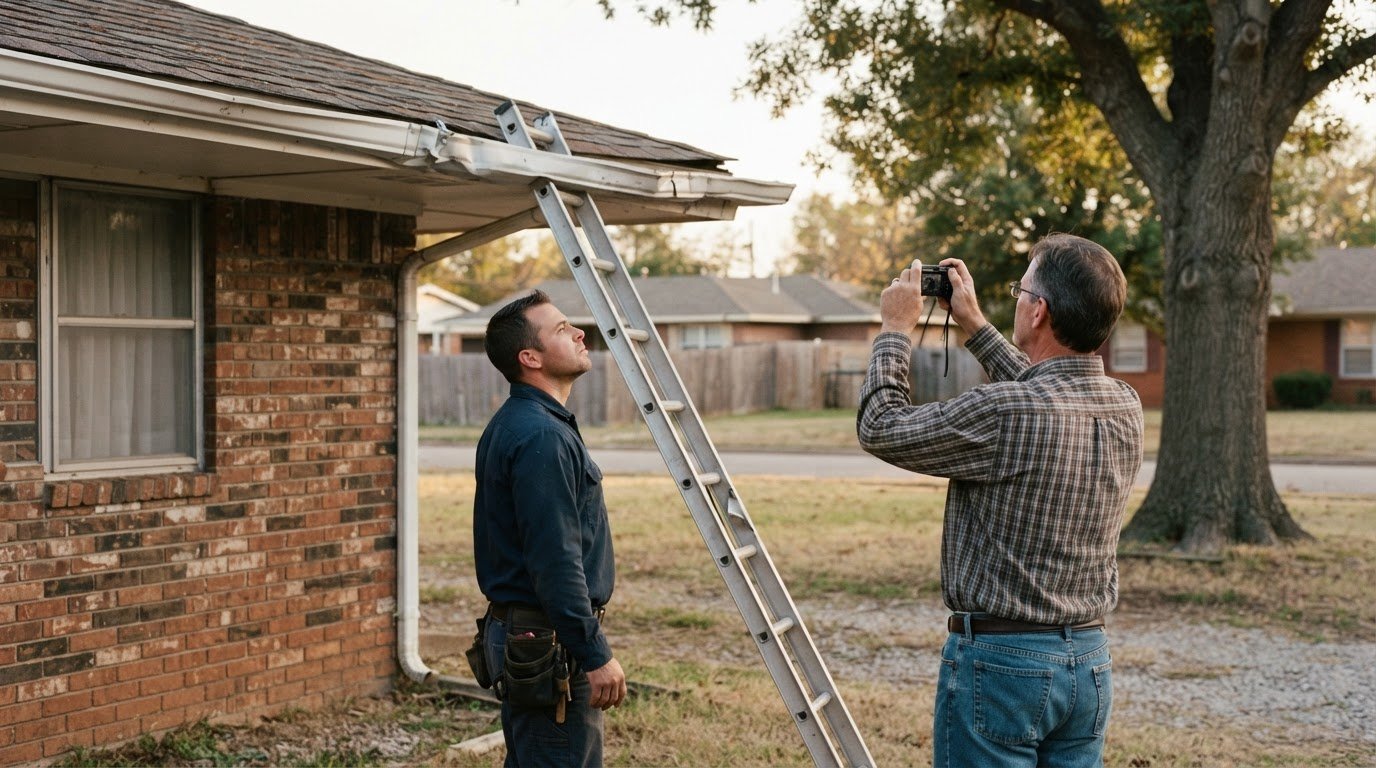

A contractor may be responsible for damage caused by their work, but the steps you take next matter. If you’re figuring out what to do if a contractor damaged your property, first make the area safe, photograph or record the damage, and notify the contractor in writing. Keep your contract, invoices, messages, and receipts together.
It’s understandable to want a clear answer about who pays. The contractor’s liability insurance may cover damage they’re responsible for, while your homeowners policy may cover some sudden, accidental damage, subject to its terms. Poor workmanship itself may be treated differently from damage resulting from it, so the cause and type of loss can affect coverage.
This guide explains how to document the damage, how responsibility can differ when subcontractors are involved, and what practical steps to take next. It also covers when an insurance claim, a written request for compensation, or a roofing inspection and repair may help move the matter forward.
Key Takeaways
- Coverage can depend on whether the contractor caused sudden damage or simply performed faulty work, as well as your policy’s terms and deductible.
- Build a clear record of the damage with dated photos, saved communications, and project documents.
- Responsibility may involve the general contractor, a subcontractor, or an insurer, depending on who caused the damage and how the work was arranged.
- For roof damage, a professional inspection or repair can help address the physical problem while you pursue the appropriate compensation route.
What If a Contractor Damages My Property?
Responsibility depends on what caused the damage, the contractor’s insurance, and your homeowners policy. To decide what to do if a contractor has damaged your property, separate the repair issue from the question of who may pay.
Homeowners Insurance Coverage
Homeowners insurance may cover sudden, accidental contractor damage, subject to policy terms, exclusions, limits, and your deductible. For example, a contractor’s accident might damage a wall or belongings, while correcting faulty workmanship itself may not be covered. A plumber’s incorrectly installed pipe could cause water damage, but the policy may treat the resulting damage differently from replacing the faulty pipe. Review the relevant coverage details before filing.
Contractor Insurance and Credentials
A contractor’s commercial general liability insurance may cover property damage for which the contractor is responsible. Before work begins, ask for the contractor’s insurance information and certificate of insurance, and keep a copy with your project records. For extensive home projects—such as those seeking loft conversions Bournemouth or other structural alterations—checking credentials and insurance upfront helps safeguard your investment. Review the contractor’s work history and check whether your state requires a business license for that type of work. Some states license certain contractors and provide online credential databases.
Filing an Insurance Claim
Report the incident to the contractor in writing and contact your homeowners insurer to ask how to submit a claim. The contractor’s insurer may review whether its policy covers the damage; your insurer will assess your policy, evidence, limits, and deductible. For repair estimates, request written, itemized proposals that describe the damage and work needed. Choose a qualified contractor with relevant experience and credentials for the repair, such as roof work or plumbing.
Legal and Licensing Options
State laws and licensing boards can shape complaint processes, while small claims court may offer a route for pursuing eligible disputes. Rules and court limits vary by state, so the damage amount, evidence, contract, and local requirements matter. Save the contract, photos, messages, invoices, and repair estimates to support a complaint or claim. A licensing board may investigate or discipline a contractor, but that process is separate from seeking compensation through court.
Documenting property damage
A clear record connects the contractor’s work to the damage and supports an insurance review. Capture the condition before cleanup or repairs change what is visible.
Photographing Property Damage
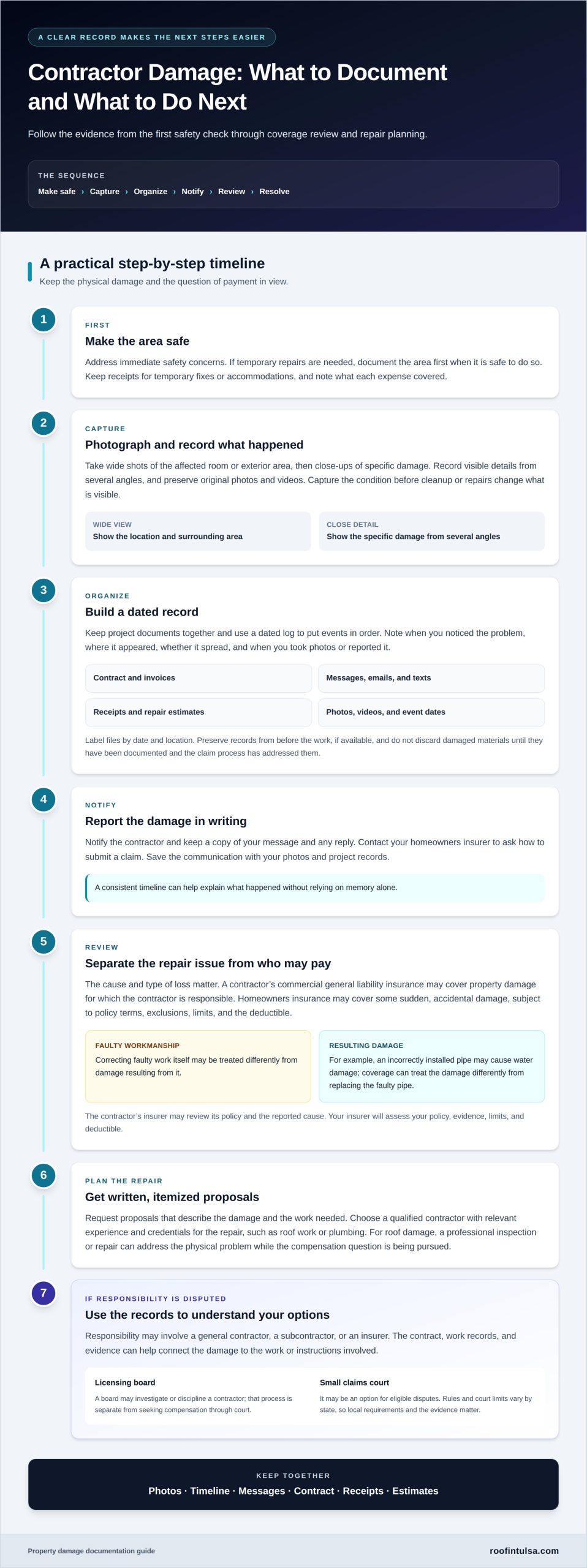
Photographs and videos document the damage’s condition and location, giving insurers and contractors a visual record to review. Take wide shots showing the affected room or exterior area, then close-ups of specific damage, such as a cracked tile, water stain, or broken fixture. Record visible details from several angles and preserve the original files. If a safety hazard requires immediate temporary repairs, document the area first when it’s safe to do so.
Damage Records and Documentation
A damage record brings together visual evidence, project paperwork, and a timeline. Save the contract, invoices, receipts, and messages with the contractor, including emails and texts about the work or damage. Note when you first noticed the problem and when you reported it. Keep receipts for temporary fixes or accommodations, and record what each expense covered. These details can help distinguish accidental damage from a dispute about negligence or workmanship.
Use a dated log to keep events in order. For example, note when a ceiling stain appeared, which room it affected, and whether it spread after the contractor’s work. Add the dates you took photos or videos and sent written notice. Keep copies of those messages and any replies with the images. A consistent timeline can help explain what happened without relying on memory alone.
Organize files by project and label them by date and location, such as “kitchen ceiling” or “roof edge.” Preserve records from before the work, if available, to make changes in condition easier to show. Don’t discard damaged materials until they’ve been documented and the claim process has addressed them. Keep deductible details with your policy documents, since they affect how a covered claim is handled.
If the damage involves a roof, clear photographs and a dated record can support an insurance claim review.
Responsibility of general contractors and subcontractors
The responsible party depends on who performed the work, what caused the damage, and the agreements involved. A contractor may be responsible for repair costs when their work damages your property.
Assigning Contractor Responsibility
Responsibility is assessed by connecting the damage to a person’s work, instructions, or failure to follow professional standards. The contract, work records, and evidence can help establish that connection. If a subcontractor’s electrical work causes a fire, for example, both the subcontractor’s actions and the general contractor’s role matter. An employer is not always liable for an independent contractor’s actions, but may be liable for negligent hiring or instructions.
Insurance may also affect how a claim is handled. A contractor’s liability insurance can cover property damage for which the contractor is liable. The insurer may review the work, reported cause, and supporting documentation before addressing coverage.
Damage to Neighboring Property
If the work damages a neighbor’s fence, vehicle, or home, the contractor responsible should address the repair costs. Notify the contractor in writing and preserve photos, repair estimates, and relevant project messages. Your homeowners insurance likely won’t cover a neighbor’s property, so discuss compensation with the contractor or their insurer. Keep your neighbor informed about the documented damage and steps underway.
Responding to Denied Responsibility
A denial doesn’t settle who caused the damage. Keep communication in writing, organize evidence by date, and ask the contractor to explain their position. Compare the response with the contract, photographs, and inspection findings. If a subcontractor did the work, send the same factual record to the general contractor and identify the specific work at issue.
If the insurance company disputes liability or the contractor stops responding, consider whether the repair evidence supports a formal complaint or legal action. A licensing board may handle complaints or discipline, but that process does not itself compensate you. The appropriate next step depends on the evidence, contract, and available remedies.
Steps to take after a contractor damages property
First protect people and prevent further damage. Then report the incident, preserve evidence, and decide how repairs and compensation should proceed.
Initial Damage Response
Responding quickly helps reduce hazards while preserving evidence. Keep people away from unstable areas, exposed wiring, or standing water. Shut off utilities only when necessary and safe. Before cleanup or temporary repairs, photograph the affected area if conditions allow. Then send the contractor a written report describing the damage, when you noticed it, and what immediate action you took.
- Save receipts for temporary fixes, cleanup, or alternative accommodation.
- Record any new damage after a temporary repair, such as a spreading ceiling stain.
- Keep the contractor’s reply with your project records.
Withholding Payment and Repair Costs
Whether you can withhold payment or deduct repair costs depends on the contract and applicable state rules. Don’t assume a disputed bill can automatically be reduced by your repair estimate. Review the payment terms, describe the damage in writing, and ask the contractor to address compensation or the cost of correcting faulty work. Keep the estimate and any response together. If the contractor disputes the amount, a clear written record helps explain the disagreement.
Separate the cost of repairing accidental damage from the cost of correcting the renovation itself. For example, a policy might address resulting fire damage differently from the expense of rewiring faulty work. Ask the relevant insurer how it will assess each part, and keep receipts for urgent measures that prevent the problem from worsening. If you need a roof assessment or repair, request roof repair assistance.
If the contractor refuses compensation, court action can be one way to pursue damages. The Contractors State License Board notes that its investigation does not guarantee restitution. A licensing complaint and a compensation claim serve different purposes, so keep repair estimates, contract terms, and damage records organized for each process.
Rescue Roofing Tulsa
Rescue Roofing Tulsa can help when contractor-related damage affects a roof and you need to understand its condition. A roof inspection can identify visible damage and help clarify whether repair or replacement is appropriate. For a localized issue, roof repair may address the affected area; more extensive damage may call for residential or commercial roof replacement.
A roofing assessment can help distinguish roof damage from other property concerns and identify a practical next step. Keep your photos, written communications, and relevant project records available when discussing the damage. Contact Rescue Roofing Tulsa to discuss roof damage and possible repair options.
Move Forward With a Clear Repair Plan
A clear plan for what to do if a contractor has damaged your property should address both the home’s immediate needs and the unresolved work. Before work resumes, put the proposed repair scope in writing. Clarify which tasks address the damage, which correct the original work, and who will coordinate any necessary trades. This can help keep new work separate from the original disagreement.
For roof-related damage, the next step may involve roof repair or a broader replacement, whether the property is residential or commercial. Rescue Roofing Tulsa provides these services for roofing needs. The right approach depends on the roof’s condition and the work required. Keep the repair plan focused on restoring the affected area while you handle responsibility and insurance questions separately.
When you’re ready to discuss roofing work, contact Rescue Roofing Tulsa today. A clear next step can make it easier to move forward with care.
Frequently Asked Questions
Is a company liable for the actions of an independent contractor?
Not automatically; responsibility depends on the company’s role and the facts. A company may be liable if its own negligent hiring or instructions contributed to the damage. For example, if a company directed a contractor to perform work in a way that damaged a neighboring structure, those instructions may matter. The contract, work arrangements, and evidence about who controlled the task can help clarify responsibility.
What should I do immediately if a contractor damages my property?
Protect people from immediate hazards first, then prevent further damage if it’s safe. If water is spreading near electrical outlets, keep clear and address the hazard rather than testing equipment yourself. Once the area is safe, notify the contractor and your insurer promptly. Avoid authorizing permanent corrective work before the cause and repair scope are understood, unless urgent action is needed to protect the property.
How should I document property damage caused by a contractor?
Photograph the affected area from close and wider viewpoints so both the damage and its location are clear. For a cracked window, photograph the crack and the full window within its room. Keep the original image files and make a separate copy to share. If you have earlier photos showing the area before work began, preserve them too. They can help show how its condition changed.
Should I notify my contractor in writing about the damage, and what should I say?
Yes, written notice creates a clear record of what you’re reporting. State where the damage is, when you first noticed it, and what work was underway. Describe the visible problem without guessing at its cause. Ask the contractor to respond in writing with their position and proposed next step. Keep the message factual and save the reply with your project records.
Does a contractor’s general liability insurance cover damage to a customer’s property?
It may cover property damage for which the contractor is liable, but having a policy does not by itself establish coverage for a particular incident. The insurer reviews the reported cause and policy terms. For example, accidental damage to a customer’s wall may be treated differently from the cost of correcting faulty installation. Separate the physical damage from the work that may need correction when describing the claim.
How can I verify a contractor’s insurance and file a claim?
Ask the contractor for insurance information and a copy of the certificate of insurance, then keep it with the signed agreement. If damage occurs, notify the contractor in writing and contact your homeowners insurer to learn how to report the loss. Share incident details and supporting records with the relevant insurer. Keep claim correspondence and reference details together so updates and repair decisions remain organized.