



Table of Contents
- Types of Commercial Roofing Systems for Warehouses
- Commercial Roof Leak Detection: Methods and Early Warning Signs
- Common Warehouse Roof Problems and Repair Solutions
- Industrial Roof Maintenance Checklist for Warehouse Operations
- Commercial Flat Roof Lifespan: Maximizing Asset Life and Planning Replacements
- Roof Replacement vs. Repair: Making the Right Decision for Your Warehouse
- Insurance Claims and Cost Factors in Warehouse Roof Repair
- Conclusion
- Frequently Asked Questions
Last Updated: September 2, 2026
Types of Commercial Roofing Systems for Warehouses
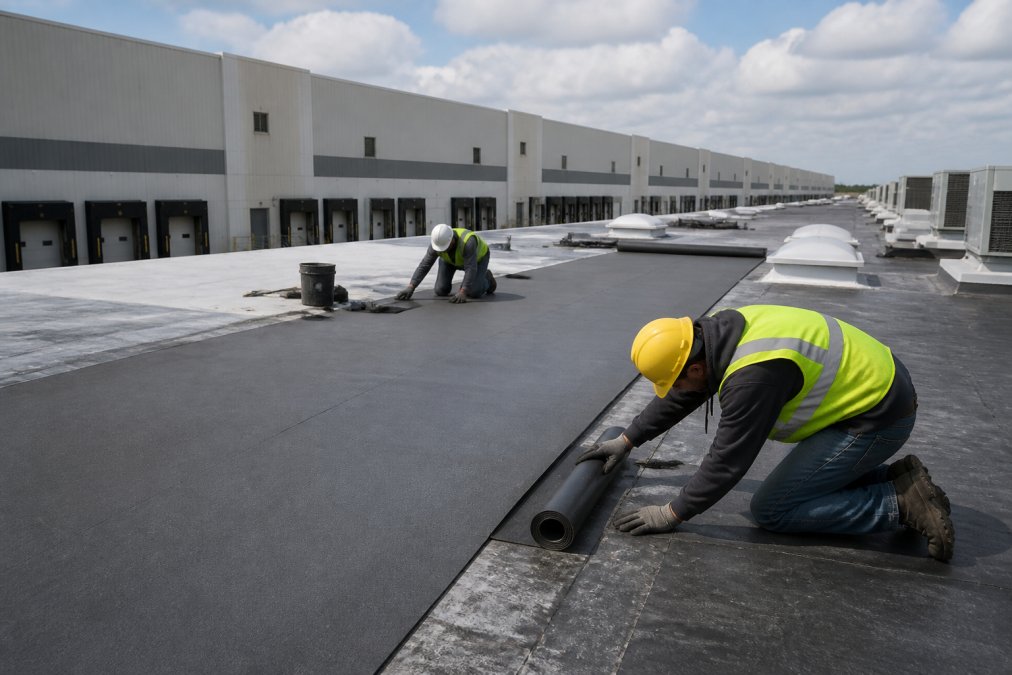
Warehouse roofs face unique demands that differ significantly from residential structures. The most common commercial roofing systems include TPO (thermoplastic polyolefin), EPDM (ethylene propylene diene monomer), PVC, and metal roofing. Each system has distinct advantages depending on your facility’s climate, contents, and budget.
TPO membranes dominate flat roof applications in warehouses. They’re lightweight, reflective, and resistant to UV degradation, extending roof lifespan. Installation is straightforward and repairs are simpler than competing systems, though TPO seams can fail if not installed properly.
EPDM (rubber) roofing has been the industry standard for decades. It’s durable, affordable, and forgiving during installation, a critical advantage for larger warehouse surfaces. The trade-off is that EPDM absorbs more heat than TPO, potentially increasing cooling costs in hot climates.
PVC roofing offers superior chemical resistance and fire ratings, making it ideal for warehouses storing hazardous materials or food products. It maintains structural integrity through temperature extremes but typically costs more than TPO or EPDM.
Metal roofing systems (standing seam) provide exceptional longevity, often lasting 40-50 years with minimal maintenance (nrca.net). They handle ponding water better than membrane systems and shed snow naturally, though flat metal applications are less common due to drainage complexity.
At Rescue Roofing, we assess your specific warehouse conditions, climate exposure, facility contents, and operational requirements to recommend the system that balances durability, cost, and performance.
The most common mistake is choosing a roofing system based solely on upfront cost. A $2-per-square-foot savings on installation often translates to $10-per-square-foot in repair costs within five years if the system doesn’t match your warehouse’s actual demands.
Commercial Roof Leak Detection: Methods and Early Warning Signs
Detecting leaks early prevents catastrophic water damage that can shut down warehouse operations. The most effective leak detection methods combine visual inspection, thermal imaging, and moisture surveys.
Visual inspection examines the roof membrane for cracks, blisters, punctures, and deterioration around flashing and seams. Many warehouse managers overlook this step, assuming no visible interior water means the roof is fine. By the time interior damage appears, sub-surface damage is often extensive and expensive to repair.
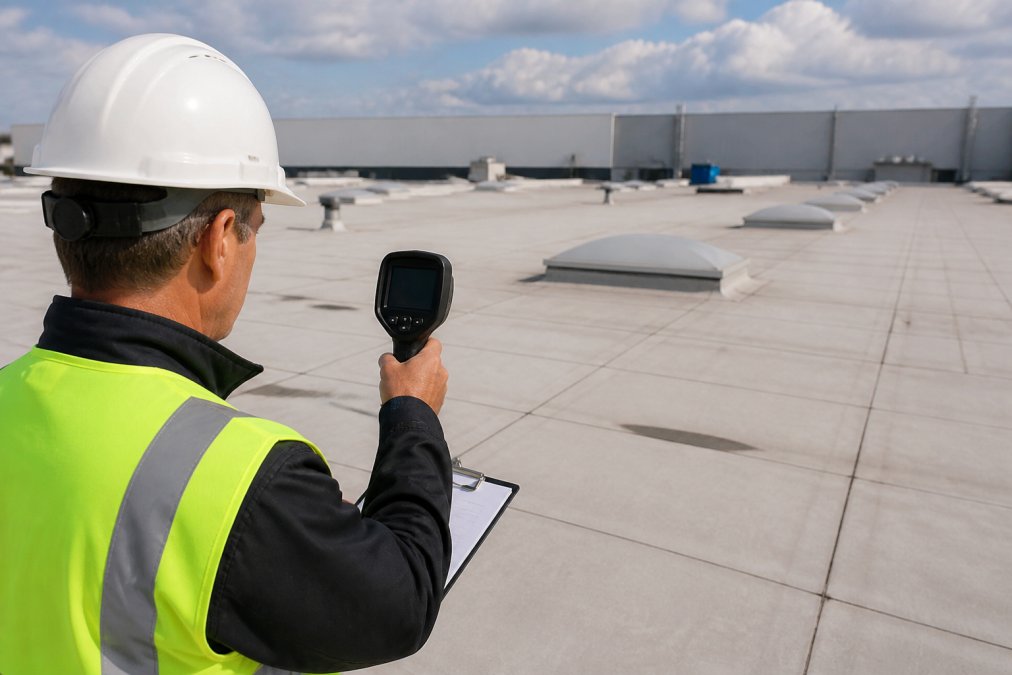
Thermal imaging (infrared thermography) detects moisture trapped beneath the roof membrane by identifying temperature variations. Wet insulation retains heat differently than dry areas, creating distinct thermal signatures. This technology is particularly valuable for flat roofs where moisture can spread laterally without obvious surface indicators.
Moisture surveys use specialized equipment to measure moisture content in the roof assembly, pinpointing exact locations and extent of saturation. This allows contractors to prioritize repairs and estimate replacement needs accurately.
Early warning signs include water stains on interior walls or ceilings, musty odors, peeling paint near roof penetrations, and visible algae or moss growth. Ponding water, areas where water collects and doesn’t drain, indicates poor slope or structural settling and should be addressed immediately.
Ignoring small leaks costs exponentially more. A pinhole-sized leak can saturate 500+ square feet of insulation within months, requiring complete section replacement rather than a simple patch.
Common Warehouse Roof Problems and Repair Solutions
Warehouse roofs develop predictable failure patterns based on age, material type, and maintenance history. Understanding these problems helps facility managers recognize when professional repair is necessary versus when replacement becomes more cost-effective.
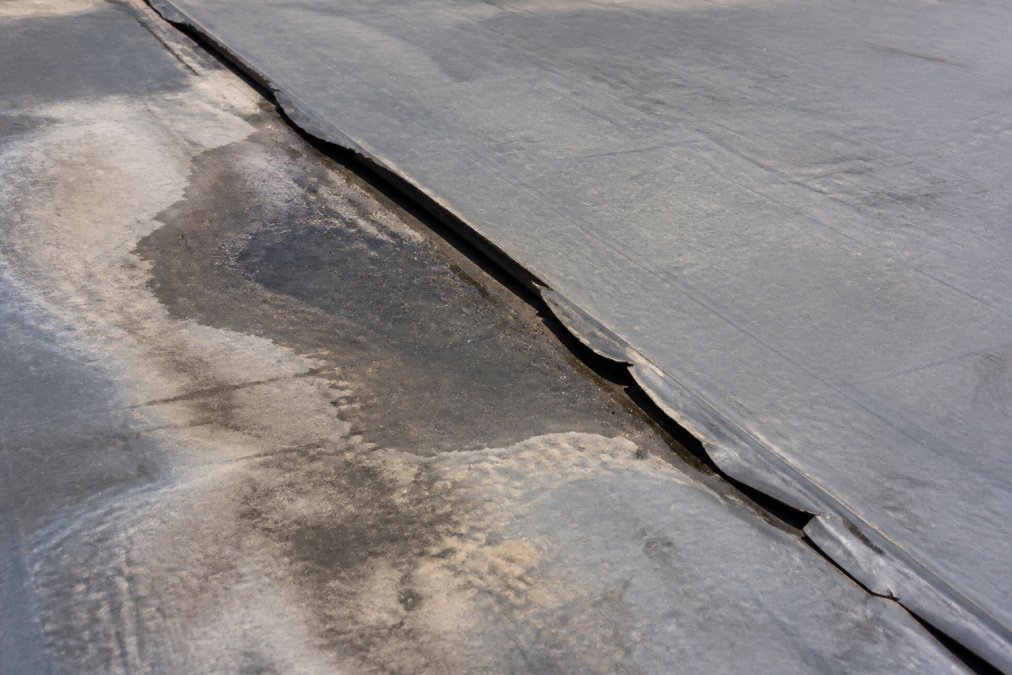
Seam Failure represents the most common commercial roof leak source. Over time, UV exposure, thermal cycling, and foot traffic degrade the adhesive or heat-weld bonds holding seams together. Seam separation allows water to penetrate the substrate and insulation. Repair typically involves re-sealing or heat-welding the affected section.
Flashing Deterioration occurs around roof penetrations, HVAC units, vents, skylights, and exhaust pipes. As flashing ages, it cracks, rusts, or separates from the roof membrane. Water enters the building at these weak points. Flashing repair or replacement is essential preventative maintenance.
Ponding Water indicates inadequate roof slope or structural settling. Commercial flat roofs should have minimum 1/4-inch slope per 12 inches of horizontal distance (the American Dental Association). When water pools and doesn’t drain within 48 hours, it accelerates membrane degradation. Solutions range from installing additional drains to re-sloping sections.
Puncture and Tear Damage occurs from foot traffic, equipment movement, fallen branches, or hail impact. Repair involves patching with compatible membrane material, but the underlying cause must be addressed to prevent recurrence.
UV Degradation affects all membrane roofing systems over time. Roof coatings (reflective or protective) slow this process significantly. Warehouses in high-sun climates benefit from recoating every 5-7 years.
Industrial Roof Maintenance Checklist for Warehouse Operations
A systematic maintenance program extends roof lifespan by 10-15 years compared to reactive repair approaches. The checklist should be performed quarterly and after severe weather events.
Visual Roof Inspection:
- Walk the entire roof surface (or use drone inspection for large warehouses)
- Check all seams for separation, cracks, or deterioration
- Inspect flashing around vents, pipes, and HVAC penetrations
- Look for blisters, wrinkles, or pooling water
- Document any damage with photos and location notes
Drainage System Maintenance:
- Clear gutters and downspouts of debris
- Verify that drain outlets are clear and flowing freely
- Check for standing water or slow drainage areas
- Inspect gutter seams for leaks or separation
Flashing and Penetration Check:
- Examine all roof penetrations for gaps or separation
- Check caulking and sealants around vents and pipes
- Verify that metal flashing shows no rust or corrosion
- Confirm that all fasteners are tight and secure installing roof hatches.
Structural Assessment:
- Check for sagging, dips, or uneven surfaces
- Inspect the roof deck for visible damage or deterioration
- Look for signs of water damage on interior ceilings
- Document changes in roof condition since last inspection
Seasonal Considerations:
- Spring: Remove winter debris, inspect for storm damage
- Summer: Check for UV damage and heat-related deterioration
- Fall: Clear leaves and prepare for winter weather
- Winter: Monitor for ice damming and snow load accumulation
A documented maintenance schedule costs 15-20% of what emergency repairs cost. Warehouses that track roof condition quarterly spend significantly less on unplanned downtime and emergency service calls.
Commercial Flat Roof Lifespan: Maximizing Asset Life and Planning Replacements
Understanding the expected lifespan of your commercial flat roof helps with capital planning and prevents unexpected facility failures.
TPO membrane roofs typically last 15-20 years under normal conditions. Superior UV resistance means less degradation in high-sun environments. However, poor installation can reduce this to 10-12 years.
EPDM roofs generally last 20-25 years when properly maintained. Seams require periodic re-sealing to prevent failure. Warehouses with regular maintenance programs often extend EPDM roofs to 25-30 years.
PVC membrane systems offer the longest lifespan among single-ply membranes, typically 25-30 years. The material resists UV degradation better than TPO or EPDM, and chemical resistance means fewer environmental stressors.
Metal roofing (standing seam) can exceed 40-50 years with minimal maintenance. The primary failure point is fastener corrosion and sealant degradation around penetrations, not the metal itself.
The commercial roof lifecycle involves distinct phases: the first 5 years (warranty period with minimal issues), years 5-15 (preventative maintenance becomes critical), years 15-25 (seams and flashing require increasing attention), and beyond 25 years (replacement planning becomes necessary).
Maximizing asset life requires understanding your roof’s current condition. A moisture survey combined with thermal imaging reveals exactly how much useful life remains. Warehouses with roofs approaching the 15-20 year mark should budget for replacement within 3-5 years, as emergency repairs become more frequent and costly as systems age.
Roof Replacement vs. Repair: Making the Right Decision for Your Warehouse
The decision between repair and replacement depends on roof age, extent of damage, and repair cost relative to replacement cost.
Repair makes sense when:
- Roof is under 15 years old
- Damage is localized to specific areas (less than 25% of roof surface)
- Repairs cost less than 50% of replacement cost
- Structural integrity remains sound
- The roof has several years of useful life remaining
Replacement becomes necessary when:
- Roof is 20+ years old and approaching end of lifespan
- Multiple systems are failing simultaneously (seams, flashing, membrane)
- Damage affects more than 30% of roof surface
- Repair costs exceed 50-60% of replacement cost
- The roof has experienced repeated failures in the same areas
The “50% rule” is a common industry benchmark: if repairs cost more than 50% of replacement, replacement is typically the better long-term investment. However, this doesn’t account for operational disruption. A warehouse that cannot afford downtime might choose repair even at higher cost to avoid the 1-2 week replacement timeline.
Rescue Roofing provides detailed cost-benefit analysis for both options. Our aerial inspection technology captures precise roof condition data, allowing us to estimate remaining lifespan and project when replacement will become necessary. This forward planning prevents emergency situations where warehouse managers must choose between operational shutdown and expensive emergency repairs.
Insurance Claims and Cost Factors in Warehouse Roof Repair
Storm damage, hail, and weather events frequently trigger insurance claims for warehouse roof damage. Understanding the claims process and documentation requirements ensures you receive full coverage.
Insurance Claim Documentation Requirements:
- Photographs of damage from multiple angles
- Detailed damage assessment from a licensed contractor
- Estimate of repair costs with itemized line items
- Evidence of pre-damage roof condition (prior inspections, photos)
- Weather reports documenting the storm event
- Proof of maintenance (if applicable to claim)
Most insurance policies require that damage be reported within 30 days of the incident. Delayed reporting can result in claim denial, even if the damage was caused by a covered event.
Cost Factors in Warehouse Roof Repair:
Repair costs vary based on membrane type, damage extent, accessibility, and local labor rates. TPO and EPDM patches cost less than PVC or metal repairs. Extensive damage requiring section replacement costs significantly more than localized seam repairs.
Accessibility affects labor costs substantially. Warehouses with complex roof designs, multiple penetrations, or safety hazards require more time and specialized equipment. Emergency repairs (nights, weekends, holidays) typically cost more than standard daytime repairs.
According to the National Roofing Contractors Association, proper documentation of pre-damage conditions increases claim approval rates by 40% and reduces disputes with insurance adjusters. Warehouses that maintain regular inspection records have significantly better claim outcomes.
Rescue Roofing handles insurance claim coordination directly with your adjuster. We document damage, provide detailed estimates, and communicate with insurance companies on your behalf, ensuring you understand exactly what coverage applies to your situation.
Warehouses with aging roofs (15+ years) or those in high-hail-risk areas should maintain detailed pre-damage documentation and annual inspection photos to strengthen future insurance claims.
Conclusion
Commercial roof repair for warehouses requires balancing immediate repair needs with long-term asset management strategy. The roofing systems that work best, TPO, EPDM, PVC, and metal, each have distinct advantages depending on your facility’s climate, contents, and operational requirements. Early detection through regular inspections and thermal imaging prevents catastrophic failures that disrupt warehouse operations.
A systematic maintenance program extending 15-20 years costs substantially less than reactive repairs. Understanding when to repair versus when to replace protects your capital budget and prevents emergency situations where expensive downtime becomes unavoidable.
Rescue Roofing provides the expertise and support to manage your warehouse roof as a strategic asset. Our team handles accurate aerial inspections, assists with insurance claims, and coordinates directly with adjusters to ensure you receive full coverage. We offer flexible financing options and transparent cost estimates so you can plan roof repairs and replacements with confidence.
Ready to protect your warehouse roof? Call Rescue Roofing today for a professional inspection and detailed estimate. We’ll assess your roof’s current condition, explain your options, and help you make the right decision for your facility.
Frequently Asked Questions
How often should a warehouse roof be inspected?
Warehouses should have professional roof inspections at least twice per year, spring and fall, to catch seasonal damage early. After severe weather events (hail, high winds, heavy snow), schedule an immediate inspection. Regular inspections identify membrane deterioration, flashing issues, and ponding water before they become expensive problems. Many commercial property managers also conduct visual walkthroughs monthly to spot obvious damage.
What type of roof do warehouses have?
Most warehouses use flat roof systems, typically TPO (thermoplastic polyolefin), EPDM (rubber membrane), or PVC membranes. These materials are cost-effective, durable, and allow efficient use of roof space for HVAC equipment and drainage. Metal roofing is also used in some industrial facilities for its longevity and energy efficiency. The choice depends on climate, budget, and specific operational needs of the facility.
Who is responsible for roof repairs in a commercial lease?
Responsibility depends on your lease agreement. In triple-net (NNN) leases, tenants typically cover roof maintenance and repairs as part of building expenses. In gross leases, the landlord usually handles structural repairs. Review your lease carefully, ambiguity about roof responsibility is common. Many commercial property disputes arise from unclear maintenance obligations, so clarify this before signing or when damage occurs.
What is the 25% rule for roofing?
The 25% rule states that if repair costs exceed 25% of the roof’s replacement cost, replacement is often the better financial decision. This rule helps warehouse owners decide between patching and replacing. However, the actual threshold varies based on your roof’s remaining lifespan, warranty considerations, and operational downtime costs. A professional assessment can determine whether repair or replacement makes sense for your specific situation.
This article was written using GrandRanker