



Table of Contents
- Why Commercial Roof Maintenance Is Essential
- Recommended Inspection Frequency and Seasonal Timing
- Commercial Roof Inspection Checklist for Facility Managers
- Building Your Roof Maintenance Log Template
- OSHA Roof Safety Requirements and Compliance
- Creating a Preventative Maintenance Program
- Budgeting and Warranty Compliance for Long-Term Asset Management
- Conclusion
Last Updated: August 5, 2026
Why Commercial Roof Maintenance Is Essential
A commercial roof system is not a "set it and forget it" asset. It’s complex infrastructure that protects your entire operation, inventory, equipment, employees, and building structure. Without a structured maintenance schedule, you’re gambling with expensive failures that disrupt business, compromise safety, and trigger insurance complications.
Water infiltration from a failing roof cascades into structural damage, mold growth, electrical hazards, and equipment failure. A single severe weather event can accelerate deterioration that might have gone unnoticed for months. By the time you realize there’s a problem, damage has already spread.
Preventative maintenance is your competitive advantage. Regular inspections catch problems early, when repairs are manageable and affordable. You extend your roof’s lifecycle, reduce emergency repair costs, and maintain the building envelope that keeps your business running. A documented maintenance log also protects you with insurance companies and warranty claims, proving you’ve upheld your responsibilities as a property owner.
Rescue Roofing has worked with facility managers across Tulsa and Oklahoma to establish maintenance programs that prevent costly surprises. The difference between a roof that fails after 10 years and one that lasts 20 years often comes down to consistency and keeping records that prove you did.
Recommended Inspection Frequency and Seasonal Timing
Most facility managers should conduct formal inspections at least twice per year, spring and fall, with additional checks after severe weather events.
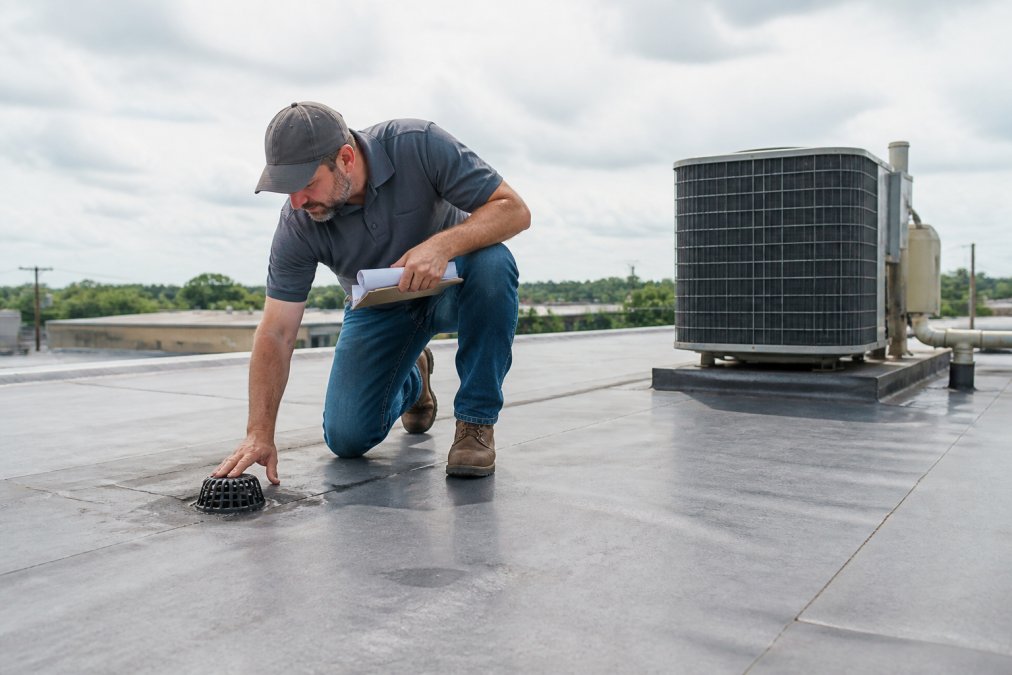
Spring inspections (March to May) catch winter damage from snow load, ice dams, and freeze-thaw cycles. You’re looking for seam integrity issues, ponding water, and debris. Spring is also when you should clear gutters to prepare for summer storms.
Fall inspections (September to November) prepare the roof for winter stress. You’re checking for UV degradation from summer heat, verifying seals on seams and flashing, and ensuring drainage systems are clear before heavy rains.
After severe weather events, inspect within 48 hours of high winds, hail, or ice storms. Prompt inspection documents damage for insurance claims and prevents small problems from becoming structural failures.
For high-stress environments like data centers or medical facilities, consider quarterly inspections. The additional cost is minimal compared to unexpected downtime.
Document every inspection with dates, findings, and photos. This log becomes critical evidence for insurance claims or warranty disputes. Rescue Roofing assists with documentation and helps coordinate findings with your insurance adjuster.
Commercial Roof Inspection Checklist for Facility Managers
A structured checklist ensures you don’t miss critical vulnerabilities on commercial flat roofs and membrane systems.
Roof Membrane Assessment:
- Check for visible cracks, blisters, or tears
- Look for membrane separation from seams or edges
- Identify UV degradation (chalking, fading, or brittleness)
- Document condition in photos
Flashing Inspection:
- Examine all roof penetrations: HVAC units, vents, skylights, and parapet walls
- Check that flashing is properly sealed and not lifting or cracked
- Verify sealant integrity around flashing
- Look for rust or corrosion on metal flashing
Seam Integrity:
- Walk perimeter and major seams, checking for gaps or separation
- Look for water infiltration signs near seams (staining, mold, moisture)
- Verify seams are sealed and not pulling apart
Drainage Systems:
- Clear debris from gutters, downspouts, and roof drains
- Check that water flows freely without ponding
- Verify drains aren’t blocked or damaged
Structural Elements:
- Inspect parapet walls for cracks, deterioration, or water damage
- Check roof-to-wall connections
- Look for signs of structural movement or settling
Safety Hazards:
- Identify trip hazards, loose materials, or debris
- Check that roof access points are secure
- Note areas requiring fall protection
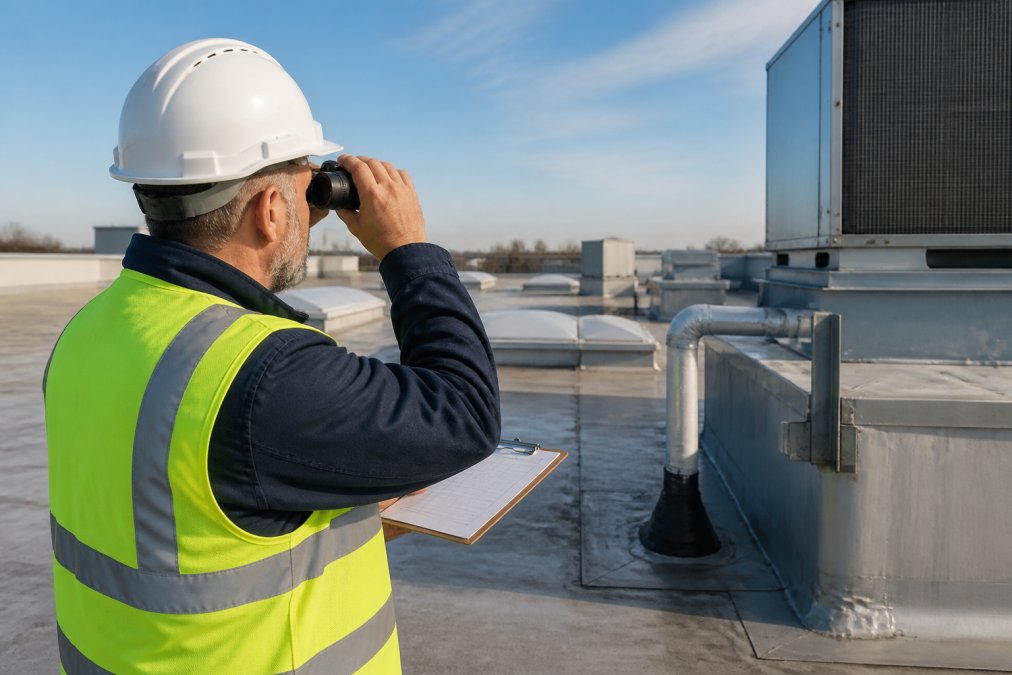
Take photos of every area inspected. These images become part of your maintenance log and provide visual proof of the roof’s condition. If problems develop later, you have documentation showing what the roof looked like in good condition.
Building Your Roof Maintenance Log Template
A roof maintenance log creates a continuous record of inspections, repairs, and identified problems. It protects you with insurance companies and provides evidence that you’ve maintained the roof system according to manufacturer specifications.
Your maintenance log should include:
Inspection Date and Inspector Name, Establishes accountability and creates a documentation chain.
Weather Conditions, Note conditions during inspection (clear, rainy, hot, cold) for context when interpreting findings.
Roof Areas Inspected, Document which sections you examined. Large buildings may require multiple sessions.
Findings and Observations, Describe what you found specifically. "Flashing around Unit 3 HVAC shows minor sealant deterioration, no water entry yet" is actionable; "Roof looks okay" is not.
Photos or Attachments, Link photos taken during inspection. Visual documentation is more reliable than memory.
Repairs or Actions Taken, Record any work completed: debris removal, sealant reapplication, drain cleaning, or contractor repairs, including completion dates.
Repair Cost, Track spending on maintenance and repairs to help budget for future work.
Next Inspection Date, Schedule the next inspection to prevent gaps in documentation.
Warranty or Compliance Notes, Document warranty conditions affecting coverage and any compliance efforts.
Most facility managers use a spreadsheet or dedicated facility management platform. The key is consistency, every inspection gets recorded, every repair documented. When you need to file an insurance claim or dispute a warranty issue, you’ll have complete history proving responsible maintenance.
Rescue Roofing can help you establish this documentation system and ensure inspections and repairs are properly recorded.
OSHA Roof Safety Requirements and Compliance
Commercial roof maintenance involves inherent safety risks. Workers face fall hazards, exposure to hot surfaces, and potential equipment strikes. OSHA sets specific requirements to protect workers during roof inspections and maintenance.
Fall Protection Requirements, Any work at heights of 6 feet or more requires fall protection: personal fall arrest systems (harnesses, lanyards, anchors), safety nets, or warning lines. Your maintenance team must be trained on proper equipment and procedures before roof access.
Roof Access and Ladders, Ladders must be secured and extend at least 3 feet above the landing. Workers must maintain three points of contact when climbing. Ladders should be at a 75-degree angle on stable, level ground.
Hazard Communication, Workers must be informed of roof hazards: slippery surfaces, hot materials, electrical hazards from HVAC equipment, and chemical hazards from sealants. Safety data sheets (SDS) must be accessible.
Training and Competency, Workers must be trained in fall protection, hazard recognition, and emergency procedures. A "competent person" (trained to identify hazards and authorized to correct them) must supervise roof work.
Weather Conditions, Work should not proceed during high winds, rain, ice, or other conditions increasing slip and fall risk. Wind speeds above 30 mph typically make roof work unsafe.
Documentation, Keep records of worker training, competency certifications, and incident reports. OSHA will review these if an accident occurs.
When hiring contractors like Rescue Roofing, verify they have proper safety certifications, trained personnel, documented safety procedures, liability insurance, and OSHA compliance.
Creating a Preventative Maintenance Program
A preventative maintenance program transforms roof management from reactive crisis response to proactive asset protection.
Start by establishing a baseline with a comprehensive roof assessment documenting the current condition of the membrane, flashing, drainage systems, and structural elements. This becomes your reference point for tracking changes over time.
Create a maintenance schedule tied to seasonal weather patterns and your roof’s specific vulnerabilities. Most commercial roofs need spring and fall inspections, with additional checks after severe weather. Document scheduled dates in your facility management system and assign responsibility to specific team members.
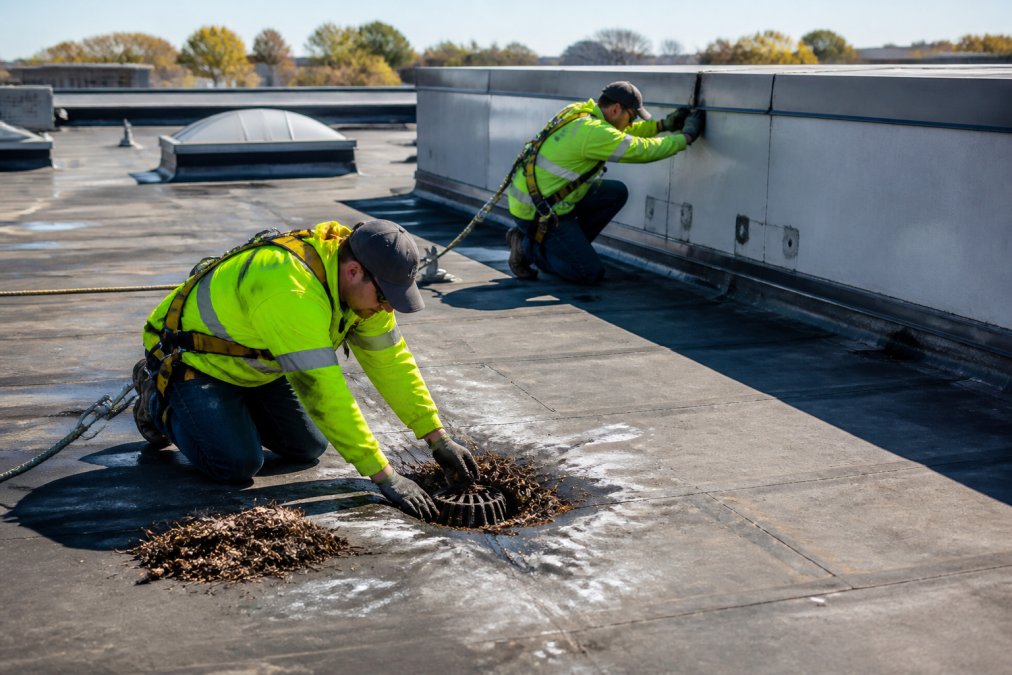
Assign specific tasks to each inspection. Spring inspections focus on winter damage recovery. Fall inspections prepare for winter stress. After severe weather, document damage for insurance purposes. Defining what you’re looking for ensures consistency.
Budget for routine maintenance: debris removal, drain cleaning, sealant reapplication, and minor repairs. A clogged drain costs $200 to clean but can cause $20,000 in water damage if ignored. Sealant reapplication costs a few hundred dollars but prevents membrane penetration requiring full roof replacement.
Track all maintenance in your log. Over time, this data reveals patterns, certain areas deteriorating faster or specific problems recurring. This information helps you prioritize repairs and plan for eventual replacement.
Establish a capital expenditure budget for roof replacement. Even with excellent maintenance, commercial roofs eventually reach end-of-life. Planning financially avoids emergency situations.
Rescue Roofing helps facility managers establish preventative maintenance programs fitting your building’s specific needs and budget constraints.
Budgeting and Warranty Compliance for Long-Term Asset Management
Commercial roof maintenance requires a multi-year financial perspective, balancing immediate repair costs against long-term lifecycle extension and eventual replacement.
Warranty Compliance, Most commercial roofing systems come with manufacturer warranties covering the membrane and sometimes installation labor. These warranties have conditions: you must perform recommended maintenance, keep detailed records, and address problems within specified timeframes. Failing to conduct required inspections or delaying repairs can void coverage.
Review your roof system’s warranty documentation. Understand what’s covered, what maintenance is required, and what voids the warranty. Some warranties require annual professional inspections. Document that you’re meeting these requirements in your maintenance log.
Capital Expenditure Planning, A typical commercial flat roof lasts 15-20 years depending on membrane type, climate, and maintenance quality. Budget for eventual replacement by setting aside funds annually. If your roof has 10 years remaining, budgeting $500-$1,000 per month ensures funds are available when replacement becomes necessary.
Repair vs. Replacement Decisions, If repairs would cost more than 30-40% of replacement cost, replacement makes financial sense. If your roof is near end-of-life, repairs are temporary fixes. If relatively new, repairs extend life economically.
Insurance and Claims, Maintain your maintenance log meticulously because it becomes critical evidence in insurance claims. A documented maintenance history proves you maintained the system responsibly and strengthens your claim. Provide photos from your log showing pre-damage condition and include inspection records when filing claims.
Asset Management Integration, Integrate roof maintenance into your broader facility asset management system. Track maintenance costs alongside other building systems. Monitor how preventative maintenance spending correlates with emergency repair costs and system lifespan.
Rescue Roofing provides detailed documentation of all inspections and repairs for warranty compliance and insurance claims support.
Commercial roof maintenance is the foundation of protecting your facility, extending your roof’s life, and avoiding costly emergencies. A structured schedule, consistent inspections, detailed documentation, and preventative maintenance transform roof management from a source of stress into a controlled, predictable expense.
Start with a comprehensive inspection documenting your roof’s current condition. Schedule regular inspections aligned with seasonal weather patterns. Keep detailed records of every inspection and repair. Budget for routine maintenance and eventual replacement. Address problems promptly before they escalate.
Rescue Roofing has helped countless facility managers in Tulsa and Oklahoma establish maintenance programs protecting their assets and bottom line. Our team provides thorough inspections, accurate documentation, and expert guidance on maintenance priorities. We work directly with your insurance adjuster if damage occurs, ensuring claims are properly supported. Call Rescue Roofing today to schedule your commercial roof inspection and establish a maintenance program for your facility.
Frequently Asked Questions
How often should a commercial roof be inspected?
Most commercial roofs need inspection twice annually, spring and fall, to catch seasonal damage and debris accumulation. After severe weather events, inspect immediately for punctures, membrane damage, and flashing separation. Properties with aging roof systems or those in high-wind areas may benefit from quarterly inspections. Regular inspection frequency directly extends roof system integrity and catches water infiltration issues before they become structural damage.
What should be included in a commercial roof inspection checklist?
A comprehensive commercial roof inspection checklist should cover roof membrane condition, flashing integrity around HVAC units and parapet walls, seam integrity, debris accumulation, ponding water, drainage system function, signs of UV degradation, and evidence of leaks or moisture. Document all findings in a roof maintenance log template with photos and dates. This systematic approach helps facility managers track roof lifecycle extension and supports warranty compliance documentation.
What are the common signs of commercial roof failure?
Watch for pooling water, visible cracks or blistering in the roof membrane, deteriorating flashing, moss or algae growth, and interior water stains. Thermal imaging can detect moisture survey issues before they become visible. Puncture repairs that keep recurring, separated seams, and worn roof coating also signal approaching failure. Early detection through preventative maintenance prevents costly emergency repairs and structural damage to your facility.
How does a preventative maintenance program extend roof life?
A preventative maintenance program reduces capital expenditure by addressing minor issues, seam separation, flashing deterioration, debris removal, before they cause water infiltration and structural damage. Regular inspections catch UV degradation and weather cycle damage early. Proper drainage maintenance prevents ponding water that accelerates membrane breakdown. Properties with documented maintenance logs also maintain roof warranty coverage and see significantly longer asset lifecycle compared to reactive-only approaches.
What does OSHA require for roof safety during maintenance?
OSHA requires fall protection systems, guardrails, or safety nets for any work on roofs above 6 feet. Workers must use personal protective equipment, and proper training in roof safety is mandatory. Rescue Roofing ensures all maintenance work meets OSHA roof safety requirements, protecting your team and your liability. Documenting safety compliance in your maintenance log also supports insurance and warranty claims.
How should I document roof maintenance for insurance and warranty purposes?
Use a roof maintenance log template to record inspection dates, findings, repairs completed, contractor information, and any warranty work performed. Include photos of problem areas and completed repairs. This documentation protects your warranty coverage, supports insurance claims after severe weather, and demonstrates due diligence to adjusters. Digital asset management systems help facility managers organize these records for easy retrieval during claims or warranty disputes.
This article was written using GrandRanker