



Table of Contents
- Start With These 7 Tips for Choosing a Storm Damage Roof Contractor
- Tip 1: Verify Licensing, Bonding, and Insurance First
- Tip 2: How to Spot Storm Chaser Roofing Scams
- Tip 3: Roof Insurance Claim Process Tips: Know the Contractor’s Role
- Tip 4: Questions to Ask Roofing Contractor After Storm Damage
- Tip 5: Demand a Written Estimate and a Contract You Can Read
- Tip 6: Check Local References and Online Reputation
- Tip 7: Confirm the Warranty and Post-Installation Support
- What Matters Most After the Storm
- Frequently Asked Questions
Last Updated: September 7, 2026
Start With These 7 Tips for Choosing a Storm Damage Roof Contractor
Severe weather can leave your roof compromised and your judgment clouded by urgency. The pressure to act fast is exactly what storm chasers rely on, which is why knowing how to vet a storm damage roof contractor before you sign anything matters more than speed.
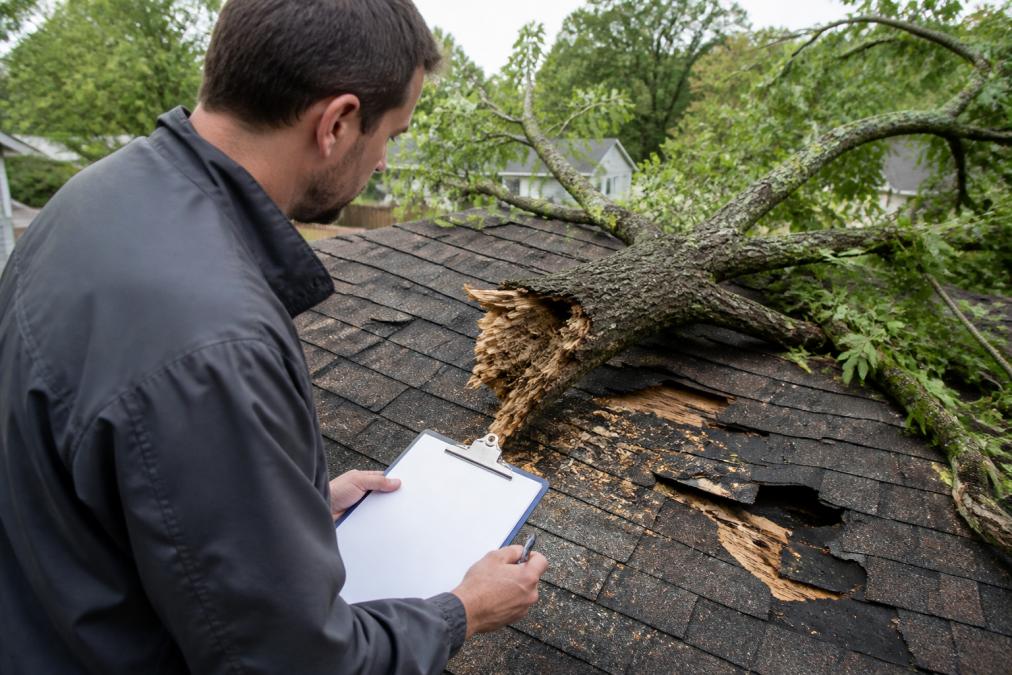
A storm damage roof contractor is a specialist who handles hail and wind damage repairs, documents losses for insurers, and manages the restoration process from inspection to final shingle. The wrong choice leads to shoddy workmanship, denied claims, and out-of-pocket costs. The right one simplifies the insurance process and protects your home for decades. The Federal Emergency Management Agency notes that contractor fraud spikes after declared disasters, so a little diligence now prevents significant financial pain later FEMA disaster fraud guidance.
Quick Picks:
- Best Overall: Rescue Roofing, licensed local team with insurance claim advocacy and aerial quote technology
- Best for Scam Avoidance: A contractor who can show local references and a physical business address
- Best for Claims: A roofer who communicates directly with your insurance adjuster
Never sign a contract with a contractor who knocks on your door unsolicited after a storm. High-pressure tactics and demands for upfront payment are the strongest predictors of a storm-chaser operation.
Tip 1: Verify Licensing, Bonding, and Insurance First
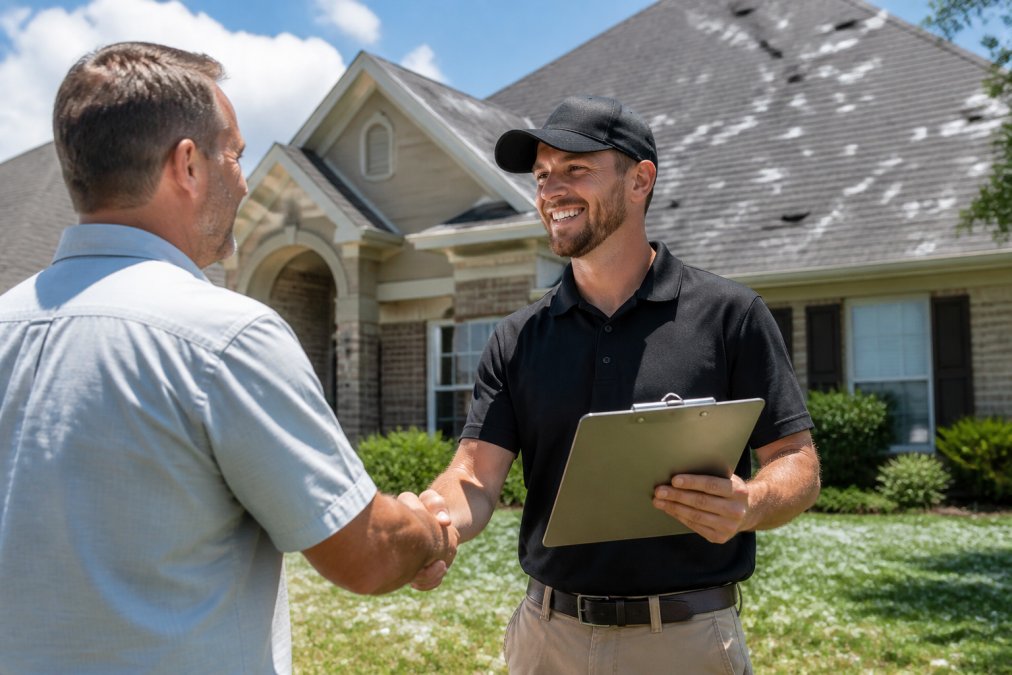
Confirming credentials is the non-negotiable first step. A legitimate contractor holds a valid state license where required, carries general liability insurance, and provides proof of workers’ compensation coverage for their crew.
Ask to see the documents yourself. Verify the license number with your state’s licensing board, and call the insurance carrier to confirm the policy is active. Bonding protects you if the contractor fails to complete the job or pay subcontractors.
Request the certificate of insurance directly from the contractor’s agent, not from the contractor. A policy number scribbled on a business card proves nothing. The certificate should list the contractor’s legal business name and the policy expiration date.
Tip 2: How to Spot Storm Chaser Roofing Scams
Storm chasers follow severe weather patterns and set up temporary operations in affected areas, often using out-of-state license plates, temporary phone numbers, and post-office-box addresses.
The most common red flags include door-to-door solicitations, demands for full payment upfront, offers to cover your insurance deductible, and pressure to sign an assignment of benefits agreement immediately. Legitimate roofers do not rush you into a legally binding contract on your doorstep.
A local contractor has a reputation to protect and a physical presence in your community. The [National Roofing Contractors(/blog/best-roofing-contractors-in-tulsa-2026-guide/) Association guidance on selecting a roofer | nrca.net] recommends verifying a contractor has been in business locally for several years and can provide verifiable local references. If a crew arrived in town the same week as the storm, that is not experience, that is a pattern.
Tip 3: Roof Insurance Claim Process Tips: Know the Contractor’s Role
Understanding the roof insurance claim process tips can save you from a denied claim, or worse, an insurance fraud investigation. Your roofer does not file the claim; you do.
The contractor’s role includes producing detailed damage documentation, meeting the adjuster on-site, and ensuring the scope of work matches what the insurer approves. Many homeowners mistakenly assume the contractor handles everything, then find themselves alone when the adjuster undervalues the claim.
A reputable storm damage roof contractor communicates directly with your insurance company and adjusters throughout the process, which separates a smooth claim from a months-long battle. The contractor should also explain your deductible clearly and provide a written estimate aligned with what the insurer will cover.
The Legal Line: Contractor vs. Public Adjuster
A contractor cannot legally negotiate your claim settlement, interpret your policy coverage, or sign documents on your behalf with the insurance company. Those actions require a licensed public adjuster in most states. A contractor who promises to “handle your claim completely” or “take care of the insurance paperwork” may be crossing a legal boundary.
If a contractor pressures you to sign an assignment of benefits (AOB) agreement, which transfers your insurance claim rights to them, that is a major red flag. In many states, AOB agreements have been linked to predatory practices where contractors inflate repair costs and then sue insurers.
What Legitimate Advocacy Looks Like
A contractor acting within their legal role will:
- Document all visible and suspected hidden damage with dated photos and notes
- Provide a detailed, line-item estimate that matches industry-standard pricing in your area
- Meet your insurance adjuster on-site and point out specific damage they may have missed
- Provide supplemental documentation if the adjuster’s scope omits necessary repairs
- Explain your deductible and what the insurer will likely cover versus what you owe
If you need someone to negotiate the settlement itself, hire a licensed public adjuster separately. They typically charge a percentage of the claim payout (often 5% to 20%, depending on state regulations).
If a contractor offers to “waive your deductible” or “make the claim go away,” that is illegal in many states and constitutes insurance fraud. Your deductible is your contractual responsibility under your policy. Any contractor who suggests otherwise is putting you at legal risk.
For a deeper look at what to expect from start to finish, the Insurance Information Institute guide on filing roof claims outlines the documentation insurers require and the common reasons claims get reduced or denied. The National Association of Public Insurance Adjusters directory can help you find a licensed public adjuster if your claim becomes contentious.
Tip 4: Questions to Ask Roofing Contractor After Storm Damage
The right questions to ask roofing contractor after storm damage reveal whether you are dealing with a professional or a salesperson. Ask these before any work begins:
- How long have you operated under this business name in this area?
- Will you provide a certificate of insurance and your state license number?
- Do you use subcontractors, and are they insured and covered by workers’ compensation?
- Will you meet my insurance adjuster on-site during the inspection?
- What is your process for documenting hidden damage discovered mid-project?
- Can you provide three local references from the past year?
Vague responses, hesitation on credentials, or pressure to sign quickly are telling signals. A contractor who has handled many storm claims will answer confidently and in specific detail.
Tip 5: Demand a Written Estimate and a Contract You Can Read
A verbal estimate is worthless when disputes arise. Demand a detailed written estimate that itemizes materials, labor, cleanup, and the project timeline, specifying the roofing materials, shingle type, underlayment, and any gutter inspection or replacement included.
Review the contract for these red flags before signing:
- Blank spaces for payment terms or project dates
- A demand for full payment before work starts
- A clause that lets the contractor change the price without written notice
- No mention of who obtains building permits
- An assignment of benefits clause that transfers your insurance rights to the contractor
Never sign a contract with blank fields. If a contractor expects you to trust them to fill in payment amounts or timelines later, walk away. A complete, specific contract protects both parties and signals a professional operation.
Contract Clauses That Should Trigger an Immediate Walk-Away
Specific contract language can silently strip away your protections. Flag and reject these clauses:
1. Assignment of Benefits (AOB) Clause
This clause transfers your insurance claim rights to the contractor. Once signed, the contractor controls the claim and can sue your insurer without your consent. In states like Florida, AOB abuse has driven up insurance premiums. If you see language like “the insured hereby assigns all rights and benefits under the policy to the contractor,” do not sign it. You can still hire the contractor without signing an AOB.
2. Binding Arbitration with a Contractor-Selected Forum
Some contracts require disputes to go through arbitration rather than court. That is not inherently bad, but if the contract names a specific arbitration firm the contractor has a financial relationship with, you are not getting a neutral forum.
3. Indemnification That Makes You Liable for Their Mistakes
A standard indemnity clause protects the contractor from claims arising from their own negligence. A predatory version makes you responsible for damages caused by the contractor’s subcontractors. The clause should read that the contractor indemnifies you against claims from their work, not the reverse.
4. Non-Compete or Non-Disparagement Clauses
Some contracts include a clause preventing you from posting a negative review or discussing the contractor’s work publicly. While non-disparagement clauses are legally questionable in many contexts, their presence signals a contractor who expects complaints.
5. Change Order Language That Lets Them Add Costs Without Your Signature
Legitimate change orders require your written approval before additional work begins. A predatory contract will say something like “contractor may adjust the final price to reflect unforeseen conditions” without requiring your sign-off.
What a Fair Contract Contains
A fair contract is specific and balanced. It should include:
- The contractor’s full legal business name, license number, and physical address
- A detailed scope of work with specific material brands, colors, and product lines
- A payment schedule tied to milestones (e.g., 10% down, 50% at material delivery, 40% upon final inspection)
- A clause stating the contractor will obtain all required building permits
- A warranty section that names the manufacturer warranty and the workmanship warranty terms
- A right-to-cancel provision that gives you at least 3 business days to rescind the contract after signing
- A clause requiring written change orders signed by both parties before any additional charges apply
Take the contract home for 24 hours before signing. A legitimate contractor will not pressure you to sign on the spot. If they do, that pressure is the single strongest signal that the contract contains terms they do not want you to read carefully.
A written estimate and contract are the legal framework that determines whether you can hold the contractor accountable when something goes wrong. The extra hour spent reviewing the fine print is the cheapest insurance you will ever buy.
Tip 6: Check Local References and Online Reputation
Online reviews are a starting point, not the whole picture. A contractor with dozens of five-star reviews from out-of-state locations is a red flag. Look for reviews from homeowners in your area, then verify them by calling the references.
Ask references specific questions: Did the contractor communicate clearly? Did the project stay on schedule and on budget? Were there surprise charges? How did they handle the insurance claim process?
Cross-reference the contractor’s physical address, business registration, and years in operation. A legitimate local roofer has a track record you can verify through your state’s contractor licensing board and local building department.
Tip 7: Confirm the Warranty and Post-Installation Support
Two warranties exist: the manufacturer warranty on the roofing materials and the workmanship warranty from the contractor covering installation errors.
Ask the contractor to explain both warranties in writing. A workmanship warranty should cover at least several years and address common installation failures like improper flashing, poor ventilation, and shingle defects. Confirm whether the warranty transfers if you sell the home, which adds resale value.
Post-installation support matters just as much. Will the contractor return for a gutter inspection after the first heavy storm? Do they offer maintenance programs that extend roof life?
What Matters Most After the Storm
| Checklist Item | Why It Matters | Red Flag to Watch For |
|---|---|---|
| License, bonding, insurance | Protects you from liability and shoddy work | Reluctance to show proof of coverage |
| Local presence | Accountability and service after the sale | Out-of-state plates, temp phone numbers |
| Insurance claim advocacy | Ensures fair claim settlement | Promises to “handle everything” with no details |
| Written estimate and contract | Prevents surprise costs and scope disputes | Blank fields or pressure to sign fast |
| Workmanship warranty | Covers installation errors for years | Vague or verbal warranty promises |
Choosing a storm damage roof contractor is the single most consequential decision you will make after severe weather. The seven checks above take less than an hour and protect you from mistakes that cost thousands and compromise your home’s safety.
Frequently Asked Questions
What not to say to insurance adjuster roof?
Avoid giving a recorded statement or speculating about the cause of the damage, such as saying the roof was already leaking before the storm. Do not agree to a repair scope before your contractor has completed a full inspection. Let your contractor document the hail damage and wind damage and communicate with the adjuster directly. Stick to the facts about when the storm occurred and what you noticed afterward, then refer the adjuster to your contractor for technical details.
How can you distinguish a reputable roofer from a storm chaser?
A reputable roofer has a local physical address, verifiable licensing and insurance, and a track record in your community. Storm chasers often arrive shortly after a storm, offer to cover your deductible, or pressure you to sign an assignment of benefits on the spot. Ask for local references and check their standing with your state’s licensing board. Legitimate contractors will not rush you and will provide a written estimate you can review before signing anything.
Should you get multiple quotes after storm damage?
Yes, getting multiple quotes helps you compare scope of work, materials, and pricing, but do not choose based on price alone. The lowest bid may omit necessary shingle replacement, underlayment, or mitigation steps that the insurance claim should cover. Compare written estimates line by line and confirm each contractor is bidding on the same scope. A contractor who documents the damage thoroughly and communicates with your insurer is often a better choice than the cheapest option.
What are the most important questions to ask a roofing contractor before hiring?
Ask for proof of general liability insurance and workers’ compensation, verify their license, and ask whether they use subcontractors. Ask who will communicate with your insurance company and whether they will attend the adjuster’s inspection. Request a written estimate that itemizes materials, labor, cleanup, and the payment schedule. Finally, ask about the workmanship warranty and the manufacturer warranty on the roofing materials, and get the warranty terms in writing before work begins.
Choosing the right storm damage roof contractor comes down to preparation, not luck. At Rescue Roofing, we simplify the process with accurate aerial quotes, thorough inspections, and direct communication with your insurance company and adjusters. Our team handles residential and commercial storm damage restoration across Tulsa and surrounding areas, and we offer flexible financing options to fit your budget. Call Rescue Roofing today and get a contractor who treats your claim like their own.