



Table of Contents
- Understand Common Types of Roofing Scams
- How to Verify Roofing Contractor Insurance Before Hiring
- Recognize Storm Chaser Roofing Scams and Unsolicited Offers
- Questions to Ask a Roofer Before Hiring
- Get Multiple Written Estimates and Review the Scope of Work
- Protect Yourself with a Written Contract and Payment Schedule
- Verify Licensing, References, and BBB Accreditation
- Conclusion
Last Updated: August 24, 2026
Understand Common Types of Roofing Scams
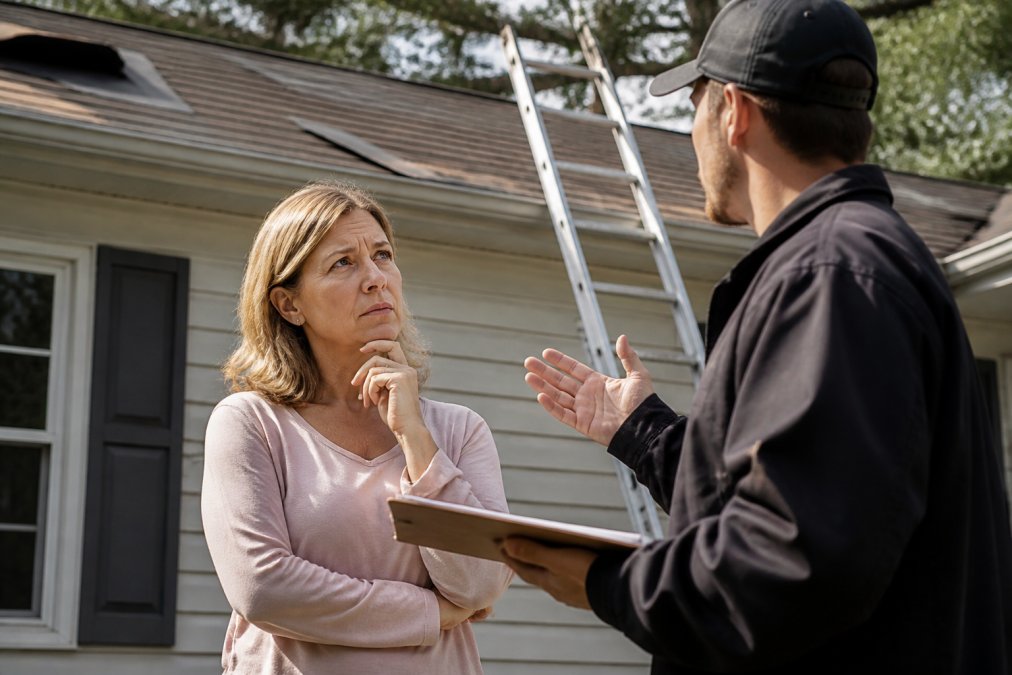
Roofing scams exploit emotional pressure after storm damage. A contractor shows up claiming to find damage you didn’t notice, promises insurance will cover everything, and pressures you to sign immediately. By the time you realize what happened, they’ve collected a deposit and disappeared.
Another widespread tactic involves misrepresenting the scope of work. A contractor quotes basic repairs, then discovers "hidden damage" once on your roof and demands thousands more. You’re stuck: stop mid-project and lose your deposit, or pay inflated prices for unauthorized work.
Some contractors deliberately inflate damage assessments or encourage false insurance claims, putting you at legal risk and risking claim denial or policy cancellation. Understanding these patterns is your first line of defense.
Rescue Roofing operates differently. Our team provides transparent estimates based on thorough inspections, not pressure tactics. We assist with insurance claims by communicating directly with adjusters, so you’re never left to navigate that process alone.
How to Verify Roofing Contractor Insurance Before Hiring
Before any contractor sets foot on your roof, verify their general liability insurance and workers’ compensation coverage. This single step eliminates massive risk. A legitimate contractor carries insurance that protects you if someone gets injured on your property or if the contractor damages your home.
Ask the contractor for their insurance certificate directly. Don’t accept verbal assurances or photos. Request an official certificate of insurance listing your property address as an additional insured. Call the insurance company to confirm the policy is active and current. Scammers often use expired policies or forged documents.
Workers’ compensation insurance is equally critical. If a roofer gets injured on your property without coverage, you could be liable for their medical bills and lost wages (osha.gov). Check the contractor’s license number against your state’s licensing board database to verify it’s active and matches their legal business name.
Insurance verification takes 15 minutes and eliminates contractors operating without proper coverage. Legitimate contractors expect this question and provide documentation without hesitation. If a contractor resists, move on immediately.
Recognize Storm Chaser Roofing Scams and Unsolicited Offers
Storm chasers are contractors who follow severe weather, targeting neighborhoods with visible damage (fbi.gov). They arrive within days with promotional flyers and claims they can handle your insurance claim. The pressure is relentless: "We’re only in town this week," "Your neighbors already signed up," "Insurance companies are swamped, we need to get your claim in first."
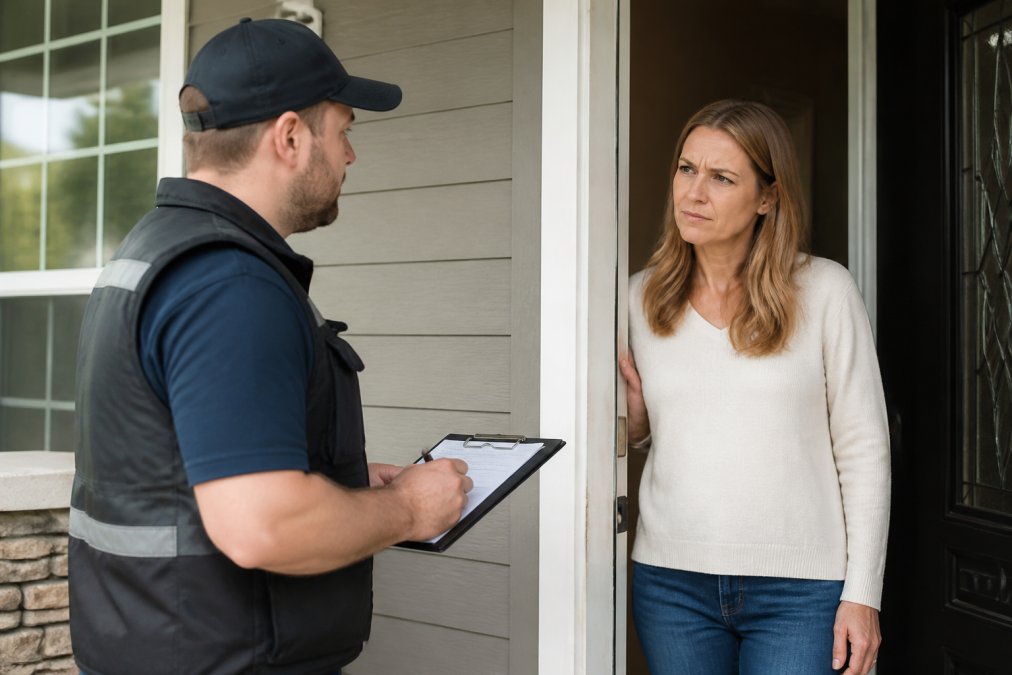
Insurance adjusters work on their own timeline, not the contractor’s. Legitimate contractors don’t need to pressure you into signing within 48 hours. If someone shows up at your door claiming urgency, that’s a warning signal.
Unsolicited offers are almost always scams. A contractor who finds you through neighborhood canvassing isn’t there because they’re the best option, they’re hunting for easy targets. Homeowners dealing with fresh storm damage are emotionally vulnerable and less likely to research thoroughly.
Watch for high-pressure language: "We can start tomorrow," "This deal expires today," "Other contractors are already booked." These phrases bypass rational decision-making. A quality contractor has steady work and doesn’t manufacture urgency.
Storm chasers often claim they can handle your entire insurance claim, including negotiating with the adjuster. While a legitimate contractor can assist, they shouldn’t promise specific outcomes or suggest you exaggerate damage. If a contractor hints you should file a claim for damage you’re unsure about, that’s insurance fraud, and you face legal consequences.
Questions to Ask a Roofer Before Hiring
Before committing to any roofing contractor, ask these critical questions. A legitimate contractor answers thoroughly and provides documentation. Evasive answers are immediate disqualifications.
Start with credentials: "Can you provide proof of your contractor license, general liability insurance, and workers’ compensation insurance?" A quality roofer hands over these documents without hesitation. If they say "I’ll bring them to the first appointment," that’s a delay tactic.
Ask about their experience with insurance claims: "Have you worked with insurance adjusters before? Can you provide references from homeowners whose claims you’ve assisted with?" Rescue Roofing communicates directly with insurance adjusters and walks you through the entire process.
Inquire about their warranty: "What warranty do you offer on materials and workmanship? How long does it last, and what does it cover?" Get this in writing. Oral warranties are worthless if the contractor disappears.
Ask for references from recent projects: "Can you provide contact information for three homeowners from the past year?" Call these references and ask about communication, timeline adherence, and how they handled unexpected issues.
Request a detailed written estimate: "Can you provide a line-item estimate that breaks down materials, labor, and timeline?" This prevents bait-and-switch tactics. The estimate should specify exactly what work will be done, what materials will be used, and the total cost.
Ask about subcontractors: "Will you be doing the work yourself, or using subcontractors? If subcontractors, do they carry their own insurance?" Subcontractors should carry their own liability insurance separate from the main contractor’s policy. choosing a reliable contractor.
Get Multiple Written Estimates and Review the Scope of Work
Never hire a roofing contractor based on a single estimate. Getting multiple written estimates gives you competitive pricing information and helps identify outliers who might cut corners or inflate costs later.
When requesting estimates, ask each contractor to assess the same damage or project scope. If one estimate is dramatically lower than others, that’s a warning sign. They’re either planning inferior work or will discover "hidden damage" and demand more money once they start.
A legitimate scope of work specifies exact materials (brand, grade, color), square footage, labor hours, timeline, cleanup, warranty terms, and payment schedule. If an estimate omits these details, ask for clarification before signing anything.
Compare estimates side by side. Look for significant price differences in the same line items. If one contractor charges $8,000 for materials and another charges $12,000, find out why.
Watch for estimates that don’t match your insurance adjuster’s assessment. If your insurance company determined repairs require $6,000 and a contractor quotes $15,000, ask them to explain the discrepancy. Legitimate contractors can justify their estimates; scammers deflect or pressure you to ignore the insurance assessment.
Ask each contractor if their estimate includes obtaining building permits. A quality contractor builds permits into their estimate and timeline.
Protect Yourself with a Written Contract and Payment Schedule
A written contract is your legal protection. Never begin work without a signed agreement outlining the entire project, costs, timeline, and what happens if either party fails to perform.
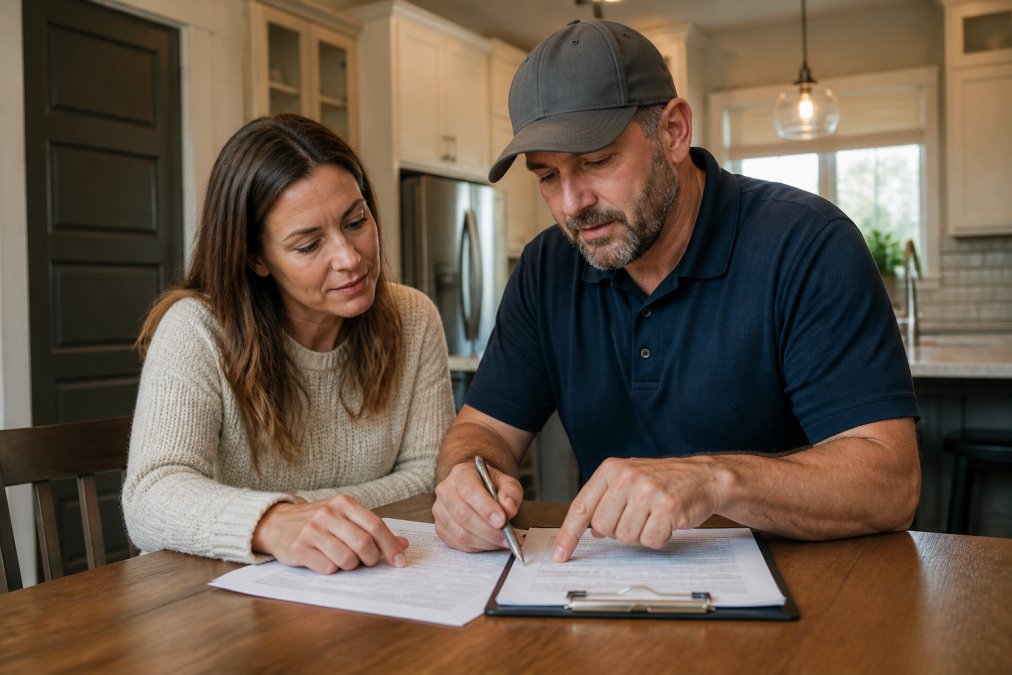
Your contract should include: scope of work, total cost, payment schedule tied to specific milestones, change order process, written warranty, lien waiver, insurance requirements, and dispute resolution.
Never sign a contract allowing the contractor to collect full payment upfront. Once they have your money, you have no recourse if they disappear or do poor work.
A reasonable payment schedule typically looks like: 10-20% deposit to start, 30-40% upon material delivery, 30-40% upon completion of major work, and final 10-20% upon project completion and lien waiver signing (consumerfinance.gov).
Oral agreements are worthless. If a contractor says "don’t worry, we’ll put it in writing later," that’s a red flag. Legitimate contractors have standard contracts for every project. If they’re resistant to documenting the agreement, they’re planning to change terms later.
Read every word of the contract before signing. Don’t let a contractor rush you. A quality contractor expects you to understand what you’re agreeing to.
Verify Licensing, References, and BBB Accreditation
A roofing contractor’s license proves they’ve met state or local requirements. Verify the license before hiring by searching your state’s licensing board website directly. Check that the license is currently active, the license type matches the work they’re performing, no disciplinary actions are listed, and the business name matches exactly.
If a contractor can’t provide a license number or claims they don’t need one, they’re operating illegally. Don’t hire them.
Call the references the contractor provides. Ask if they completed work on schedule, if the final cost matched the quote, how they handled problems, and whether you’d hire them again. References from recent projects are most valuable.
Check the Better Business Bureau (BBB) for accreditation and complaint history. However, BBB accreditation alone doesn’t guarantee quality. Some excellent contractors aren’t BBB members, and some scammers maintain good ratings by responding to complaints with refunds.
Check online reviews on Google, Yelp, and industry-specific sites. Read both positive and negative reviews carefully. If multiple reviews mention the same issue, like surprise charges or poor communication, that’s a pattern worth noting.
Rescue Roofing maintains transparent credentials and direct communication with insurance companies. Our team is committed to making the process straightforward, with no hidden charges or surprise demands. We assist with insurance claims from start to finish, ensuring you understand every step.
Conclusion
Avoiding roof repair scams requires diligence before you hire, not damage control after. Verify insurance and licensing, get multiple written estimates, demand a detailed scope of work, and never sign a contract without understanding every clause. Ask tough questions and trust your instincts; if something feels off, it probably is.
Rescue Roofing simplifies this process by providing accurate aerial quotes, assisting with insurance claims, and communicating directly with adjusters so you’re never left guessing. Contact us today for a transparent estimate and professional guidance through every step of your roof repair or replacement.
Frequently Asked Questions
What are the most common signs of a roofing scam?
Red flags include unsolicited door-to-door offers, high-pressure tactics to sign contracts immediately, requests for full payment upfront, lack of written estimates with detailed scope of work, inability to verify contractor license and insurance, and claims that you need emergency repairs without a proper roof inspection. Legitimate roofing contractors provide written estimates, allow time for decisions, and never pressure homeowners into same-day contracts.
How can I verify if a roofing contractor is licensed and insured?
Contact your state's licensing board or construction regulatory agency to confirm the contractor's license is current and in good standing. Ask the contractor directly for proof of general liability insurance and workers' compensation coverage, then verify with their insurance provider. Check the Better Business Bureau for accreditation and complaint history. Request references from recent projects and follow up with those homeowners about their experience.
Why do I keep getting texts and door-to-door offers about roof inspections after a storm?
Storm chasers are roofing contractors who follow severe weather events to solicit work. They use aggressive marketing tactics and high-pressure sales methods to convince homeowners they have damage requiring immediate repairs. These unsolicited offers often lead to inflated estimates and insurance fraud schemes. Never accept free inspections from door-to-door solicitors; instead, contact your insurance company or hire a licensed local contractor you've verified independently.
What should I ask a roofer before hiring to avoid scams?
Ask for their contractor license number and verify it with your state. Request proof of general liability insurance and workers' compensation coverage. Ask for multiple references from completed projects in your area and follow up with those homeowners. Inquire about their warranty on materials and workmanship, payment schedule terms, and timeline for project completion. Ask whether they handle insurance claims directly or if you manage that separately. Request a detailed written estimate that includes the scope of work, materials, labor costs, and any permits required.
This article was written using GrandRanker