



Table of Contents
- Why Tulsa’s Climate Makes Roofing Material Selection Critical
- Quick Comparison: Best Roofing Materials for Tulsa Climate
- Asphalt Shingles: Pros, Cons, and Class 4 Upgrades
- Metal Roofing Tulsa: Pros and Cons for Oklahoma Homeowners
- Hail Resistant Roofing in Tulsa: What Class 4 Really Means
- Synthetic Composite Roofing: Premium Protection Without the Weight
- Clay and Concrete Tile: Durability, Weight, and Tulsa Considerations
- Roof Replacement Cost in Tulsa: What Affects Your Price
Last Updated: August 1, 2026
Choosing the best roofing material for Tulsa climate is one of the most consequential decisions a homeowner can make in northeast Oklahoma. Rescue Roofing has helped hundreds of Tulsa-area homeowners navigate this exact decision, and the stakes are real: Tulsa sits in one of the most meteorologically aggressive regions in the continental United States, where a single hail storm can destroy a roof that wasn’t built to handle it. Below, we’ll walk you through every major material option, what Class 4 impact resistance actually means for your insurance bill, and which roofing solutions hold up when Oklahoma’s weather turns violent.
The best roofing material for Tulsa climate is first a structural and financial decision, then an aesthetic one.
Why Tulsa’s Climate Makes Roofing Material Selection Critical
Tulsa’s climate is hostile to roofing materials not designed for extremes. The city experiences severe hail storms from spring supercells, sustained summer heat exceeding 100°F, and wind gusts over 80 mph during tornado-adjacent storm systems. This combination accelerates UV degradation, granule loss, and thermal expansion in ways moderate climates don’t produce.
Impact of Tulsa Climate on Roof Longevity
Roof longevity in Tulsa is shorter than national averages for most standard materials. A standard three-tab asphalt shingle lasting 20 years in a mild climate may show significant granule loss and structural compromise in under 12 years under Tulsa’s UV exposure and hail cycles. Thermal expansion from temperature swings repeatedly stresses flashing, underlayment, and roof deck connections.
According to National Weather Service records for the Tulsa area, Oklahoma ranks among the top states nationally for hail frequency and severity. Material durability ratings, wind resistance certifications, and solar reflectance values aren’t marketing language in Tulsa, they’re functional requirements.
Skipping a moisture barrier or using standard underlayment on a Tulsa roof is a common and costly mistake. Tulsa’s freeze-thaw cycles and driving rain events create conditions where inadequate underlayment leads to water infiltration within a few seasons, causing roof deck rot that dramatically increases replacement scope and cost.
Quick Comparison: Best Roofing Materials for Tulsa Climate
| Material | Approximate Lifespan in Tulsa | Wind Resistance | Hail Resistance | Best For |
|---|---|---|---|---|
| Standard Architectural Shingles | 15-20 years | Good (up to 130 mph rated) | Moderate | Budget-conscious replacement |
| Class 4 Impact-Resistant Shingles | 20-30 years | Very Good | High | Insurance savings + storm protection |
| Standing Seam Metal | 40-70 years | Excellent (140+ mph) | Very High | Long-term investment, energy efficiency |
| Stone-Coated Steel | 40-70 years | Excellent (140+ mph) | Very High | Aesthetic versatility + durability |
| Synthetic Composite | 40-50+ years | Excellent | High (Class 4 rated) | Premium look without natural material weight |
| Clay/Concrete Tile | 50+ years | Very Good | Moderate (can crack) | Mediterranean-style homes with structural support |
Contact Rescue Roofing directly for an accurate aerial quote specific to your property.
Asphalt Shingles: Pros, Cons, and Class 4 Upgrades
Asphalt shingles remain the most commonly installed roofing material in Tulsa. The real question isn’t whether to use asphalt shingles, but which type.
Architectural Shingles vs. Class 4 Impact-Resistant Shingles
Architectural shingles use triple-layer reinforcement construction and carry a 130 mph wind warranty. The gap between standard architectural shingles and Class 4 impact-resistant shingles is where Tulsa homeowners should focus. The GAF Timberline HDZ in its Class 4 rated version carries a UL 2218 impact resistance certification, meaning it has been tested against steel ball drops simulating hail impact at the most demanding classification level. The CertainTeed Landmark Pro and Malarkey Vista AR offer similar Class 4 credentials.
Pros of Class 4 asphalt shingles:
- Superior hail damage resistance versus standard shingles
- Longer service life in Tulsa’s climate (closer to 25-30 years)
- Potential for meaningful insurance premium reductions in Oklahoma
- Wide color and style availability
Cons:
- Higher upfront installation cost than standard architectural shingles
- Still subject to some UV degradation over time
- Shorter lifespan than metal or synthetic alternatives
Granule Loss, UV Degradation, and Tulsa Summers
Granule loss is the canary in the coal mine for asphalt roof health. Granules protect the asphalt layer beneath from UV degradation. Tulsa’s summer UV index is consistently high, and prolonged heat accelerates asphalt binder breakdown. Once granule loss becomes visible in gutters, the UV degradation clock is running fast.
After any significant hail storm, have a professional inspect your roof for granule loss before filing an insurance claim. Granule displacement from hail creates concentrated UV exposure points that can cause localized failure well before surrounding roof shows obvious damage.
Metal Roofing Tulsa: Pros and Cons for Oklahoma Homeowners
Metal roofing is the most durable option available for Tulsa homes. For homeowners planning to stay 15 or more years, the total cost of ownership math often favors metal over repeated asphalt replacements.
Standing Seam vs. Stone-Coated Steel: Which Fits Tulsa Best?
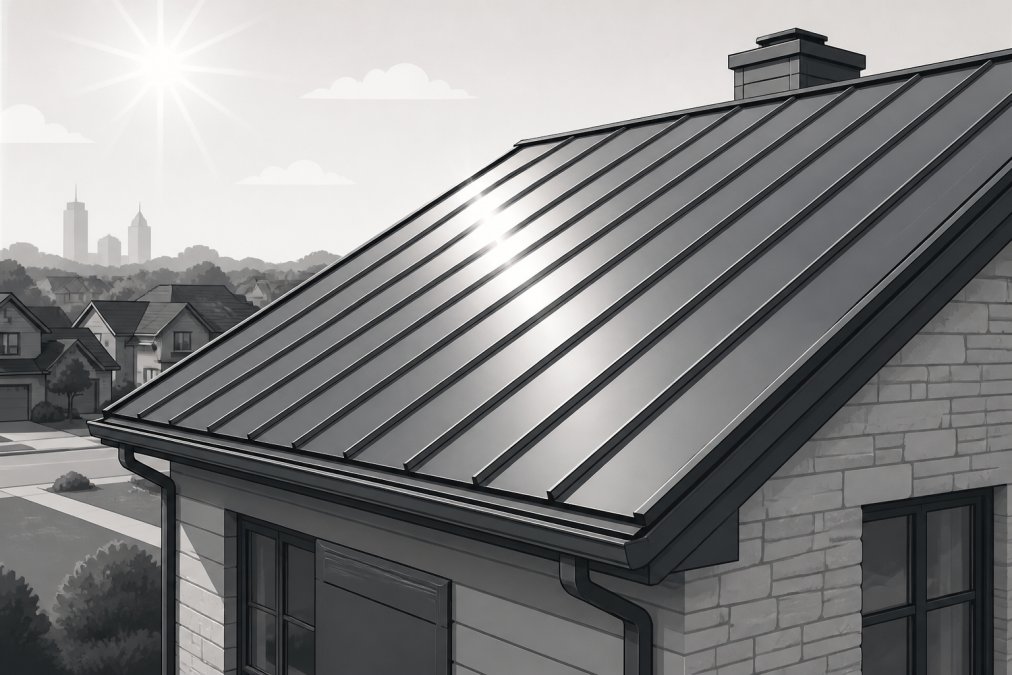
Standing seam metal roofing uses a hidden fastener system where raised interlocking seams run vertically along panels. Hidden fasteners eliminate exposed penetration points that become leak vectors. Wind uplift resistance typically exceeds 140 mph. Reflective coatings can significantly reduce attic temperatures during Tulsa summers, lowering cooling loads.
Stone-coated steel combines a steel core with stone granule coating, providing additional impact resistance and visual character of traditional roofing materials. Both carry longevity ratings of 40-70 years.
Where standing seam wins: Maximum energy efficiency, cleanest modern aesthetic, lowest maintenance.
Where stone-coated steel wins: Architectural versatility, slightly more accessible price point, familiar appearance for traditional home styles.
Shared cons:
- Higher upfront installation cost versus asphalt
- Specialized repair requirements if damage occurs
- Standing seam can amplify rain noise without proper attic insulation
Hail Resistant Roofing in Tulsa: What Class 4 Really Means
Class 4 impact-resistant roofing is the highest rating under the UL 2218 standard, used by roofing manufacturers and insurance carriers in the United States. A Class 4 rating means the material survived impact from a 2-inch steel ball dropped from 20 feet without cracking or splitting. For context, a 2-inch hailstone is considered large-scale severe hail, the kind that causes widespread roof damage across Tulsa neighborhoods.
According to Insurance Institute for Business and Home Safety research on impact-resistant roofing, Class 4 rated materials consistently demonstrate superior performance in real-world hail events compared to lower-rated alternatives.
Class 4 applies to multiple material types: asphalt shingles with polymer modification, synthetic composite tiles, and metal roofing systems. The rating is material-specific and must appear on product certification documentation.
Class 4 impact resistance is a certification, not a marketing claim. Always ask your contractor to provide the UL 2218 documentation for any product described as impact resistant before signing a contract.
Insurance Premium Reductions for Class 4 Rated Roofs
Oklahoma insurance carriers recognize Class 4 rated roofing materials as meaningful risk reduction, and many offer premium discounts for homeowners who install them. Over a 20-30 year roof lifespan, annual savings compound into a figure that can substantially offset the higher upfront cost of Class 4 materials versus standard shingles. Contact your insurance carrier directly to confirm the discount available for Class 4 certified materials under your specific policy.
Synthetic Composite Roofing: Premium Protection Without the Weight
Synthetic composite roofing delivers the visual character of natural slate or cedar shake without the structural demands, fragility, or maintenance burden those natural materials carry. Products like DaVinci Roofscapes Composite Slate and Shake are manufactured from virgin resins, giving them exceptional resistance to rot, fading, and impact damage. Both carry Class 4 impact resistance ratings and are UV-stable for long-term performance.
The weight advantage over natural slate is significant. Natural slate can weigh 800-1,500 pounds per square, often requiring structural reinforcement. Synthetic alternatives weigh a fraction of that, meaning most existing Tulsa home structures can accommodate them without engineering modifications.
Installation is labor-intensive and requires contractors with specific experience. Choosing an inexperienced installer to save on labor costs is the most common way synthetic composite roofs underperform their potential lifespan.
Clay and Concrete Tile: Durability, Weight, and Tulsa Considerations
Clay and concrete tile roofing offers impressive longevity, often exceeding 50 years, along with excellent thermal insulation properties and fire resistance. The air gap created by the tile profile provides natural ventilation that reduces heat transfer into the attic during Tulsa’s hottest months.
The structural constraint is significant. Clay tile can weigh 900-1,200 pounds per square, and concrete tile runs similarly heavy. Before any tile installation, a structural evaluation of the roof deck and framing is mandatory. Many Tulsa homes built in the last 30 years were not engineered to carry tile loads, and reinforcement adds both time and cost.
Large hail can crack individual tiles. Replacement tiles must match the original profile and color, which becomes harder as product lines change over time. This isn’t disqualifying, but it’s a real maintenance consideration that asphalt and metal roofing don’t share to the same degree.
Best for: Tulsa homeowners with Mediterranean, Spanish Colonial, or classic architectural styles, whose homes have been structurally evaluated and confirmed to support tile loads.
Roof Replacement Cost in Tulsa: What Affects Your Price
Roof replacement cost in Tulsa varies based on multiple factors that make generic price estimates unreliable.
Key cost drivers include:
- Roof pitch and complexity: Steeper pitches and multiple valleys require more labor time and safety equipment
- Roof deck condition: Decking damage discovered during tear-off adds material and labor cost
- Number of layers being removed: Multiple existing shingle layers increase tear-off labor
- Flashing replacement: Chimney, skylight, and valley flashing often need replacement
- Ventilation system upgrades: Proper attic ventilation is critical for roof longevity in Tulsa’s climate
- Material lead times: Supply chain conditions affect both availability and pricing
Accurate estimates require an actual inspection of the property. Rescue Roofing uses aerial quote technology to develop precise measurements before any on-site visit, reflecting actual roof dimensions rather than rough estimates.
Local Building Code Compliance and Installation Seasonality
Tulsa roofing installations must comply with the City of Tulsa’s adopted building codes, which reference the International Residential Code and include specific requirements for underlayment, fastener patterns, and wind resistance ratings. Homeowners should verify that any contractor pulls required permits and schedules mandatory inspections. Unpermitted roofing work creates complications with insurance claims and can affect resale.
Installation seasonality matters more in Tulsa than many markets. Asphalt shingles require temperatures above 40°F for proper adhesive sealing, making late fall and winter installations higher-risk for seal failure. Spring and early fall installations generally produce the best results. Metal and synthetic composite materials are less temperature-sensitive during installation.
The storm damage roof repair Tulsa market peaks in late spring and early summer following severe weather seasons. Scheduling roof replacement before storm season gives homeowners better contractor availability, more material options, and more control over timing.
Selecting the right roofing material for Tulsa’s demanding climate requires balancing upfront cost, storm performance, insurance implications, and long-term durability. Rescue Roofing specializes in exactly this decision for Tulsa and surrounding area homeowners, offering accurate aerial quotes that eliminate pricing surprises, direct assistance with insurance claim filing and adjuster communication, and flexible financing options for full replacements. Call Rescue Roofing to get a precise, inspection-backed quote and put the right material on your home before the next storm season arrives.
Frequently Asked Questions
What is the most durable roofing material for Tulsa's climate?
For Tulsa's combination of hail, high winds, intense UV, and temperature swings, standing seam metal roofing and synthetic composite materials like DaVinci Roofscapes offer the greatest durability, with lifespans often reaching 40-70 years. Class 4 impact-resistant asphalt shingles from brands like GAF Timberline HDZ or Malarkey Vista AR are a more budget-friendly option that still handles hail damage and wind gusts well, making them a popular choice for Tulsa homeowners seeking a balance of cost and performance.
Can hail resistant roofing in Tulsa lower my homeowner insurance premiums?
Yes. Installing a Class 4 impact-resistant roof can qualify you for meaningful discounts on your homeowner insurance in Oklahoma. Products like GAF Timberline HDZ and Malarkey Vista AR carry a UL 2218 Class 4 rating, which many insurers recognize when calculating premiums. The actual discount varies by insurer and policy, so it is worth contacting your insurance provider before choosing a material. Rescue Roofing can also assist you in communicating with your insurance company throughout the process.
How does Tulsa's climate affect roofing material choices?
Tulsa sits in a severe weather corridor where roofs face hail storms, wind gusts exceeding 100 mph during tornado season, extreme summer heat with intense UV exposure, and occasional ice storms in winter. This combination accelerates granule loss on standard asphalt shingles, causes thermal expansion issues on improperly installed metal panels, and can crack clay tiles under significant hail impact. Choosing a climate-ready material with strong wind resistance, impact resistance, and UV-stable coatings is essential for maximizing roof longevity in the Tulsa area.
What are the pros and cons of metal roofing in Tulsa?
Metal roofing in Tulsa offers exceptional wind uplift resistance (often 140+ mph), strong hail resistance, significant energy efficiency through solar reflectance, and a lifespan of 40-70 years. The main drawbacks are higher upfront installation costs compared to asphalt shingles and the potential for noise during heavy rain if attic insulation and ventilation systems are inadequate. Stone-coated steel options like Boral Steel provide the structural integrity of metal with a more traditional aesthetic that suits many Tulsa neighborhoods.
What should I do immediately after storm damage to my Tulsa roof?
After a storm, document visible damage with photos before any cleanup, check for missing flashing, damaged underlayment, or compromised roof deck areas, and contact a licensed local contractor for a professional inspection as soon as possible. Avoid climbing onto the roof yourself. A qualified contractor can identify hidden damage that is not visible from the ground, help you file your insurance claim accurately, and communicate directly with your adjuster, which is a core service Rescue Roofing provides to Tulsa homeowners.
This article was written using GrandRanker