



Table of Contents
- What Goes Into a Residential Roof Replacement Cost Breakdown in 2026
- Roofing Material Cost Per Square Foot in 2026
- Roof Replacement Labor Cost in 2026: What You’re Really Paying For
- Key Factors That Influence Your Total Roof Replacement Cost
- Signs You Need a New Roof in 2026 Before Costs Escalate
- Insurance Claims, Energy Efficiency ROI, and the True Cost of Ownership
- Roof Replacement Financing Options in 2026
- How to Get an Accurate Roof Replacement Cost Breakdown in 2026
Last Updated: July 31, 2026
Getting a clear residential roof replacement cost breakdown 2026 is harder than it should be. Most homeowners collect bids with wildly different numbers and no idea what they’re paying for. At Rescue Roofing, we work through this confusion daily with Tulsa-area homeowners: those who understand the cost structure before signing avoid expensive surprises. Below, we’ll walk through every line item that drives your roof replacement cost, from materials and labor to permits, disposal, and long-term ownership math most contractors never mention.
The core insight: roof replacement cost is not a single number. It’s a system of variables, and understanding each one puts you in control of the budget.
What Goes Into a Residential Roof Replacement Cost Breakdown in 2026
A roof replacement cost is the sum of materials, labor, permits, disposal, overhead, and profit margin, with each component varying based on your home’s specific characteristics. The residential roof replacement cost breakdown 2026 typically divides into three primary buckets: materials, labor, and project overhead.
Labor vs. Material Cost Percentages
For most standard asphalt shingle replacements, materials and labor split roughly in half, though the exact proportion shifts based on roof complexity, material grade, and regional labor markets. On a steep, multi-faceted roof with multiple valleys and dormers, labor costs can approach or exceed material costs because installation complexity multiplies the hours required.
If a bid looks unusually low, check whether the contractor has priced adequate labor for your specific roof geometry. Underbidding labor is the most common mechanism behind low initial estimates that balloon mid-project.
Permit Fees, Disposal Fees, and Contractor Overhead
Permit fees vary by municipality. In Tulsa and surrounding Oklahoma communities, building permits for roofing work are required. Skipping permits is never worth the risk: unpermitted work can complicate homeowner’s insurance claims and create problems at resale.
Tear-off costs and disposal fees cover removal of your existing roofing system and legal disposal of materials. A full tear-off adds meaningful cost, but it’s almost always the right call. Installing new materials over a failing underlayment voids most manufacturer warranties.
Contractor overhead includes insurance, licensing, equipment, and administrative costs. A legitimate roofing contractor carries general liability insurance and workers’ compensation coverage. Bids that omit these costs aren’t actually cheaper; they’re transferring risk to you.
Never hire a roofing [contractor who](/blog/finding-a-roofer-who-works-with-insurance-companies-in-tulsa-2026-guide/) cannot provide proof of current general liability insurance and workers’ compensation coverage. If a worker is injured on your property and the contractor is uninsured, you may be liable.
Roofing Material Cost Per Square Foot in 2026
Roofing material cost per square foot 2026 varies dramatically across material types, and the cheapest option upfront is rarely the cheapest over the roof’s life. The roofing industry measures area in "squares," where one roofing square equals 100 square feet of roof surface. A typical single-family home in the Tulsa area might have between 20 and 35 squares of roof surface, depending on footprint and pitch.
According to National Roofing Contractors Association material guidelines, material selection is the single largest driver of total project cost and long-term roof performance.
Asphalt Shingles and Architectural Shingles
Asphalt shingles remain the dominant residential roofing material in the United States. Three-tab asphalt shingles represent the entry-level option but are increasingly less competitive. Architectural shingles (also called dimensional or laminate shingles) are the current standard for residential roofing. They’re thicker, carry more visual depth, and typically come with longer warranty coverage. For most Tulsa homeowners replacing an aging roof, architectural shingles represent the practical sweet spot between upfront cost and long-term value.
Standing-Seam Metal, Slate, and Premium Options
Standing-seam metal roofing commands a significantly higher upfront cost per square foot than asphalt, but the math changes considerably when you account for lifespan. A properly installed standing-seam metal roof can last 40 to 70 years with minimal maintenance, compared to 20 to 30 years for architectural shingles under typical conditions.
Slate roofing sits at the premium end of the material spectrum. Natural slate is exceptionally durable, fire-resistant, and aesthetically distinctive, but it requires structural reinforcement in many homes due to its weight. Synthetic slate options offer a middle path for homeowners who want the look without the full structural and cost implications.
| Material | Typical Lifespan | Relative Cost Per Square | Best For |
|---|---|---|---|
| 3-Tab Asphalt | 15-20 years | Lowest | Budget-constrained projects |
| Architectural Shingles | 25-30 years | Low-moderate | Most residential replacements |
| Standing-Seam Metal | 40-70 years | High | Long-term ownership, energy efficiency |
| Natural Slate | 75-100+ years | Highest | Premium homes, historic properties |
| Synthetic Slate | 30-50 years | Moderate-high | Slate look without structural demands |
When comparing bids, ask each contractor to specify the exact shingle line, manufacturer, and warranty tier they’re pricing. “Architectural shingles” covers many quality levels, and the difference between a 25-year and a 50-year limited warranty product matters significantly for total cost of ownership.
Roof Replacement Labor Cost in 2026: What You’re Really Paying For
Roof replacement labor cost 2026 is the line item homeowners most frequently underestimate, and it’s the one most directly tied to quality. Labor covers tear-off, deck inspection and repair, installation of underlayment, ice and water shield, drip edge, flashing, ventilation systems, and the roofing material itself. The Occupational Safety and Health Administration roofing safety standards set strict requirements for fall protection and job site safety, which legitimate contractors build into their labor costs. When a bid comes in dramatically lower than competitors, inadequate safety practices are often part of the explanation.
How Roof Pitch and Installation Complexity Affect Labor Rates
Roof pitch is one of the clearest drivers of labor cost. A 4:12 pitch is considered a walkable slope; anything above 7:12 typically requires specialized equipment and safety systems that increase labor time and cost.
Beyond pitch, installation complexity factors include number of roof facets and valleys, skylights or chimneys requiring custom flashing, existing roof decking condition, accessibility constraints, and ventilation system requirements. A complex roof with multiple valleys, steep pitch, and several penetrations can require two to three times the labor hours of a simple gable roof of the same square footage.
Key Factors That Influence Your Total Roof Replacement Cost
The total roof replacement cost on any given home is the product of at least six interacting variables. Understanding each one makes bid comparison far more meaningful than comparing bottom-line numbers in isolation.
Roof Size, Slope, and Decking Condition
Roof size is the most obvious cost driver: more squares mean more materials and more labor hours. Roof slope multiplies the effective cost per square, and decking condition can add significant cost that no contractor can fully predict before tear-off begins.
Roof decking is the structural substrate beneath your roofing system. When the old material comes off, the decking gets inspected. Soft spots, rot, or delamination in OSB panels require replacement before new materials can be installed. A reputable contractor will price decking repair separately, on a per-sheet basis, rather than burying it in the base bid.
Regional Pricing Variations Across the U.S.
Regional pricing variations across the U.S. reflect differences in labor markets, material supply chains, local permit costs, and weather-driven demand. Oklahoma generally sits in a moderate cost range compared to coastal markets, but local demand spikes following hail seasons can temporarily push contractor pricing upward.
According to U.S. Bureau of Labor Statistics construction wage data, labor costs for construction trades vary by as much as 40% between the lowest- and highest-cost metro areas in the country. For Tulsa homeowners, national average figures should be treated as rough orientation, not budget benchmarks.
Signs You Need a New Roof in 2026 Before Costs Escalate
Catching roof deterioration early is the single most effective way to control your total roof replacement cost. A roof that’s allowed to fail progressively causes water intrusion, which damages decking, insulation, framing, and interior finishes.
(/blog/signs-of-storm-damage-on-roof-a-2026-homeowners-guide/) Before Costs Escalate]
The clearest signs that a replacement is warranted rather than another repair:
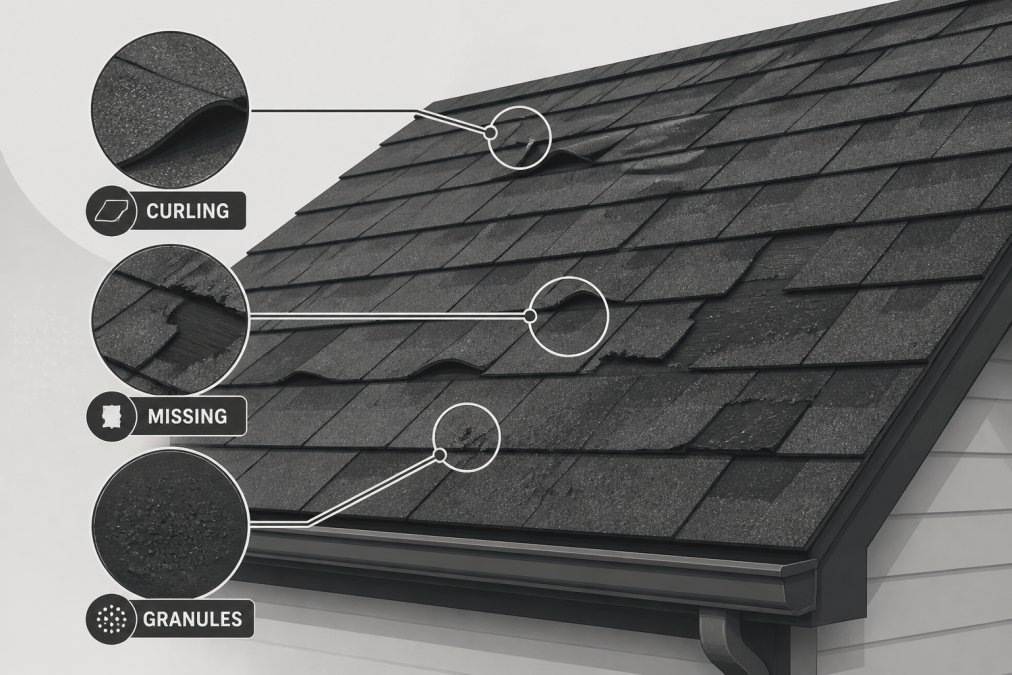
- Curling or cupping shingles. Shingles that curl upward at the edges or cup in the center have lost their structural integrity.
- Significant granule loss. Bare patches in gutters or on the roof surface indicate advanced wear.
- Missing shingles across multiple areas. Widespread loss points to systemic failure of the fastening system.
- Visible daylight through the attic. Any daylight visible through roof decking means the roofing system has been compromised.
- Age exceeding expected lifespan. A 25-year architectural shingle roof at year 22 in a hail-prone region like Oklahoma deserves a professional inspection.
- Persistent leaks after repair. When repairs stop holding, the underlying roofing system has failed beyond the point where targeted fixes are cost-effective.
A professional roof inspection identifies which conditions exist and whether repair or full replacement is appropriate. Rescue Roofing provides thorough inspections that give homeowners a clear picture of their roof’s structural integrity before any decision is made.
Insurance Claims, Energy Efficiency ROI, and the True Cost of Ownership
The true cost of a roof replacement extends well beyond the contractor’s invoice. Insurance claims can offset a substantial portion of replacement cost after storm damage, and energy-efficient roofing materials can reduce ongoing utility costs for years after installation.
Integrating an Insurance Claim Into Your Replacement Budget
Hail and wind damage from Oklahoma’s severe weather seasons frequently meets the threshold for a covered insurance claim. An improperly documented claim or a contractor who doesn’t understand how to work with insurance adjusters can result in a settlement that falls well short of actual replacement cost.
The standard insurance claim process involves an adjuster’s inspection, a scope of loss document, and a settlement based on either actual cash value or replacement cost value, depending on your policy. Replacement cost value policies are significantly more favorable to homeowners because they cover the full cost of replacement rather than depreciated value.
Rescue Roofing assists with insurance claim filing and communicates directly with insurance companies and adjusters on behalf of homeowners.
If your roof sustained hail or wind damage, file your claim before scheduling repairs. Repairing damage before documentation can eliminate your ability to claim that damage. Document everything with photographs before any work begins.
Energy Efficiency Savings and Long-Term Maintenance Cost Projections
Cool-roof products, including certain architectural shingles with reflective granules and standing-seam metal with reflective coatings, reduce heat absorption. In a hot Oklahoma summer, a roof that reflects more solar energy reduces attic temperatures, which reduces the load on air conditioning systems. The ENERGY STAR certified roofing products database identifies products that meet reflectance and emittance thresholds that qualify for energy efficiency considerations.
Proper ridge and soffit ventilation keeps attic temperatures lower in summer and reduces moisture buildup in winter, both of which extend shingle life and reduce HVAC load. Over a 40-year horizon, premium materials frequently win on total cost of ownership when maintenance and replacement cycles are factored in.
Roof Replacement Financing Options in 2026
Roof replacement financing options 2026 have expanded considerably, and for most homeowners, the question is which structure makes the most sense for their situation.
Contractor financing programs are the most accessible entry point. Many roofing contractors offer financing through third-party lenders, with terms ranging from short-term no-interest promotional periods to longer-term installment loans. Rescue Roofing offers financing options to help homeowners protect their property without requiring full payment upfront.
Home equity loans and HELOCs use your home’s equity as collateral and typically offer lower interest rates than unsecured personal loans. FHA Title I Home and Property Improvement Loans, administered through the U.S. Department of Housing and Urban Development, are government-insured loans available through approved lenders. Personal loans are the most flexible option but typically carry higher interest rates.
The right financing structure depends on your equity position, credit profile, and how long you plan to stay in the home. A contractor who offers financing options and can walk through the implications of each is a meaningful differentiator when comparing bids.
How to Get an Accurate Roof Replacement Cost Breakdown in 2026
Getting an accurate residential roof replacement cost breakdown 2026 requires more than collecting three bids and picking the middle one. A more reliable process:
-
Start with a professional inspection. An inspection establishes the actual condition of your roofing system, including decking, underlayment, ventilation, and flashing, before any bid is developed.
-
Request itemized bids. A professional bid should break out materials by type and quantity, labor, tear-off and disposal, permit fees, and any identified decking repair allowance. Lump-sum bids make comparison impossible.
-
Verify measurements independently. Aerial measurement technology has made roof measurement more accurate and transparent. Rescue Roofing uses accurate aerial quotes to confirm exact square footage, which eliminates the ambiguity that creates mid-project cost disputes.
-
Compare warranty coverage, not just price. A bid that’s 10% lower but carries a shorter manufacturer warranty or no workmanship warranty is not necessarily the better value. Ask for the specific warranty documentation for both materials and installation.
-
Check contractor credentials. Verify licensing with the Oklahoma Construction Industries Board and confirm current insurance certificates before signing anything.
-
Understand the payment schedule. Legitimate contractors don’t require full payment upfront. A deposit at signing and final payment upon satisfactory completion is standard. Requests for full payment before work begins are a red flag.
The roof replacement cost estimate you receive on day one should be the number you pay at completion, with the only exception being documented decking repairs discovered during tear-off. That level of transparency is what separates a professional roofing contractor from one that uses low initial bids to win work and change orders to recover margin.
Replacing a roof is one of the largest home improvement investments most homeowners make, and the cost structure is genuinely complex. Rescue Roofing provides accurate aerial quotes, thorough on-site inspections, and direct assistance with insurance claim filing and adjuster communication, so Tulsa-area homeowners have a clear, documented picture of their project before committing to anything. Call Rescue Roofing to schedule your inspection and get a complete, itemized cost breakdown with no surprises.
Frequently Asked Questions
What factors most influence residential roof replacement cost in 2026?
The biggest drivers of roof replacement cost in 2026 are the roofing material you choose, the total square footage of your roof, labor rates in your region, roof pitch and installation complexity, and whether tear-off and disposal of the old roof is required. Additional costs such as permit fees, underlayment, flashing, ice and water shield, and any damaged roof decking discovered during the project can also affect your final bill significantly. Always request an itemized estimate before work begins.
How much does roofing labor cost per square in 2026?
Roof replacement labor cost in 2026 varies widely depending on your location, the complexity of the roofing system, and roof slope. Steeper pitches and more complex layouts with multiple valleys or dormers require more time and skill, which pushes labor rates higher. In markets like Tulsa, Oklahoma, labor costs will differ from coastal metro areas. The best way to get an accurate labor figure is to request a detailed, itemized quote from a licensed local roofing contractor who can assess your specific roof.
What are the typical costs for different roofing materials in 2026?
Roofing material cost per square foot in 2026 spans a wide range depending on material grade. Asphalt shingles, including architectural shingles, are generally the most affordable option and the most common choice for residential roofs. Standing-seam metal roofing, slate, and tile sit at the premium end of the spectrum and carry higher installation costs due to their weight and installation complexity. Warranty coverage and roof lifespan vary significantly across material types, which affects the true long-term value of each option.
Will my homeowner's insurance cover a roof replacement in 2026?
Homeowner's insurance may cover roof replacement costs if the damage was caused by a covered peril such as a storm, hail, or wind event, which is common in Oklahoma. Coverage depends on your specific policy, the age of your roof, and the cause of damage. Working with a roofing contractor experienced in insurance claim assistance can help ensure your claim is properly documented and filed. A contractor who communicates directly with your insurance adjuster can significantly simplify the process and help maximize your covered settlement.
What roof replacement financing options are available in 2026?
Roof replacement financing options in 2026 include personal loans, home equity loans, home equity lines of credit (HELOCs), FHA Title I Home Improvement Loans through HUD-approved lenders, and contractor-offered financing programs. Each option carries different interest rates, repayment terms, and qualification requirements. If your replacement is urgent, due to storm damage or structural integrity concerns, contractor financing can be a fast, accessible path. Always review the full terms, including APR and monthly payment amounts, before committing to any financing arrangement.
Do I need a permit for a roof replacement and how much does it cost in 2026?
Most jurisdictions in the U.S. require a building permit for a full roof replacement, though requirements vary by city and county. In the Tulsa, Oklahoma area, permit requirements and associated fees are set by local building authorities. Permit costs are generally a modest line item in the overall project budget but are non-negotiable, skipping a required permit can create issues with your homeowner's insurance and complicate a future home sale. A reputable roofing contractor will pull the necessary permits on your behalf as part of the project.
This article was written using GrandRanker