


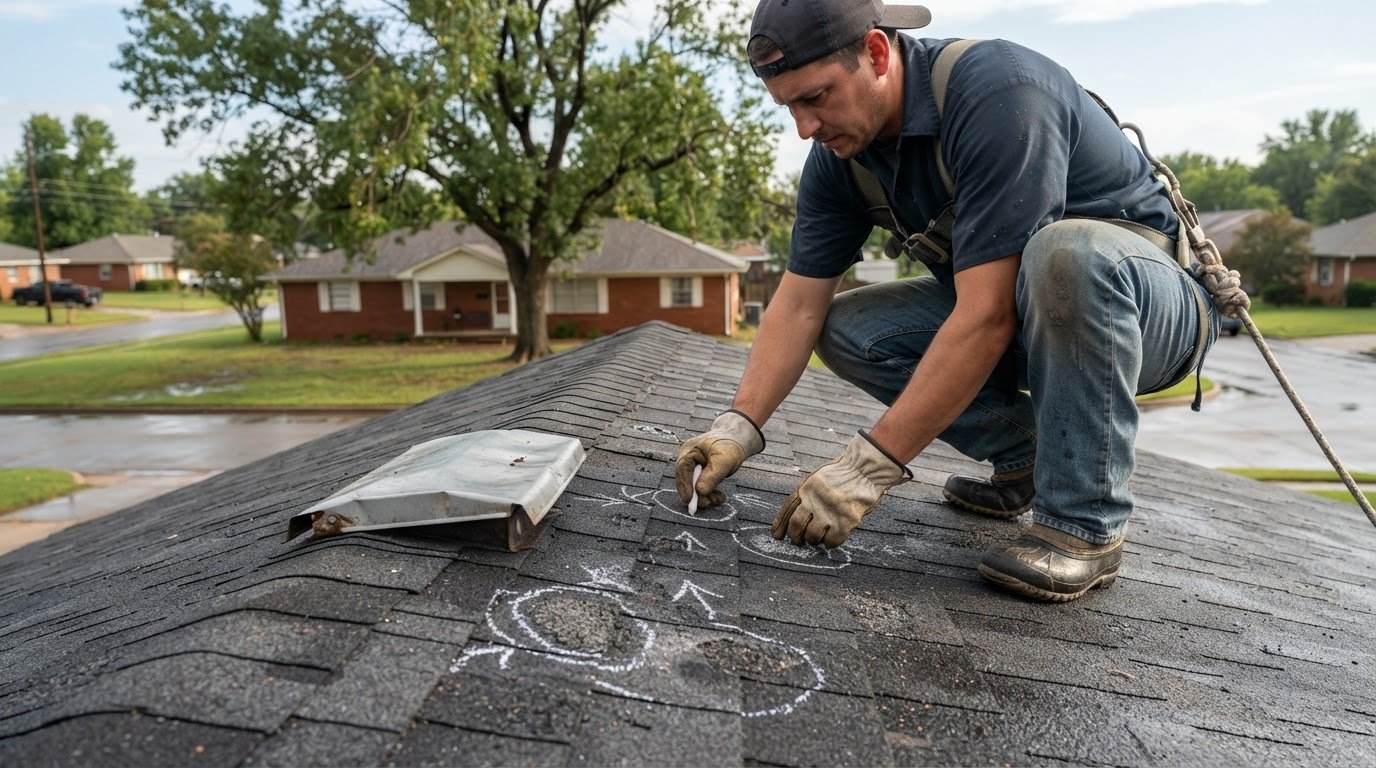

A roof claim isn’t paid simply because a roof needs replacing. To understand how to get a roof paid for by insurance, start with what caused the damage and what your policy covers. Wind or hail damage may be covered, while age-related wear and tear generally isn’t.
It’s understandable to want a clear answer after a storm, especially when you’re facing repair decisions and an unfamiliar claims process. What an insurer may pay depends on whether the damage is covered, your deductible, and whether your policy uses actual cash value or replacement cost value.
This guide explains how those calculations work, which exclusions can affect a claim, and what to document after wind or hail damage. You’ll also learn how a claim typically proceeds and how to estimate the payment after your deductible. These details can help you decide what to do next with your roof.
Key Takeaways
- Learn which sudden events may qualify for roof coverage and which common causes are generally excluded.
- See how your deductible and the policy’s valuation method affect the amount a claim may pay.
- Understand what to document after roof damage and how to approach the claim process safely.
- Find out how wind and hail coverage may apply, and when claim assistance and roofing work can help move repairs forward.
What Roof Damage Causes Aren’t Covered by Home Insurance?
Home insurance coverage depends on what caused the damage and your policy terms. Wind, hail, fire, and other sudden events may qualify, while maintenance problems and age-related deterioration generally don’t.
Covered causes can include falling objects, fire, hail, lightning, smoke, the weight of ice and snow, wind, and vandalism. For example, a windstorm that tears off shingles may be treated differently from shingles that have gradually worn down. A policy may also cover some water damage resulting from a covered event, subject to its terms.
Excluded Causes of Roof Damage
Excluded causes are events or conditions your policy doesn’t cover, such as flooding, earthquakes, or damage from defective materials. Visible roof damage alone doesn’t establish coverage. For example, a leak after a storm may involve both storm damage and a pre-existing maintenance issue. Rodent, bird, or insect damage is generally treated as a maintenance problem rather than a covered loss.
Age and Normal Wear
Homeowners insurance generally doesn’t cover roof replacement caused by age or normal wear and tear. Shingles that have deteriorated gradually differ from shingles damaged by a sudden covered event. The insurer considers the cause of damage and the policy terms, not simply whether the roof needs replacing. Regular inspections and prompt attention to minor damage can help maintain the roof.
State laws and local building codes can affect the work required for a roof replacement, but they don’t automatically make an excluded cause covered. Coverage still depends on the policy and what caused the damage. If a local code affects the repair scope, the policy determines whether related costs are included.
Damage excluded from homeowners insurance
Homeowners insurance typically excludes roof damage caused by poor maintenance, flooding, earthquakes, or gradual deterioration. A damaged roof doesn’t automatically qualify for payment. For example, water entering after a flood may be treated differently from water entering through storm-damaged shingles. The policy’s covered causes and exclusions shape the claim, even when the leak looks similar.
Other problems may also fall outside coverage. Incorrect installation, defective materials, and damage from rodents, birds, or insects are generally treated as workmanship or maintenance issues. Shingles that loosen over time point to a different cause than shingles torn away during a windstorm. Identifying what happened helps distinguish a sudden covered event from a pre-existing condition or gradual roof failure.
Document visible damage before notifying your insurer. Clear records can help show what changed and where the damage is. When possible, take photographs from the ground, including fallen shingles, damaged gutters, or interior water stains. Note which rooms or roof areas show signs of damage, and keep related records together.
- Photograph damage from several angles, such as a ceiling stain and the affected room.
- Record the date you noticed the problem and the location of each visible sign.
- Save relevant receipts or inspection records that show earlier roof conditions.
- Access the roof only if it’s safe; don’t climb onto a slippery or unstable surface.
Photos can’t establish coverage by themselves, but they provide useful evidence alongside the claim details. For instance, pictures of a newly displaced shingle may help describe the damage after a storm. Keep original files and avoid altering images. If a roof assessment would help clarify visible damage, insurance claim assistance can help organize the roofing side of the process.
Steps to file a roof insurance claim
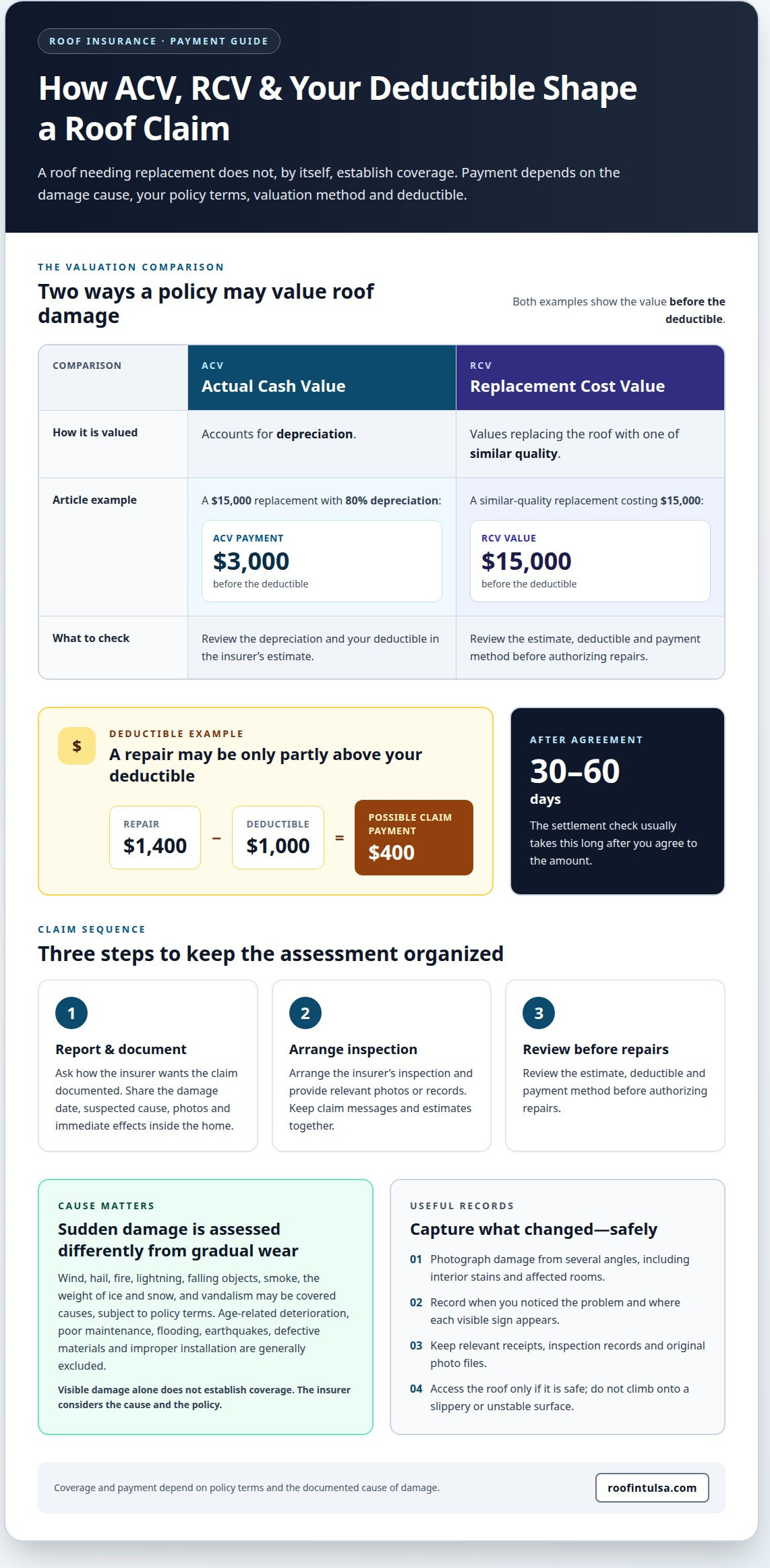
To understand how to get a roof paid for by insurance, start with your policy and a clear record of the damage. Contact your insurer before hiring a roofing contractor, since the insurer may provide a list of preferred contractors. Share the damage date, suspected cause, photographs, and any immediate effects inside the home. Keep claim messages and estimates together to track how the loss is assessed.
- Report the damage and ask how the insurer wants the claim documented.
- Arrange the insurer’s inspection and provide relevant photos or records.
- Review the estimate, deductible, and payment method before authorizing repairs.
The payout depends on whether the policy uses actual cash value (ACV) or replacement cost value (RCV). ACV accounts for depreciation, while RCV values replacing the roof with one of similar quality, before the deductible. For example, a $15,000 replacement with 80% depreciation results in a $3,000 ACV payment before the deductible. Under RCV, a similar-quality replacement costing $15,000 is valued at that amount before the deductible.
A small repair may not produce a payment greater than the deductible. For a $1,400 repair and a $1,000 deductible, the homeowner may be eligible for a $400 claim payment. Compare the estimate with your deductible and consider how the policy’s payment method affects the amount. The settlement check usually takes 30 to 60 days after you agree to the amount.
If the insurer offers a low amount or denies the claim, compare its explanation with your damage records and estimate. Submit relevant evidence and request reconsideration or appeal through the insurer’s process; a public adjuster can represent you in negotiating the claim. Ground your next steps in the policy terms and documented damage.
To reduce the risk of scams and fraud, report the loss directly to your insurer and keep claim documents accurate. Don’t agree to inflate damage or misstate its cause. A contractor’s estimate describes repair work; the insurer determines coverage under your policy.
Wind and hail coverage
Understanding how to get a roof paid for by insurance starts with identifying whether wind or hail caused the damage and whether your policy covers it. A storm may lift shingles, loosen flashing, or leave visible hail marks. The insurer considers the reported cause alongside the policy terms and exclusions, so describe what you observed without assuming the storm automatically establishes coverage.
Record the storm date and when you first noticed damage. Photograph affected areas from the ground, including debris or changes around the building. Don’t climb onto a wet or unstable roof. An inspection can document the roof’s condition and identify damage that isn’t visible from the ground. Keep these records together for the claim review.
A roof leak may be covered if a covered event, such as wind, hail, or fire, caused it and the policy doesn’t exclude that cause. A ceiling stain alone doesn’t show why water entered. The assessment may need to connect the leak’s location with storm damage rather than an older roof condition.
Save photographs of interior water marks and note when the leak began. If temporary steps are taken to limit further damage, document what was done and keep related receipts. Share those details with the insurer so the timeline and reported damage are clear. This evidence can help explain how to get a roof paid for by insurance when the cause or leak path needs clarification.
The insurer evaluates coverage under your policy, while a roofing estimate describes the work needed. Keep those roles clear as you review the claim. For help documenting wind or hail roof damage, discuss wind and hail roof damage.
Rescue Roofing Tulsa: Insurance Claim Assistance
Rescue Roofing Tulsa provides Insurance Claim Assistance for roof damage caused by wind, hail, or other storms. A roof inspection can document visible damage and help clarify whether repair or replacement work may be needed. The insurer decides coverage under your policy; an assessment helps you understand the roof’s condition and the work involved.
If the damage calls for repairs, Rescue Roofing Tulsa also provides Roof Repair. For roofs that need replacement, the company offers Residential Roof Replacement and Commercial Roof Replacement for different property types. The next step depends on the roof’s condition and the insurer’s claim decision, not simply on wanting a new roof.
Contact Rescue Roofing Tulsa for help understanding the roofing work connected to your claim.
Make Your Next Roof Decision With Confidence
Next, turn the claim decision into a clear plan for the property. Keep the insurer’s estimate, inspection notes, and repair documentation together. Use them to understand which work the claim covers and what remains your responsibility. That distinction can help you decide whether to proceed with repairs or consider another roofing solution.
Understanding how to get a roof paid for by insurance also means knowing where coverage ends and roofing work begins. The insurer determines the policy payment; a roofing professional can explain the roof’s condition and the work involved. Rescue Roofing Tulsa provides claim assistance alongside roof repair and replacement, helping connect the paperwork to the practical needs of your home or building.
If you’re ready to discuss your roof and claim, contact Rescue Roofing Tulsa. A clear next step can make a stressful repair decision easier to approach.
Frequently Asked Questions
How are roof claims calculated?
A roof claim estimate generally reflects covered repair or replacement work, your deductible, and the policy’s payment method. The insurer assesses the damage and estimates the work it considers eligible under the policy. Depreciation affects actual cash value claims, while replacement cost coverage uses the cost of replacing the roof with materials of similar quality. Review the estimate’s listed work and deductions line by line.
What types of roof damage are covered by homeowners insurance?
Coverage depends on your policy, but covered causes may include wind, hail, fire, lightning, smoke, vandalism, falling objects, and the weight of ice or snow. Hail impact may qualify when hail is a covered cause and no exclusion applies. A roof’s age or the presence of a leak alone doesn’t establish coverage. The policy terms and cause of damage guide the decision.
How do I determine whether roof damage was caused by a covered storm or event?
Compare the damage timeline and physical evidence with the reported event. Note when shingles were displaced, when a leak appeared, and whether damage is concentrated in a particular roof area. Photographs, interior water marks, and an inspection record can help describe the condition. A storm’s timing alone doesn’t prove the cause, so keep observations factual and share them during the claim review.
What steps should I take to file a roof insurance claim?
Report the loss to your insurer, provide the date and suspected cause of the damage, and follow its instructions for inspection and documentation. Keep the claim number, correspondence, photographs, and repair estimates together. Compare the insurer’s estimate with the visible damage, then ask for clarification about omitted work or deductions. If repairs uncover related damage, document it and submit the additional details through the insurer’s claim process.
How long do I have to file a roof damage insurance claim in my state?
The filing deadline depends on your policy and applicable state requirements, so there isn’t one deadline for every roof claim. Check your policy for notice and proof-of-loss requirements, and report damage promptly rather than waiting for repairs to progress. If you know the storm date, include it in your claim records. Keep copies of notices and any insurer response about timing.
How do roof insurance claims work with actual cash value versus replacement cost coverage?
Actual cash value accounts for depreciation when valuing covered roof damage. Replacement cost coverage bases payment on replacing the damaged roof with materials of similar quality, subject to policy terms and the deductible. Two policies may assess the same repair scope differently because one deducts depreciation while the other uses replacement cost. Check your declarations and claim estimate to see which method applies and how payment is issued.