



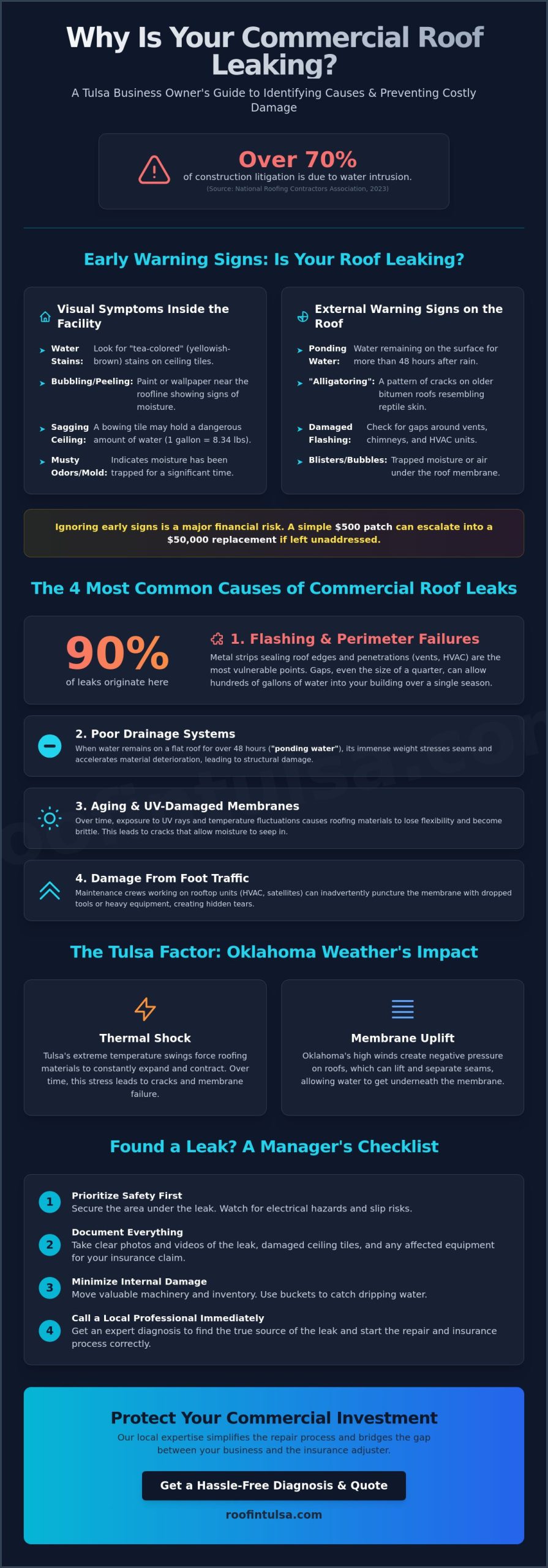
Last Tuesday, Mike discovered a three-inch puddle forming near his most expensive machinery in his downtown Tulsa warehouse. For many local business owners, this is the exact moment they start asking, “why is my commercial roof leaking?” and worrying about how much downtime they’ll face. In 2023, the National Roofing Contractors Association reported that water intrusion accounts for over 70% of construction litigation. This shows how common and stressful this problem is for our community.
It’s frustrating to deal with water damage when you’re trying to run a business. You shouldn’t have to worry about complex insurance claims or structural repairs on top of your daily operations. We understand that your commercial investment needs protection that lasts. This guide will help you identify the root cause of your leak and learn how to secure long-term protection for your property. We’ll examine common culprits like membrane damage and drainage issues while showing you how to achieve a hassle-free repair process right here in Tulsa.
Key Takeaways
- Learn to identify subtle signs of water infiltration, like musty odors or mold, to protect your building envelope before major structural damage occurs.
- Understand exactly why is my commercial roof leaking by exploring the impact of aging membranes and stressed drainage systems on your property.
- Discover how Tulsa’s extreme temperature swings and high winds create unique challenges like thermal shock and membrane uplift for local businesses.
- Follow a professional manager’s checklist to safely document damage and prepare your business for a successful, well-documented insurance claim.
- Learn how local expertise can simplify the repair process with a hassle-free approach that bridges the gap between your business and the insurance adjuster.
Identifying the Signs: Is Your Commercial Roof Actually Leaking?
A commercial roof leak is defined as any unwanted water infiltration through the building envelope. For many Tulsa business owners, the first question is often, “why is my commercial roof leaking now when it hasn’t rained in days?” The reality is that water doesn’t always present itself as an immediate drip. While a bucket in the hallway is an obvious sign, subtle indicators like musty odors or sudden mold growth in a corner are just as serious. These signs suggest that moisture has been trapped within your roofing system for a significant amount of time.
Because flat roofs are designed with very slight slopes, water often travels long distances from the initial point of entry. You might see a drip in your front office, but the actual hole in the membrane could be 40 feet away over the warehouse. This “traveling” effect makes it difficult for building managers to pinpoint the cause without professional help. Identifying the source early is vital because moisture trapped in insulation can lead to a 25% increase in repair costs if the material becomes fully saturated and requires a complete tear-off.
Small stains on ceiling tiles are frequently dismissed as minor issues, but they represent a major financial risk. A single stained tile often indicates that the roof deck is already holding water. If you ignore these “minor” symptoms, you’re risking structural rot and expensive equipment damage. At T-Town Roofing, we’ve seen how a simple $500 patch can turn into a $50,000 replacement simply because the early warning signs were ignored for too long.
Visual Symptoms Inside the Facility
Inside your building, look for “tea-colored” stains on the ceiling. This distinct yellowish-brown tint indicates that water has filtered through the roof deck and is pulling tannins from wood or rust from metal. If you notice bubbling paint or peeling wallpaper near the roofline, it’s a sign that moisture is trapped behind the finish. Most importantly, watch for sagging ceiling tiles. A single gallon of water weighs 8.34 pounds; if a tile begins to bow, it may be supporting a dangerous amount of weight that threatens the safety of your staff.
External Warning Signs on the Roof Surface
When you step onto the roof, the most common enemy is ponding water. If water remains on the surface for more than 48 hours after a storm, it puts immense pressure on common types of commercial roofing like TPO or EPDM. On older bitumen roofs, look for “alligatoring,” which is a pattern of cracks that resembles reptile skin. You should also check the flashing around chimneys, vents, and HVAC units. Gaps in these transition areas are responsible for approximately 90% of the leaks we investigate in the Tulsa area. Even a gap the size of a quarter can allow hundreds of gallons of water into your building over a single season.
The 5 Most Common Causes of Commercial Roof Leaks
Identifying the root cause of a leak is the first step toward protecting your business. When you ask yourself, why is my commercial roof leaking, the answer usually involves one of five common culprits. Poor drainage systems top the list as a leading cause of membrane stress. If water remains on your roof for more than 48 hours, it’s known as ponding water. This standing weight puts immense pressure on the roof’s seams and can lead to rapid deterioration of the underlying structure.
Aging membranes also play a significant role. Most commercial roofing materials are designed to be flexible, but they lose this elasticity over time. Exposure to UV rays and the fluctuating temperatures common in our region cause the material to become brittle. This is a growing concern given Oklahoma’s changing climate, which brings more intense heat waves and unpredictable storm patterns that test the limits of older roofing systems. When a membrane can no longer expand and contract, small cracks form, allowing moisture to seep into your building.
Another factor we often see is damage from foot traffic. Maintenance crews working on HVAC units, satellite dishes, or plumbing vents may inadvertently puncture the roof. A single dropped tool or a heavy equipment box can create a tear that remains hidden until the next heavy downpour. It’s helpful to request a routine inspection after any major rooftop service to ensure your membrane remains intact.
Flashings and Perimeter Failures
Flashings are the metal strips used to seal the edges of your roof and the areas around penetrations. Industry data indicates that 90% of all commercial leaks occur at the flashing or roof edges. Thermal expansion is the primary enemy here; as the metal heats up and cools down, it pulls away from the walls or curbs. This movement breaks the waterproof seal. Properly maintained and sealed pitch pockets are essential for rooftop penetrations to prevent water from following pipes directly into your ceiling.
HVAC Units and Rooftop Equipment
Hidden culprits like HVAC units often cause phantom leaks that aren’t actually related to the roof membrane itself. Clogged AC condensate lines can overflow, sending water into the building in a way that mimics a standard roof leak. Curb failures are also common where heavy units meet the roofing membrane. If the screws or bolts on the equipment housing aren’t properly sealed, rainwater can enter through the unit’s cabinet and bypass the roof entirely.
Parapet Walls and Coping Caps
Parapet walls provide a finished look but are frequent sites of moisture intrusion. Wall coping caps are designed to shed water, but the sealants used at the joints often fail within 5 to 7 years. In many older Tulsa buildings, moisture wicks through porous masonry or brickwork, bypassing the roof membrane altogether. You can learn more about these specific structural challenges in our guide to commercial roofing in Tulsa.
The Tulsa Factor: How Oklahoma Weather Destroys Commercial Roofs
Tulsa weather is notoriously hard on commercial structures. Our local climate features extreme temperature swings and violent storm patterns that test the limits of any roofing material. When business owners ask, why is my commercial roof leaking, the answer often lies in the cumulative stress of Oklahoma’s seasons. Our 100-degree summer days don’t just cause discomfort; they lead to thermal shock. When a triple-digit afternoon is followed by a rapid 25-degree temperature drop during a sunset thunderstorm, the roof membrane expands and contracts too quickly. This cycle causes seams to pop and flashings to pull away from the walls.
Wind Uplift and Scouring
High-wind events are a constant in Green Country. During a typical spring storm, gusts often exceed 60 mph, creating immense pressure on a building’s envelope. Wind uplift is the pressure differential that weakens roof fasteners by creating a vacuum effect that pulls the membrane away from the roof deck. This pressure is most intense at the corners and edges of your building. If the perimeter isn’t perfectly secured, the wind can peel the membrane back like a sardine can lid.
Beyond the lifting force, we also deal with scouring. Wind-blown debris, sand, and gravel act like sandpaper against your roof. Over time, this abrasive force wears down protective UV coatings and thins out the top layer of TPO or EPDM membranes. This leaves the underlying fabric reinforcement exposed to the sun and rain, which eventually leads to water infiltration.
Hail Damage on Flat Roofs
Oklahoma ranks among the top states for major hail events. In 2023 alone, the region saw multiple storms with stones exceeding 1.5 inches in diameter. There is a critical difference between cosmetic and functional hail damage. While a few dents on a metal HVAC unit might look bad, they don’t cause leaks. Functional damage occurs when hail creates micro-fractures in modified bitumen or causes TPO shattering.
Older TPO roofs become brittle due to UV exposure. When a large hailstone hits that brittle surface, it can cause the membrane to crack or “shatter” in a starburst pattern. These cracks are often invisible from a distance but allow water to seep directly into the insulation. If you’ve survived a major storm season, seeking fast & reliable roof repair in Tulsa is the best way to catch these fractures before they rot your decking.
Ice Damming and Flat Roof Drainage
Tulsa winters bring unique challenges to flat roofing systems. Even though these roofs are called “flat,” they should have a slight pitch toward internal drains or scuppers. During a freeze-thaw cycle, ice often forms around these drainage points. This creates an ice dam that prevents melted snow from leaving the roof.
The resulting “pond” of water sits over your seams for days or weeks. Commercial membranes are water-resistant, but they aren’t designed to be submerged indefinitely. Eventually, the weight and constant pressure of the standing water force moisture through the tiniest imperfections in the seams. Understanding these regional patterns helps answer the question, why is my commercial roof leaking, especially when the damage isn’t visible to the naked eye.
What to Do When You Find a Leak: A Manager’s Checklist
Finding water inside your building is stressful. It’s important to stay calm and act quickly to protect your property and your people. Your first priority is safety. Clear all personnel from the affected area and move electronics immediately. Water and electricity are a dangerous mix; don’t take risks with exposed wiring, power strips, or computer servers. Once the area is safe, grab your phone. You need to document the situation. Take clear photos and videos of the ceiling, the floor, and any damaged inventory. These records are vital for insurance claims. In our experience helping Tulsa businesses, high-quality documentation can speed up claim processing by several days.
Next, try to identify the leak rhythm. Ask yourself: does it only drip during a heavy rain, or is it constant? A constant drip often points to a broken HVAC condensation line or a plumbing issue rather than a failure in the roof membrane. Understanding this pattern helps answer the question, why is my commercial roof leaking, before a contractor even arrives. For a truly accurate diagnosis, we recommend a professional infrared moisture scan. This non-invasive tool detects water trapped under the membrane that the naked eye misses, preventing you from paying for a full replacement when a simple patch might work.
Immediate Mitigation Steps
Don’t just put a bucket on the floor. Use a leak diverter, which is a specialized heavy-duty tarp that funnels water into a container via a hose. This keeps your floors dry and prevents slip hazards for employees. Mark the exact spot on the floor with tape. Because water often travels along steel beams, the drip point inside rarely aligns perfectly with the hole on the roof. Check your roof drains too. When you start wondering why is my commercial roof leaking, the answers are often found in the drainage system. A single 4-inch drain clogged with Tulsa oak leaves can cause thousands of gallons of water to back up, forcing its way through seams.
Preparing for a Professional Inspection
You can make the inspection process hassle-free by having your paperwork ready. Gather your 10-year or 20-year warranty documents and any maintenance logs from the past 24 months. Ensure the roofer has clear access to the roof hatch or provide a designated area for a 32-foot extension ladder. When the roofer arrives, brief them on the leak’s history. Knowing if the leak started after a specific 60-mph wind storm helps them pinpoint the damage faster. This preparation saves time and ensures the technician can focus on the repair immediately.
While local expertise is essential for immediate repairs, property owners with assets in other regions should also prioritize thorough due diligence. For those looking for a broader perspective on property maintenance, check out TXCREI (Texas Commercial Real Estate Inspections) for an in-depth guide on commercial property inspections.
Rescue Roofing Tulsa: Expert Diagnosis & Insurance Assistance
Managing a business in Oklahoma comes with unique challenges, especially when the weather turns. At Rescue Roofing, we provide a hassle-free approach to commercial repairs that keeps your operations running smoothly. We are a family-owned local expert deeply rooted in the Tulsa community. Our team understands that every hour spent worrying about your facility is an hour taken away from your bottom line. We treat your property with the same care we give our own, ensuring every repair is built to last.
We take pride in our GAF Master Elite status. This certification is held by less than 2% of roofing contractors nationwide, making it a mark of trust and quality you can depend on. It means our work meets the highest industry standards for durability and craftsmanship. When you find yourself asking why is my commercial roof leaking, you need a partner who brings both technical skill and local integrity to the job site. We don’t just fix roofs; we build relationships based on honest advice and reliable results.
Our Commercial Leak Detection Process
We don’t guess where a leak starts; we find it. Our team uses advanced moisture detection technology, including infrared thermography, to see what the naked eye misses. This precision allows us to follow a repair first philosophy. We focus on targeted solutions that extend the life of your existing system rather than pushing for a full replacement. This approach helps Tulsa business owners avoid unnecessary capital expenditures. If a storm hits at 2:00 AM, our 24/7 emergency repair crews are ready to respond immediately to protect your inventory and equipment.
Navigating Insurance Claims for Your Business
The gap between a business owner and an insurance adjuster can feel like a canyon. We bridge that gap by acting as your professional advocate. Our inspectors often identify subtle storm-related damage, such as wind-scoured membranes or hail-bruised insulation, that adjusters might overlook during a quick walkthrough. We provide the detailed documentation and photo evidence required to ensure your claim is handled fairly and accurately.
Our goal is to provide total peace of mind throughout the entire process. We handle the technical jargon and the paperwork so you can focus on your business. If you aren’t sure why is my commercial roof leaking or if you suspect recent hail caused hidden damage, don’t wait for the next heavy rain to find out. Schedule your free commercial roof inspection today to secure your facility with Tulsa’s most trusted roofing experts.
Secure Your Tulsa Commercial Property Today
Identifying why is my commercial roof leaking is the first step toward protecting your investment from Oklahoma’s unpredictable weather patterns. From clogged drainage systems to the thermal shock caused by 100-degree summer days, local commercial roofs endure significant wear every season. We’ve seen how following a proactive maintenance checklist saves facility managers from costly interior repairs and structural damage. It’s about catching the small issues before they become major liabilities for your business.
You deserve a partner who understands the specific needs of the Tulsa community. As an A+ rated local contractor and GAF Master Elite Certified expert, we provide the reliable service your business depends on. Our team offers 24/7 emergency repair services to ensure you’re never left vulnerable after a sudden storm. We handle the technical diagnosis and insurance assistance so you can focus on your daily operations without the hassle. Trust our family-owned team to provide the honest, high-quality solutions your facility needs to stay dry.
Get Your Free Commercial Roof Inspection and Leak Diagnosis
We’re here to help you maintain a safe, durable roof that protects your team and your bottom line for years to come.
Frequently Asked Questions
Can a brand-new commercial roof leak?
Yes, even a brand-new roof can leak if the installation was faulty or if other contractors damaged the membrane while installing equipment. The National Roofing Contractors Association notes that 10 percent of new roofs may experience issues due to workmanship errors or improper sealing. We ensure every detail is right from day one so you don’t have to worry about why is my commercial roof leaking shortly after a new install.
How much does it cost to fix a commercial roof leak in Tulsa?
Repair costs for a commercial leak in Tulsa depend on the roof type and the extent of the damage. While we don’t provide flat rates because every building is unique, industry data from HomeAdvisor suggests minor commercial repairs often start around $500. We provide honest, transparent assessments to help you understand the specific needs of your property. Our goal is to provide peace of mind without any surprises.
What is the most common cause of leaks on a flat roof?
Improper drainage leading to ponding water is the primary cause of leaks on flat roofs. If water sits for more than 48 hours, it puts immense pressure on the seams and can seep through the smallest gaps. About 40 percent of commercial roof issues stem from these drainage failures. Our team focuses on clearing drains and restoring the proper slope to keep your building dry and durable.
Will my insurance cover a commercial roof leak?
Insurance typically covers leaks caused by sudden events like wind or hail, but they often deny claims for leaks caused by lack of maintenance. If a 60 mph wind gust rips a seam, you’re likely covered. We’ve helped many Tulsa business owners navigate the insurance process to ensure they get the protection they deserve. It’s about getting you back to business quickly and without the hassle.
How do I find a leak on a roof with ponding water?
Finding a leak in standing water requires checking the flashing around penetrations and the condition of the roof seams. Water often enters at a high point and travels along the deck, appearing inside far from the actual hole. We use thermal imaging to detect moisture trapped under the membrane. This technology identifies temperature differences to pinpoint exactly where the water is hiding, even under several inches of ponding water.
What happens if I ignore a small commercial roof leak?
Ignoring a small leak leads to mold growth, saturated insulation, and eventual structural decay. Mold begins to develop in as little as 24 hours after water enters the building. A small $500 repair can easily turn into a $10,000 restoration project if the roof deck rots. We recommend addressing leaks immediately to protect your investment and maintain a safe environment for your employees and your customers.
How long should a commercial roof last in Oklahoma’s climate?
A commercial roof in Oklahoma generally lasts between 15 and 25 years depending on the material and maintenance history. Our extreme temperature swings from 10 degrees in winter to 100 degrees in summer cause materials to expand and contract rapidly. Regular inspections twice a year can extend this lifespan by catching small cracks before they become major problems. We’re here to help you get every year of life out of your roof.
Can HVAC units cause roof leaks even if it’s not raining?
HVAC units are a very common reason why is my commercial roof leaking during dry weather. A clogged condensate drain can spill up to 20 gallons of water onto your roof every day during a humid Tulsa July. This constant moisture degrades the roofing material and eventually finds a way into your building. We check these units during our inspections to ensure your roof stays dry and your business stays protected year round.