


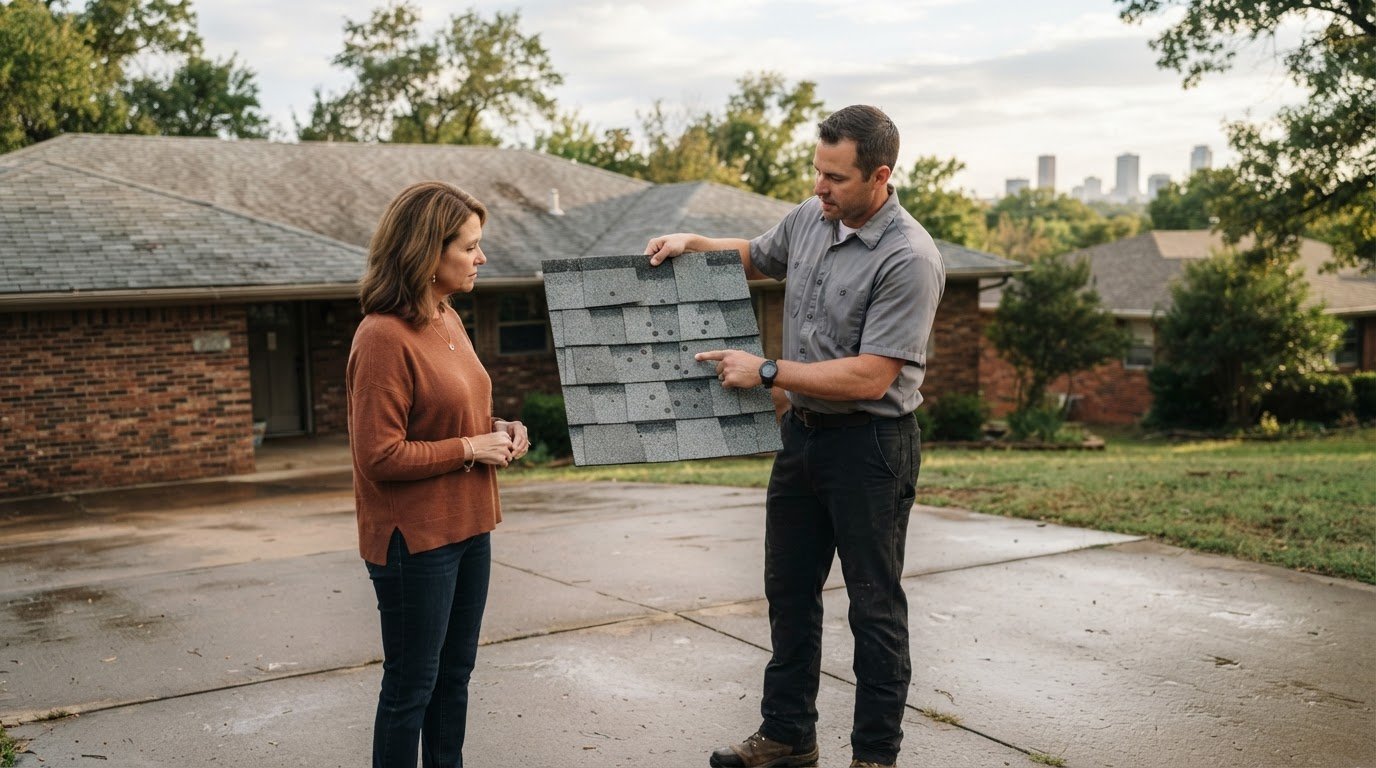

A roofer’s promise to cover your deductible can put more than your out-of-pocket costs at issue. Under Oklahoma law, it’s illegal for a roofing contractor to waive or compensate for an insurance deductible, directly or indirectly, to secure insurance-funded work. If a contractor violates the restriction, the insurer isn’t obligated to consider that contractor’s estimate.
An offer that appears to make storm repairs more affordable can be tempting. But a rebate, credit, or other deductible-related arrangement may raise the same concern as a direct waiver, and an inaccurate invoice or receipt can create further risk. Oklahoma’s restriction on waiving a roofing deductible sets boundaries to understand before accepting an offer or signing claim paperwork.
This article explains what the restriction covers, how indirect deductible offers may affect an insurance claim, and what to look for in estimates and other documents. You’ll also learn how to approach roof repairs or replacement while keeping the claim process clear and accounting for the deductible.
Key Takeaways
- Understand why an offer to cover a roofing deductible can affect how an insurer treats a contractor’s estimate.
- Learn how credits, rebates, and other indirect offers may raise concerns even when no one calls them a waiver.
- See how Oklahoma House Bill 1940 relates to the state’s restriction and what it means for roofing work tied to an insurance claim.
- Know what to watch for in estimates and claim documents before moving ahead with roof repairs or replacement.
A Roofer Offered to Waive My Deductible in Oklahoma, Could That Jeopardize My Claim?
Yes. A roofer’s offer to cover your deductible could affect how the insurer treats the contractor’s estimate. Oklahoma law prohibits roofing contractors from waiving or compensating for an insurance deductible to secure insurance-funded work. The restriction applies to contractors, not homeowners, but claim documents still need to reflect actual payments.
Oklahoma Rules for Deductible Coverage
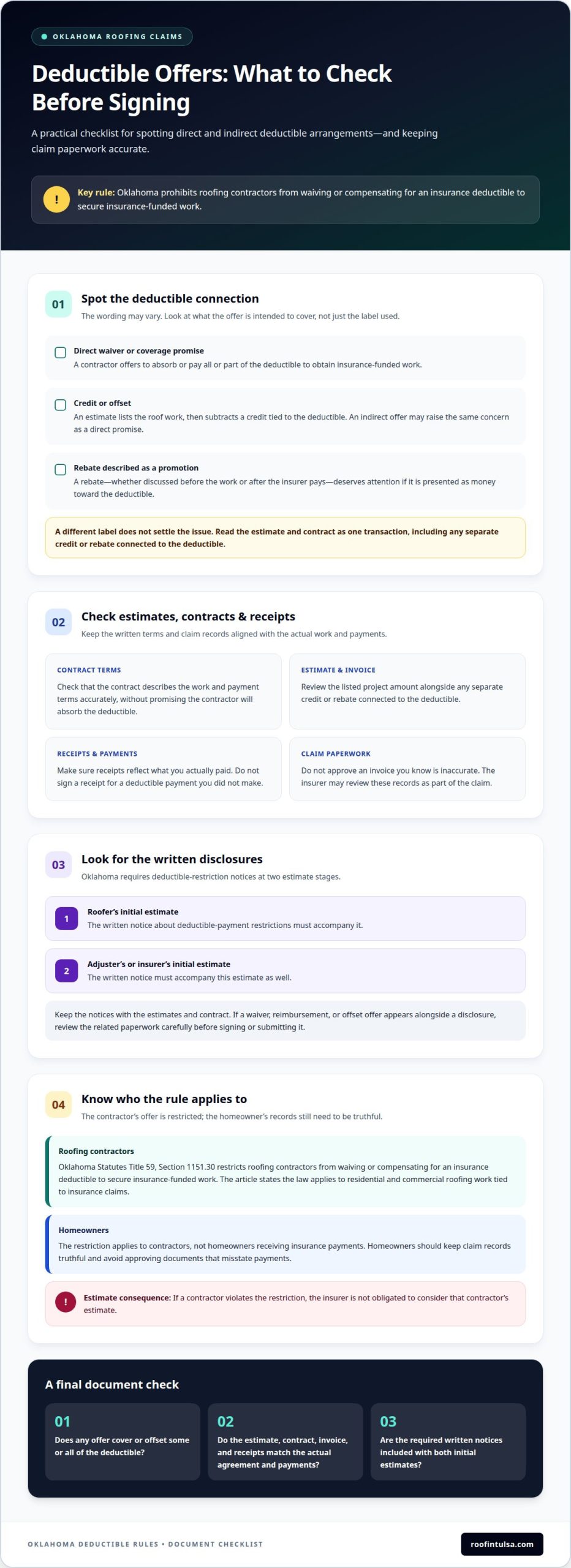
Oklahoma Statutes Title 59, Section 1151.30, prohibits roofing contractors from waiving or compensating for an insurance deductible. The rule also covers direct or indirect offers to pay part or all of it to obtain insurance-funded work. That matters because an insurer isn’t obligated to consider an estimate from a contractor who violates the restriction.
For example, a credit tied to the deductible may raise the same concern as a direct promise. Homeowners can review a contractor’s standing in the Oklahoma Construction Industries Board’s registration records and request proof of general liability insurance.
Homeowner Responsibility in Contract Terms
A roofing contract should accurately describe the work and payment terms without promising that the contractor will absorb the deductible. The deductible is part of the homeowner’s insurance arrangement, not a discount for the contractor to use to secure the project. Clear contract terms help keep the estimate, invoice, and claim documents consistent.
Before signing, review the payment terms and make sure receipts reflect what you actually paid. Don’t sign a receipt for a deductible payment you didn’t make or approve an invoice you know is inaccurate. The insurer may review these records as part of the claim.
Deductible Disclosures in Roofing Contracts
Oklahoma requires roofing contractors to provide written notice about deductible-payment restrictions with the roofer’s initial estimate. The notice must also accompany the adjuster’s or insurer’s initial estimate. These disclosures put the restriction in writing as claim and repair decisions take shape.
Keep the notices with the estimates and contract. If an offer to waive, reimburse, or offset the deductible appears alongside the disclosure, pause before signing or submitting related paperwork.
Who the Waiver Rules Apply To
Oklahoma’s law against waiving a roofing deductible applies to roofing contractors, not homeowners receiving insurance payments. Contractors cannot offer deductible coverage to secure insurance-funded work. Homeowners still need to keep claim records truthful and avoid approving documents that misstate payments.
If a roofer presents a waiver as a routine discount, consider whether the offer is connected to the deductible. The contractor must follow the restriction, and homeowners should make sure submitted paperwork matches the actual agreement and payments.
State laws prohibiting deductible payments, rebates, or inducements
Neighboring-state rules differ, but Oklahoma bars roofing contractors from advertising, offering, or promising deductible coverage to secure insurance-funded work. As of October 2026, Oklahoma was among at least 23 states with laws targeting deductible payments, waivers, rebates, or inducements.
State Restrictions on Deductible Inducements
State laws restrict how contractors may use an insurance deductible to attract work. Depending on the state, a restriction may address advertising, an offer, a promise, or a payment. This distinction matters when a roofer describes a deductible credit as a promotion rather than a waiver.
For homeowners comparing offers across state lines, the label alone doesn’t settle the issue. The key question is whether the arrangement offers to cover some or all of the deductible in connection with insurance-funded work.
Oklahoma’s Roofing Deductible Prohibition
Oklahoma’s rule, codified at Title 59, Section 1151.30, restricts roofing contractors from advertising or promising to pay all or part of an insurance deductible to obtain work. The law took effect on November 1st, 2022. It applies to residential and commercial roofing work tied to insurance claims.
Oklahoma’s approach focuses on the contractor’s offer or promise, including indirect arrangements. The state is identified among those that prohibit advertising, offering, or promising deductible coverage, rather than among states identified as also prohibiting actually paying or waiving it. This distinction helps explain why a proposed credit still deserves careful attention.
Waivers Offered as an Inducement
An inducement is an offer intended to persuade a customer to choose a contractor for insurance-funded work. A promise to absorb the deductible, or a rebate framed around that amount, can raise concerns under Oklahoma’s restriction. Calling it a discount doesn’t change what the offer is intended to cover.
Read the estimate and contract as a complete transaction, not as isolated phrases. For example, compare the listed project amount with any separate credit or rebate connected to the deductible. For a roof claim, insurance claim assistance can help keep the roofing estimate and claim process organized.
Indirect deductible offsets, credits, and rebates
A deductible offer doesn’t always use the word “waive.” Oklahoma’s restriction also addresses roofing contractors who indirectly promise to pay all or part of an insurance deductible to secure insurance-funded work. The connection matters: a credit described as a promotion can still be tied to the deductible in an estimate or sales discussion.
Consider an estimate that lists the full roof work, then subtracts a credit matching the homeowner’s deductible. Or a contractor might offer a rebate after the insurer pays the claim. These examples deserve close attention if the reduction is presented as money toward the deductible. The label alone doesn’t explain the arrangement.
Compare the written estimate, contract, invoice, and any rebate terms. Look for a line connecting a discount, upgrade, credit, or payment to the deductible. For example, a free upgrade offered specifically in place of the customer’s deductible raises a different question from an estimate that simply describes the agreed roofing work. Keep the documents together so the payment arrangement is clear.
The claim risk can extend beyond the wording. An Oklahoma insurer is not obligated to consider an estimate prepared by a roofing contractor who violates the deductible-payment restriction. A credit tied to the deductible could therefore affect how the estimate is treated, even if it appears only on a later invoice or rebate document.
Keep every claim document accurate. The Oklahoma Attorney General identifies false insurance claims and falsified supporting documents as forms of insurance fraud. Don’t approve paperwork saying you paid an amount you didn’t pay, or misstating a contractor credit. If a proposed reduction is connected to the deductible, ask the insurer how to document it before relying on it. This helps keep the claim record aligned with the actual agreement and payments.
Oklahoma House Bill 1940
Oklahoma House Bill 1940 established the roofing deductible restriction. The statute is Oklahoma Statutes Title 59, Section 1151.30.
The Statute on Roofing Deductible Waivers
Title 59, Section 1151.30, makes it unlawful for roofing contractors to waive or compensate for insurance deductibles. The restriction also covers advertising or promising deductible coverage to obtain insurance-funded roofing work. This statutory reference matters when reviewing a contractor’s offer, estimate, or agreement connected to an insurance claim.
House Bill 1940 was introduced during the 2021 Regular Session. Its listed passage date is 05/20/2022, and the governor approved it on 05/26/2022. Those dates show the bill’s path into law, while Section 1151.30 identifies the rule relevant to homeowners assessing deductible-related offers.
The statute’s practical significance is the connection between a contractor’s conduct and the claim estimate. If a roofing contractor violates the deductible-payment restriction, the insurer is not obligated to consider that contractor’s estimate. Homeowners can distinguish the contractor’s legal restriction from the insurer’s decision about claim documents.
Penalties for Deductible Waivers
A roofer who violates Oklahoma’s restriction may face consequences from the Oklahoma Construction Industries Board. The board may suspend or revoke the contractor’s license, and deductible-waiver violations can also result in fines and civil penalties. These potential outcomes make a deductible promise more than a contract-discount issue.
For homeowners, the estimate and supporting paperwork remain important. Don’t sign a receipt for a deductible payment you didn’t make or approve an invoice you know is inaccurate. Accurate records help distinguish actual payments from a contractor’s proposed credit or waiver.
If a claim-related estimate or offer raises questions, get insurance claim assistance to help keep roofing and claim paperwork organized.
Rescue Roofing Tulsa
Rescue Roofing Tulsa can help homeowners move from deductible questions to a clear understanding of their roof’s condition and needed work. A roof inspection can help identify damage, while roof repair or replacement addresses the roofing work itself. The right option depends on the roof’s condition and the scope of damage.
Keep estimates and claim documents accurate, and don’t treat a roofing credit as deductible payment. If you need help understanding the roof work involved after a storm or insurance claim, contact Rescue Roofing Tulsa to discuss your roofing needs.
Move Forward With a Clear Roofing Plan
Once you understand how Oklahoma law makes it illegal for a roofing contractor to waive a deductible, focus on the roof work your property needs. Clear records and an accurate scope can help keep repair decisions separate from promises about deductible payments. If you’re unsure whether the damage calls for repair or replacement, an inspection can help clarify the roof’s condition.
Rescue Roofing Tulsa handles residential and commercial roof replacement, as well as roof repair. The next step can be a conversation about your roofing concern and the work involved, without relying on a deductible credit to shape the decision.
Contact Rescue Roofing Tulsa to discuss your roofing needs. A clear plan can help you move ahead with greater confidence.
Frequently Asked Questions
What should a roofing contract say about the deductible?
A roofing contract should accurately describe the work, payment arrangement, and any insurance-related terms. It shouldn’t promise that the contractor will absorb your deductible. Compare the contract with the estimate and invoice before signing. If a document lists a deductible payment or credit, make sure it reflects what you actually agreed to and paid. Keep copies of the signed contract and related claim paperwork.
Does Calling It a Credit or Rebate Change the Offer?
No. A different label doesn’t settle whether an offer is tied to the deductible. For example, a rebate called a “storm discount” may still raise concerns if the roofer connects it to covering your deductible. Consider the purpose and terms of the offer, not just its name. Keep the written offer and estimate together so the insurer can see how the proposed payment was described.
How do storm chasers use illegal deductible offers to steal business?
After a storm, a contractor may use a promise to cover the deductible as a sales pitch, making the project seem less costly upfront. That promise can pressure homeowners to choose quickly, before carefully reviewing the estimate and contract. A storm-related offer alone doesn’t establish wrongdoing. Focus on what the contractor promises, whether the offer is tied to the deductible, and whether the paperwork accurately describes payments.
How much does a homeowner pay on an insurance roof?
The homeowner’s out-of-pocket share depends on the policy’s deductible and what the insurer approves for the claim. Some home policies set wind or hail deductibles at 1% to 5% of the insured home value. The policy terms and covered damage determine the amount, not a roofer’s promised credit.
What Should You Do if You Already Agreed?
Save the contract, estimate, messages, and any written offer. Avoid signing receipts or invoices that don’t match actual payments. Tell your insurance agency what the contractor offered and provide accurate documents about the arrangement. If work hasn’t started, clarify the contract terms before proceeding. If you’ve already submitted paperwork, promptly explain any error to the insurer rather than leaving an inaccurate record uncorrected.
What Warning Signs Should You Watch For?
Take care with offers that promise to erase the deductible, use a credit equal to it, or ask you to sign a receipt for money you never paid. Other warning signs include blank spaces in a contract or paperwork describing a different payment arrangement from the one discussed. Keep every version of the estimate. A mismatch between the written terms and the actual offer deserves attention before you sign.