


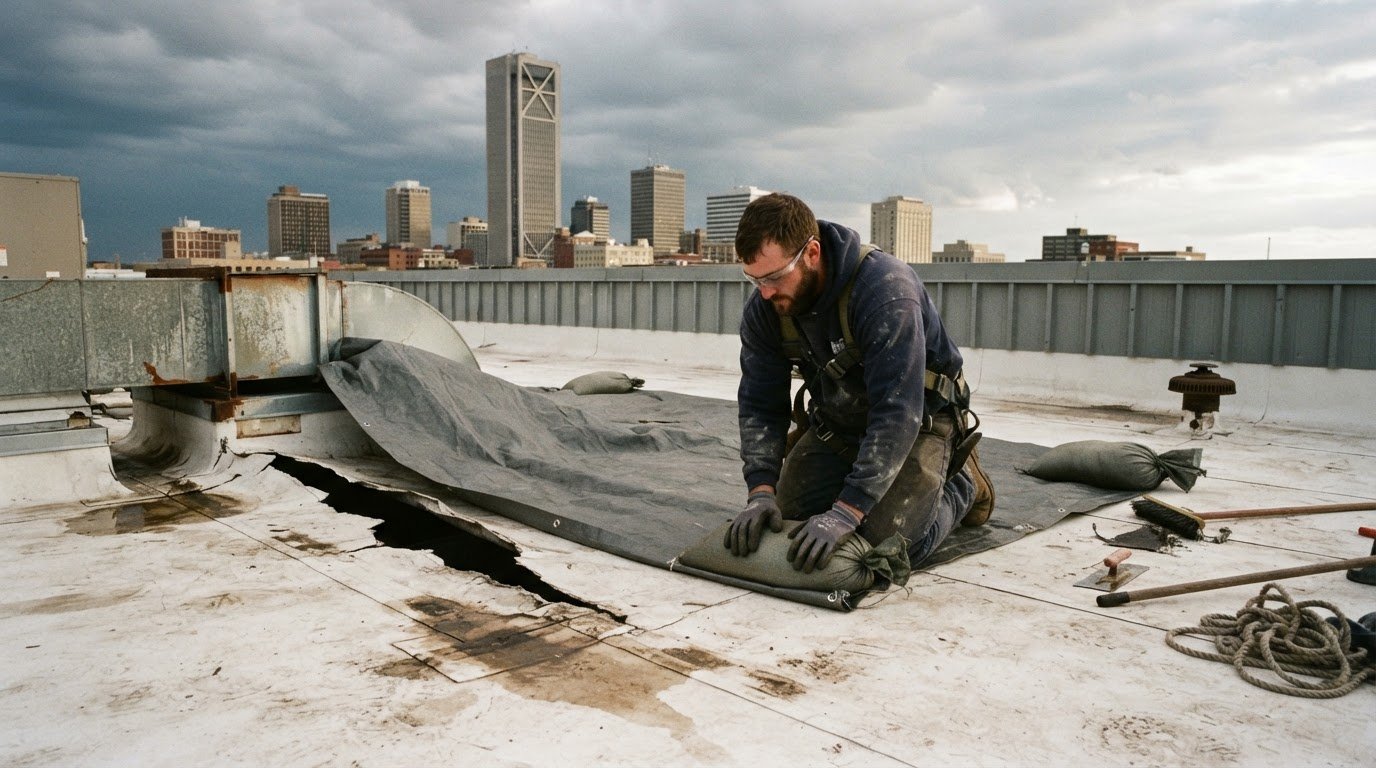

Storm damage can become an urgent problem before a roof can be permanently repaired. Property insurance may cover emergency repairs when the storm damage falls within the policy’s coverage, but the policy and cause of damage matter. Damage that could let water, wind, or outside air into a Tulsa home within 24 to 48 hours is an emergency. A Tulsa emergency roof repair contractor can assess the damage and help protect the property.
After a storm, it’s understandable to want quick answers about what may be covered and what needs attention first. This guide explains how property insurance may apply, how emergency roof tarping can limit exposure, and how a professional assessment helps plan permanent repairs.
You’ll also learn how residential and commercial roofing repairs differ and how to get help in Tulsa and surrounding communities. Knowing what to expect can make the next steps clearer when roof damage has you worried.
Key Takeaways
- Learn what information can help support a storm-damage insurance claim and how a professional roofer can document the damage.
- Understand how temporary tarping helps shield exposed areas until permanent repairs can be planned.
- See how emergency repair needs differ across residential roofs and commercial or flat roofing systems.
- Find out what professional roof repair can address in Tulsa and nearby communities after severe weather.
Does property insurance cover emergency roof repair?
Property insurance may cover emergency roof repairs when storm damage is covered by the policy. The cause of the damage and your policy terms determine what the claim may include.
Storm and Tree Damage Repairs
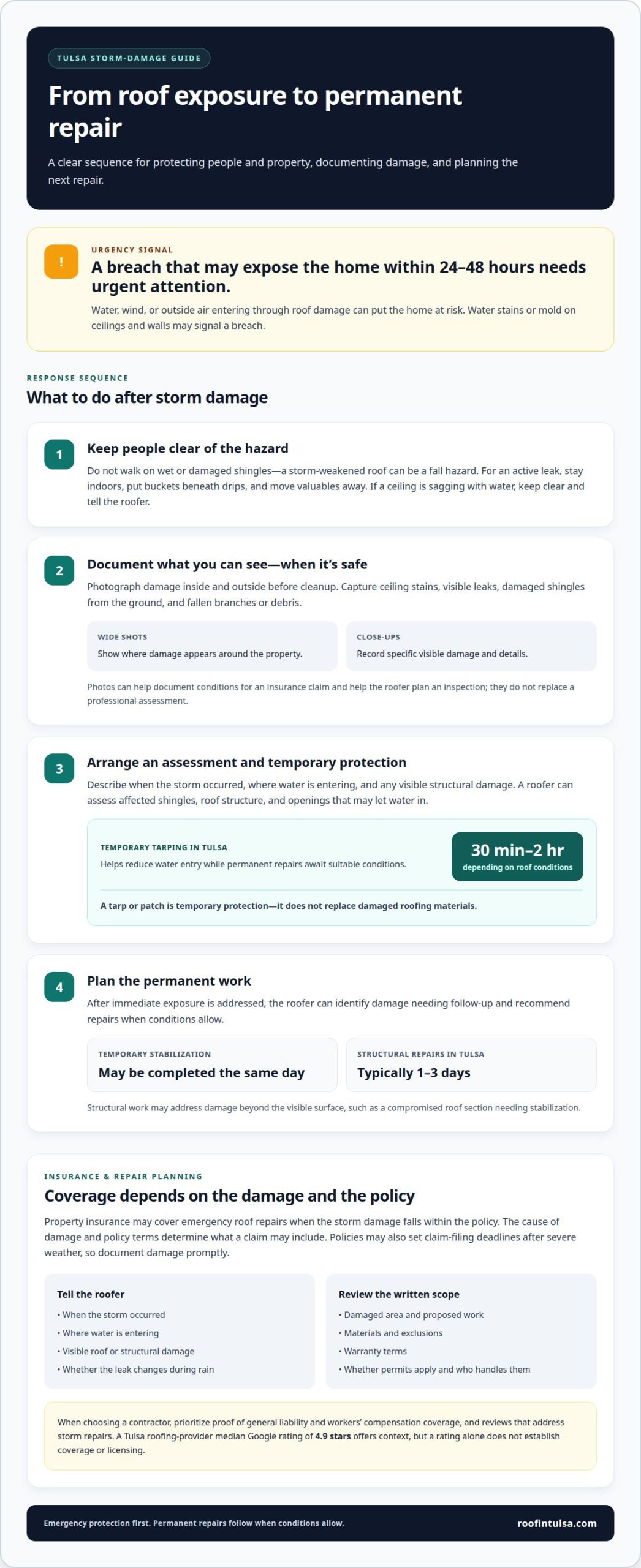
After wind, hail, or a fallen tree damages a roof, a roofer assesses the affected shingles, roof structure, and openings that could let in water. Structural repairs address damage beyond the visible surface, such as a compromised roof section that needs stabilization before permanent work. Structural repairs in Tulsa typically take 1-3 days, while temporary stabilization may be completed the same day.
Emergency roofing can include tarping exposed areas and replacing wind- or hail-damaged shingles. A roof breach that could let water, wind, or outside air into a home within 24 to 48 hours warrants urgent attention. Water stains or mold on ceilings and walls can signal a possible breach. Stay off wet or damaged shingles; a storm-weakened roof can create a fall hazard.
Damage Photos for Insurance Claims
When it’s safe, photograph damage inside and outside before cleanup. Capture ceiling stains, visible leaks, damaged shingles from the ground, and fallen branches or debris. Take wide shots to show where damage appears, along with close-ups of specific details. These photos can document conditions for an insurance claim and help a roofer plan an inspection and repair.
When arranging service, describe when the storm occurred, where water is entering, and any visible structural damage. For active leaks, stay indoors, place buckets beneath drips, and move valuables away. If a ceiling is sagging with water, keep clear of the area and tell the roofer.
Which Tulsa emergency roof repair contractors are licensed, insured, and well reviewed? Prioritize a contractor who can show proof of general liability and workers’ compensation coverage, and whose reviews address storm repairs. A Tulsa roofing-provider median Google rating of 4.9 stars offers context, but a rating alone doesn’t establish coverage or licensing.
Delaying repairs can leave the roof exposed to further water intrusion and interior damage. Insurance policies may set deadlines for filing claims after severe weather, so document the damage promptly and arrange a professional assessment.
Emergency roof tarping after storms or tornadoes
Yes, Tulsa roofers can provide temporary tarping and emergency leak repairs when storms expose a roof. Tarping helps limit exposure while permanent repairs await suitable conditions.
Storm Tarping and Temporary Patching
After severe wind or tornado damage, a roofer assesses the opening, then covers exposed areas with a temporary tarp or patch. The goal is to reduce water entry, not replace damaged roofing materials. In Tulsa, emergency tarping typically takes 30 minutes to 2 hours, depending on roof conditions. A tarp is temporary protection; permanent repairs should be planned as soon as weather allows.
Emergency Leak Repair
For an active leak, a roofer traces the likely entry point and checks nearby shingles and roof surfaces. A ceiling stain may appear far from the opening, so the indoor symptom alone may not reveal the full extent of the damage. Emergency work may start with temporary protection, followed by targeted repairs when conditions allow. Tell the roofer where water appears and whether the leak changes during rain.
If a storm has damaged shingles or opened part of the roof, arrange a professional assessment instead of trying to access the roof yourself. A post-storm inspection can identify loose materials, hidden openings, and areas needing follow-up. Photos of interior and exterior damage can also document conditions before cleanup. If a ceiling is actively leaking, keep people and belongings away from the affected area.
Local Storm-Call Availability
After severe weather, call availability can change as multiple properties need attention. When arranging service, describe the property’s location, visible roof damage, active leaks, and any fallen branches. These details help communicate urgency and guide the assessment. Ask for a clear explanation of temporary protection and permanent repairs so you understand both the immediate step and any follow-up work.
Once conditions are safe, a professional roof inspection can help identify damage that isn’t visible from the ground. Prompt attention matters because an uncovered opening can expose ceilings and interior finishes to further water intrusion.
Residential and commercial roofing systems serviced
In Tulsa, emergency roof work depends partly on the roofing system and where the damage occurred. A residential shingle roof may have missing or lifted shingles, while a commercial flat roof may leak across a larger surface. In either case, a roofer assesses the roof covering, underlying decking, and signs of interior damage before recommending a repair or replacement.
When reviewing an emergency estimate and warranty, look for the same details in the written scope: the damaged area, proposed work, materials, exclusions, and warranty terms. Photos can help show what the roofer observed, but they don’t replace an assessment. A clear estimate should distinguish a localized leak from damage affecting the decking or a broader roof section.
Permit and contractor registration requirements can depend on the work and local jurisdiction. Repairs and full replacements may have different requirements. The written scope should state whether permits apply and who handles them, rather than treating a repair estimate as interchangeable with an installation plan.
Emergency roofing coverage is also a service-area and dispatch question. Tulsa and surrounding communities are the relevant area for local response; Northeast Oklahoma should not be assumed to have identical coverage. A 24/7 emergency service label describes around-the-clock contact availability, not a guaranteed arrival time or completed repair. The urgency, weather, roof access, and crew capacity can shape dispatch.
For example, a shingle opening above a bedroom calls for a different inspection focus than water entering beneath a commercial flat roof. Share the property address, roof type if known, where the leak appears, and any visible interior effects. A roofer can use this information to plan the inspection and determine whether damaged decking or a larger section needs attention.
Emergency roof repairs in Tulsa and surrounding communities
Tulsa sees major hail or wind events multiple times per year, with peak activity in late spring. Damage can range from missing shingles to structural openings, so first determine whether water can enter and affect the interior. A Tulsa emergency roof repair contractor can assess the damage and distinguish urgent exposure from work that can wait for permanent repairs.
From a safe place, look for missing shingles, impact from debris, ceiling stains, or active indoor dripping. Standing water on a roof may point to drainage or surface damage, while water inside may have entered elsewhere on the roof. Share the property address, when the storm occurred, and where interior damage appears. This information helps clarify the immediate concern before inspection.
Repair timing depends on the damaged area and work involved. Localized shingle replacement in Tulsa typically takes 1-3 hours, while roof leak repairs typically take 1-4 hours. Those timeframes describe common repair tasks, not every storm response. A roofer also needs to assess surrounding materials, since visible damage may extend beyond one missing shingle.
Structural damage needs a broader assessment than a surface repair. A fallen branch, for example, may affect roof framing or decking as well as shingles. The roofer determines whether the area needs temporary stabilization, structural repair, or a larger scope of permanent work. This helps property owners understand what addresses immediate exposure and what restores the roof.
When arranging service in Tulsa and surrounding communities, describe the roof type, visible damage, active leaks, and any safety concerns. A Tulsa emergency roof repair contractor can use those details to focus the inspection on the property’s needs. Keep people away from damaged areas indoors and outdoors, and don’t climb onto the roof after a storm.
If storm damage has left your roof exposed, arrange professional roof repair to assess the damage and plan the next steps.
Rescue Roofing Tulsa: Roof Repair
Rescue Roofing Tulsa provides Roof Repair for storm damage, leaks, and fallen branches that leave a roof exposed. A professional inspection helps identify the affected area and determine whether targeted repairs can address the damage or roof replacement is more suitable.
For a home, Residential Roof Replacement may be appropriate when damage extends beyond a repairable section. Commercial Roof Replacement addresses broader needs on business properties. The right scope depends on the roof’s condition and the extent of storm damage, so an assessment can clarify the next step.
Turn to Rescue Roofing Tulsa for a professional roof damage assessment and help planning repairs. Contact Rescue Roofing Tulsa to discuss your roofing needs.
Take the Next Step Toward a Sound Roof
After storm damage, start with an assessment that connects the visible problem to the right scope of work. A Tulsa emergency roof repair contractor can help determine whether the property needs a focused repair or a broader replacement plan. Share the property address, storm-related concerns, and any photos you’ve taken so the assessment has useful context.
Rescue Roofing Tulsa offers Roof Repair, Residential Roof Replacement, and Commercial Roof Replacement. The right option depends on the roof’s condition and the damage. If you’re weighing repair against replacement, a professional evaluation can clarify the way forward and reduce guesswork during a stressful situation.
Contact Rescue Roofing Tulsa for help with your roofing needs. A steady next step can make storm recovery feel more manageable.
Frequently Asked Questions
What Counts as a Roofing Emergency in Tulsa?
A roofing emergency is damage that leaves a home exposed to water, wind, or outside air within 24 to 48 hours. A hole from a fallen branch, active water intrusion, or storm damage that exposes the roof structure can need urgent attention. Water stains or mold on interior walls and ceilings may also signal a roof breach, even when the opening isn’t visible from indoors.
Do you tarp commercial buildings?
Commercial roofs may need temporary covering when storm damage exposes the building interior, equipment, or stored property. Whether a tarp is suitable depends on the roof’s condition, the damaged area, and safe access. For a commercial property, explain which rooms or operations are affected and share photos taken from safe locations. A roofer can assess the damage and outline temporary protection and follow-up repairs.
How does a professional roofer seal a leaking roof?
A professional roofer traces the leak to its entry point, then assesses nearby roofing materials and any affected decking. The repair method depends on the roof system and damage, and may involve replacing damaged shingles, closing a roof opening, or repairing a compromised section. Sealing only the interior stain won’t fix the leak. The roofer should explain the source and scope before starting repairs.
How long can a tarp stay on my roof?
A roof tarp provides temporary protection, not a permanent repair. Its usefulness depends on its condition, how it is secured, the roof surface, and exposure to further wind or rain. Ask what area the covering protects, what conditions could affect it, and when permanent repairs are planned. If the tarp shifts or damage appears indoors, report the change promptly.
What should clients do first while arranging professional help if their roof leaks during a storm?
Stay indoors and keep people away from active leaks or a sagging ceiling. Place buckets beneath drips and move valuables out of the affected area. If water is near a light fixture or outlet, turn off power to that room at the breaker if you can do so safely. Don’t climb onto the roof or attempt repairs during the storm; tell the roofer where water is entering.
What should you ask a roofer after a storm?
Ask what the inspection found, whether the roof needs temporary protection, and what permanent work the roofer recommends. Request a written scope distinguishing visible damage from structural concerns, and ask what photos or records can support your insurance claim. Before roof work begins, you can also ask whether the roofer carries general liability and workers’ compensation insurance.