


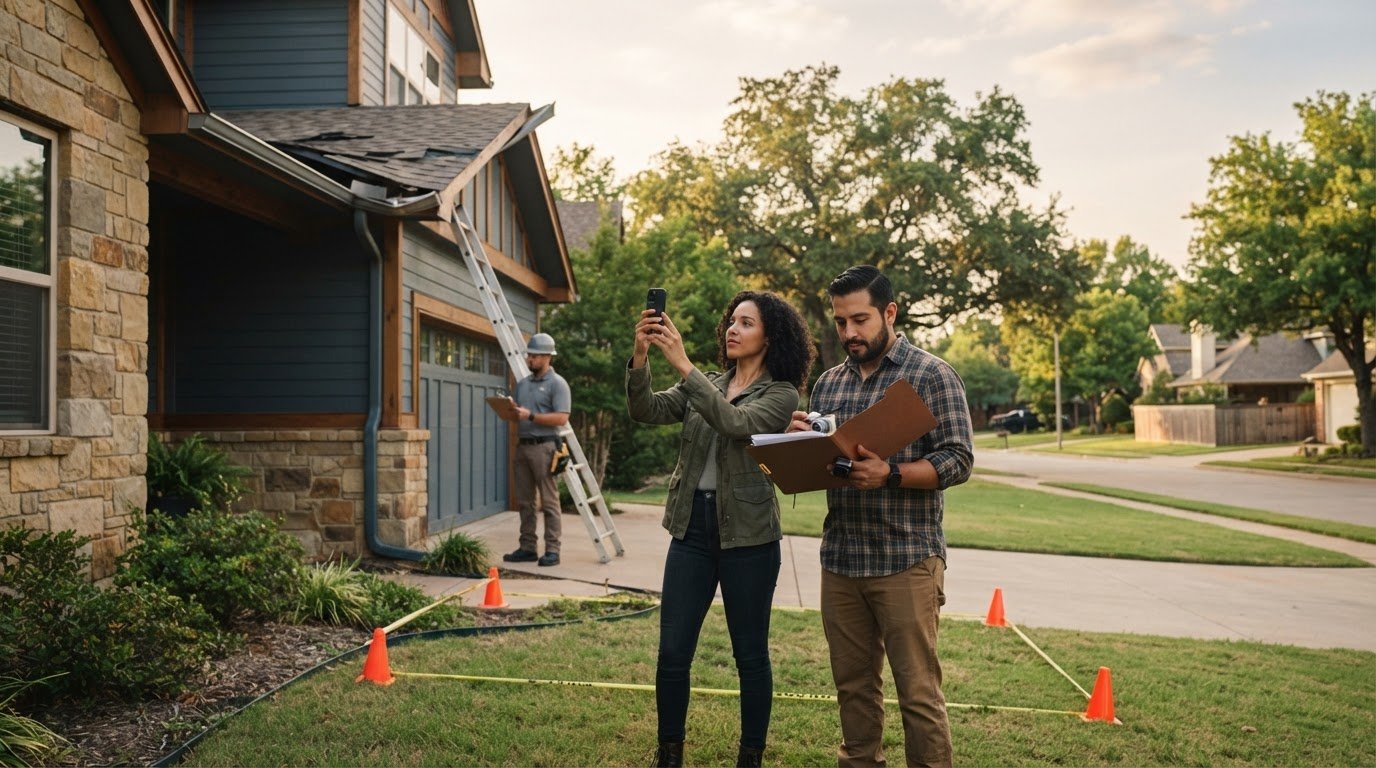

The first repair shouldn’t be your first move after a roofer damages your home. If you’re wondering what to do if a roofer damages your home, start by protecting people and documenting what happened. Take sensible steps to prevent further damage, but don’t put yourself at risk. If there’s an immediate safety concern, keep clear of the area and seek appropriate help.
It’s understandable to want the roofer to fix the problem right away. A clear record can help you explain what happened and make informed decisions about repairs, insurance, and responsibility. From a safe distance, take photos or videos, note when you noticed the damage, and save relevant messages and paperwork before repairs or cleanup change the scene.
This guide covers practical next steps: how to limit further damage safely, what to document, and how to raise the issue with the roofer. You’ll also learn when an independent roof inspection may help, how to approach your insurer, and what to consider if communication breaks down. You don’t have to resolve everything at once. Start with safety, then build a clear record.
Key Takeaways
- Knowing what to do if a roofer damages your home starts with separating immediate safety concerns from issues that can be addressed less urgently.
- Build a clear evidence file with dated photos, notes, and project documents to support calm, factual communication.
- Compare the roofer’s response with an independent assessment and your insurer’s guidance.
- Use a measured sequence: request an inspection, review repair proposals, and consider escalation if the issue remains unresolved.
- A professional roof inspection or repair assessment may help clarify visible damage and inform your next step.
What to Do First If a Roofer Damages Your Home
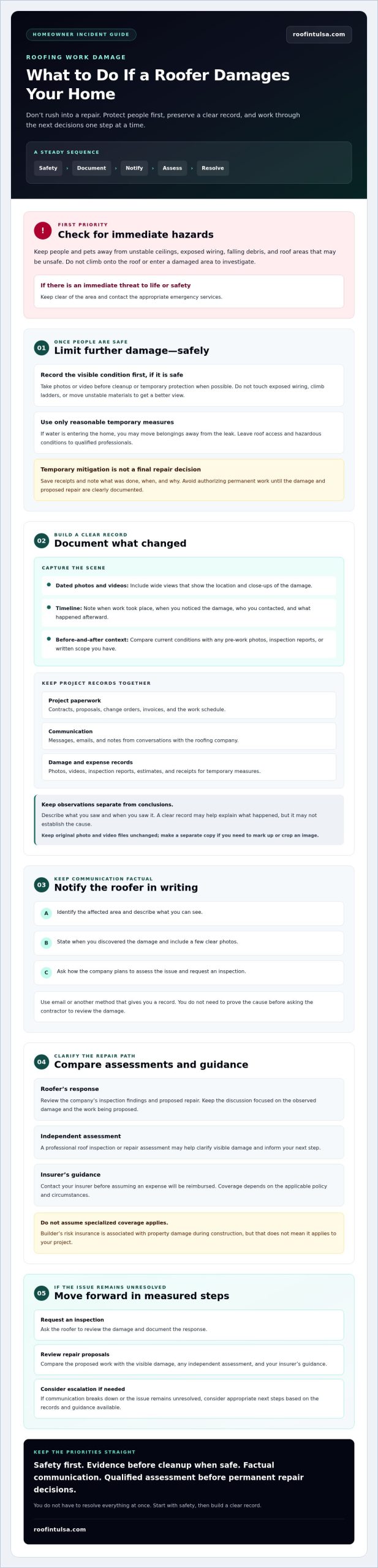
Finding damage after roofing work can feel overwhelming, but you don’t have to solve everything at once. Start with safety, take reasonable steps to limit further damage, and keep communication factual. If you’re deciding what to do if a roofer damages your home, treat it first as an incident to document, then as a repair issue to resolve.
Check for immediate hazards before inspecting the damage
Keep people and pets away from unstable ceilings, exposed wiring, falling debris, and roof areas that may be unsafe. Don’t climb onto the roof or enter a damaged area to investigate. From a safe location, note visible signs such as water coming through a ceiling, new stains, or debris indoors. If there’s an immediate threat to life or safety, contact the appropriate emergency services.
For damage that doesn’t pose an urgent hazard, use this order:
- Secure people first: Keep others clear of the affected area.
- Record what you can see: Take photos or video from a safe distance before cleanup or temporary protection, if possible.
- Notify the roofer: Describe the visible issue calmly and ask how they plan to assess it.
- Arrange qualified help when needed: Don’t attempt hazardous repairs yourself. Contact a qualified professional if the situation requires a roof or electrical assessment.
Limit further damage while preserving evidence
Before moving damaged belongings or covering an affected area, photograph its condition if it’s safe to do so. Take wide views that show the location and close-ups of the damage. Don’t touch exposed wiring, climb ladders, or move unstable materials to get a better picture. If you can’t document the scene safely, prioritize people and property over evidence.
Write down when you noticed the damage, what work was underway, and who you spoke with. Keep the roofing agreement, messages, inspection notes, photos, and receipts together. If water is entering the home, use only safe, reasonable temporary measures, such as moving belongings away from the leak. Leave roof access and hazardous conditions to qualified professionals.
Emergency mitigation and permanent repairs are separate decisions. A temporary measure may limit additional damage, but it doesn’t establish who caused the problem or who will pay. Save receipts and note what was done, when, and why. Coverage depends on the applicable policy and circumstances, so contact your insurer before assuming an expense will be reimbursed. For context, Builder’s risk insurance is a specialized type of coverage associated with property damage during construction, but don’t assume it applies to your project.
Once everyone is safe and immediate risks are addressed, avoid authorizing permanent work until the damage and proposed repair are clearly documented. That gives you a steadier basis for the next conversation.
How to Document Roofer Damage and Notify the Contractor
A clear record keeps the conversation focused on what changed rather than assumptions about why it happened. As you decide what to do if a roofer damages your home, gather the evidence in one place and describe only what you observed. You don’t need to prove the cause before asking the contractor to review the damage.
Create a clear record of what changed
Take dated photos and videos of each affected area. Include wide views that show its location and close-ups of details such as a cracked fixture, water stain, or damaged belongings. If you have pre-work photos, inspection reports, or a written scope, compare them with the current condition. These records may show what was documented before work began, but they may not establish what caused the damage.
Save project records together so they’re easy to find:
- Contracts, proposals, change orders, invoices, and the work schedule
- Messages, emails, and notes from conversations with the roofing company
- Photos, videos, inspection reports, estimates, and receipts for temporary measures
Keep the original photo and video files unchanged. Make a separate copy if you need to mark up or crop an image. Add a dated timeline showing when work took place, when you noticed the damage, who you contacted, and what happened afterward. Keep observations separate from conclusions. For example, write “water stain appeared below the bedroom ceiling after Tuesday’s work,” rather than stating who caused it.
Send a calm written notice and request an inspection
Contact the roofing company in writing, using email or another method that gives you a record. Identify the affected area, describe what you see, and state when you discovered it. Attach a few clear photos, but keep your full evidence file. Ask the contractor to respond in writing and suggest a time to inspect the damage.
A straightforward message could say: “I noticed a new water stain on the hallway ceiling on [date], after roofing work at [address]. I’ve attached photos. Please confirm when you can inspect this area and share your findings and proposed next steps in writing.” Keep your tone factual, and save the reply along with any follow-up messages. The FTC’s consumer protection advice also offers guidance on home improvement contractors and project agreements.
If the damage needs a repair assessment, the site article A Homeowner’s Guide to Roof Repair: Fixing Leaks, Damage, and More may offer useful background. For a separate professional perspective, Rescue Roofing Tulsa offers roof inspections and roof repair in Tulsa and surrounding areas. Learn about roof inspection and repair options.
How to Assess Responsibility, Insurance, and Repair Options
Once you’ve recorded the damage, consider what the evidence can and can’t establish. A roof leak discovered after a project may be related to the work, a pre-existing condition, or storm damage. Timing matters, but it doesn’t prove the cause. Responsibility depends on the available evidence and the terms of the work agreement.
Contractor-caused damage and storm damage can involve different evidence and different questions under your insurance policy. Compare the current condition with pre-work photos or inspection reports, review the agreed scope, and note when and where the damage appeared. For background on prior roof conditions and routine care, see Roof Maintenance: A Homeowner’s Guide to Protecting Your Tulsa Home. These records can help frame questions, but they don’t determine fault on their own.
Choose the right assessment for the situation
| Option | What it can clarify | What to ask or keep in mind |
|---|---|---|
| Contractor inspection | The roofer can review the affected area and explain its findings. | Ask what will be inspected and request the findings and proposed next steps in writing. |
| Independent roof assessment | A separate roofer can describe visible roof conditions and possible repair needs. | An inspection can inform your decisions, but it doesn’t make a legal determination about responsibility. |
| Insurer contact | Your insurer can explain how your specific policy may handle the situation. | Ask about applicable policy terms, documentation, and any deadlines. Coverage decisions depend on the policy and facts. |
| Urgent mitigation | Qualified help may address an active leak or another immediate concern. | Keep records of the condition, work performed, and related receipts. Temporary mitigation isn’t the same as a permanent repair or a decision about who pays. |
Understand the contractor’s and insurer’s roles
Ask the roofing company how it will inspect the damage and whether it can provide information about any applicable insurance. Don’t assume that a policy exists, applies, or will cover the loss. Contact your own insurer directly, describe the situation accurately, and ask how your policy addresses contractor work, storm damage, and resulting repairs. Review the policy language and keep notes from calls.
If the explanations conflict or the disagreement may involve legal responsibility, consider getting advice from a qualified attorney. Legal rights and deadlines depend on the facts, so don’t rely on a roofer or insurance representative to make that determination. For homeowners weighing what to do if a roofer damages your home, an independent roof inspection can help clarify visible conditions while leaving responsibility and coverage questions to the appropriate parties.
How Tulsa Homeowners Can Pursue a Repair or Escalate a Dispute
If the roofer’s first response doesn’t resolve the concern, take the next steps in order. Request an inspection, save the company’s response, and seek another assessment if the cause or repair scope remains unclear. This measured approach keeps the discussion focused on documented conditions and practical solutions.
Evaluate a proposed repair before agreeing
Ask for a written proposal that identifies each damaged area, the work planned, expected timing, and who will handle follow-up if the problem continues. Check that it addresses all the areas you documented, not just the most visible spot. If the proposal is vague, ask for clarification before authorizing the work. A second professional assessment may help if you still have questions about the damage, its likely cause, or whether the proposed fix is appropriate.
Keep copies of revised proposals and messages about scheduling or changes to the work. If you agree to a repair, make sure the written scope reflects what you understand the roofer will do. Clear details can reduce confusion later.
Escalate carefully when the issue remains unresolved
Keep a record of your attempts to resolve the matter, including dates, written requests, responses, inspection findings, and repair proposals. If direct communication doesn’t lead to a practical next step, check current Oklahoma consumer resources before filing a complaint. The Oklahoma Construction Industries Board and the Oklahoma Attorney General’s Consumer Protection Unit may offer complaint channels, but verify each agency’s current jurisdiction, eligibility requirements, and filing process. Don’t assume a particular agency handles every roofing dispute.
For legal questions, contract disagreements, or concerns about deadlines, consult an Oklahoma attorney. An attorney can review the facts and explain options that may apply to your situation. This is especially important if the dispute involves significant repair needs or the contractor denies responsibility.
Understanding what to do if a roofer damages your home includes knowing when a separate roof assessment could clarify the condition and repair scope. Rescue Roofing Tulsa offers roof inspections and roof repair in Tulsa and surrounding areas. Request a roof inspection or repair assessment.
Choosing a Reliable Next Step After Roofer Damage in Tulsa
There’s no need to decide everything at once. Use a simple sequence: address immediate safety concerns, preserve your records, give the original contractor a chance to respond, and consider an independent assessment if questions remain. Contact your insurer about how your policy applies. If the dispute raises legal or deadline concerns, seek qualified legal advice.
When to request an independent roof inspection
A separate inspection may help if you can’t identify the source of visible damage, the roofer’s explanation is unclear, or a proposed repair appears to leave part of the problem unaddressed. Share relevant photos, work documents, and earlier inspection records. Ask the inspector to distinguish what they can directly observe from any conclusions about cause. An inspection can clarify roof conditions and possible repair needs, but it doesn’t decide legal responsibility or insurance coverage.
For a closer look at repair considerations, see Fast & Reliable Roof Repair in Tulsa, OK | Rescue Roofing. The broader guide Tulsa Roofing: The Complete Homeowner’s Guide to Protection, Repair, and Insurance may also provide helpful local context.
Get practical help without rushing a decision
If there’s an active leak or urgent roof condition, keep people away from unsafe areas and ask a qualified roofing professional about available emergency repair assistance. Rescue Roofing Tulsa provides 24/7 emergency roof repair, along with roof inspections and repair services for residential and commercial property owners in Tulsa and surrounding areas. A professional assessment can help you understand visible damage and possible next steps; it can’t guarantee a particular outcome in a dispute.
If you have insurance questions, contact your insurer directly to ask how your policy applies. Rescue Roofing Tulsa also offers insurance claim assistance, but coverage and claim decisions remain with the insurer. The company isn’t a law firm, and its assistance doesn’t promise claim approval or resolve contractor responsibility.
Understanding what to do if a roofer damages your home means choosing the next step that fits the situation, not rushing into permanent repairs or a dispute. If you’d like help assessing roof damage, contact Rescue Roofing Tulsa for help assessing roof damage.
Take Your Next Step With a Clear Plan
Knowing what to do if a roofer damages your home starts with protecting people, then preserving a factual record of what changed. Give the contractor a clear opportunity to inspect the damage, and consider an independent roof assessment if the cause or repair plan remains uncertain. Your insurer can explain how your policy applies, while a qualified attorney can advise on legal questions or deadlines.
You don’t have to decide every repair or dispute question at once. Focus on the next practical step, whether that’s documenting a response, arranging an inspection, or addressing an active leak. Rescue Roofing Tulsa serves residential and commercial property owners in Tulsa and surrounding areas with roof inspections, repairs, and insurance claim assistance. The company also provides 24/7 emergency roof repair for urgent damage. These services can help assess roof conditions, but they don’t guarantee an insurance or dispute outcome.
Contact Rescue Roofing Tulsa for help assessing roof damage. With clear records and the right professional guidance, you can move forward one step at a time.
Frequently Asked Questions
What should I do first if a roofer damages my home?
Prioritize safety and keep people away from unstable ceilings, exposed wiring, falling debris, or unsafe roof areas. Contact emergency services if there’s an immediate threat, and don’t climb onto the roof. If it’s safe, take reasonable steps to limit further damage, then photograph the affected areas before cleanup or temporary protection. Contact the contractor in writing, describe what you observed, and request an inspection. Save your message and any response. These are practical first steps for what to do if a roofer damages your home.
Can I make a roofer pay for damage to my home?
Whether a roofer must pay depends on the evidence, the work agreement, and applicable law. Photos, project documents, inspection findings, and a written repair proposal may help clarify what happened, but they don’t guarantee a particular outcome. Ask the contractor to respond to the damage in writing and keep records of the discussion. If responsibility remains disputed, consider speaking with a qualified attorney who can review your circumstances and explain your options.
Should I contact my homeowners insurance if a contractor damages my roof?
Contact your insurer and ask how your policy applies to this specific incident. Homeowners insurance terms and coverage vary, and the insurer can explain what documentation it needs and how to proceed. Describe what you know without guessing about the cause, and ask whether any time-sensitive steps apply. Keep notes from calls and save related messages. Don’t assume the policy covers the damage or that a claim will be approved until your insurer reviews the circumstances.
How do I prove that a roofer caused damage?
Build a clear record, but remember that timing alone doesn’t prove who caused the damage. Save dated photos and videos, compare them with before-work images or inspection records, and keep the contract, work scope, schedule, and messages. Write a timeline of the work, when you noticed the damage, and what happened afterward. A professional’s observations may help describe the condition and possible repair needs, but may not determine legal responsibility.
Can I hire another roofer to inspect the damage?
Yes. An independent roofer can assess visible conditions and help clarify what repairs may be needed, especially if the original contractor’s explanation or proposal leaves questions. Share relevant photos, inspection records, and project documents. Ask the roofer to distinguish direct observations from conclusions about the cause. An independent assessment can provide another professional perspective, but it doesn’t decide who is legally responsible or whether an insurance policy covers the damage.
What if the roofer refuses to fix the damage?
Keep copies of your written notices and the contractor’s replies, and ask for a clear written explanation of its position. If direct communication doesn’t resolve the issue, check current Oklahoma consumer guidance and confirm which agency, if any, has jurisdiction over your complaint. Agency processes and coverage can vary. For questions about contract rights, legal responsibility, or deadlines, consult an Oklahoma attorney who can review the facts and advise you about possible next steps.
Should I sign a release after a roofer repairs the damage?
Don’t sign a release until you understand what it says and what claims or rights it may affect. A document might address more than confirmation that repair work was completed, so read every term carefully and ask for clarification in writing. If any language is unclear or you’re unsure about its effect, seek advice from a qualified attorney before signing. Keep a copy of the document and related repair records for your files.
Contact Rescue Roofing Tulsa to discuss a roof inspection or repair assessment.