



What if the roof problem you expect a warranty to cover falls outside its written terms? After a leak, storm, or suspected installation issue, asking what does a roofing warranty actually cover can feel confusing, especially when the warranty language is hard to interpret.
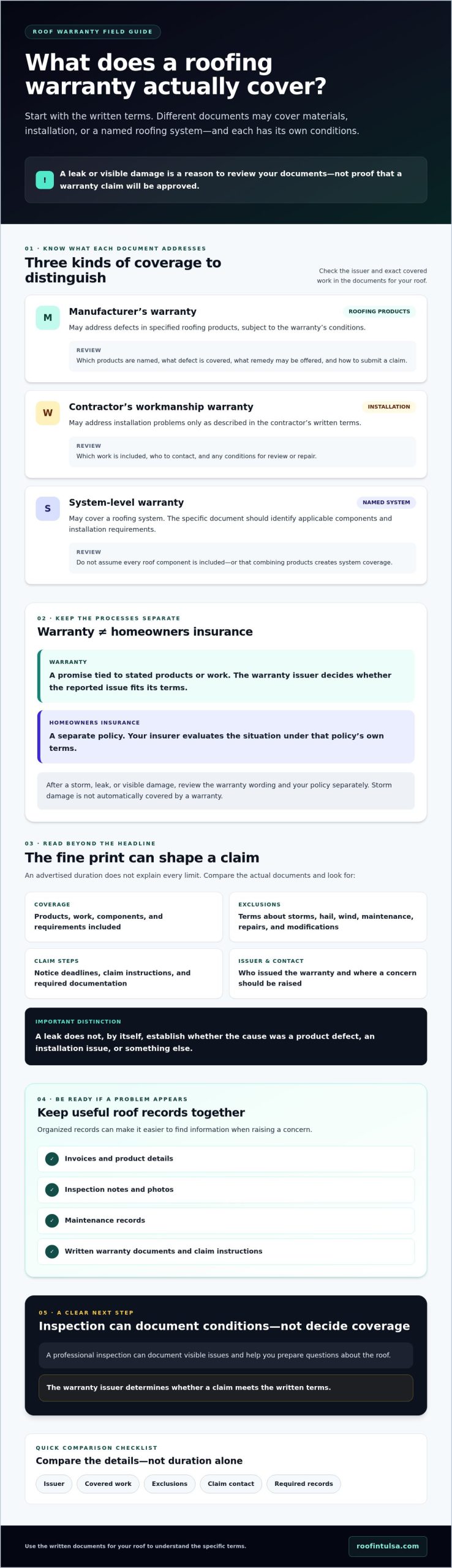
Start by separating the documents. A manufacturer’s warranty may address defects in roofing materials, while a contractor’s workmanship warranty may address installation problems. Neither is the same as homeowners insurance, and storm damage isn’t automatically covered by a warranty. The terms for your roof, including exclusions, maintenance requirements, and claim instructions, determine what may qualify.
This guide explains how to distinguish material coverage from workmanship coverage, identify terms that could affect a claim, and gather useful records if a problem arises. It also explains how warranties differ from insurance and what to review before you need to make a claim. If you’re unsure about your roof’s condition, a professional inspection can document visible issues and help you prepare questions for the warranty issuer.
Key Takeaways
- To understand what does a roofing warranty actually cover, check whether the written terms address material defects, installation work, or a complete roofing system.
- Compare warranties by issuer, covered work, exclusions, claim contact, and required documentation, not by the headline duration alone.
- Review maintenance conditions and claim instructions before arranging repairs or making roof changes that could affect coverage.
- Keep invoices, product details, inspection notes, maintenance records, and photos together so they’re easy to find if you need to raise a concern.
- A roof inspection can document visible conditions and help you prepare questions, but the warranty issuer determines whether a claim meets its terms.
What does a roofing warranty actually cover, and what does it promise?
Warranty language can sound broad, but the written coverage may be limited. If you’re asking what does a roofing warranty actually cover, begin with the documents for your roof. A roofing warranty sets out what may be covered, the conditions that apply, what’s excluded, and how to submit a claim. Terms vary by manufacturer, contractor, roofing system, and the documents you received or signed.
A warranty label or advertised duration won’t tell you every limit. Check who issued the warranty, which products or work it applies to, and what steps you must follow if a problem occurs. For a plain-language overview of what a warranty promises, see the general definition, then use your specific roofing documents to understand your coverage.
What is the difference between a material warranty and workmanship warranty?
A manufacturer’s warranty generally concerns specified roofing products or defects in those products, subject to its conditions. A workmanship warranty concerns installation only if the contractor’s written terms say it does. These warranties address different parts of the job, so don’t assume one replaces the other.
For example, if a shingle appears damaged, the material warranty may be relevant. If a roof detail appears to have been installed incorrectly, the workmanship terms may be relevant. But a leak alone doesn’t establish its cause or guarantee coverage. Check the documents and claim process for each warranty.
Is a roofing warranty the same as insurance?
No. A warranty is a promise tied to stated products or work; homeowners insurance is a separate policy whose coverage depends on its own terms. If a storm is followed by a leak or visible damage, review both the warranty wording and your policy rather than assuming either one applies automatically.
Keep the two processes separate. The warranty issuer decides whether the reported issue fits its terms; your insurer evaluates the situation under your policy. For a broader look at roof concerns and insurance in the area, see Tulsa roofing and insurance guidance.
Roof warranty coverage: materials, installation, and the fine print
To work out what does a roofing warranty actually cover, look beyond its title. Review the covered items, conditions, and exclusions in each relevant document. Product documents, a contractor’s written terms, and any system-level warranty may cover different things. Installation methods, maintenance, and whether the roofing components meet the document’s requirements may also affect coverage.
Material coverage
A manufacturer’s warranty may address a defect in a specified roofing product. Check which products are identified, what type of defect is covered, what remedy may be offered, and how to submit a claim. A visible problem, such as a shingle that appears damaged, is a reason to review the product warranty, not proof that the manufacturer will approve a claim.
Workmanship coverage
Take installation concerns to the contractor named in the written workmanship terms, if those terms apply. Check which work is included and whether the document sets conditions for review or repair. A leak doesn’t by itself show that installation caused the problem. An inspection and the warranty issuer’s review may be needed to clarify what happened.
System-level coverage
Some warranty documents cover a roofing system rather than one product. Confirm which components and installation requirements the specific document names. Don’t assume that using several products together creates system coverage, or that every roof component is included. The product documentation and signed agreement should show what applies to your roof.
The written warranty, not a verbal summary, defines the scope of coverage and the steps required to request it. The Federal Trade Commission offers guidance to help consumers understand your warranty rights. For a roof, compare that general guidance with your actual documents.
Exclusions and claim conditions
Look for terms about storms, hail, wind, maintenance, repairs, and modifications. These vary, so don’t assume a particular cause is always included or excluded. Tulsa-area weather makes storm-related wording especially worth checking, but it doesn’t guarantee warranty coverage.
Also check for notice deadlines, required inspections, approved repair procedures, and documentation rules. Before arranging work, see whether the warranty directs you to contact a particular party or follow a specific process. Keep a clear record of symptoms, including where a leak appears and when you first noticed it, without guessing at the cause or assuming the issue is covered.
If you’re unsure what’s causing a roof concern, a professional roof inspection in Tulsa can help document visible conditions and inform your questions for the warranty issuer.
How to compare roof warranties before choosing a contractor
Comparing written terms before work begins can clarify who is responsible for what. To understand what does a roofing warranty actually cover, compare the complete documents, not just labels such as “limited” or a headline duration. Take time to review the terms and ask for clarification wherever the scope or process is unclear.
Use a simple chart to keep the key details together:
| What to compare | What to check |
|---|---|
| Issuer | Who provides the warranty, the manufacturer, the contractor, or another party? |
| Covered scope | Which products, roof components, or installation work are included? |
| Exclusions | What causes, maintenance issues, or alterations may be excluded? |
| Claim contact | Who should you contact first, and how will a claim be reviewed and updates communicated? |
| Required records | What invoices, product details, inspection records, or other documents must you provide? |
What questions should you ask about warranty coverage?
Ask who issues each warranty and which materials or work it covers. Then find out what maintenance or inspections are required, what records to keep, and how to submit a claim. Ask who will communicate with you during the review. If the contractor is unavailable later, ask which party to contact and whether the documents explain what to do next. Note the answers and confirm important details in writing.
For broader context, the Federal Trade Commission advice on home warranties discusses warranties related to new homes. It doesn’t replace the terms of a roofing product or contractor warranty, so check the documents that apply to your roof. You can also review these questions to ask Tulsa roofing companies as you compare providers.
Does a longer warranty always provide better protection?
Not by itself. A longer stated period doesn’t tell you what’s covered, which exclusions apply, what steps a claim requires, or what remedy may be offered. Compare those details in the complete, current documents. If an offer’s scope or conditions aren’t clear, ask for an explanation before deciding. Base your comparison on the written coverage and responsibilities, not duration alone.
How to protect your roof warranty and prepare for a claim
A possible roof problem can feel stressful, especially if water is entering the home. Keep two priorities in mind: protect people and property, and preserve the information needed for a warranty review. Urgent leak mitigation and warranty eligibility are separate issues. If there’s an immediate safety concern, prioritize safety and seek appropriate help. Before making repairs that could affect a claim, check the warranty instructions or contact the named party if you can.
What should you do when you notice a possible warranty issue?
Start by recording what you can see. From a safe position, note the date, where the issue appears, and what’s visible. Take relevant photos without climbing onto the roof or putting yourself at risk. Then follow these steps:
- Find the manufacturer’s warranty, contractor agreement, and any related product documents.
- Check the notice deadline, claim contact, and instructions for inspections or repairs.
- Contact the party named in the relevant document and ask which steps are authorized.
- Save messages and written responses, along with photos and notes.
Don’t assume a leak or damaged material is covered before the issuer reviews the issue. If you need to act quickly to limit further damage, ask the warranty contact how to proceed when possible. Keep a record of the actions taken and any related documents.
How can routine roof care help preserve your records?
Keep roof paperwork together in a folder or digital file. Include installation invoices, product details, inspection notes, maintenance records, repair documents, and relevant photos. Follow the maintenance requirements in your actual warranty rather than relying on a general schedule, since instructions may differ by product and agreement. Organized records make it easier to explain the roof’s history if a concern arises.
For practical care ideas, see this roof maintenance guidance for Tulsa homeowners. A professional inspection can document visible roof conditions and help you prepare questions for the warranty issuer. It can’t determine whether a claim will be approved, so follow the issuer’s instructions.
If you have a roof concern in Tulsa, schedule a roof inspection to document visible conditions and discuss what you’ve noticed.
When a Tulsa roofing professional can help clarify warranty questions
Warranty documents can tell you who to contact, but they may not explain what a roof problem looks like in practice. If you’re still asking what does a roofing warranty actually cover, a professional roof inspection can document visible conditions and help you prepare more specific questions for the warranty issuer.
What can a roof inspection help you understand?
An inspection can record the roof’s visible condition at the time of the visit, note areas of damage, and identify possible sources of a leak. Share relevant warranty paperwork, installation records, and information about prior repairs so the professional can understand the roof’s history and focus the inspection appropriately.
Keep the roles clear: an inspection documents observations; it doesn’t approve a warranty claim or determine insurance coverage. The manufacturer or other warranty issuer decides whether the issue meets its written terms. A roofer can explain observed conditions and help identify questions to ask, but shouldn’t promise a particular claim outcome.
What are practical next steps for Tulsa homeowners?
Before requesting guidance, gather the records that may help explain the roof and the concern:
- The manufacturer’s warranty and any contractor agreement
- Installation invoices and roofing product details
- Maintenance and prior repair records
- Photos of visible symptoms and notes about when and where they appeared
For storm-related concerns, review your homeowners insurance policy and its claim process separately from the warranty. A warranty isn’t a substitute for insurance, and storm damage isn’t automatically covered by either agreement. Rescue Roofing Tulsa provides roof inspections, repairs, replacements, and insurance claim assistance for residential and commercial properties in Tulsa and surrounding communities. Insurance claim assistance doesn’t determine warranty eligibility or guarantee an insurance outcome.
A local professional can help you understand visible roof conditions and discuss suitable next steps, while the warranty issuer remains the authority on its own terms. If you have a roof concern, contact Rescue Roofing Tulsa to discuss an inspection or other roofing needs. Bring the documents you’ve gathered and ask for observations or recommendations to be explained clearly.
Make your next roof decision with confidence
So, what does a roofing warranty actually cover? The answer is in its written terms: who issued it, which materials or installation work it applies to, and what conditions or exclusions may affect a claim. Keep the warranty and roof records together, and follow the issuer’s instructions if a concern comes up. For storm damage, review your homeowners insurance separately. A warranty and an insurance policy serve different purposes.
If the roof’s condition is unclear, a professional inspection can document visible concerns and help you prepare questions for the warranty issuer. Rescue Roofing Tulsa serves homeowners in Tulsa and surrounding communities with roof inspections, repairs, replacements, and insurance claim assistance. These services can help you understand your roofing needs, but the warranty issuer determines eligibility under its written terms.
Talk with a local roofing professional about your roof concerns. Gather your documents and get clear information to help you decide what to do next.
Frequently Asked Questions
What does a roofing warranty usually cover?
To understand what does a roofing warranty actually cover, check the written agreement for your specific roof. A manufacturer warranty may address defects in specified roofing products, while a contractor’s workmanship warranty may cover installation issues described in its terms. Neither automatically covers every leak, repair, or weather event. Review the covered components, exclusions, conditions, claim steps, and required records before deciding whether a concern may qualify.
Does a roof warranty cover leaks?
A roof warranty may cover a leak if its cause falls within the agreement’s terms, but a leak alone doesn’t show that coverage applies. The cause could involve a product defect, installation, weather, maintenance, or another issue. From a safe location, note where and when you notice the leak. Review the warranty and contact the issuer or named contractor before arranging non-urgent repairs that could affect a claim.
Does a roofing warranty cover hail or wind damage?
Don’t assume a roofing warranty covers hail or wind damage. Storm-related damage may be treated differently from a product defect or installation issue, and the exact warranty language matters. Review the warranty’s exclusions and conditions, then check your homeowners insurance policy separately. If you see damage, take photos from a safe location and ask the relevant warranty issuer or insurer what steps to follow.
How long does a roof warranty last?
There’s no single duration that applies to every roof warranty. The term depends on the specific manufacturer or contractor agreement, product, and stated conditions. A headline duration doesn’t explain the full scope of protection. Check the paperwork for the coverage start date, included materials or work, exclusions, claim requirements, and any terms that may change over time. Ask the issuer to clarify wording you don’t understand.
Can a roof warranty transfer to a new homeowner?
A roof warranty may be transferable, but the rules depend on its written terms. Some agreements may restrict a transfer or require particular steps and deadlines. Don’t rely on a general statement that a warranty transfers. Review the document and contact its issuer to confirm whether transfer is allowed, what paperwork is needed, and whether coverage or conditions change after the property changes hands.
What can void or limit a roof warranty?
What may void or limit a roof warranty depends on its written conditions. The agreement may set requirements for maintenance, repairs, alterations, inspections, or timely notice, and may exclude certain causes of damage. Read those terms before work is done. Keep records of maintenance and repairs, and ask the issuer to explain any unclear requirement so you understand what applies to your roof.
Is a roof warranty the same as homeowners insurance?
No. A roof warranty and homeowners insurance are separate agreements with different terms. A warranty may address specified products or workmanship, while insurance coverage depends on the policy and the circumstances of the damage. Storm damage isn’t automatically covered by either. Review each document independently, then ask the warranty issuer or insurance provider which process applies to your situation and what information they need.