


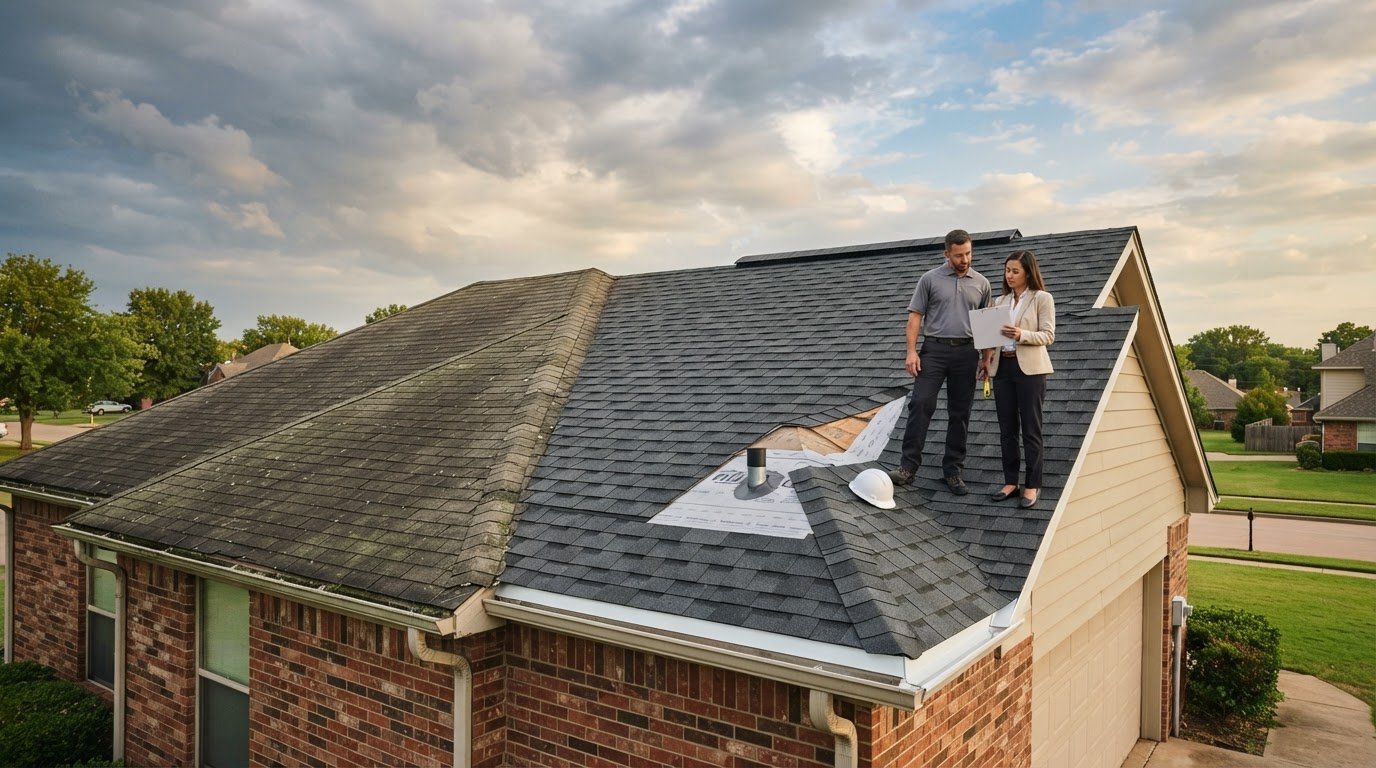

What if your insurance company approves your roof replacement, but you’re still stuck paying for mandated city building components out of pocket? It’s a stressful surprise that catches many homeowners off guard after severe weather strikes. Most standard policies only pay to replace damaged materials to their original condition, which creates a gap when current building codes require modern upgrades. So, what is code upgrade coverage for roofing? Also known as ordinance or law coverage, this essential endorsement bridges the financial gap between your old roof and legal modern safety standards.
You shouldn’t have to decode confusing policy language or worry about inspection delays while trying to protect your home. In this guide, you’ll learn exactly how ordinance or law coverage protects your savings, the standard code-mandated components required during a full tear-off, and how to verify your endorsements before filing a claim. Here is everything you need to know to ensure your roof is replaced safely, legally, and without unexpected expenses.
Key Takeaways
- Discover what is code upgrade coverage for roofing and how this policy endorsement pays for modern building improvements that standard policies exclude.
- Identify the critical components local inspectors scrutinize during a tear-off, including drip edge flashing, ice barriers, and proper attic ventilation.
- Understand how municipal building permits and statewide standards dictate roof replacement specifications across Oklahoma communities.
- Master a straightforward four-step process to verify your policy endorsements and submit code documentation to insurance adjusters.
- Learn why working with an experienced local contractor keeps your project compliant and protects you from inspection delays or future resale complications.
What Is Code Upgrade Coverage for Roofing in Homeowners Insurance?
When wind or hail damages your property, filing a claim seems straightforward. You expect your insurance carrier to pay for the damage so your home returns to normal. Many property owners quickly discover a frustrating gap between what their carrier agrees to pay and what the city legally requires for the rebuild. Understanding what is code upgrade coverage for roofing helps you avoid these sudden out-of-pocket expenses.
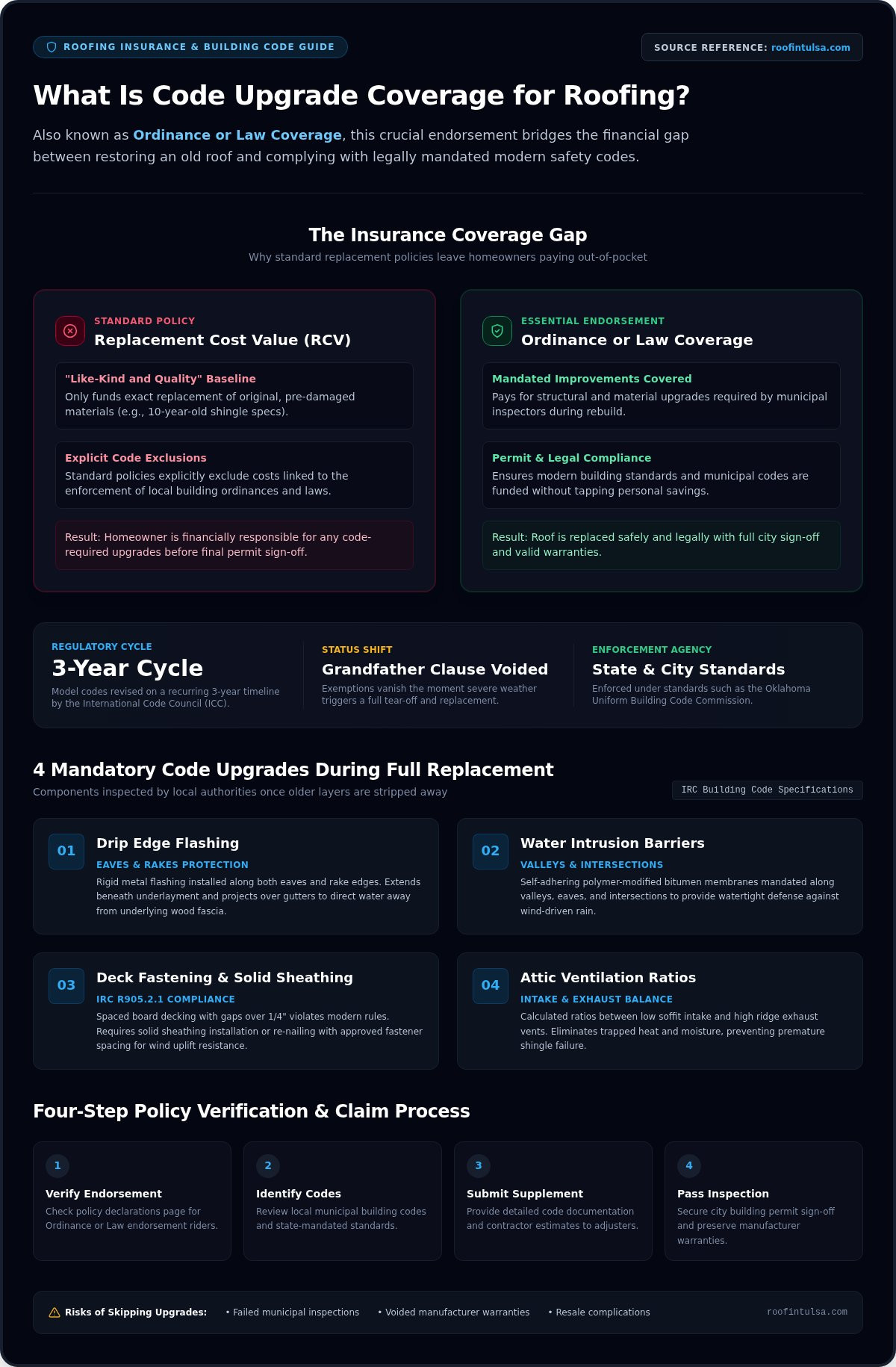
Ordinance or Law coverage is a specialized property insurance endorsement that pays for the mandated structural and material improvements required by local building authorities during a covered repair or replacement. Without this protection, your policy only covers the cost to restore your roof to the condition it was in right before the storm hit.
Ordinance or Law vs Standard Replacement Cost
Standard Replacement Cost Value (RCV) policies operate on a “like-kind and quality” baseline. If your ten-year-old roof had traditional three-tab shingles nailed straight to wide plank decking without modern drip edges, your base policy only funds those identical components. Standard policies contain explicit exclusions for costs associated with the enforcement of any ordinance or law regulating construction. When city inspectors require modern upgrades before signing off on a permit, your base coverage stops short, leaving you responsible for the difference.
Why Building Codes Change Over Time
Municipalities update their safety regulations regularly. The International Code Council revises model codes on a three-year cycle, prompting state and local jurisdictions to adapt their local building code standards to better protect communities. In areas prone to intense windstorms and hail, these updates happen quickly. Key improvements over the last decade focus on:
- Water intrusion barriers: Ice and water shielding along eaves and valleys to stop driving rain.
- Perimeter flashing: Metal drip edge installation along all eaves and rakes to protect underlying wood decking.
- Structural fastening: Enhanced nail patterns and sealed decking rules designed to resist extreme wind uplift.
- Attic ventilation: Strict intake and exhaust ratios to prevent attic heat buildup and premature shingle failure.
Roofs built just ten or fifteen years ago rarely meet today’s rigorous rules. Knowing what is code upgrade coverage for roofing ensures you are not caught off guard by these evolving safety standards when it is time to rebuild.
Common Roofing Code Upgrades Mandated During a Full Replacement
Your existing roof generally enjoys “grandfathered” status under municipal rules, meaning you aren’t forced to rebuild an older roof simply because building codes evolved. That exemption vanishes the moment severe weather triggers a full replacement. Once old layers are stripped away, city inspectors require the new installation to meet modern building codes. Drip edge flashing and deck re-nailing are standard mandatory code upgrades required during modern roof installations. Skipping these mandated components can lead to failed inspections and voided manufacturer warranties. Understanding what is code upgrade coverage for roofing ensures your insurance policy absorbs these necessary structural additions.
Drip Edge Flashing and Ice Barrier Requirements
Modern residential codes adopted by the Oklahoma Uniform Building Code Commission require rigid metal drip edge flashing along both eaves and rake edges. This component extends beneath the underlayment and projects over gutters to direct moisture away from wooden fascia. Along valleys and roof intersections, codes mandate self-adhering polymer-modified bitumen membranes. These serve as watertight barriers against wind-driven rain rather than simple cosmetic trim.
Roof Deck Fastening and Sheathing Thickness
Inspectors examine the deck beneath your shingles. Homes built decades ago often feature spaced board decking with gaps exceeding a quarter-inch, which violates modern solid-sheathing rules (IRC R905.2.1). Contractors must either install solid sheathing across the roof or re-nail existing plywood with approved fastener spacing to satisfy structural load ratings and wind uplift requirements.
Attic Ventilation and Combustion Air Intake
Proper airflow is a safety mandate. Modern building standards calculate specific ratios between low soffit intake vents and high ridge exhaust vents to eliminate trapped heat and moisture. Inspectors also verify that gas furnace flue pipes and bathroom exhaust vents vent cleanly through the roofline without spilling exhaust back into the living space. Balanced ventilation preserves new shingle life and keeps your home secure.
A trusted contractor identifies these technical requirements before construction starts. If you are preparing for a claim, scheduling a professional roof inspection gives you a clear assessment of your ventilation and decking needs.
How Local Building Regulations Affect Oklahoma Roof Replacements
Living in Tornado Alley means our homes face severe weather that most regions never encounter. The Oklahoma Uniform Building Code Commission establishes statewide residential building mandates, but local jurisdictions enforce these codes through required permits and on-site reviews. Understanding local enforcement is critical to answering what is code upgrade coverage for roofing, as your policy pays out based on what local inspectors mandate. In northeastern Oklahoma, city inspectors verify that newly installed systems meet updated regional wind and moisture standards before closing out open permits.
Tulsa Area Permitting and Multi-Layer Tear-Off Rules
Municipal building departments across Tulsa County enforce strict rules regarding existing roofing materials. Under residential building codes, contractors cannot install a new shingle system over two existing layers. If your home has an older second layer hidden beneath the top shingle course, city codes mandate a complete tear-off down to bare structural decking. Working without required municipal permits can halt your project mid-build, trigger fines, and even jeopardize your insurance settlement. For complete step-by-step guidance on organizing this overhaul, check our roof replacement Tulsa guide.
Severe Weather and Wind Uplift Resistance Standards
High-wind design standards across Central and Eastern Oklahoma require specialized fastening techniques. Rather than relying on standard four-nail applications, local building codes mandate a six-nail pattern for architectural shingles. This fastening method secures the shingles against baseline design wind speeds of 110 mph or higher. In addition, roofers must install reinforced valley liners to manage heavy thunderstorm runoff without backing up under shingle courses.
During tear-off, contractors often discover warped, rotted, or spaced deck boards that cannot hold these required fasteners. Reviewing the signs you need a new roof can help you spot compromised decking early. If your policy includes proper ordinance or law coverage, your carrier helps pay for the necessary structural re-decking required by current building codes, protecting both your home and your budget.
How to Check Your Policy and Navigate the Insurance Supplement Process
Reviewing your insurance declarations page before work begins saves you from unexpected expenses. Knowing what is code upgrade coverage for roofing starts with recognizing how your insurer structures this protection. Many property owners assume their initial insurance estimate represents the total payout, but code-related funds follow a different set of rules.
Locating Your Coverage Limits and Endorsement Details
Examine the property coverage section of your policy declarations page for line items labeled “Ordinance or Law” or “Building Ordinance.” Insurers calculate this protection as a specific percentage of your total Dwelling Coverage (Coverage A). Standard homeowners policies often bundle 10% by default, though many homeowners purchase endorsement riders increasing coverage to 25% or 50%.
Watch out for policies that cap this benefit at a small flat fee or exclude it completely. Keep in mind that carriers treat code upgrades as “incurred costs.” They don’t disburse these funds upfront; payment is only issued after the contractor installs the mandated components and provides proof.
The 4-Step Supplemental Claim Process for Code Items
When required updates aren’t included in the adjuster’s original scope of work, your contractor files an insurance supplement. Following a structured process keeps your claim moving without inspection stalls:
- Identify code discrepancies: During roof tear-off, the contractor inspects the exposed decking and structural layout, documenting any non-compliant elements.
- Gather municipal documentation: The contractor references relevant statewide codes or municipal ordinances that legally mandate the improvement.
- Submit itemized supplement packages: The contractor sends adjusters clear photo documentation alongside standardized Xactimate line-item estimates matching local pricing data.
- Release supplemental funds: Once the crew completes the installation and provides local permit sign-offs, the insurance company releases the supplemental check.
Managing adjuster discussions and municipal paperwork doesn’t have to feel stressful. If you are dealing with storm damage, contact us today for dedicated insurance claim assistance to ensure every mandated item is properly documented and covered.
Protecting Your Home: Choosing an Experienced Local Contractor
After severe weather passes through Green Country, out-of-town crews often flood neighborhoods looking for quick shingle jobs. Understanding what is code upgrade coverage for roofing means very little if your contractor ignores municipal building codes to cut corners. A thorough grasp of local building requirements separates dedicated local specialists from transient storm chasers. Skipping municipal standards might shave hours off construction, but unpermitted work leaves you vulnerable down the road. During future real estate transactions, home inspectors frequently flag non-compliant roof components, stalling sales and shifting unexpected repair expenses right back onto your shoulders.
Risks of Working with Contractors Who Ignore Local Codes
Hiring a contractor who bypasses local permitting places your entire investment at risk. When crews work without city permits, inspectors can issue stop-work orders or fail final sign-offs. Leaving off mandatory components like perimeter drip edge or proper intake ventilation invites structural leaks, wood rot, and mold inside your attic. If an insurer discovers repairs were completed without required permits or code compliance, they can deny supplemental disbursements or invalidate future storm damage claims altogether.
How Rescue Roofing Tulsa Manages Your Code Upgrades
At Rescue Roofing Tulsa, we eliminate that stress by serving as your dependable local advocate. Our experienced team performs comprehensive pre-claim evaluations to identify mandatory city modifications before any paperwork gets submitted. We coordinate directly with local municipal inspectors and insurance adjusters, supplying the photographic proof and line-item documentation necessary for seamless approval. By following the evaluation strategies detailed in our Tulsa roofing protection guides, we ensure your residential roof replacement satisfies every legal standard without unnecessary friction.
Before filing a claim alone or trusting an unvetted crew, let our local team inspect your property. Knowing what is code upgrade coverage for roofing and pairing that knowledge with an experienced local contractor guarantees your home remains safe, code-compliant, and fully protected.
Ensure Full Protection for Your Next Roof Replacement
Dealing with storm damage or an aging roof is challenging enough without unexpected building code expenses. Understanding what is code upgrade coverage for roofing gives you the upper hand when reviewing your policy. By verifying your ordinance or law endorsements early and identifying mandatory components like solid decking and perimeter flashing upfront, you protect your family’s budget from stressful surprises.
You don’t have to navigate city permits, structural requirements, and adjuster meetings alone. Rescue Roofing Tulsa is your locally owned partner committed to strict IRC compliance and seamless municipal approvals. Our team provides the transparent documentation adjusters need to release supplemental funds promptly. Schedule your comprehensive roof inspection with Rescue Roofing Tulsa today, and rest easy knowing your home is restored to the highest modern safety standards.
Frequently Asked Questions
Does standard homeowners insurance automatically include code upgrade coverage?
Standard homeowners policies do not always include adequate code upgrade coverage by default. Basic policies often include a minimal 10% ordinance or law endorsement relative to Dwelling Coverage A, but some budget policies exclude it completely. This is why homeowners frequently ask what is code upgrade coverage for roofing when facing an unexpected bill. You can purchase riders to expand this coverage to 25% or 50% for greater peace of mind.
What happens if a building inspector requires an upgrade my policy does not cover?
If an inspector mandates an upgrade that your policy excludes, you are financially responsible for the out-of-pocket cost. City inspectors cannot issue a certificate of completion or close your building permit until the roof fully complies with current municipal standards. An experienced roofing contractor can review your policy alongside local building ordinances before construction begins, helping you anticipate any uncovered items so you aren’t surprised by unexpected expenses.
Can my roofing contractor waive required municipal code updates to save money?
No, a licensed contractor cannot legally waive municipal building codes to reduce your project costs. Building codes carry the force of law in municipalities that adopt them. Skipping required items like drip edge or ventilation can result in stop-work orders, failed inspections, and invalidated manufacturer warranties. A trustworthy local contractor pulls the required city permits and installs every mandated component to protect your safety and your home’s resale value—a standard upheld by reputable companies like Ultimate Solution Roofing & Exteriors that emphasize code-compliant residential and commercial installations.
Is drip edge installation legally required by residential building codes?
Yes, modern International Residential Code regulations adopted across Oklahoma legally mandate drip edge flashing along both eaves and rake edges of shingle roofs. This metal flashing protects the wooden fascia and roof decking by directing rainwater directly into gutters. Insurers without code endorsements often balk at paying for drip edge on older homes, which highlights what is code upgrade coverage for roofing and why this endorsement is vital during replacements.
How do insurance companies pay out ordinance or law claims?
Insurance carriers disburse ordinance or law funds as “incurred costs,” meaning they rarely pay this money upfront in your initial claim check. Your roofing contractor must first identify the code requirement, submit photos and municipal citations to the adjuster, and complete the actual installation. Once your contractor provides the final invoice and passed city inspection documentation, the insurer reviews the supplement and releases the withheld code upgrade funds.
Will my insurance cover replacement of rotted or non-compliant roof decking?
Insurers handle rotted and non-compliant decking under different rules. Carriers typically exclude rotted decking as general maintenance or wear and tear. If your decking violates current solid-sheathing rules, such as spaced plank boards with gaps exceeding a quarter-inch, your ordinance or law endorsement can cover the necessary plywood overlay. Your contractor must document the open gaps during tear-off to justify the supplemental claim to your insurance adjuster.
How does roof ventilation tie into local residential building codes?
Residential building codes enforce strict ratios for net free ventilating area to balance continuous intake at the soffits with exhaust at the ridge. If a roof tear-off reveals inadequate airflow or unvented exhaust pipes, building inspectors will require adding intake or ridge vents before granting final approval. Code upgrade endorsements step in to cover these ventilation adjustments, ensuring your attic stays dry, cool, and fully compliant. To explore how roofing and ventilation integrate with full home energy solutions, visit Underline Energy Concepts for professional contractor insights.