


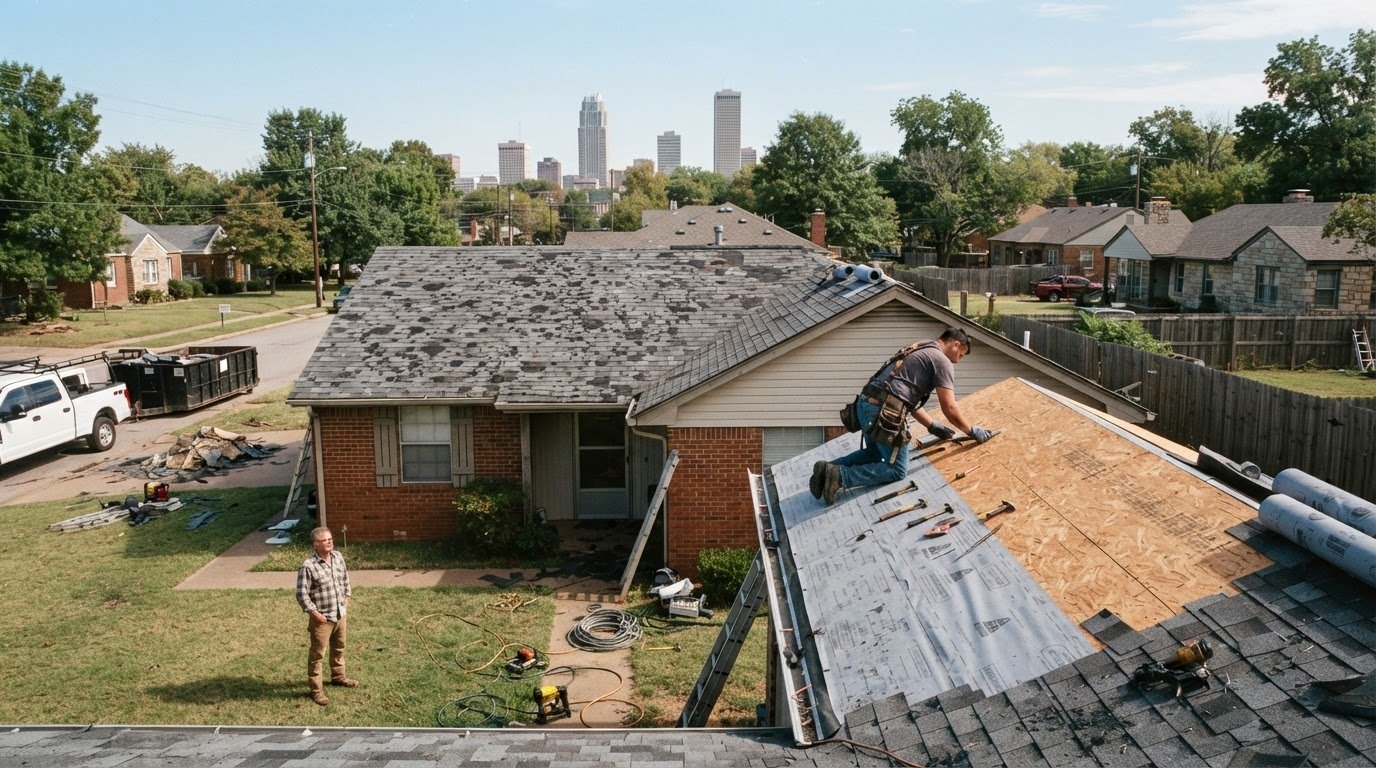

A roof claim can leave you facing costs beyond the visible damage. What law and ordinance insurance coverage for roofs may do is help pay for code-required upgrades and the demolition of undamaged sections after a covered loss, subject to the policy’s terms and limits. Standard homeowners policies typically don’t pay to bring a home up to current building codes, while ordinance or law coverage is often set as a percentage of dwelling coverage, with 10% a standard amount.
It’s understandable to expect roof insurance to cover the work needed to restore your home, but building-code requirements can add work beyond repairing storm damage. This article explains what ordinance or law coverage may pay for, how its limits affect a claim, and when demolition of undamaged parts may be included. You’ll also learn why replacing a roof for routine maintenance differs from code work required after a covered loss.
Key Takeaways
- Learn when a covered roof loss may trigger code upgrades beyond ordinary repair or replacement.
- Understand how the policy’s ordinance or law limit affects the amount available for required work.
- See when coverage may help pay to demolish undamaged sections that must come down to meet building requirements.
- Distinguish code work tied to a covered loss from routine roof maintenance or renovation.
What Is Code-Upgrade Coverage and Why Does It Matter?
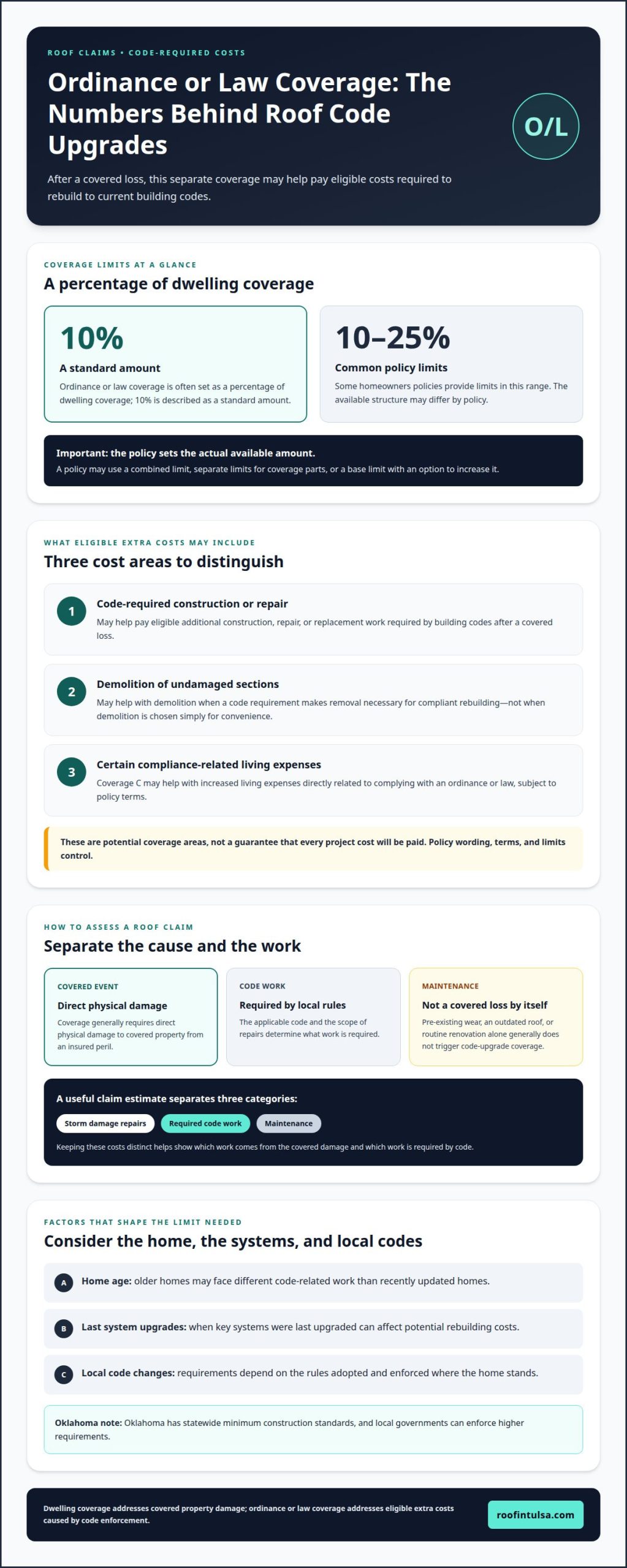
After a covered loss, ordinance or law coverage may help pay for code-required work beyond repairs to damaged roofing. Coverage C may also help with increased living expenses directly related to complying with an ordinance or law.
Payment for Required Code Upgrades
This coverage may pay eligible additional construction, repair, or demolition costs when building codes require changes after a covered loss. It matters because standard homeowners insurance typically doesn’t pay to bring a home up to current codes. Are roof code upgrades covered if the roof was already damaged or outdated? They may be covered when a covered peril caused the damage and code compliance requires upgrades. Pre-existing wear or an outdated roof alone doesn’t make routine replacement a covered loss. Payment depends on the policy terms and separate coverage limit.
Code Compliance in Roof Repairs
Building-code compliance means completing roof repairs or replacement to meet applicable requirements, not simply restoring the roof to its pre-damage condition. A covered storm loss may require materials or other work that differ from what was on the damaged roof. Local building codes and the scope of repairs determine what work is required. How do building codes and roof requirements vary by state or locality? Requirements depend on the rules adopted and enforced where the home stands. Oklahoma has statewide minimum construction standards, and local governments can enforce higher requirements.
Roof Condition and Possible Code Issues
A roof’s age and visible condition can signal that repairs may uncover code issues, since requirements can change after installation. An older roof may need different work than a recently replaced one, while severe weather can trigger upgrades even on newer homes. During a claim, distinguish damage from the covered event, code-required work, and maintenance. Routine renovation or replacement generally isn’t covered as a code upgrade simply because current standards differ.
Discussing Coverage With an Agent
Discussing the policy’s ordinance or law limit and Coverage C with an insurance agent can clarify what the policy may cover. Ask how the limit applies to code upgrades and related living expenses, and document the policy details. How do homeowners file a law and ordinance claim for roof repairs? Report the covered loss to the insurer, share the policy information, and provide an estimate that separates storm repairs, required code work, and maintenance. Clear categories show which costs arise from damage and which are required by code.
What Is Ordinance or Law Coverage?
Ordinance or law coverage helps address extra costs when rebuilding must meet current requirements. Homeowners policies often set its limit as a percentage of dwelling coverage, with 10% a standard amount.
Choosing a Coverage Limit
Choosing a limit means estimating how much code-required work could add to rebuilding costs after a covered loss. The home’s age, when key systems were last upgraded, and local building-code changes all matter. How much should homeowners carry? Consider these factors alongside the dwelling coverage limit and the work a code upgrade could require. A higher limit may suit an older home or one with systems that haven’t been updated recently.
Limits, Endorsements, and Documentation
An endorsement can add ordinance or law coverage to an existing homeowners policy, while the policy sets the available limits. How does this coverage differ from standard dwelling coverage? Dwelling coverage addresses covered property damage; ordinance or law coverage addresses eligible extra costs caused by code enforcement. Ordinance or law coverage may help with demolition costs when code requirements apply. Depending on the policy, Coverage B may help pay eligible code-related repair or replacement costs for damaged parts. Coverage C may address increased living expenses or costs directly related to compliance. Keep policy details and claim estimates organized to distinguish ordinary repairs from code work.
Common Coverage Limits and Costs
Common limits are expressed as a share of dwelling coverage, rather than as a separate rebuilding estimate. Some homeowners policies provide 10% to 25%; policy structures may use a combined limit, separate limits for coverage parts, or a base limit with an option to increase it. What does adding coverage typically cost? The cost varies with the home, location, selected limits, and insurer. Compare the available limit with the dwelling coverage amount to understand the potential code-upgrade allowance.
Exclusions and Coverage Limits
Exclusions and limits define when code-related expenses qualify for payment. Coverage generally requires direct physical damage to covered property from an insured peril, and routine roof renovation alone doesn’t trigger code-upgrade coverage. Replacement cost or extended replacement cost doesn’t automatically remove a separate ordinance or law limit. For help organizing roof claim details, Insurance Claim Assistance can support the process.
What About Demolishing Undamaged Parts?
A covered loss can damage one part of a home while leaving another intact. Yet a local building code may require demolition beyond the damaged portion before compliant rebuilding can begin. Coverage may help with demolition when rebuilding requirements make it necessary. This protection addresses additional costs caused by code requirements, not demolition chosen simply for convenience.
For example, imagine a covered event damages one section of a connected structure. Code-required demolition of an undamaged portion may be considered under ordinance or law coverage, subject to the policy’s terms and limits. The key distinction is why the work is required: a legal requirement tied to rebuilding after covered damage differs from a voluntary renovation. The policy wording and limits define what payment may be eligible.
Demolition and rebuilding are related, but coverage doesn’t mean every cost for the entire project is automatically paid. Coverage A concerns demolition and removal of undamaged portions required by code. Repair or replacement of the damaged portion may be handled under other parts of the homeowners policy. Separate code-required upgrades can also add expenses. Dividing estimates into damaged work, required demolition, debris removal, and code upgrades helps show what each amount covers.
After a covered loss, identify the damaged area, determine whether a current building code requires additional demolition, and document that work separately. Materials and labor to remove an intact portion are different line items from repairs to damaged materials. A building official’s requirement or other claim documentation can help explain why demolition is necessary. The insurer then considers the policy language, covered cause of loss, and available limits. If no code requires removal of the undamaged portion, Coverage A’s demolition protection doesn’t apply to that work. This distinction helps homeowners understand how code compliance affects rebuilding and which extra costs may qualify.
Meaning of ordinance and law coverage for roofs
For a roof, ordinance or law coverage protects against eligible extra work required by current building codes after a covered loss. It’s an endorsement to an existing property policy, not a separate policy. The distinction matters: ordinary roof damage and code-driven upgrades are different parts of a claim, and separate terms and limits may apply.
A covered loss must involve direct physical damage to covered property caused by an insured peril. That damage can trigger code requirements during repairs or rebuilding. For example, a local building rule may require compliant materials or work beyond the damaged portion. The additional work is connected to the covered event because current requirements apply to the repair, not because the homeowner simply wants an upgrade.
Coverage can also matter when a code affects undamaged portions. If local requirements make removal necessary for compliant rebuilding, ordinance or law protection may address eligible demolition costs. That doesn’t mean every intact section is automatically covered. The key questions are whether a covered loss occurred, whether the code requires the work, and whether the policy wording includes that cost.
The practical takeaway is to separate three things in a roof estimate: repairs to damaged areas, code-required upgrades, and optional improvements. A contractor’s recommendation alone doesn’t trigger insurance coverage. Documentation of a local building requirement helps explain why materials or work must change. Coverage applies to rebuilding at the property’s present location, and the policy limits shape the amount available.
If roof damage has raised questions about required work, get help organizing a roof claim and its repair details.
Rescue Roofing Tulsa: Residential Roof Replacement
Rescue Roofing Tulsa provides residential roof replacement when a home needs a new roof after damage or deterioration. For storm-related concerns, a roof inspection can help document visible conditions, while roof repair addresses damage that doesn’t call for full replacement. Separating damaged areas, code-required work, and maintenance items in an estimate can clarify the roofing scope for an insurance claim. The insurance policy still determines which costs qualify for coverage.
Once you understand the roof work involved, Rescue Roofing Tulsa can help with the roofing portion of the project, from inspection and repair to replacement. If you’re ready to discuss your roof, contact Rescue Roofing Tulsa or visit roofintulsa.com.
Move From Coverage Questions to a Clear Roof Plan
Understanding what law and ordinance insurance coverage for roofs is designed to address can help you frame the next conversation: connect the proposed roof work to the requirements that apply to your property. Whether a specific cost qualifies depends on the policy wording and claim facts. Keep the insurer’s decision and the repair or replacement scope together so you can see what the claim addresses and what work remains.
For the roofing work itself, Rescue Roofing Tulsa offers residential and commercial roof replacement, along with roof repair. That can be a practical next step when you need to assess damage or plan the roof work associated with a claim. Contact Rescue Roofing Tulsa today to discuss your roof and move forward with a clearer plan.
Frequently Asked Questions
When do you need building code protection?
Building-code protection matters when a covered loss requires repairs or rebuilding to meet current local requirements. For example, storm damage may lead to code-compliant roofing materials or other required work. The coverage generally doesn’t apply just because you want to modernize an undamaged roof. Consider the home’s age and previous upgrades when assessing how code requirements could affect future covered repairs.
Can It Apply to Roof Replacement?
Yes, it can apply when a covered loss leads to roof replacement and current code requires additional work. The coverage concerns eligible code-related expenses, not automatically every part of replacing a roof. Replacement for routine maintenance or renovation is different. For a storm claim, separating work on the damaged roof from code-required changes helps clarify the reason for each part of the project.
What does code upgrade mean in insurance?
A code upgrade is work required to bring damaged or rebuilt property into compliance with applicable building rules. For a roof, that could mean using materials or completing work that meets requirements in effect when repairs take place. The added work differs from simply restoring the roof to its prior condition. Insurance coverage for those extra requirements depends on the policy and a covered loss.
What is law and ordinance coverage in homeowners insurance?
In practical terms, what is law and ordinance insurance coverage for roofs? It may help with eligible extra costs when a building rule affects roof repairs or rebuilding after covered damage. The policy may distinguish costs for damaged property, required demolition, and code compliance. Homeowners should read these provisions alongside dwelling coverage, since the extra protection may have its own limit and terms.
Does law and ordinance insurance cover roof replacement or upgrades?
It may help pay for code-required roof upgrades during replacement after a covered loss. It doesn’t automatically pay for a full replacement just because the roof is old or out of date. The reason for replacement, applicable code requirements, and policy terms matter. A useful estimate separates repairs from the covered event, required upgrades, and optional improvements.
Does law and ordinance coverage pay for code-required roof upgrades after a covered loss?
A homeowner asking what is law and ordinance insurance coverage for roofs wants to know whether required upgrades may be included. Eligible additional costs may be covered when an insured peril damages the roof and current code requires upgrades. Documentation identifying the code work helps distinguish it from maintenance or elective improvements. Payment remains subject to the policy’s terms and limit.