


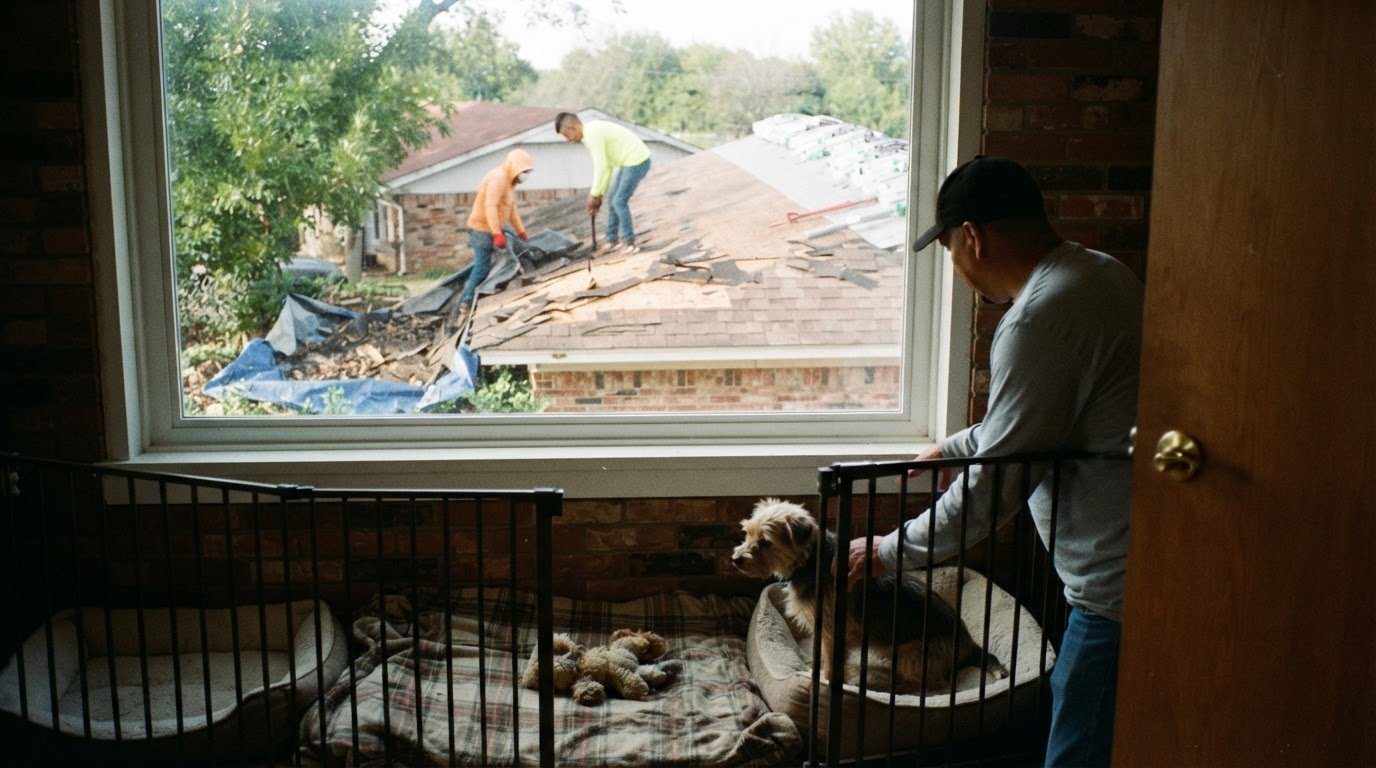

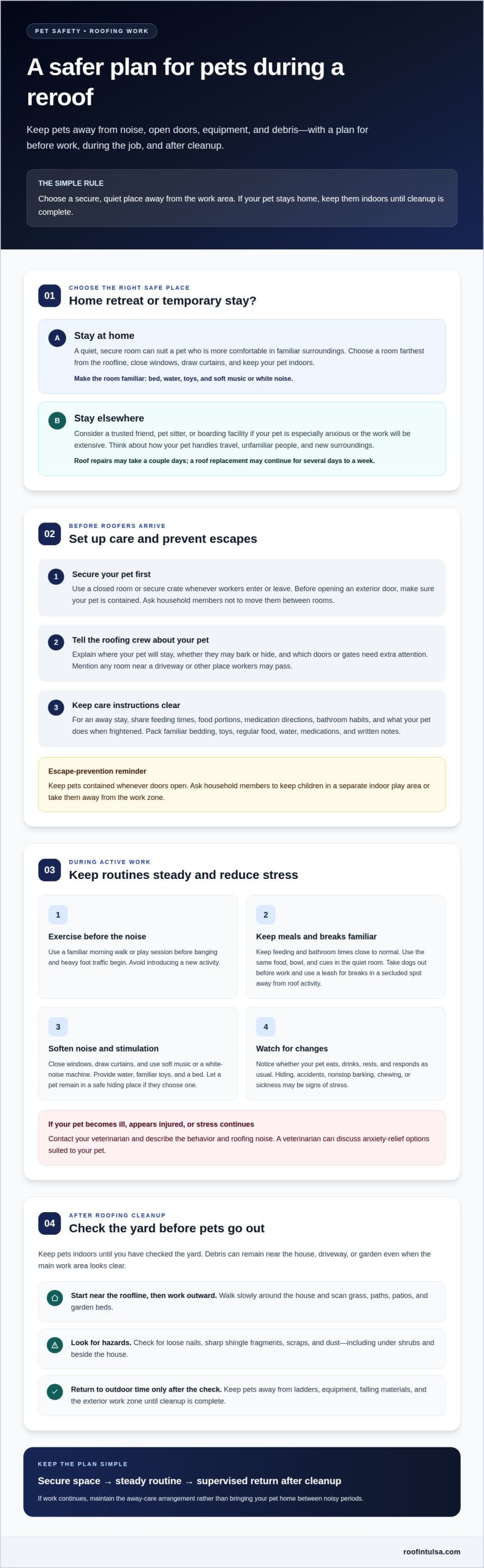
Boarding isn’t the only way to keep pets safe during roofing work. Knowing how to protect your pets during a reroof starts with choosing a secure, quiet place away from the work area. If possible, arrange for your pet to stay elsewhere while the work is underway. If they stay home, set up a room farthest from the roofline and keep them indoors until cleanup is complete.
It’s understandable to worry about loud banging, unfamiliar people, and the chance your pet could slip outside. A calm plan can make the workday easier for both of you, whether your pet stays at home or with someone they know.
This guide covers how to adjust your pet’s routine, when a temporary stay elsewhere may make sense, and what to check in the yard before letting them out again. You’ll also find practical ways to make their safe space more comfortable and reduce exposure to roofing noise and debris.
Key Takeaways
- Keep familiar feeding, exercise, and bathroom routines as steady as possible to help your pet cope with disruption.
- Choose between a home safe room and a temporary stay elsewhere based on your pet’s comfort and the scope of noisy work.
- Use familiar bedding, toys, and gentle background sound to make an indoor retreat feel calmer.
- Walk the yard for loose nails, shingles, and other debris before letting your pet explore outside.
Opening Hook: How Can You Keep Pets and Kids Safe During Roofing Work?
Keep pets in a secure room or crate, and arrange a stay elsewhere if the noise or work zone could overwhelm them. To prevent escapes, secure exits before roofers arrive and keep pets contained whenever doors open.
-
Arrange Care Away From the Work
Arrange a stay with a trusted friend, pet sitter, or boarding facility if your pet is especially anxious or the work will be extensive. Roof repairs may take a couple days, so plan care around the scheduled work. Pack familiar bedding, toys, food, and water, and share feeding or medication routines. Avoid leaving your pet with someone who can’t keep them securely indoors.
-
Tell the Contractor About Your Pets
Tell the roofing crew before work begins that pets are in the home. Explain where they’ll stay, whether they’re likely to bark or hide, and which doors or gates need extra attention. For example, let the crew know if your dog is in a room near the driveway. Clear communication helps prevent someone from opening the wrong door or entering your pet’s space unexpectedly.
-
Keep Pets Clear of Debris and Work Areas
Keep pets indoors and away from the exterior work zone until cleanup is complete. Shingles, nails, and other debris can end up in the yard, where a pet could step on or swallow something hazardous. Keep dogs clear of ladders, equipment, and falling materials. For bathroom breaks, carry or leash your pet to a secluded spot away from the work area.
-
Prevent Escapes as Roofers Come and Go
Keep your pet in a closed room or secure crate whenever workers enter or leave the house. Before opening an exterior door, make sure your pet is contained, and ask household members not to move them between rooms. If you’re home during roofing, stay alert to door activity. Keep children in a separate indoor play area or take them on an outing away from the work zone.
Adjusting daily routines to give pets a break from construction noise
Keep meals, walks, and rest periods close to your pet’s usual routine while roofing noise continues. Stress may show as hiding, accidents, nonstop barking, chewing, or sickness. Contact your veterinarian if your pet becomes ill or appears injured.
- Exercise your pet before the noisy workday begins. A morning walk or play session can use up nervous energy before banging and heavy foot traffic start. Keep the activity familiar: take your usual route with your dog or offer your cat a favorite indoor game. Avoid introducing a new activity that could add uncertainty.
- Keep feeding and bathroom times steady, even if you change where they happen. Serve meals in your pet’s quiet room using the same bowl, food, and cues. Take dogs out before work begins, then plan breaks in a secluded spot away from roof activity. Keep your dog on a leash for each trip.
- Reduce noise and visual stimulation in the safe room. Close windows, draw curtains, and use soft music or a white-noise machine to soften the sound of roofing machinery. Set out water, familiar toys, and a bed. If your pet chooses to hide, let them stay in a safe hiding place rather than pulling them out.
- Watch for changes at each meal, walk, and quiet period. Note whether your pet eats, drinks, rests, and responds as usual. If stress continues, or sickness or injury appears, call your veterinarian and describe the behavior and roofing noise. A veterinarian can discuss anxiety-relief options suited to your pet.
Homeowners can make routine changes easier by keeping the day’s work timing visible and planning walks around active roofing periods. For practical information about planning a roof project, visit roofing project details.
Boarding or arranging a stay with a friend during noisy work
Choose temporary care if your pet struggles with sustained noise, unfamiliar activity, or changes at home. Roof replacement may continue for several days to a week, so plan for the expected work period rather than only the first noisy morning.
- Decide whether an away stay suits your pet’s temperament and needs. A sociable dog who is comfortable with a trusted friend may settle more easily there than beside ongoing roof work. A cat distressed by unfamiliar places may do better in a quiet, secure room at home. Consider how your pet responds to travel, new people, and changes in surroundings.
- Choose a caregiver who can follow your pet’s normal care instructions. Before work starts, share meal times, food portions, medication directions, and bathroom habits. Explain what your pet does when frightened, such as hiding or trying to slip through an open door. Keep the caregiver’s contact details handy in case the work schedule changes.
- Prepare a clear handoff plan for the day your pet leaves home. Pack their regular food, leash or carrier, medications, and written care notes. Let the caregiver know when roofing activity is expected and where your pet should stay indoors. If your pet has a particular feeding routine, measure portions or label each meal clearly.
- Keep your pet away until active work and cleanup are finished. Ask the caregiver to keep them indoors rather than letting them explore an unfamiliar yard during roofing. Once home, bring them into a familiar area and observe how they respond to household sounds and activity. If work continues, maintain the care arrangement instead of bringing them back between noisy periods.
Checking the yard for nails and debris before pets go outside
Keep pets inside until you’ve checked the yard after roofing cleanup. Loose nails, shingle fragments, and dust may remain near the house, driveway, or garden even when the main work area looks clear.
- Start near the roofline, then work outward. Walk slowly around the house, scanning grass, paths, patios, and garden beds for nails, sharp shingle pieces, and scraps. Check where debris could collect, including under shrubs, beside steps, and along fences. Pick up visible hazards before letting your pet outside.
- Check the full route your pet normally takes. A dog may head straight for a favorite bathroom spot, while a cat might investigate beneath a deck or around planters. Inspect those familiar routes, not just the open lawn. Use good lighting to spot small, dark objects against grass or soil.
- Keep pets leashed on their first outdoor trips after roofing work. Choose a cleared area away from the roof edge, ladders, and equipment, and stay beside them as they sniff or walk. A leash helps prevent sudden dashes toward overlooked debris. Don’t let pets roam freely while cleanup is underway.
- Repeat the inspection after additional work or cleanup. Loose shingles, nails, and dust can be harder to spot in thick grass or around outdoor items. Check beneath patio furniture and toys before moving them back into the yard. If you find a sharp object, remove it safely and search nearby for similar debris.
Once the yard is clear, reintroduce outdoor access gradually and keep watching your pet’s path. For help with a roofing concern at your home, discuss your roof project.
Rescue Roofing Tulsa: Residential Roof Replacement
Rescue Roofing Tulsa provides residential roof replacement for homeowners planning a reroof. A Roof Inspection can help clarify your roof’s condition and whether repair or replacement is the relevant next step. Understanding the planned scope of work helps you arrange pet care, keep pets away from activity, and plan yard checks after cleanup.
If your roof needs attention, contact Rescue Roofing Tulsa for a free roof inspection and quote.
Plan the next step with your household in mind
A reroof affects more than the roof. It can change how your household uses the yard, schedules time at home, and keeps pets comfortable. Knowing how to protect your pets during a reroof gives you a practical starting point, while understanding the roofing work ahead helps you plan around it.
Rescue Roofing Tulsa offers residential and commercial roof replacement and Roof Repair. If you’re weighing repair against replacement, a Roof Inspection can help you understand the roof’s condition and consider the next step. Plan for your household’s needs as well as the roofing work, including where pets will stay and when outdoor access can resume.
For help with your roofing needs, contact Rescue Roofing Tulsa today. A clear plan can make the project easier to manage for everyone at home, pets included.
Frequently Asked Questions
Should I board my pet during a roof replacement?
Board your pet if noise, unfamiliar activity, or disruption at home is likely to cause significant distress. A trusted friend or pet sitter may be a calmer option if your pet is comfortable with them. Consider your pet’s temperament, health needs, and response to new surroundings. If moving them would cause more stress, arrange a quiet indoor space instead.
Can You Live in a House While the Roof Is Being Repaired?
Yes, you can generally remain at home during roof repairs, while keeping pets and household members away from active work areas. Choose an indoor room where your pet can rest, and use another entrance or route if workers need access near the usual path. If the activity makes home uncomfortable for your pet, arrange a temporary stay elsewhere during the noisiest periods.
How long will the noise and disruption last?
The duration depends on whether the job is a repair or a replacement, along with the roof’s size, materials, and weather. Repairs may take a few hours to days, while a replacement may last several days to a week. Ask for the expected work schedule so you can plan pet care and household routines around the active work periods.
Is it safe for my dog to be in the backyard while roofers are working?
No. Keep your dog out of the backyard while roofing work is active. A dog could enter the work zone or encounter falling materials, loose shingles, or nails. Use a leash for bathroom breaks in a secluded area away from the house and equipment. Resume normal yard access only after work and cleanup are complete and you’ve inspected the area.
How loud and disruptive is a roof replacement for pets?
Roof replacement can bring sustained banging, machinery sounds, and unfamiliar foot traffic, which may unsettle noise-sensitive pets. The disturbance can vary as work moves across the roof. Watch how your pet responds to sudden sounds and changes in activity. If they become unusually distressed, consider a quieter place away from home during active work.
Should pets stay home during a reroof or be boarded elsewhere?
Choose based on your pet’s behavior and how they handle unfamiliar places. A pet who settles with a trusted caregiver may benefit from staying elsewhere during a full replacement. A pet who finds travel or new surroundings stressful may do better at home, away from the activity. Keep familiar care routines in mind as you decide how to protect your pets during a reroof.