


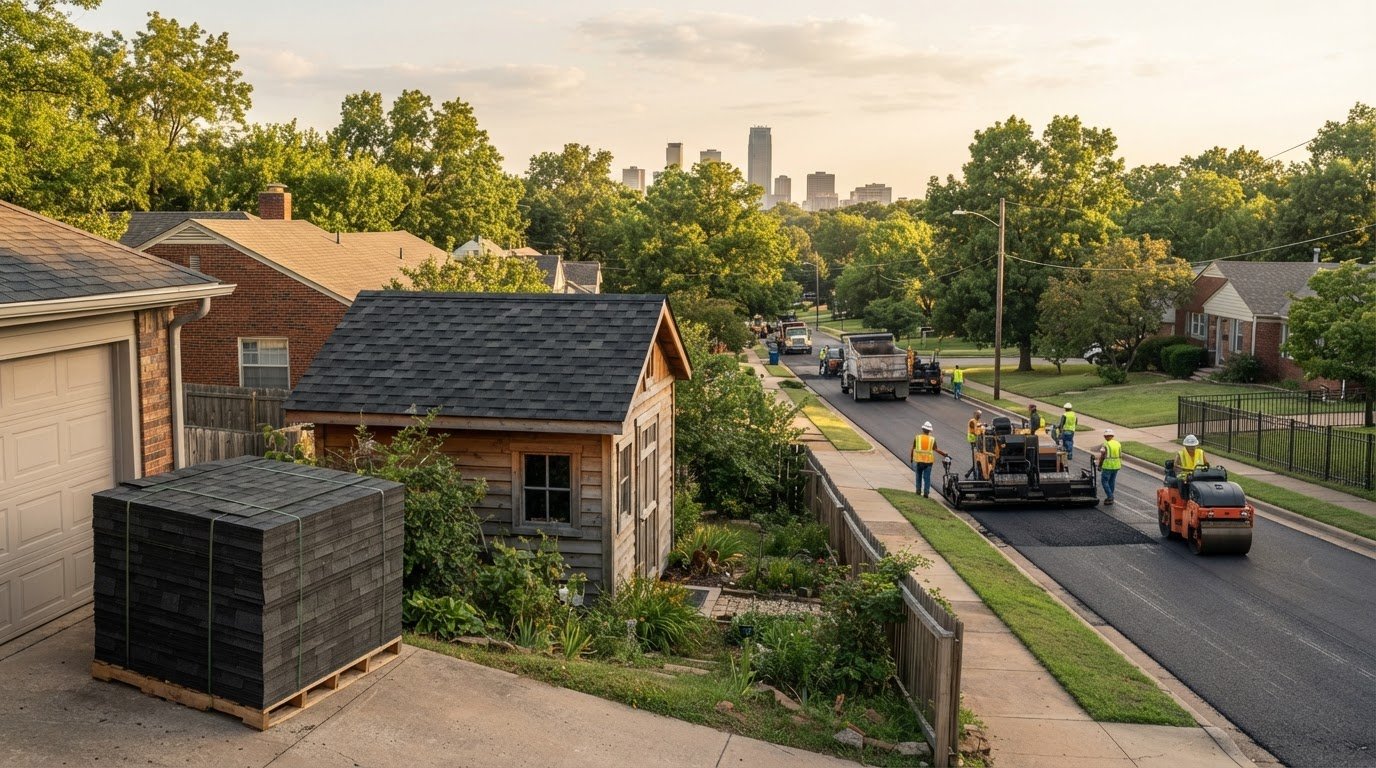

Leftover roofing shingles can be saved for future repairs, recycled, or reused on a small shed or playhouse. If you’re deciding what to do with leftover roofing shingles, first set aside a few intact pieces for patching, then consider recycling or a small project for the rest. Using spare materials on a shed or playhouse can be a practical option.
It’s understandable to look for a responsible use for serviceable shingles rather than letting them go to waste. This guide explains how to find a shingle recycler, how recycled shingles may be used in road construction, and what to consider before roofing a shed or playhouse. It also covers simple reuse and disposal options, so you can choose what suits the shingles and your project.
Key Takeaways
- Set aside usable shingles for future repairs, then look for a recycling program that accepts roofing materials.
- Recycled asphalt shingles can become part of road construction, giving leftover material another practical use.
- For a shed or playhouse roof, plan the layers carefully and install underlayment before adding shingles.
- Don’t assume roofing debris belongs in household trash; choose a disposal route that accepts the material.
1. Finding a shingle recycler
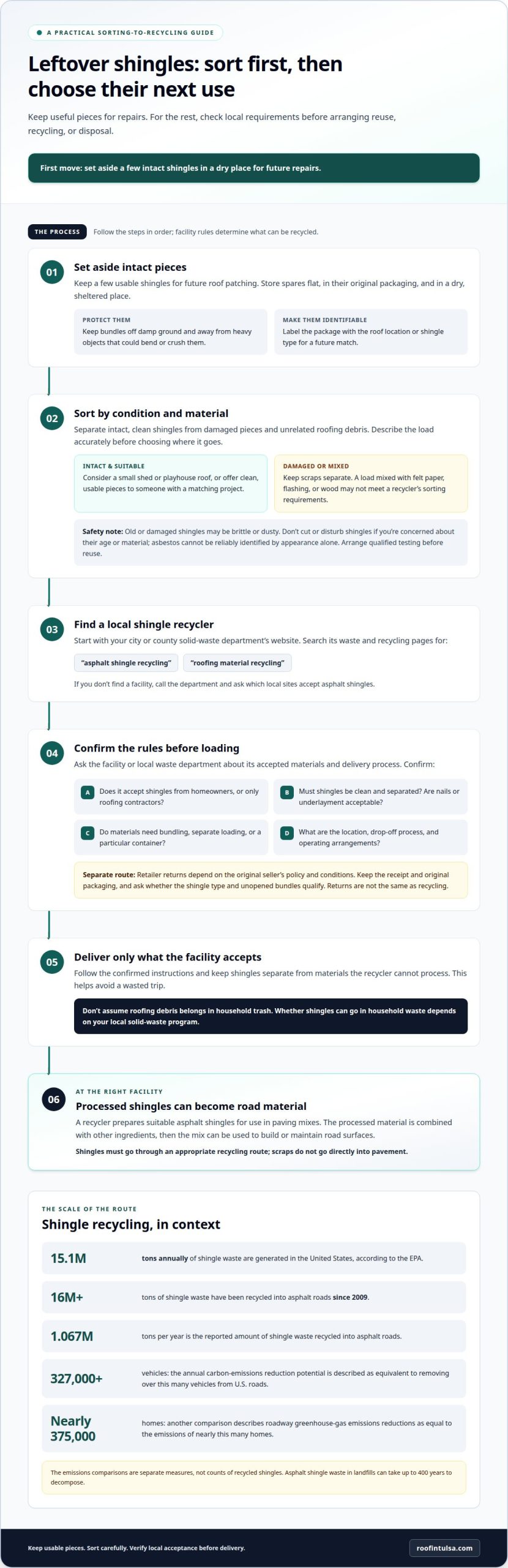
Start with your city or county solid-waste department’s website. Search its waste and recycling pages for “asphalt shingle recycling” or “roofing material recycling.” If you don’t find a facility, call the department and ask which local sites accept asphalt shingles. Some facilities require specific drop-off arrangements, so confirm the location and process before loading your vehicle.
You can return leftover shingles only if the original retailer’s policy allows it and the shingles meet its conditions. Keep the receipt and original packaging, and give the seller details such as the shingle type and whether the bundles are unopened. Returns are separate from recycling: damaged, opened, or mixed roofing debris may need another destination.
Ask each facility whether it accepts asphalt shingles from homeowners or only from roofing contractors. Clarify whether it takes clean, separated shingles and whether attached nails or underlayment are acceptable. A load containing shingles, felt paper, flashing, and wood, for example, may not meet the facility’s sorting requirements. Describe the materials accurately before making the trip.
Sorting also helps you decide how much to recycle. Keep a few intact shingles in a dry place for future roof repairs, and separate the rest from unrelated debris. The EPA estimates that 15.1 million tons of shingle waste are generated annually in the United States. Diverting suitable material from disposal gives it a chance to become feedstock for another use.
Before drop-off, confirm which materials the facility accepts, how to deliver them, and its operating arrangements through the facility or local waste department. Ask whether shingles need to be bundled, loaded separately, or brought in a particular container. Note the facility’s name and instructions. This can prevent a wasted trip and keep roofing scraps separate from materials the recycler cannot process.
2. Recycled asphalt shingles in road construction
Roofing shingles can become a useful ingredient in asphalt paving instead of remaining roofing waste. Recyclers process asphalt shingles into material that can be incorporated into road-building mixes. Since 2009, more than 16 million tons of shingle waste have been recycled into asphalt roads. That figure shows how a discarded roofing material can enter a large-scale infrastructure project.
Road recycling begins after shingles reach a suitable recycling facility. There, the material is prepared for use in asphalt production and combined with other ingredients in a paving mixture. The finished mix can then be used to build or maintain road surfaces. Only shingles processed through an appropriate recycling route can serve as road-making material.
The annual amount of shingle waste recycled into asphalt roads is 1.067 million tons per year. Asphalt shingle recycling also has a carbon-emissions reduction potential equivalent to removing over 327,000 vehicles from U.S. roads annually. These figures describe different measures: one tracks recycled material, while the other compares potential emissions reductions with vehicle emissions.
Another comparison describes greenhouse-gas emissions reductions from using recycled asphalt shingles in roadways as equal to the emissions of nearly 375,000 homes. Together, these figures explain why road construction is a meaningful destination for suitable shingles. They don’t mean every scrap can go directly into pavement. A recycler must process the roofing material before it becomes part of an asphalt mix.
Separate asphalt shingles from unrelated roofing debris, then find a recycler that processes the material it accepts. The facility’s requirements determine whether your load is suitable. Ask specifically whether its asphalt shingles are prepared for road use. This helps distinguish a pavement-recycling route from general waste disposal.
Keeping suitable shingles out of landfills also matters because asphalt shingle waste in landfills can take up to 400 years to decompose.
3. Roofing sheds and playhouses with leftover shingles
Intact shingles may work on a small shed or playhouse if they suit the roof layout. To decide what to do with leftover roofing shingles, measure the roof and sort the pieces by type and condition. Set aside curled, cracked, or visibly worn pieces. Before installing shingles, put down underlayment and follow the manufacturer’s instructions for placement and fastening.
Plan the layout before you start. Arrange the first course as directed, then overlap the joints below with the next courses. This helps create an even roof covering. Keep the work area clear, and don’t use damaged pieces just to use every leftover. Keep children away from tools and materials while you work on a playhouse roof.
Store spare shingles flat in their original packaging, in a dry, sheltered place. Keep bundles off damp ground and away from heavy objects that could bend or crush them. Label the package with the roof location or shingle type. That information can help you find a match for a future shed or home repair.
Old or damaged shingles may be brittle or dusty. Avoid breaking or crushing them, especially if you’re unsure what they contain. Separate damaged scraps from intact pieces before deciding whether to reuse them.
You can’t reliably identify asbestos in shingles by appearance alone. If you’re concerned about a shingle’s age or material, don’t cut or disturb it. Arrange qualified testing before reuse.
You can donate or give away leftover shingles if they’re clean, usable, and suitable for the recipient’s project. Describe their type and condition clearly. A neighbor repairing a shed, for example, may need matching pieces, while damaged scraps won’t suit that job.
One practical answer to what to do with leftover roofing shingles is to offer intact, matching pieces to someone with a small repair project. If no one can use them, consider the recycling or disposal options covered in the other sections.
4. Can roofing shingles go in household trash or a construction dumpster?
Whether shingles can go in household trash depends on your local solid-waste program. They’re bulky and heavy compared with everyday bagged waste, so don’t assume curbside collection will accept them. Check your city or county waste department’s instructions for roofing materials. If the rules don’t mention shingles, contact the department before placing them beside household bins.
A construction dumpster or skip bin may be an option, depending on the rental agreement. Services such as Madi’s Skips demonstrate how professional bin hire can accommodate heavy renovation and domestic cleanups, but you should always confirm specific acceptance terms for roofing debris. A dumpster for mixed construction waste, for example, may have different terms from one reserved for a specific material. Keep shingles separate from other debris until you know the sorting requirements.
Prepare the material carefully. Use sturdy containers or bundles that can be moved without spilling loose fragments, and keep the surrounding area clear. If the dumpster has a fill line, keep debris below it. Don’t place shingles where they block access or make loading difficult. Follow the site’s placement instructions and keep the material contained during transport.
Set reusable shingles aside before disposing of the rest. Intact pieces may suit a shed repair or another small project; broken scraps should go through an accepted disposal or recycling route. A mixed load can make suitable shingles harder to sort later. If a recycler accepts your material, keep it separate from waste headed to a dumpster.
For a small amount, ask the local waste department whether household collection, a designated drop-off, or another option applies. For a larger roofing cleanup, follow the dumpster’s written acceptance terms, or consider hiring a professional service like Copper State Junk Removal & Hauling to handle heavy and awkward materials. Local rules and rental conditions determine the right route, so don’t assume household trash and construction containers have the same requirements.
If leftover shingles came from a roof problem, talk through the roof’s condition before planning repair work.
Rescue Roofing Tulsa: Residential Roof Replacement
Rescue Roofing Tulsa can help if leftover shingles point to a larger roofing concern, such as damage that needs assessment or a roof nearing replacement. A roof inspection can help determine whether a limited repair is suitable or more extensive work is needed. If the shingles came from a recent project, keep matching pieces for future repairs and discuss any concerns about the roof’s condition.
For a damaged area, roof repair may address the specific problem. If the roof needs replacing, residential roof replacement is the relevant next step. The right option depends on the roof’s condition and the extent of the work.
Contact Rescue Roofing Tulsa to discuss your roofing needs.
Make a simple plan for your remaining shingles
Before storing spare shingles, note their type, color, and roof location. Keep the note with the material so you can identify a match when maintenance is needed. If you give shingles away, include those details so the recipient can decide whether they suit the project.
Deciding what to do with leftover roofing shingles can also prompt a closer look at the roof they came from. If you’ve noticed loose, missing, or damaged shingles, consider whether the roof needs professional attention instead of relying only on stored pieces. Rescue Roofing Tulsa offers roof inspections to assess the roof and discuss an appropriate next step.
Rescue Roofing Tulsa offers residential and commercial roof replacement and roof repair. Contact Rescue Roofing Tulsa for roofing help and take the next step with a clearer plan for your roof.
Frequently Asked Questions
How can leftover asphalt roofing shingles be reused for DIY projects?
Clean, intact shingle pieces can be cut into coasters for a simple reuse project. Aim for pieces about 4×4 inches, then arrange them with the granulated surface facing up. You could also use matching scraps for a small craft or garden project where roofing material is suitable. Sort pieces by condition and size before choosing a project, so you can set aside the best-fitting scraps.
Can leftover roofing shingles be recycled, and where?
Yes, facilities that accept roofing materials may recycle asphalt shingles. Look through your state or local waste agency’s recycling resources, then contact the facility about homeowner drop-offs. Ask whether it accepts your shingle type and load, and whether it processes shingles for use in road materials. This helps you find a suitable destination rather than arriving at a site that handles only contractor deliveries.
How do I dispose of roofing shingles legally in my area?
Ask your municipal or county solid-waste department which disposal route is approved where you live. Explain whether you have a small household amount or debris from a roof project. Ask whether the material belongs in household collection, at a designated drop-off, or in a construction dumpster, then follow the destination’s instructions before transporting it.