


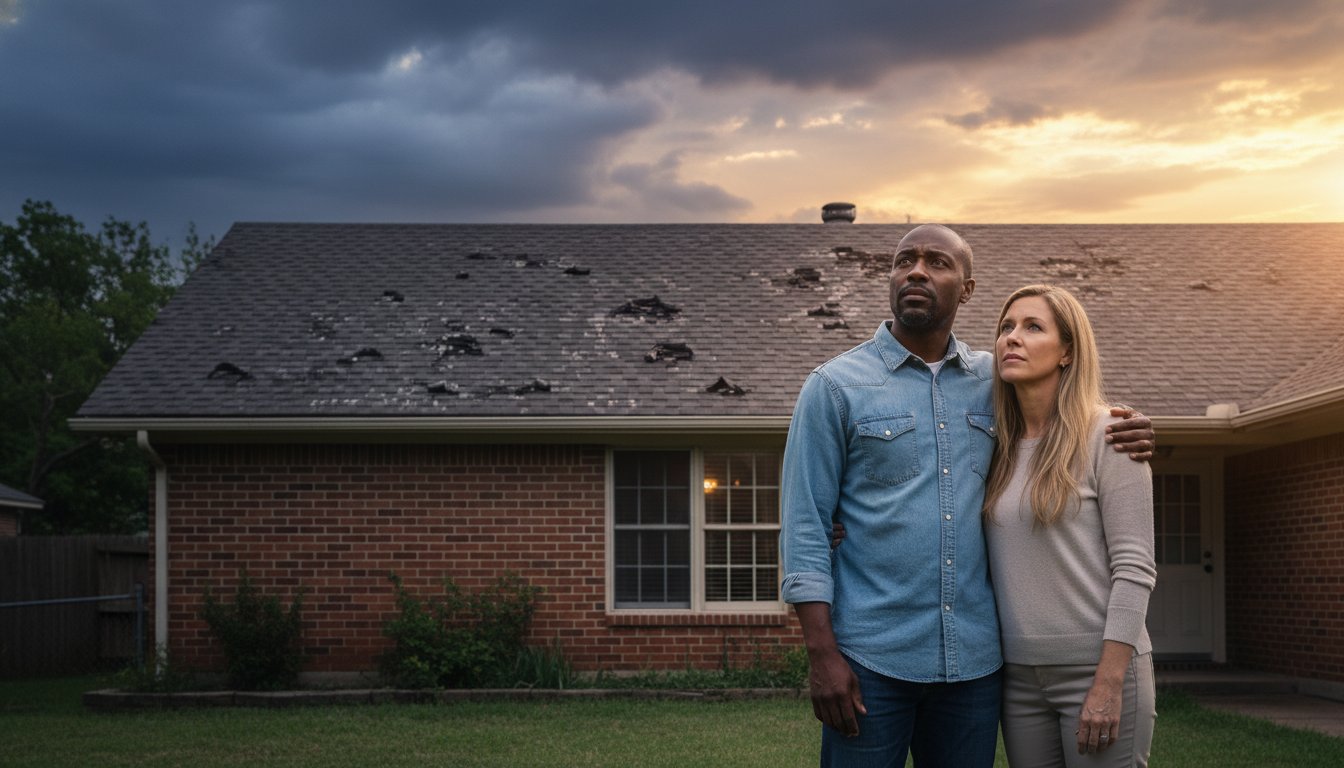

Spending a few hundred dollars to patch a leak might feel like a win, but for an aging structure in Tulsa, that small fix could actually be a costly mistake. You’re likely asking yourself: is it worth repairing a 20 year old roof when the next Oklahoma hailstorm is always just around the corner? It’s natural to want to extend the life of your shingles to avoid a major expense, especially when you’re facing conflicting contractor quotes. We understand the stress of wondering if your home will stay dry during the next severe weather event, and we’re here to provide the honest guidance you deserve as your local neighbor.
In this guide, you’ll discover the financial and structural reality of maintaining an aging roof in Oklahoma so you can stop wasting money on temporary fixes. We will explain the specific tipping point where repairs no longer make sense and how a two-decade-old roof impacts your insurance coverage, including the shift toward Actual Cash Value policies. You’ll also learn about the new residential roofing endorsement requirements effective July 1, 2026, so you can find peace of mind knowing your home is truly protected before the next storm season arrives.
Key Takeaways
- Learn why the 20 year mark is a critical turning point for Tulsa roofs and how local climate extremes accelerate shingle wear.
- Understand the 30% Rule to help you decide if it is worth repairing a 20 year old roof or if a full replacement is the more responsible financial choice.
- Discover how insurance companies view aging roofs and why your coverage might shift to Actual Cash Value, potentially leaving you with higher out-of-pocket costs.
- Identify the structural warning signs, like granule loss and curling edges, that signal your roof can no longer reliably withstand Oklahoma’s severe weather.
- Find out how a professional inspection provides the clarity you need to stop spending on temporary fixes and start protecting your home’s long-term value.
The 20-Year Milestone: Why Age Matters for Tulsa Roofs
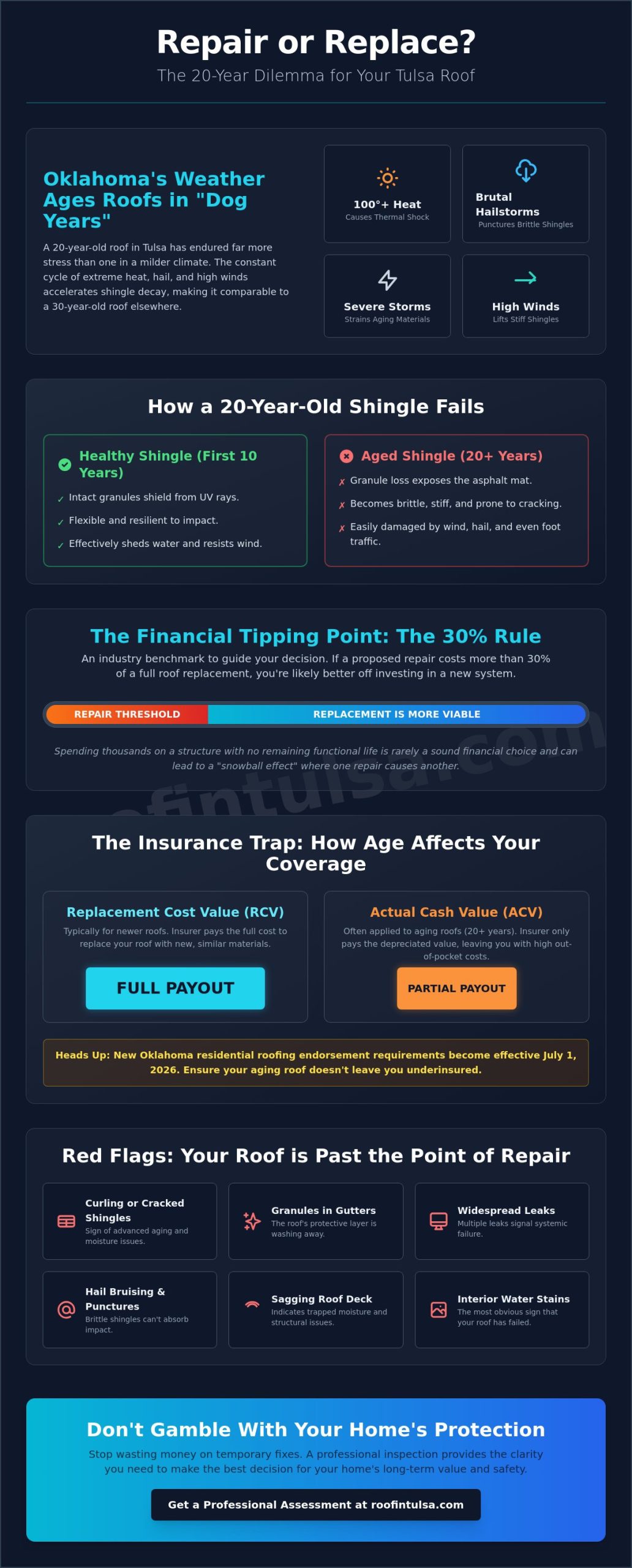
Reaching the twenty-year mark is a significant milestone for any home. For your roof, however, it usually signals the final chapter of its functional life. Most standard 3-tab asphalt shingles are designed with a specific durability window in mind. While the typical lifespan of asphalt shingles is often cited as twenty to thirty years, Oklahoma’s environment rarely allows a roof to reach that upper limit gracefully. By the time two decades have passed, the chemical compounds that keep your shingles flexible have largely evaporated.
In Tulsa, we often say that roofs age in “dog years.” A roof here faces far more punishment than one in a milder climate. Our 100-degree summer afternoons followed by sudden evening thunderstorms create a cycle of extreme stress. When you ask yourself is it worth repairing a 20 year old roof, you have to consider that the materials have already survived thousands of these intense cycles. The structural integrity of the asphalt is simply not what it used to be. A roof that is twenty years old in Oklahoma is often in worse condition than a thirty-year-old roof in a state with more consistent temperatures.
The Science of Shingle Decay
Shingle decay begins with the loss of protective granules. These small, stone-like particles act as a shield against the sun. As they wash away into your gutters, the underlying asphalt mat becomes vulnerable to UV rays. Without that protection, the shingles become brittle and lose their ability to shed water effectively. You’ll also notice a loss of flexibility. Older shingles become stiff, which makes them prone to wind lift during our frequent Oklahoma gusts. This decay is often accelerated by thermal shock. Thermal shock is the physical strain caused when roofing materials expand rapidly in the heat and contract quickly during a cold snap, which eventually leads to deep cracks and structural fatigue.
Tulsa Weather: The Ultimate Stress Test
Our local weather serves as the ultimate test for an aging roof. While a younger roof can often bounce back from a hailstorm, a 20-year-old shingle mat is too brittle to absorb the impact. Hailstones that might have caused minor scuffing ten years ago will now cause bruising or full punctures in the weakened mat. This is why minor repairs frequently fail on older homes. When a technician tries to lift a brittle shingle to replace the one underneath, the surrounding shingles often crack or snap because they can no longer bend. While consistent roof maintenance during the first decade can help extend the system’s life, it cannot stop the clock forever. At this stage, you aren’t just fixing a leak; you’re trying to repair a system that has reached its physical limit. It’s often more practical to stop the cycle of temporary fixes and look toward a more permanent solution.
Repair vs. Replacement: Calculating the Real Value
Deciding whether to invest in your current roof or start over is primarily a math problem. Many homeowners get stuck in a frustrating cycle of small patches. They hope to save money, but the cumulative cost of repeated service calls usually tells a different story. If you’re asking is it worth repairing a 20 year old roof, the answer often lies in the “30% Rule.” This industry benchmark suggests that if a repair quote exceeds 30% of the total cost of a replacement, you’re likely better off investing that money into a new system. Spending thousands on a structure with no remaining life is rarely a sound financial choice.
Beyond the immediate price tag, you must consider the systemic health of the materials. A single leak near a chimney might be a simple flashing issue that is easy to fix. However, if you have multiple active leaks in different areas, the entire system has likely reached its breaking point. Patching one spot won’t stop the next one from failing. Each time a technician walks on those brittle, twenty-year-old shingles, they risk causing new fractures in the surrounding area. This creates a “snowball effect” where one repair leads directly to the next.
Insurance companies also track these milestones closely. Government programs and private insurers have established clear guidelines on how age affects your coverage, often reducing protection once a roof hits the two-decade mark. If your roof is at this age, a repair might keep you dry for a month, but it won’t restore the official service life needed to satisfy an insurance underwriter during storm season.
When Repairs Make Sense
Repairs are a viable option when the damage is isolated and mechanical. If an otherwise healthy roof suffered a direct hit from a falling tree limb or a few shingles blew off in a localized gust, a patch is a smart move. This assumes the rest of the system is still in fair condition. To be sure, you should always get a professional roof repair Tulsa assessment. A local expert can determine if the surrounding shingles are still flexible enough to hold a new nail without cracking.
The Tipping Point for Replacement
The real tipping point occurs when the cost of maintenance no longer matches the value of the asset. Spending $1,500 on a roof with zero remaining years of life is a poor investment compared to putting that money toward a permanent fix. A full roof replacement Tulsa provides a fresh start and significantly improves your home’s energy efficiency. Modern roofing systems reflect more heat, which can lower your Tulsa cooling bills during our brutal summer months. You aren’t just buying shingles; you’re buying decades of peace of mind. If you’re unsure where your home stands, scheduling an honest assessment is the best first step.
The Insurance Trap: How Age Affects Your Coverage
Many homeowners in Oklahoma assume that as long as they pay their premiums, their roof is fully protected. However, the age of your structure significantly changes the rules of the game. Once a roof reaches the 15 to 20-year mark, many insurance providers shift their coverage model. They move away from “Replacement Cost Value” and toward “Actual Cash Value.” This shift is a major factor when deciding if is it worth repairing a 20 year old roof. If you spend money on a repair today, you might still face a massive out-of-pocket bill if a storm hits tomorrow because your policy no longer covers the full cost of a new system.
Getting a claim approved becomes much harder as shingles age. Adjusters often look for any reason to attribute damage to “wear and tear” or “gradual deterioration” rather than a specific storm event. If your shingles are brittle and losing granules, an insurer may argue that the roof failed because it was at the end of its life, not because of the wind or hail. In these cases, a repair can be seen as basic maintenance that you are responsible for, rather than a covered loss. There is also the very real risk of policy non-renewal. If an insurance inspector sees an end-of-life roof during a routine drive-by or renewal audit, they may require a full replacement as a condition of keeping your home insured.
ACV vs. RCV: What Homeowners Must Know
Actual Cash Value (ACV) means the insurer only pays what the roof is worth today, accounting for twenty years of depreciation. This payout is often much smaller than the actual cost of a new roof. In contrast, Replacement Cost Value (RCV) covers the full cost to replace the roof with a similar new one. Maintaining RCV coverage on a two-decade-old roof is increasingly rare in the Tulsa market. Following National Roofing Contractors Association guidelines, we recommend checking your policy’s “schedule of shingles” to see how your coverage drops each year. If you find the paperwork confusing, our team provides expert insurance claim assistance to help you understand exactly where you stand before you spend money on repairs.
The Cost of Non-Coverage
The most expensive roof is the one that fails when you aren’t covered. If a 20-year-old roof suffers a major leak and the claim is denied due to age, you are left with the full bill for both the roof and the interior water damage. Proactive replacement can actually save you money by qualifying you for lower premiums and better coverage terms. It also removes the stress of wondering if your insurer will stand by you during the next tornado season. Before you commit to another patch, take a moment to review the signs you need a new roof to see if your system is already sending you warning signals that it’s time for a fresh start.
Warning Signs That Repairs Are No Longer Worth It
Identifying terminal issues early can save you from a major disaster during the next Oklahoma storm. When you’re trying to decide is it worth repairing a 20 year old roof, your first stop should be your gutters. Look for an accumulation of granules that looks like coarse sand. These granules are the primary defense against UV rays. Once they wash away, the asphalt mat underneath begins to bake and crack. If your gutters are filled with this debris, your shingles have lost their ability to protect your home. This isn’t just a cosmetic issue; it’s a sign of systemic material failure.
You should also look for curling or “clawing” at the edges of your shingles. This happens when the asphalt has dried out completely and the shingles begin to pull away from the roof deck. Brittle shingles like these can’t be repaired effectively because they often shatter when a technician tries to nail them down. Don’t ignore moss or algae growth that has rooted into the mat. While some staining is just a nuisance, rooted growth traps moisture against the roof and accelerates rot. Finally, consider the “neighbor rule.” Most homes in a single Tulsa development were built at the same time. If you see your neighbors replacing their roofs, it’s a strong indicator that your neighborhood’s original materials have reached their expiration date.
Interior Red Flags
You don’t always have to climb a ladder to find trouble. Start by checking your attic for daylight peeking through the roof boards. If you can see light, water is definitely finding its way in. Look for damp rafters or persistent water stains on your ceilings and walls. Even if it isn’t dripping yet, dampness leads to sagging roof decks and a distinct musty smell in your upper-level rooms. Mold growth in the attic is a clear indicator that your roof’s ventilation or moisture barrier has failed. These interior signs often mean the damage is already structural, making a simple repair insufficient.
Exterior Structural Clues
From the ground, look for “bald spots” where the granules are completely gone and the black mat is visible. You should also inspect the flashing around your chimneys and vents. On a younger roof, a missing shingle is an easy fix. On a twenty-year-old roof, however, the surrounding shingles are often too brittle to be manipulated. Attempting a patch on an old roof frequently causes more damage than it fixes. This creates a cycle of endless service calls that never truly solve the problem. If you’re seeing these warning signs, it’s time to stop guessing. You can schedule a professional roof inspection to get a clear, honest picture of your home’s safety before the next storm arrives.
Expert Guidance: Navigating Your Roof’s Next Chapter
Determining the future of your home’s protection shouldn’t be a guessing game based on internet searches alone. While the “30% Rule” and visible warning signs provide a great starting point, a professional eye is required to confirm if your specific structure is still sound. You’re trying to figure out is it worth repairing a 20 year old roof, and the answer depends on the unique conditions of your decking, ventilation, and flashing. At Rescue Roofing Tulsa, we pride ourselves on being more than just a service provider; we’re your neighbors who understand exactly what Oklahoma weather does to a home. Our approach centers on honest assessments that prioritize your safety and financial well-being over a quick sale.
We understand that a full replacement is a significant investment. However, when compared to the compounding costs of emergency patches and the risk of interior water damage, a new system often proves to be the more manageable path. We guide you through the entire process, from the initial inspection to navigating insurance claim assistance and final installation. Our team handles the administrative burdens and technical details so you don’t have to. By choosing a comprehensive solution, you gain access to modern materials that offer better wind resistance and energy efficiency than the shingles installed two decades ago.
The Rescue Roofing Difference
What sets us apart is our deep commitment to the Tulsa community and our adherence to rigorous industry standards. As a trusted residential roofing contractor, we maintain high-level certifications that serve as a constant proof point for our quality. We also recognize that not every homeowner is ready for a full replacement the moment a leak appears. That’s why we offer 24/7 emergency repair availability to provide immediate relief during a crisis. Whether you need a temporary fix to get through a storm or a permanent new roof, our goal is to provide a sense of calm confidence in your home’s durability.
Your Action Plan for 2026
With new Oklahoma roofing regulations taking effect on July 1, 2026, it’s more important than ever to work with a professional who stays ahead of industry changes. We suggest this simple three-step plan to secure your home:
- Step 1: Schedule a professional, no-obligation inspection to document the current state of your shingles and underlying deck.
- Step 2: Review a detailed repair vs. replacement cost-benefit analysis with our team to see where your “tipping point” lies.
- Step 3: Secure your home with a long-term solution before the next peak Oklahoma storm season arrives.
Taking proactive steps today prevents the stress of a forced replacement during a weather emergency. If you’re ready for an honest look at your roof’s condition, we’re here to help you navigate the best path forward for your home and your family.
Protect Your Home Before the Next Oklahoma Storm
Deciding is it worth repairing a 20 year old roof comes down to balancing immediate costs against your long-term security. As we explored, the combination of Tulsa’s extreme temperature swings and the shift toward Actual Cash Value insurance coverage often makes replacement the more responsible choice. By addressing systemic failures like granule loss and brittle shingles now, you avoid the high cost of repeated patches and the stress of a sudden leak during tornado season. Your home is your most significant investment, and it deserves a defense that is up to the task.
You don’t have to navigate these complex decisions alone. As A+ rated local Tulsa experts, we’re here to provide the honest guidance you need to make an informed choice. Whether you require expert assistance with insurance claims or 24/7 emergency repair services to bridge the gap during a storm, our team is committed to your safety. Get Your Free 20-Point Roof Inspection from Rescue Roofing Tulsa today to gain total clarity on your home’s condition. Investing in a reliable roofing system is the best way to ensure your family stays dry and protected for years to come. We look forward to serving as your trusted local partner.
Frequently Asked Questions
Is a 20-year-old roof too old to repair?
Deciding if it is worth repairing a 20 year old roof depends on the flexibility of your shingles. Most systems this age have become too brittle for effective repairs. When a technician tries to replace one shingle, the surrounding ones often crack or break. This creates a cycle of endless patches that never truly seals the home. If the damage covers a large area, replacement is almost always the safer choice.
Will my insurance pay for a 20-year-old roof replacement?
Insurance coverage for older roofs in Oklahoma is often limited. Many providers transition policies to Actual Cash Value once a roof passes fifteen years. This means they deduct depreciation from your claim payout, which can leave you with a significant out-of-pocket expense. You should check your policy for a roof surface endorsement to see if you have replacement cost coverage or if you’ll only receive the current market value.
How much does it cost to repair a leak on an old roof?
The price of a repair depends on the complexity of the leak and the condition of the surrounding materials. Simple flashing fixes are straightforward, but leaks caused by brittle shingles are more difficult to manage. You should consider that a repair on a two-decade-old roof is often a temporary solution. Instead of fixing a single spot, you might be better served by investing that money into a permanent replacement.
What is the average lifespan of a roof in Tulsa, Oklahoma?
Tulsa’s extreme climate generally limits the lifespan of standard asphalt shingles to about 15 to 20 years. Our 100-degree summers and frequent hailstorms accelerate the aging process compared to milder regions. Even in areas with less extreme heat, such as those served by a roofing contractor Brush Prairie WA, the twenty-year mark remains a critical point for roof health. While some materials are rated for longer, the constant thermal expansion and contraction eventually cause the asphalt to fail. Regular maintenance can help you reach the 20-year mark, but most local roofs require attention by then.
Can I just shingle over my existing 20-year-old roof?
Adding a second layer of shingles over an old roof is technically possible under some building codes, but we don’t recommend it. A layover traps heat, which can cause the new shingles to fail prematurely. It also adds significant weight to your home’s structure. Most importantly, it prevents us from inspecting the underlying wood deck for rot or damage that needs to be addressed before a new system is installed.
How do I know if my roof has storm damage or is just old?
Distinguishing between age and storm damage requires a professional eye. Age typically shows as widespread granule loss, brittle textures, and curling edges across the entire surface. Storm damage is usually localized, appearing as circular bruises from hail or clean tears from high winds. If you’re wondering if it is worth repairing a 20 year old roof after a storm, an inspection can help determine if the damage is covered by insurance.
What happens if I ignore minor leaks on an old roof?
Ignoring even a small leak on an aging roof can lead to expensive structural problems. Water that seeps through the shingles will eventually rot the wooden decking and cause mold to grow in your attic. Over time, this moisture can damage your insulation and even compromise the electrical systems in your ceiling. On an old roof, a minor leak is often a warning that the entire barrier has reached its breaking point.
Does a new roof increase my home’s resale value in Tulsa?
A new roof is a significant asset when selling a home in Tulsa. Potential buyers are often wary of older roofs because of the difficulty in securing affordable homeowners insurance. A recently replaced roof removes this hurdle and provides the peace of mind that the home is protected from Oklahoma’s severe weather. It can lead to a faster sale and help you avoid last-minute price negotiations during the inspection process.