



Does it feel like your air conditioner is fighting a losing battle against the Oklahoma sun every afternoon? You aren’t alone in that struggle. Many Tulsa homeowners watch their electricity bills skyrocket while the upstairs bedrooms remain uncomfortably warm. It’s frustrating to pay for cool air that seems to vanish through the ceiling. If you’re wondering how to make your roof more energy efficient, you’ve come to the right place. We understand that your home should be a sanctuary, not a source of financial stress.
The good news is that high utility costs don’t have to be your summer reality. By focusing on a total roof system strategy, you can reclaim your comfort and lower your monthly expenses. This 2026 guide walks you through the most effective upgrades, from reflective materials to the latest Oklahoma grant programs like the Strengthen Oklahoma Homes initiative. You’ll learn how to identify energy leaks and make informed decisions that increase your property value without overspending on unnecessary replacements.
Key Takeaways
- Learn why an energy-efficient roof is a complete system that manages heat transfer through your entire attic.
- Discover how to make your roof more energy efficient by selecting high-reflectivity “cool roofing” materials tailored for the Oklahoma climate.
- Find out how proper ventilation and insulation serve as critical buffers to keep your home comfortable and your utility costs low.
- Explore practical retrofitting options and professional coatings that’ll boost your current roof’s performance without a full replacement.
- Understand the value of a professional energy-focused inspection to identify hidden heat leaks and improve your property’s long-term value.
Understanding Energy Efficiency: Why Your Roof is the Key to Savings
Energy efficiency starts at the highest point of your home. Many people think of their roof as just a shield against rain, but it’s actually your home’s primary thermal barrier. An energy-efficient roof is a coordinated system designed to minimize heat transfer into your living space. In a city like Tulsa, this is vital because of the “Urban Heat Island” effect. This phenomenon occurs when dense pockets of pavement and traditional dark roofing materials absorb massive amounts of heat, making our neighborhoods significantly hotter than the surrounding rural areas. When you focus on how to make your roof more energy efficient, you’re directly pushing back against this local heat trap.
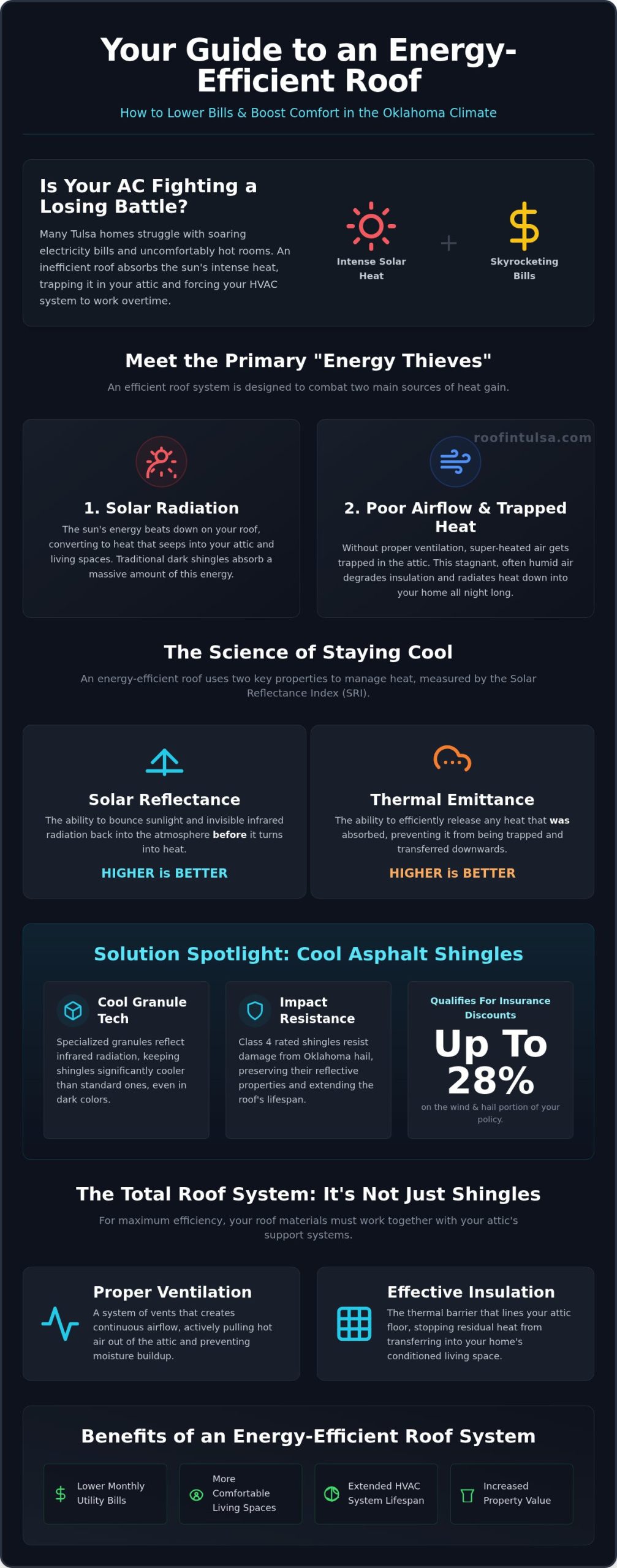
Two main “energy thieves” are usually responsible for high utility bills: solar radiation and poor airflow. Solar radiation is the intense energy from the sun that beats down on your shingles. If your roof isn’t designed to handle it, that energy turns into heat and seeps into your attic. Once that heat is trapped, your HVAC system has to work overtime to keep your living space cool. A high-performance roof acts as a reflection tool, significantly reducing the workload on your air conditioner and extending its lifespan.
The Science of Solar Reflectance vs. Thermal Emittance
Understanding the mechanics of a cool roof involves two key concepts. Solar reflectance is the roof’s ability to bounce sunlight back into the atmosphere before it can be converted into heat. This principle is a cornerstone of climate engineering, where reflective surfaces are used to manage temperatures. Thermal emittance is the second half of the equation. It measures how effectively a material sheds any heat it does absorb. The Solar Reflectance Index (SRI) is the standard value used to measure a roof’s overall ability to stay cool by accounting for both of these factors.
How Oklahoma Weather Impacts Roof Efficiency
Tulsa’s climate presents unique challenges for any roofing system. Our 100-degree summers are brutal on standard asphalt shingles, causing them to bake and become brittle over time. This degradation doesn’t just lead to leaks; it actively lowers your roof’s ability to reflect heat. Additionally, Oklahoma’s high humidity makes ventilation even more critical. Moist air trapped in an attic can reduce the effectiveness of your insulation and lead to structural issues. When we look at how to make your roof more energy efficient in this region, we also prioritize storm durability. Materials that resist hail damage often maintain their reflective properties longer, ensuring your home stays cool and protected for years to come.
Choosing the Right Materials: Cool Roofing and High-Reflectivity Options
Selecting the right material is the first practical step in learning how to make your roof more energy efficient. In the past, homeowners were often forced to choose between a roof that looked good and one that kept the house cool. Modern technology has changed that. Today, you can select materials that reflect a high percentage of solar heat while still providing the durability needed to survive an Oklahoma spring. While initial costs vary, the long-term energy ROI is significant when you factor in lower monthly cooling costs and potential insurance discounts. In Tulsa, choosing a material that balances reflectivity with impact resistance is the smartest way to protect your investment.
Energy-Efficient Asphalt Shingles
Asphalt shingles remain the most popular choice for local homes. Traditional shingles absorb solar heat, which then radiates directly into your attic. However, “cool” shingle technology uses specially designed granules that reflect infrared radiation. This prevents the shingles from reaching the extreme temperatures that standard materials do. While lighter colors are naturally more reflective, manufacturers now offer dark-colored shingles equipped with these specialized granules. This means you don’t have to sacrifice your home’s curb appeal for efficiency. If you are planning a roof replacement tulsa homeowners often find that upgrading to Class 4 impact-resistant shingles provides a double benefit. These shingles are more durable against hail and frequently qualify for insurance premium discounts of up to 28 percent on the wind and hail portion of the policy.
The Efficiency Benefits of Metal Roofing
Metal roofing is another excellent option for those prioritizing energy performance. A common misconception is that a metal roof will act like a frying pan and make the house hotter. It’s actually the opposite. Metal has a low thermal mass, meaning it doesn’t store heat like asphalt or tile. Instead, it reflects solar energy away from the structure. When coated with “cool” pigments, a metal roof can reflect even more sunlight. This keeps your attic much cooler during those 100-degree August afternoons. Because metal roofs can last 50 years or more, they offer a superior lifespan compared to traditional materials. Choosing the right material is a big decision for your family. Starting with a professional roof inspection can help you determine which option fits your home’s structure and your budget best.
The Attic Connection: Maximizing Efficiency Through Ventilation and Insulation
Your attic is the critical buffer zone between the scorching Oklahoma sun and your family’s living space. It’s the area where your home’s temperature is either managed or lost. If you’re researching how to make your roof more energy efficient, you must look beneath the shingles. A roof is only as effective as the ventilation system supporting it. When heat gets trapped, it creates a “suffocating” environment that degrades materials and drives up utility costs. You might notice excessive heat in the attic or even ice dams during a winter storm. These are clear signs that your attic isn’t breathing correctly.
Balanced Roof Ventilation Systems
Proper airflow requires a delicate balance between intake and exhaust. Cool air should enter through soffit vents at the eaves, while hot, moist air escapes through ridge or gable vents. Without this balance, moisture builds up. This is especially dangerous in Tulsa’s humid climate. Some homeowners think adding a powered attic fan is a quick fix, but if it isn’t balanced, it can actually pull conditioned air out of your home. This forces your HVAC to work harder. Keeping these pathways clear is essential for your home’s health. Following a consistent roof maintenance schedule ensures your ventilation system remains functional year-round.
Radiant Barriers and Insulation Upgrades
Upgrading your insulation is one of the most effective ways to stop thermal bridging. This is when heat bypasses your roof materials and enters your home through the ceiling. In 2026, Oklahoma homeowners can take advantage of state-administered federal rebates. The Home Electrification and Appliance Rebates (HEAR) program offers up to $1,600 for insulation and weatherization. Pairing thick, high R-value insulation with a radiant barrier foil can reflect a massive amount of radiant heat back toward the roof. This synergy between your shingles and your attic insulation creates a formidable defense against the summer heat. It’s a key part of how to make your roof more energy efficient while significantly improving your home’s comfort and lowering your monthly expenses.
Practical Steps and Retrofits: Improving Your Existing Roof’s Performance
Not every homeowner is prepared for a full roof replacement today. If your shingles are still in good structural shape, there are several strategic ways to improve your home’s thermal performance. Knowing how to make your roof more energy efficient doesn’t always require a massive construction project. Sometimes, it’s about fine-tuning the system you already have to ensure it’s performing at its peak. These retrofits can bridge the gap between your current utility bills and the savings you want to see, providing immediate relief during the hottest months of the year.
Reflective Roof Coatings and Sealants
Professional-grade elastomeric coatings are a powerful tool for flat or low-slope roofs. Many Tulsa commercial properties and modern residential designs use these to bounce sunlight away from the structure. It’s important to distinguish between thin DIY sealants found at big-box stores and professional-grade applications. A high-quality coating creates a seamless, rubber-like membrane that handles Oklahoma’s extreme temperature swings without cracking. However, you should use caution with traditional asphalt shingles. Applying a coating to shingles can trap moisture underneath the material and often voids the manufacturer’s warranty. For standard residential shingle roofs, focusing on the attic and ventilation points we discussed earlier is usually a safer and more effective path.
The Power of Regular Maintenance
Simple maintenance is often the most overlooked part of home energy efficiency. When leaves, needles, and branches pile up on your roof, they create “hot spots” that absorb heat and prevent the surface from cooling down after the sun goes down. Gutter health also plays a surprising role in thermal regulation. Clogged gutters trap moisture at the roof’s edge. This can lead to wood rot and thermal bridges that allow heat to bypass your attic insulation. Addressing a small roof repair immediately prevents leaks that would otherwise compress your attic insulation. Once insulation becomes damp or compressed, it loses its R-value and its ability to keep your home cool.
Annual inspections are the best way to catch these small efficiency gaps before they become expensive problems. We look for cracked seals around plumbing boots and shifted shingles that might be creating heat leaks. Taking these practical steps ensures your home remains a sanctuary during our intense Oklahoma summers. If you aren’t sure where your roof is losing energy, scheduling a professional roof inspection is the most reliable way to create a personalized efficiency roadmap for your property.
Partnering with Tulsa Professionals: How Rescue Roofing Boosts Your Home’s Efficiency
Rescue Roofing Tulsa has built a reputation for reliability and local expertise since our inception. We understand that your home is your most significant investment. When you research how to make your roof more energy efficient, the sheer amount of technical information can feel overwhelming. Our role is to act as your trusted advisor, simplifying the process and providing clear, honest guidance. We focus on the unique climate challenges of our region, ensuring every project we handle is built to withstand both high winds and extreme heat.
Precision installation is the foundation of energy performance. Even the most expensive “cool” shingles won’t save you money if they aren’t installed as part of a balanced system. Our team adheres to rigorous industry standards and stays current with the latest Oklahoma roofing regulations, including the 2026 Residential Roofing Endorsement requirements. We ensure that every layer of your roof, from the underlayment to the ridge vents, works together to minimize heat transfer and maximize durability. This steady, methodical approach is how we ensure your home remains protected and efficient for decades.
Our Comprehensive Efficiency Inspection
The journey to a more efficient home starts with a professional roof inspection. We go beyond a simple visual check. Our team performs a deep dive into your roof’s health to identify hidden energy leaks. We check for ventilation bottlenecks in your soffits and ridge vents that might be “suffocating” your attic. We also look for insulation gaps and thermal bridges that allow heat to seep into your living spaces. This methodical approach ensures we address the root cause of your high utility bills rather than just treating the symptoms.
Oklahoma weather is unpredictable, and storm damage is a common reality for Tulsa property owners. We specialize in helping neighbors navigate the insurance claim process following severe weather events. If your roof needs a replacement due to hail or wind, it’s the perfect time to consider energy-saving upgrades. We help you choose materials that not only meet current building codes but also provide long-term savings and superior protection. Our community-focused approach means we treat your home as if it were our own, providing a calm and supportive experience from start to finish.
Ready for a Cooler Home?
The benefits of optimizing your roof’s energy performance extend far beyond your monthly utility statement. You’ll enjoy a more consistent temperature between floors and a more comfortable living environment for your family. These upgrades are a proactive investment in your home’s future. High-performance roofing materials and proper attic management increase your property value and reduce the strain on your expensive HVAC equipment. It’s a strategic financial decision that offers immediate and lasting ROI.
We are committed to helping Tulsa homeowners achieve the perfect balance of comfort, safety, and efficiency. Our team is ready to provide you with the expert guidance and high-quality service you deserve. Take the first step toward a more affordable home today. Contact Rescue Roofing Tulsa today to schedule your efficiency audit!
Take Control of Your Home’s Comfort and Energy Costs
Optimizing your home for the Oklahoma heat doesn’t have to be a stressful or confusing process. By understanding how to make your roof more energy efficient, you’ve already taken the first step toward significant monthly savings and a more comfortable living environment. Whether you choose high-reflectivity shingles, improve your attic’s ventilation, or simply keep up with regular maintenance, every improvement adds up to a stronger home. These choices protect your property value while keeping your family cool during the most intense summer months.
As a locally owned and operated business in Tulsa, we’re specialists in Oklahoma storm damage and energy upgrades. We’re proud to provide A+ rated professional roofing services to our neighbors. You don’t have to navigate these technical decisions or complex insurance processes alone. Our team is here to guide you through every step, ensuring your roof is ready for whatever the 2026 season brings. Let’s work together to make your home more resilient and affordable.
Get Your Free Energy-Efficient Roof Estimate in Tulsa
We look forward to helping you build a cooler, more durable home for your family. You deserve a roof that works as hard as you do.
Frequently Asked Questions
Does a more energy-efficient roof really lower my electric bills?
Yes, an energy-efficient roof directly lowers your electric bills by reducing the amount of solar heat that enters your home. When your roof reflects sunlight instead of absorbing it, your attic stays significantly cooler. This means your air conditioner doesn’t have to run as often to maintain your desired temperature. Many Tulsa homeowners see a noticeable drop in their monthly PSO or OG&E costs after upgrading to a more reflective system.
What color roof is best for energy efficiency in Oklahoma?
Light colors like white, light gray, or tan are generally the best for energy efficiency because they naturally reflect more solar radiation. However, you aren’t limited to light shades anymore. Modern “cool roof” technology now allows for dark-colored shingles that are engineered with specialized granules to reflect infrared light. You can now enjoy a dark, stylish aesthetic while still benefiting from the thermal performance needed for Oklahoma’s intense summer sun.
Can I make my current roof more efficient without a full replacement?
You can improve your current roof’s efficiency by focusing on attic ventilation and insulation. Ensuring your soffit and ridge vents are clear of debris allows hot air to escape, which prevents heat from building up against your ceiling. For those with flat or low-slope roofs, applying a professional elastomeric coating is another great way to boost reflectivity. These steps are practical ways to learn how to make your roof more energy efficient without the cost of a total tear-off.
What is the most energy-efficient roofing material for Tulsa homes?
Standing seam metal roofing is the most energy-efficient material for our climate due to its high reflectivity and low thermal mass. Unlike asphalt, metal doesn’t store heat, so it cools down almost immediately once the sun sets. If you prefer a traditional look, “cool” asphalt shingles with a high Solar Reflectance Index (SRI) are an excellent alternative. Both options help manage the “Urban Heat Island” effect common in many Tulsa neighborhoods.
How does roof ventilation affect my AC usage?
Roof ventilation lowers your AC usage by allowing superheated air to escape your attic before it can transfer into your living space. Without proper airflow, attic temperatures can soar to 150 degrees or higher on a typical July afternoon. This creates a massive heat load that your air conditioner must constantly fight. A balanced ventilation system reduces this temperature difference, which lets your HVAC system work more efficiently and last longer.
Are metal roofs louder or hotter than asphalt shingles?
Metal roofs are actually cooler than asphalt because they reflect the majority of solar rays away from your home. They don’t hold onto heat the way heavy shingles do. As for noise, a professionally installed metal roof is no louder than any other roofing type. When installed with solid sheathing and proper attic insulation, the sound of Oklahoma rain or hail is dampened just as effectively as it is with traditional materials.
How much can I save with a cool roof?
Homeowners often save between 10 and 15 percent on their annual cooling costs after installing a cool roof. Your actual savings will depend on your home’s size, your current insulation levels, and your local utility rates. In addition to lower monthly bills, you may qualify for insurance discounts. In Oklahoma, installing Class 4 impact-resistant shingles can sometimes lead to a 10 to 28 percent discount on the wind and hail portion of your homeowner’s premium.
Does attic insulation matter if I have an energy-efficient roof?
Attic insulation is vital because it works in tandem with your roofing materials to create a complete thermal barrier. While an energy-efficient roof reflects heat away from the surface, insulation prevents any residual heat from seeping through your ceiling. This combined approach is the most effective strategy for how to make your roof more energy efficient. It ensures your home stays comfortable during a 100-degree August day and stays warm during a freezing Oklahoma winter.