


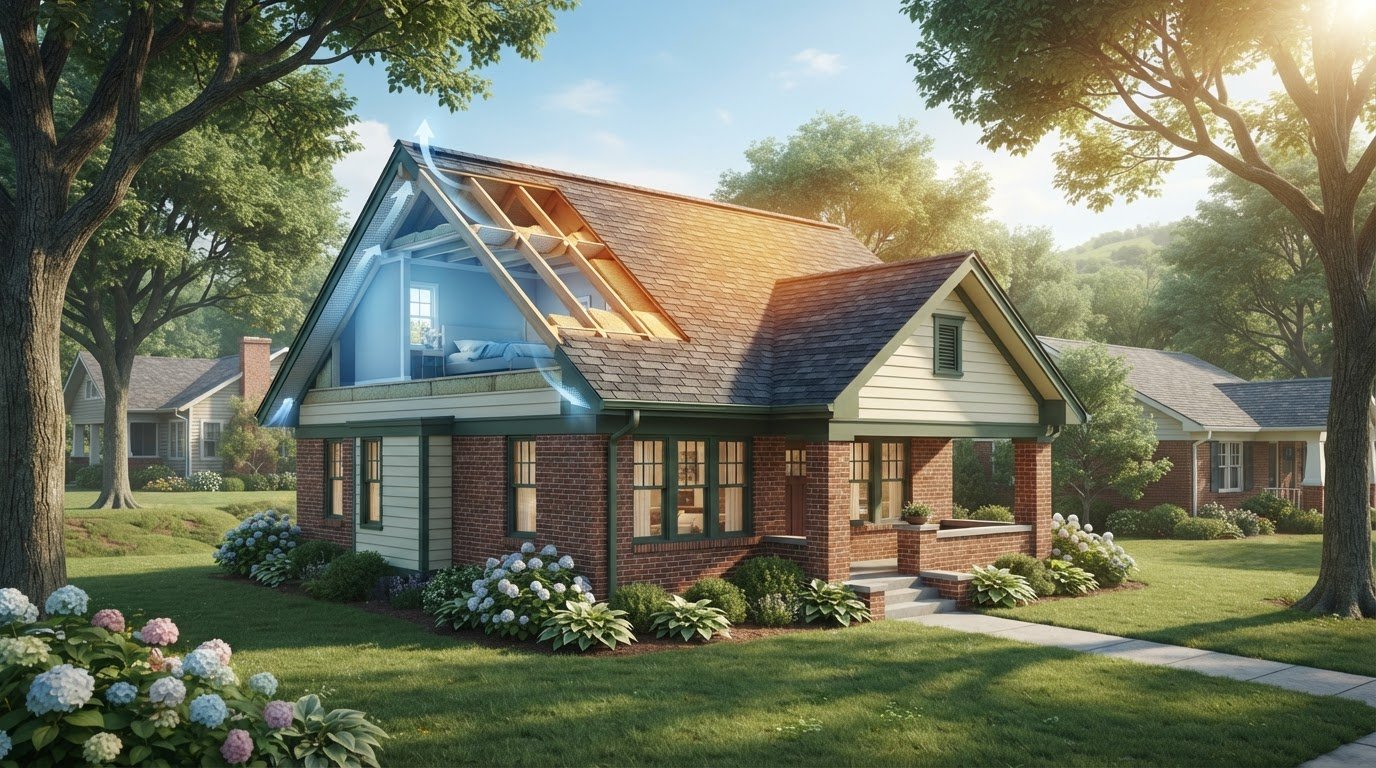

What if the hottest part of your home isn’t the roof surface, but the attic beneath it? If upstairs rooms feel stifling during a Tulsa summer, changing the roof color may not solve the problem. Learning how to keep your roof cool in the summer starts with understanding how heat builds up and moves through the roof and attic.
It’s tempting to look for one clear fix, especially when you’re unsure whether ventilation, insulation, shade, or roofing materials matter most. The right approach depends on how these parts work together and on the condition of your existing roof. Start with safe observations, then address the likely cause rather than adding upgrades at random.
This guide explains how roof and attic heat affect indoor comfort, then compares practical options for Tulsa homes, from checking insulation and airflow to considering reflective materials and shade. You’ll also learn what to look for safely, when a roof inspection can help identify roof concerns, and how to make repair or replacement decisions based on the roof’s condition.
Key Takeaways
- Learn how roof heat can warm attic spaces, ceilings, and rooms, and where to begin investigating.
- Understand how to keep your roof cool in the summer by checking attic conditions, air leaks, insulation, and ventilation in a practical order.
- Compare reflective roofing, insulation, ventilation, and exterior shade to understand what each can address and what affects its suitability.
- Use a safe checklist to spot blocked vents, unusual attic heat, visible roof damage, or recurring comfort problems.
- Choose a next step based on what you observe. A hot home doesn’t automatically mean the roof needs repair or replacement.
Why Tulsa Roofs and Attics Heat Up in Summer
Warm ceilings, stuffy upstairs rooms, and a hot attic can make it hard to know where to start. The roof is part of the picture, but its color alone doesn’t determine how comfortable your home feels. Sunlight heats roofing materials, and some of that heat passes through the roof assembly into the attic. Insulation, air leaks, and ventilation then affect how much heat reaches the rooms below.
Roof heat gain is heat absorbed by the roof and transferred through the roof and attic toward a home’s living spaces. It describes a process, not a guarantee that the roof surface and indoor rooms will reach the same temperature. A sunlit roof can become very hot while insulation and other parts of the building assembly slow heat from reaching occupied rooms.
How summer heat moves from the roof into your home
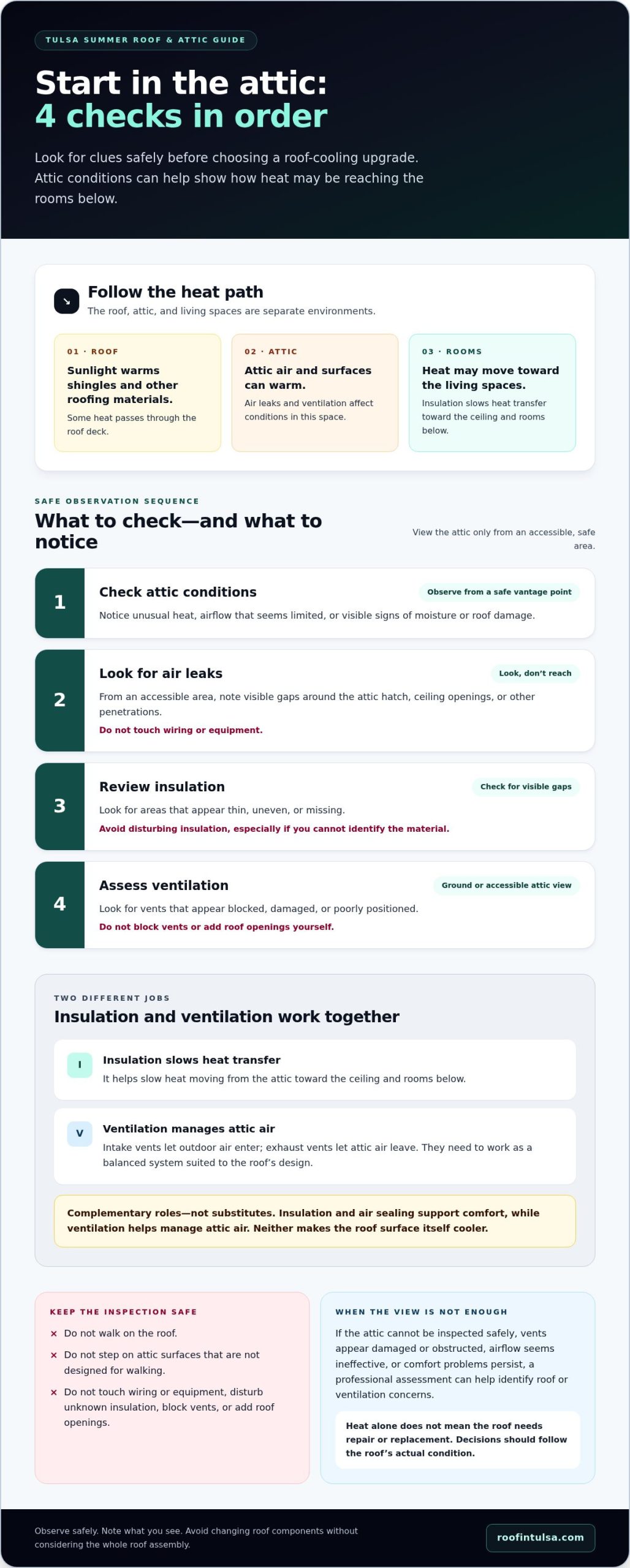
As sunlight warms shingles or other roofing materials, heat can pass through the roof deck and warm attic air and surfaces. The roof surface, attic, and rooms below are separate environments, so their temperatures differ. Attic insulation slows heat transfer toward the ceiling. Gaps around ceiling fixtures, attic access points, or wiring can let air move between spaces. Insulation and air sealing work together, but neither makes the roof surface itself cooler.
That distinction matters when considering how to keep your roof cool in the summer. Reflective roofing may absorb less solar heat, but indoor comfort also depends on attic insulation, air leakage through the ceiling, and attic airflow. Looking at these factors together helps you avoid focusing on a visible change while overlooking a less obvious source of heat.
Why Tulsa homeowners should consider the whole roof system
Tulsa’s summer sun can put sustained heat on roof surfaces, but the right improvement varies from home to home. Trees may shade part of a roof, while roof orientation, attic layout, and existing ventilation can also affect heat buildup. Roof condition matters, too. Damaged areas or deteriorated components may need attention before you consider a cooling upgrade.
Any improvement should preserve the roof’s ability to shed water, maintain appropriate attic airflow, and protect the home from the weather. Blocking vents or changing roof components without considering the whole assembly could create new problems. If hot rooms persist or the roof’s condition is uncertain, a professional roof inspection can help identify roof concerns. Repair or replacement decisions should follow the roof’s actual condition, not heat alone.
How to Keep Your Roof Cool in Summer: Start With the Attic
The attic can help show where heat is building up and how it may be reaching your living space. If you can view it safely from an accessible area, observe from there. Don’t walk on the roof or step onto attic surfaces that aren’t designed for walking. If you can’t inspect the attic safely, leave the assessment to a professional.
Work through these checks in order:
- 1. Check attic conditions. Notice whether the space feels unusually hot, whether airflow seems limited, and whether you can see signs of moisture or roof damage from a safe vantage point.
- 2. Look for air leaks. From an accessible area, note visible gaps around the attic hatch, ceiling openings, or other penetrations. Don’t touch wiring or equipment.
- 3. Review insulation. Look for visibly thin, uneven, or missing areas. Avoid disturbing insulation, especially if you can’t identify the material.
- 4. Assess ventilation. From the ground or an accessible attic area, look for vents that appear blocked, damaged, or poorly positioned. Don’t block vents or add roof openings yourself.
Check attic insulation and air leaks before adding vents
Insulation slows heat transfer between the attic and rooms below. Sealing appropriate gaps can reduce unwanted air movement through the ceiling. Together, they support more consistent indoor comfort and help insulation perform as intended. Look for obvious gaps around an attic access point or ceiling penetrations, but don’t reach into areas containing wiring, equipment, or materials you can’t identify. If insulation looks uneven or the source of a draft is unclear, a professional assessment can help clarify the next step.
Understand roof ventilation without assuming more is always better
Intake vents allow outdoor air to enter the attic, while exhaust vents let attic air leave. They need to work as a balanced system suited to the roof’s design. Adding an opening or blocking an existing vent can disrupt airflow and may affect the roof’s weather protection. The U.S. Environmental Protection Agency explains how cool roofs can reduce energy use by reflecting more sunlight and absorbing less heat, but roof upgrades still need to suit the existing assembly.
Insulation slows heat transfer into the home, while ventilation helps manage attic air. They serve complementary roles, and neither replaces the other. If vents appear damaged or obstructed, or attic airflow seems ineffective, a professional roof inspection in Tulsa can help identify roof or ventilation concerns. That gives you a clearer basis for deciding whether roof repair is needed.
Roof-Cooling Options Compared for Tulsa Homes
There isn’t one cooling upgrade that fits every Tulsa home. Reflective roofing affects how much sunlight the roof absorbs, while insulation and ventilation address heat inside the attic. Shade can reduce direct sun on parts of the home. Use the comparison below to understand each option’s role and what may affect its suitability.
| Option | Primary role | Common limitation | What affects suitability |
|---|---|---|---|
| Reflective roofing | Reflects more sunlight and absorbs less solar energy than less reflective surfaces. | It won’t correct insulation gaps, air leaks, or ventilation concerns. | Existing roof condition, material compatibility, and the roof’s overall design. |
| Attic insulation | Slows heat transfer from the attic into rooms below. | It doesn’t remove attic heat or resolve ventilation problems by itself. | Current insulation coverage, attic layout, and any gaps or air leaks. |
| Ventilation | Helps manage attic air through intake and exhaust airflow. | More vents aren’t automatically better, especially if changes disrupt the existing system. | Vent placement and condition, roof design, and how intake and exhaust work together. |
| Exterior shade | Trees or other existing shade can reduce direct sun on portions of the roof or home. | Shade may be limited by the home’s surroundings and won’t fix attic-system issues. | Sun exposure, tree placement, and keeping branches clear of the roof. |
Reflective roofing and lighter roof colors
Reflective roofing surfaces may absorb less solar energy, but performance depends on the material and design, not color alone. A lighter roof can’t make up for missing or uneven insulation, air leakage, or ventilation concerns. Before considering a surface change, account for the roof’s condition and whether the proposed material is compatible with the existing roof system. Any upgrade should preserve the roof’s ability to shed water and protect the home.
Shade, insulation, and ventilation: choosing the right combination
Trees can provide helpful shade, but keep branches clear of the roof so they don’t rub against it or interfere with roof drainage. Insulation slows heat moving toward living spaces; ventilation helps manage air within the attic. They serve different purposes, so improving one doesn’t necessarily address a problem with the other.
To decide how to keep your roof cool in the summer, start with conditions you can observe, then focus on the likely source of heat rather than adding upgrades at random. A roof inspection can help identify roof or ventilation concerns and clarify which issue deserves attention first. Repair or replacement decisions should reflect the roof’s condition, not the temperature in the home alone.
A Safe Summer Roof-Cooling Checklist for Tulsa Homeowners
A few careful observations can help narrow down why your home feels hot without putting you at risk. Start inside, move to ground-level checks, and leave roof access or uncertain attic conditions to a professional. Never climb onto a hot or sloped roof to inspect it or apply a coating. A fall or damage to roofing materials can turn a comfort concern into a more serious problem.
What homeowners can check safely from inside or at ground level
- Track indoor comfort. Note which rooms feel warm, what time of day the discomfort is strongest, and whether the same pattern returns. Compare rooms on different sides or levels of the home.
- Observe the attic only from a safe, accessible spot. Notice unusual heat or visible concerns without stepping onto attic surfaces or touching wiring, equipment, or insulation you can’t identify.
- Look at vents from the ground. From a safe vantage point, check for vents that appear blocked or damaged. Don’t climb up to clear them or alter roof components.
- Look for visible roof damage. From the ground, note missing or displaced shingles, sagging areas, or other visible changes. Take photos from a safe location and record when you noticed the issue.
Keep your notes together. A recurring comfort pattern, unusual attic heat, or a vent that appears obstructed can help guide the next step. For more routine upkeep ideas, see this Tulsa roof maintenance guide.
When a roof inspection can help identify the cause
Arrange a professional assessment if you notice damaged shingles, persistent leaks, visibly compromised roof components, or ventilation that appears damaged or obstructed. An inspection can help identify roof concerns and distinguish them from attic insulation or ventilation issues, so the response can match what’s happening. Heat alone doesn’t mean the roof needs repair or replacement; decisions should reflect its condition.
If you’ve spotted damage that needs attention, learn more about Tulsa roof repair. An inspection is a practical step toward understanding how to keep your roof cool in the summer while protecting the roof’s weather resistance.
Recurring indoor comfort issues or visible roof concerns are good reasons to arrange a Tulsa roof inspection.
Plan Your Next Step for a Cooler, Well-Protected Tulsa Roof
A hot room doesn’t automatically mean your roof needs repair or replacement. The cause may relate to roof condition, air movement, insulation, ventilation, or a combination of factors. A measured plan helps you focus on the concern most likely affecting comfort while keeping the roof’s weather protection in view.
Decide whether the issue points to the roof, attic, or both
Start with the patterns you’ve noticed. Roof damage or a persistent leak calls for attention to the roof itself. Drafts or gaps around attic openings can point to air leakage. Thin or uneven insulation may allow heat to pass more readily into rooms, while blocked or damaged vents may affect attic airflow. These clues can overlap, so don’t assume one sign tells the whole story.
Use a simple sequence: note which rooms warm up and when, record safe indoor or ground-level observations, then prioritize the concern those observations suggest. Any improvement should suit your home’s roof condition and attic design. An assessment can clarify what deserves attention without assuming a particular repair or upgrade is necessary.
Get local help when roof condition needs a closer look
Rescue Roofing Tulsa provides residential roof inspections and roof repair for homeowners in Tulsa and surrounding areas. An inspection can help identify roof concerns and provide a clearer picture of whether the issue relates to the roof or its ventilation. If findings show roof damage, repair may be appropriate. Replacement should be considered only when the roof’s actual condition makes it relevant.
As you decide how to keep your roof cool in the summer, keep the next steps straightforward:
- Observe: Note recurring comfort patterns and changes in indoor conditions.
- Check safely: Look from inside or at ground level. Don’t climb onto the roof.
- Prioritize: Focus first on visible damage, leaks, or concerns that may affect roof protection.
- Plan follow-up: Use an inspection to understand the roof’s condition and make an informed decision about what, if anything, should happen next.
If you’d like a closer look at your roof, schedule a roof inspection with Rescue Roofing Tulsa. A clear assessment can help you plan without assuming that a hot home means major roof work is needed.
Take a Practical First Step Toward a Cooler Roof
Summer comfort depends on more than roof color. Heat moves through a system, so the roof, attic insulation, air leaks, and ventilation all matter. Start by noticing when and where rooms feel hottest, then check safely from inside or at ground level. Those observations can help you decide what to investigate next.
Learning how to keep your roof cool in the summer doesn’t mean assuming you need a major upgrade. A hot home alone doesn’t prove the roof needs repair or replacement. A roof inspection can help identify roof or ventilation concerns and guide decisions based on the roof’s actual condition.
Rescue Roofing Tulsa provides residential roof inspections and repairs for homeowners in Tulsa, Oklahoma, and surrounding areas. If you’d like a clearer view of your roof’s condition, schedule a roof inspection with Rescue Roofing Tulsa.
With a careful assessment and practical next steps, you can work toward a more comfortable home while keeping your roof protected.
Frequently Asked Questions
Does a darker roof make a house hotter in summer?
A darker roof can absorb more sunlight than a lighter, more reflective roof surface, but roof color alone doesn’t determine indoor comfort. Insulation, air leaks, ventilation, roof design, and shade also affect how heat moves toward living spaces. A dark roof with effective insulation may perform differently from one with gaps or poor attic airflow. Consider the whole roof and attic system before deciding that color is the main cause of a hot home.
Can roof ventilation keep an attic cooler?
Roof ventilation can help manage attic air when intake and exhaust vents work together as a balanced system. It isn’t a substitute for insulation, which slows heat transfer from the attic into rooms below. Blocked or damaged vents may affect airflow, but adding more openings without considering roof design can disrupt the system. If ventilation appears ineffective or compromised, a roof inspection can help identify concerns before changes are made.
How can I cool my attic without replacing the roof?
You may be able to address attic heat without replacing the roof. Start by checking for visible insulation gaps, air leaks around attic access points, or vents that appear blocked, but observe only from a safe, accessible location. Don’t disturb wiring, equipment, or insulation you can’t identify. The best approach to how to keep your roof cool in the summer depends on the cause, so an assessment can help prioritize practical next steps.
Are reflective roof coatings suitable for every roof?
No, a reflective coating isn’t suitable for every roof. Whether it’s appropriate depends on the roof’s material, design, existing condition, and compatibility with the coating. A surface treatment also won’t correct insulation gaps, air leaks, or ventilation issues. Before applying anything, have the roof’s condition and requirements evaluated. Avoid climbing onto a hot or sloped roof to apply a coating yourself, since the work can create safety and roof-protection risks.
Should I climb onto my roof to check for summer damage?
No, don’t climb onto a hot or sloped roof to look for damage. From the ground, you can note visible concerns such as missing or displaced shingles and take photos from a safe location. Indoors, record leaks, warm ceilings, or rooms that repeatedly feel uncomfortable. Leave roof access and closer assessment to a professional. This approach helps you gather useful observations without risking a fall or disturbing roofing materials.
Can trees help keep a roof and house cooler?
Yes, trees can shade parts of a roof and home, reducing direct sun exposure in those areas. Their effect depends on placement, roof exposure, and how much shade reaches the building. Keep branches clear of the roof so they don’t rub against roofing materials or interfere with drainage. Shade can complement other cooling measures, but it won’t resolve attic insulation or ventilation concerns on its own.
When should I have a roof inspected for heat-related concerns?
Consider an inspection if warm rooms keep returning, attic heat seems unusual, vents appear damaged or blocked, or you notice roof damage or persistent leaks. An assessment can help distinguish roof concerns from attic insulation or ventilation issues, so the next step is based on the home’s actual condition. Rescue Roofing Tulsa provides residential roof inspections and repairs in Tulsa, Oklahoma, and surrounding areas. A hot home alone doesn’t mean roof replacement is necessary.