


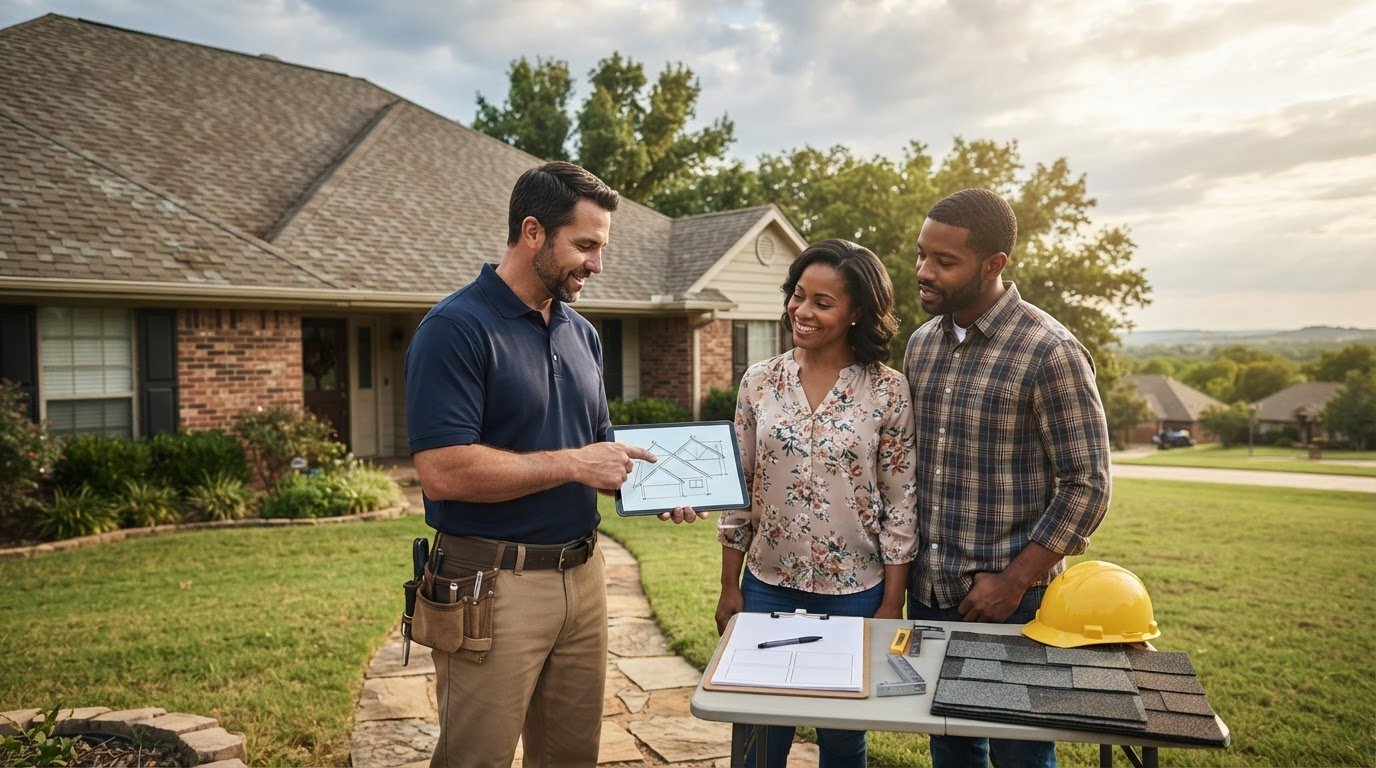

What if the best sign of a trustworthy roofer isn’t a fast promise, but clear evidence and time to make a decision? After a storm, urgency can make it hard to tell helpful advice from pressure. If you’re wondering how to find a roofer who won’t rip you off, look for straightforward answers, documented findings, and a quote you can review without being rushed.
It’s reasonable to understand what’s wrong with your roof before agreeing to repairs or replacement. A useful inspection explains what the roofer found and why they recommend particular work. A quote should make the proposed work and its terms easy to understand. Be cautious of pressure to sign immediately or vague explanations that leave you unsure what you’re paying for.
This guide covers warning signs, how to assess a roofing quote, and the clear communication you should expect. You’ll also learn how Rescue Roofing Tulsa makes the first step low-pressure with free, no-obligation roof inspections and quotes. Its Aerial Quote system provides roof measurements and a price quote within 24 hours.
Key Takeaways
- Learn how to find a roofer who won’t rip you off by looking for clear evidence and communication, not urgent promises.
- Understand what an inspection and quote should explain before you consider roof repair or replacement.
- Compare the proposed work, materials, written terms, and follow-up instead of judging an offer by price or speed alone.
- Document your concerns, review the recommended scope, and make your decision without pressure.
- See how Rescue Roofing Tulsa’s free, no-obligation inspection and quote, plus its Aerial Quote system, can help clarify the next step.
How Roofing Scams Target Homeowners After a Storm
Roof damage can leave you worried about protecting your home while facing decisions you didn’t expect to make. A knock at the door or a call offering an immediate solution may feel helpful, especially when you’re unsure what the roof needs. But a quick response shouldn’t mean making a permanent repair or replacement decision on the spot.
A roofing scam uses pressure or unclear terms to undermine your ability to make an informed decision about work on your home. An unfamiliar roofer isn’t automatically dishonest. Instead, watch for situations where urgency takes the place of clear explanations, written details, and time to review.
Why storm damage can make rushed decisions more likely
After a storm, you may want to stop water from entering or prevent an existing problem from getting worse. That concern is understandable. Still, addressing immediate exposure and choosing permanent roofing work are separate decisions. A temporary measure may help protect the property while you arrange an inspection and find out what repairs are recommended.
Some storm chasers approach residents door to door after severe weather. An uninvited visit isn’t proof of a scam, but pressure to sign immediately should give you pause. A roofer should be able to explain an urgent concern without demanding that you commit to a full project before reviewing the terms.
Red flags in a roofer’s first conversation
Pay attention to what the roofer explains, not just how quickly they offer to act. Vague paperwork makes it hard to tell what work is included, while verbal promises are difficult to compare with the written agreement. Ask for time to understand the proposed work and charges before deciding.
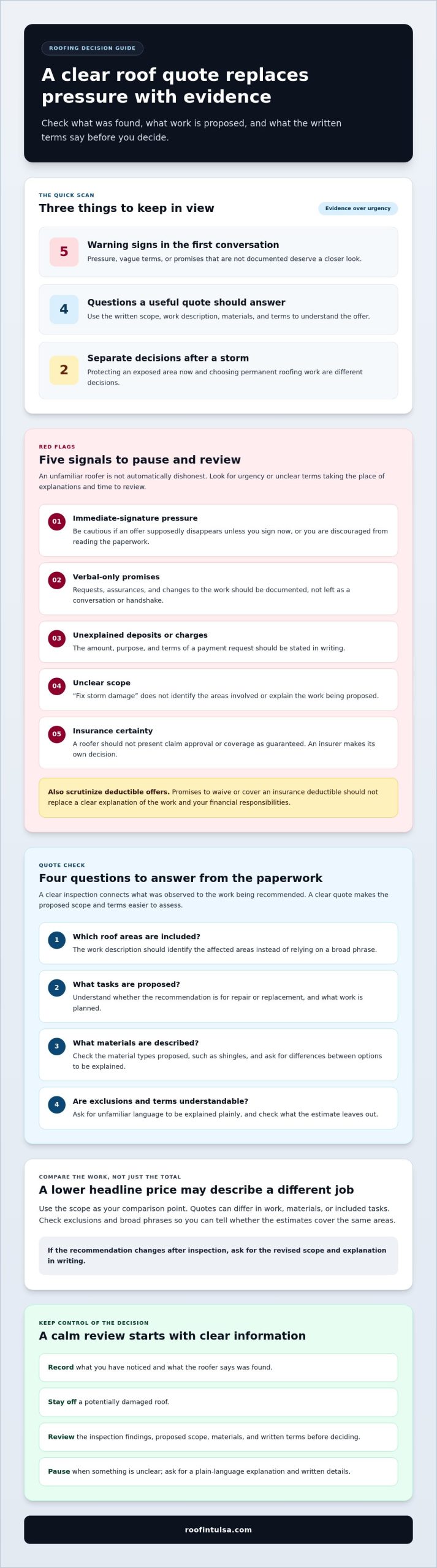
- Immediate-signature pressure: Be cautious if you’re told an offer disappears unless you sign now, or you’re discouraged from reading the paperwork.
- Verbal-only promises: Requests, assurances, and changes to the work should be documented clearly, not left as a handshake or conversation.
- Unexplained deposits or charges: The amount, purpose, and terms of a payment request should be stated in writing.
- Unclear scope: “Fix storm damage” doesn’t explain which areas will be worked on or what the proposed work involves.
- Insurance certainty: A roofer shouldn’t present claim approval or coverage as guaranteed. A contractor can assist with the roofing process, but shouldn’t promise an insurer’s decision.
Promises to waive or cover an insurance deductible also deserve close scrutiny. Don’t let an insurance-related offer replace a clear explanation of the work and your financial responsibilities. If a term is confusing, pause and ask for it to be explained in plain language and put in writing.
Learning how to find a roofer who won’t rip you off starts with keeping control of the decision. Record what you’ve noticed, avoid climbing onto a potentially damaged roof, and arrange an inspection that explains the findings. Review the proposed work before deciding what comes next.
What a Clear Roofing Inspection and Quote Should Explain
A useful inspection does more than point out a problem. It connects visible roof conditions to the recommended work, so you can understand why a repair or replacement is being proposed. Photos or other clear explanations can help you follow the findings. The roofer should explain what they observed and what the recommendation is intended to address, rather than expecting you to take a technical claim on faith.
A roof quote is easier to evaluate when the scope, materials, and terms are clear. That clarity helps you understand the difference between a targeted repair and a larger replacement recommendation. The right option depends on the roof’s condition, not a remote guess based on a brief description or picture.
How to review the work description and materials
Look for a work description that identifies the roof area involved and the main tasks proposed. “Repair roof” is hard to assess. A clearer description names the affected area and explains the work planned there. Material details should identify the type of materials proposed, such as shingles, and make any differences between options understandable.
Use the scope as your comparison point. Two quotes with different totals may describe different work, materials, or included tasks. A lower headline number doesn’t tell you whether the same areas are covered or whether important details have been left out. If a term is unfamiliar, ask for a plain-language explanation before comparing.
Why documentation matters before agreeing to work
Written details give you a reference for what you and the roofer have discussed. They help prevent misunderstandings about which areas are included, what materials are proposed, and what terms apply. Pay attention to exclusions, too. If one estimate leaves out a task or another uses a broad phrase without defining it, a fair comparison becomes difficult.
For a practical review, check whether you can answer these questions from the quote:
- Which roof areas are included in the work?
- What tasks are proposed, and are they for repair or replacement?
- What categories of materials are described?
- Are exclusions and other terms explained in understandable language?
If the recommendation changes after the inspection, ask for the revised scope and explanation in writing. Documentation isn’t paperwork for its own sake. It gives you a stable basis for deciding whether the proposed work matches the inspection findings.
Rescue Roofing Tulsa offers free, no-obligation roof inspections and quotes. Its Aerial Quote system provides roof measurements and a price quote within 24 hours. You can review roof inspection and quote options as you consider your next step. Knowing how to find a roofer who won’t rip you off includes checking that the proposal is understandable before agreeing to work.
How to Compare Roofers and Avoid Unrealistic Offers
Compare roofing proposals by looking beyond the total or how quickly someone says the work can begin. A quote for a small repair and one for a full replacement aren’t equivalent, even if both address the same reported concern. First check whether each proposal responds to the same roof condition and requested outcome. Then compare the details that explain what the work includes.
What to compare when estimates describe different work
Use a side-by-side review. If an item is missing or unclear, mark it as a question rather than assuming it’s included. This makes gaps visible and helps you distinguish material choices from differences in scope or included tasks.
| What to compare | What to look for |
|---|---|
| Scope | Do the proposals name the same roof areas and describe the work needed to reach the same outcome? |
| Materials | Are the material categories or options described clearly enough to identify differences between proposals? |
| Written terms | Can you understand what’s included, what’s excluded, and which terms apply? |
| Communication | Are explanations direct, consistent, and responsive to your questions? |
| Follow-up | Is it clear how updates or proposed changes to the work will be communicated? |
For example, one proposal may describe replacing a roof area, while another describes repairing part of it. The totals alone can’t show which is a better fit. Different material categories or included tasks can also change the scope. If you can’t tell whether two estimates cover the same work, the price comparison isn’t meaningful yet. Ask for the descriptions to be clarified in writing before weighing the offers.
How to interpret promises, credentials, and warranties
An unusually broad promise can sound reassuring, but read the written terms carefully. A useful comparison depends on what the document actually says, not just a verbal assurance. Credentials and warranty information can also help you assess a roofer, but they don’t replace a clear work description.
Rescue Roofing Tulsa is licensed and certified, and provides a lifetime warranty on roofing services. Consider these details alongside the proposed scope and written terms. Read the warranty language closely so you understand what coverage is described rather than assuming a broad phrase answers every question about a particular project.
The lowest offer isn’t automatically the best value, and the fastest-sounding schedule doesn’t prove a proposal is complete. A low figure may reflect a narrower scope, different materials, or details that haven’t been explained. A confident timeline doesn’t tell you what work is included, either. Compare the same categories across each estimate, then consider whether the explanations are clear and consistent. That’s a more grounded way to assess value than choosing by headline alone, and an important part of how to find a roofer who won’t rip you off.
Practical Steps to Protect Yourself Before Signing a Roofing Contract
A clear process can make a stressful roofing decision easier to manage. You don’t need to settle every question in one conversation. Work through the steps in order, keep a record of what you learn, and sign only when you understand the written agreement.
- Document your concerns. Note when you noticed a problem and what you can safely observe from the ground, such as a ceiling stain or visible debris. Take photos from a safe location if useful. Don’t climb onto a damaged roof to gather evidence.
- Arrange an inspection. Have a roofing professional assess the roof and explain the findings. Keep observations separate from assumptions about the cause or the work required.
- Review the proposed scope. Read the written description of the work and materials. Check that it matches what was discussed, and note any exclusions, payment terms, or other conditions you want explained.
- Decide without pressure. Take time to understand the agreement. If a term is unclear or a verbal explanation differs from the document, pause and request clarification in writing before signing.
A simple checklist for reviewing a proposal
Before you agree, confirm that the proposal describes the work and materials in language you can follow. Review the payment schedule and agreement terms as written, without assuming a particular amount or arrangement is customary. Keep copies of inspection findings, estimates, messages about changes, and signed documents together. A simple file helps you refer back to what was proposed and agreed.
Don’t sign simply because someone says the offer will expire or that you must decide immediately. A roofer should be able to explain the written terms so you can make an informed choice. If you still have questions, list them and get clear answers before committing.
When a storm-damage claim is part of the process
A roofer’s inspection records observations about roof conditions. An insurer makes coverage decisions based on the policy and claim review, so a contractor shouldn’t promise that a claim will be approved. Keep those roles distinct as you review the proposed work and claim-related paperwork. For more context on roof protection and insurance considerations, see this Tulsa roofing homeowner’s guide to protection, repair, and insurance.
Rescue Roofing Tulsa provides insurance claim assistance, but that support doesn’t determine the insurer’s decision. You can also request a no-obligation roof inspection and quote to have the roof assessed and review a quote without committing to the work. Taking a deliberate approach is a practical part of how to find a roofer who won’t rip you off.
How Rescue Roofing Tulsa Makes the Roofing Process More Transparent
Choosing a roofer is easier when the first step is clear and you can decide what to do with the information afterward. Rescue Roofing Tulsa is a locally owned roofing contractor serving Tulsa. It starts with a free, no-obligation roof inspection and quote, giving you a chance to understand the proposed next step without committing to the work.
You can get useful information about your roof through an inspection and quote, which can explain the observed condition and recommended work. The Aerial Quote system provides roof measurements and a price quote within 24 hours. Both give you a way to begin with information rather than pressure.
What to expect when requesting an inspection or quote
You can request a free, no-obligation roof inspection or quote by phone, text, or website form. Rescue Roofing Tulsa is “Open Daily – 24 Hours,” and states, “Get a quote within 15 minutes!” For phone or text contact, use “CALL TEXT 918‑407‑4834”.
The quote response within 15 minutes is separate from the Aerial Quote system’s timeframe for measurements and price quotes. After receiving the information, take time to review the scope, materials, and terms. A response or quote is a starting point for your decision, not an obligation to accept the proposed work.
A local next step with no obligation
A low-pressure process leaves room for questions. Describe what you’ve noticed, arrange an inspection, and review the findings before deciding whether repair or replacement is appropriate. If insurance is involved, the roofer’s observations can help inform the process, but the insurer makes its own coverage decision. An inspection or quote can’t guarantee a claim outcome.
Trust signals matter alongside clear communication. Rescue Roofing Tulsa’s roofing professionals are licensed and certified. The company has 5-star ratings on Google and Facebook, and provides a lifetime warranty on roofing services. Consider these details together with the written scope and terms to evaluate both the work proposed and the company behind it.
For a calm first step, request a free roof inspection or quote. Review what the roof assessment shows and consider the quote before deciding whether to move ahead.
Make Your Next Roofing Decision With Confidence
You don’t have to resolve every roofing question in one conversation. Give yourself room to understand what’s happening, consider the proposed work, and decide when the details make sense. That steady approach is the heart of how to find a roofer who won’t rip you off: choose clarity over pressure and keep the decision in your hands.
If you’re ready to move forward, begin with an inspection and a clear quote. Rescue Roofing Tulsa can help you understand the roof’s condition and consider a practical next step, without requiring you to commit to work to get started.
Request your roof inspection or quote, then take the time you need to review the information. A thoughtful decision can help you feel more settled about protecting your home.
Frequently Asked Questions
Is the lowest roofing quote always a scam?
No. A low quote by itself doesn’t prove dishonesty. To understand how to find a roofer who won’t rip you off, check what the estimate actually covers. One quote might include several roof areas while another addresses only a single section. Ask for a written explanation of the differences before comparing totals. If the scope is comparable and the terms are clear, you can assess the proposals more fairly without assuming the cheapest is automatically wrong.
Can a roofer guarantee that my insurance claim will be approved?
No roofer can promise an insurer’s coverage decision. The insurer evaluates the claim according to your policy and its review. A contractor may document roof conditions or assist with roofing-related claim steps, but that isn’t the same as deciding coverage or payment. Rescue Roofing Tulsa offers insurance claim assistance. Keep the insurer’s communications and the roofer’s findings separate in your records, and don’t treat a confident prediction as proof that a claim will be approved.
What should I do if a roofer wants me to sign immediately?
Pause and don’t sign until you understand the agreement. Take a copy, read it away from the conversation, and note any phrases you can’t interpret. For example, if the paperwork refers to “additional work as needed,” ask how changes will be described and approved. Make sure important promises appear in the written agreement, not only in a conversation. If you’re still uncomfortable or feel rushed, stepping back is a reasonable choice.
Is it a red flag if a roofer offers to waive my insurance deductible?
Yes. Treat that offer as a reason to stop and examine the arrangement carefully. Don’t rely on a verbal assurance that it’s acceptable or sign paperwork that doesn’t make the financial terms clear. Deductible and insurance rules can depend on the policy and current requirements, so get an authoritative explanation before agreeing. Keep copies of related documents and communications. If the proposed arrangement remains unclear, don’t proceed until you understand what you’re agreeing to.
How can I tell whether a roofing estimate is clear?
You should be able to identify the roof areas involved, the tasks proposed, the material categories, and the terms that affect the agreement. Try explaining the proposal back in your own words. If you can’t tell whether it covers a patch, a larger repair, or replacement, ask for a written clarification. Compare estimates only after accounting for differences in included work. A detailed estimate should make those distinctions easier to see, not require guesswork.
Should I pay a roofer before work begins?
There isn’t one payment arrangement that applies to every roofing agreement. Read the written payment schedule and make sure you understand what each payment covers and when it is due. If a request doesn’t match the document, ask for an explanation in writing before paying. Avoid acting on an unexplained demand made during a rushed conversation. For a question about Oklahoma requirements or your specific contract, consult an authoritative source rather than relying only on a verbal claim.