



In Oklahoma, roofing contractors are required to be licensed and insured, so start by checking both. When deciding how to choose a roofing contractor in Tulsa, compare written estimates for the same scope of work, materials, labor, and warranty terms rather than choosing by price alone.
It’s reasonable to want clear answers before work begins, especially when your roof needs attention. This guide explains what to check in licensing and insurance, how to compare itemized estimates, and what a thorough inspection and responsive communication should include. You’ll also see why working with a Tulsa roofing contractor can be practical for local projects and follow-up.
Key Takeaways
- Confirm a roofer’s licensing and review both liability and workers’ compensation coverage before work begins.
- Compare written estimates by scope, materials, labor, schedule, and warranty terms, not just the bottom line.
- Look for an inspection that clearly documents roof conditions and supports a straightforward discussion of next steps.
- Choose a Tulsa roofer whose local presence and clear communication can help you feel confident about the project.
1. Does a Roofing Contractor Need to be Licensed and Insured?
Oklahoma requires roofing contractors to be licensed and insured. Before discussing shingles or replacement, ask to see the contractor’s current Oklahoma roofing license. Licensing and insurance address different risks: the license identifies the contractor, while insurance helps address covered losses connected with the work. Check both before signing.
Review liability and workers’ compensation coverage separately. General liability insurance can help address property damage or other covered claims connected with the project. A practical benchmark for Tulsa is at least $1 million per occurrence in liability coverage. Workers’ compensation coverage relates to employee injuries. Ask for current insurance certificates before work begins, and confirm that both types of coverage are shown.
A certificate records insurance coverage, but match its details to the written agreement, too. Check that the business name is consistent across the estimate, contract, and insurance documents. If the crew will remove old asphalt shingles, confirm that workers’ compensation coverage applies to the contractor’s employees. Keep copies with your roof replacement records.
For roof replacement or repair in Tulsa, ask the contractor to state in writing whether a city permit is required and who will obtain it. The agreement should identify who handles any required application and permit fee. Clarifying this before work starts helps avoid confusion, especially when storm damage needs prompt attention.
After severe weather, separate the roof assessment from the insurance decision. A contractor can document visible damage and describe recommended repairs, while the insurer determines coverage under your policy. For a claim involving missing shingles or damaged flashing, request a detailed description of the observed damage and proposed work. Keep the inspection notes, photos, and estimate together for your records.
These checks help you assess qualifications, financial protection, and claim documentation before choosing a contractor. Clear paperwork makes it easier to understand who is responsible for each step.
2. Comparing written estimates and itemized project costs
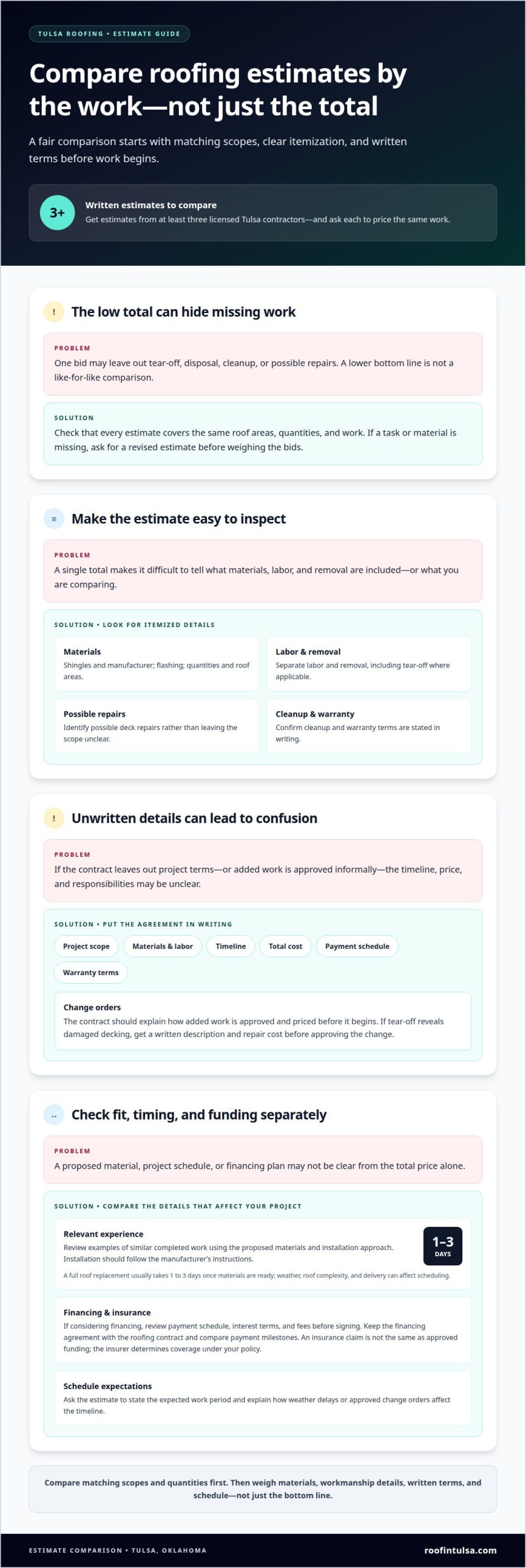
Get written estimates from at least three licensed Tulsa contractors, then compare the same work. A low total may leave out tear-off, disposal, cleanup, or repairs. Check that each estimate covers the same roof areas and clearly describes the materials. This makes differences easier to spot before choosing a bid.
A detailed estimate should separate materials, labor, removal, and possible deck repairs. It should identify the shingles and manufacturer, and describe flashing, cleanup, and warranty terms. Compare matching scopes and quantities, not just the totals. If a task or material is missing, ask for a revised estimate before weighing the bids.
Your written contract should state the project scope, materials, labor, timeline, total cost, payment schedule, and warranty terms. It should also explain how change orders are approved and priced before added work begins. If tear-off reveals damaged decking, for example, get a written description and cost for the repair before approving the change.
Consider the contractor’s experience with work similar to yours. Review examples of completed projects using the proposed materials and installation approach. Replacing asphalt shingles and repairing flashing involve different details, so relevant examples can help you judge whether the estimate addresses your roof’s needs. The proposed installation should follow the manufacturer’s instructions.
If you’re considering financing, review the payment schedule, interest terms, and fees before signing. Keep the financing agreement with the roofing contract, and compare its payment milestones with the contract schedule. An insurance claim is not the same as approved funding: the insurer determines coverage under your policy.
In Tulsa, a full roof replacement usually takes 1 to 3 days once materials are ready. Weather, roof complexity, and delivery can affect scheduling. Ask the estimate to clarify the expected work period and how weather delays or approved change orders affect the timeline.
For storm-related work, review roofing project options and consider whether a separate repair estimate fits your needs.
3. Inspection, damage documentation, and customer communication
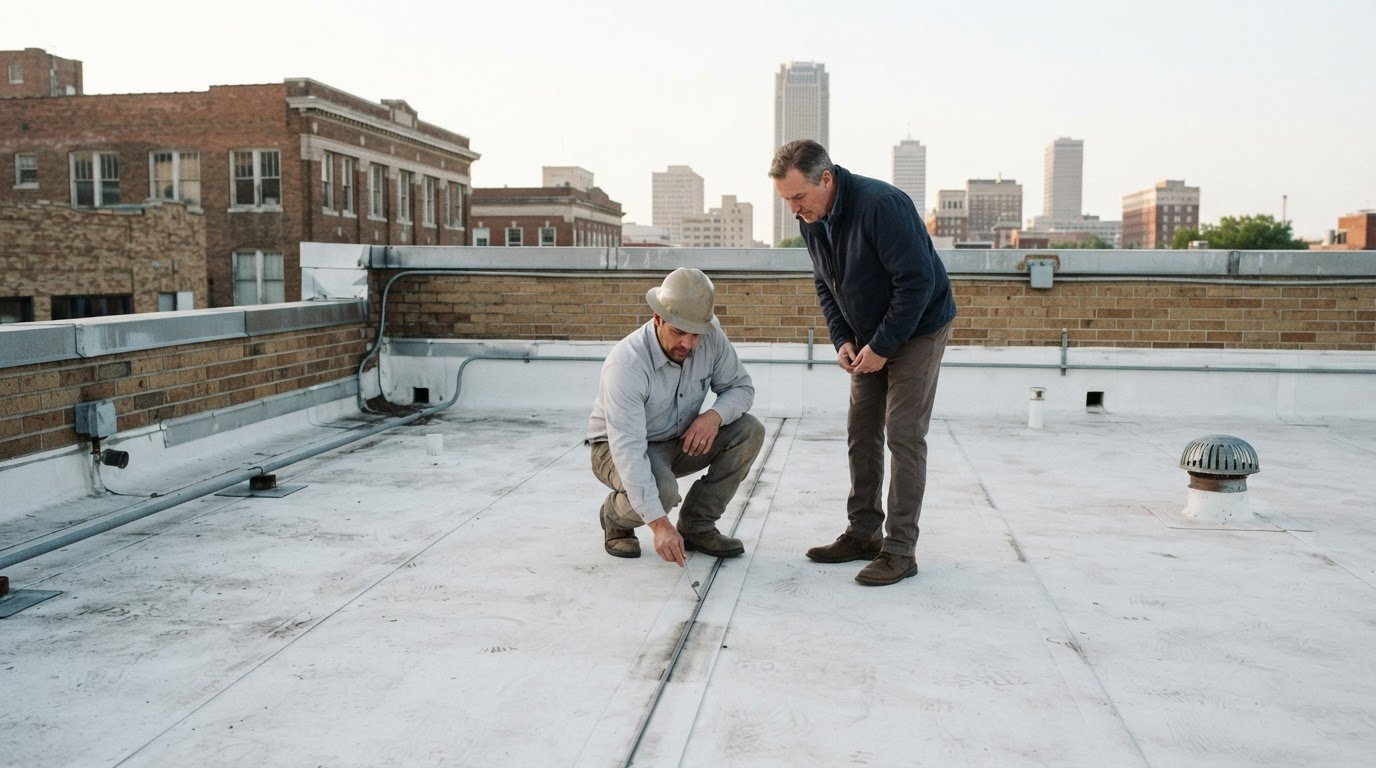
After Tulsa hail or high winds, a careful roof inspection can distinguish visible damage from ordinary wear. A licensed roofer should explain the inspection findings in plain language and document affected areas. For example, hail marks on shingles, lifted edges, or damaged flashing each need a clear description, not just a general statement that the roof is damaged.
Ask for photos that show both the roof area and close-up details. Take your own photos from the ground soon after a storm, using wide views and close-ups. Keep the original files with their EXIF timestamps, which record image details such as when each photo was taken. Don’t climb onto a wet or storm-damaged roof to take pictures.
A thorough inspection can record impact marks on a test square used by an insurance adjuster. It can also document soft-metal damage to vents, flashing, and gutters. These details help connect visible conditions to the storm. In the attic, daylight through roof decking, brown insulation stains, or wet rafters can point to a leak. Asphalt granules in downspouts can also indicate shingle wear.
Tulsa’s weather makes the material discussion part of the inspection. Class 4 impact-resistant shingles are one option to discuss for hail exposure. The right selection also depends on roof design, installation requirements, and the manufacturer’s instructions. Ask the roofer to explain how the proposed material addresses the specific damage or exposure found.
Clear communication matters after the inspection, too. A useful report identifies where damage appears, which photos support each finding, and what work the roofer recommends. Ask for updates if new conditions appear during work, such as damaged decking beneath the shingles. The explanation should describe the location, recommended response, and effect on the planned work.
For an insurance claim, keep the inspection report, dated photos, and insurer correspondence together. The insurer determines policy coverage; the roofer’s documentation records observed roof conditions. Keeping these roles clear helps organize the damage assessment and makes follow-up questions easier to address.
4. Choosing a local Tulsa roofing contractor
A local Tulsa roofer understands the area’s weather patterns and building conditions. That knowledge matters when homeowners assess storm damage, choose asphalt shingles, or plan residential roof work. Local presence can also make follow-up easier if a warranty repair is needed later. Out-of-state storm chasers may leave Oklahoma within 6 weeks, making future contact harder.
To verify credentials and reputation, confirm the license and insurance documents described earlier, then review examples of completed Tulsa projects. Look for work similar to yours, such as replacing asphalt shingles after hail or addressing damage near gutters. Ask how long the roofing company has served Tulsa and whether it can explain its written workmanship warranty. Quality Tulsa contractors usually offer workmanship warranties of at least 5 to 10 years.
Before hiring, ask who will supervise the job, what materials will be installed, and how weather delays will be communicated. Ask how the roofer documents unexpected damage and handles proposed changes. For storm damage, ask what documentation the roofer can provide for your insurance claim. Specific answers clarify the process and each party’s responsibilities.
A reputable contractor should explain the work without pressuring you to sign immediately. Be cautious if someone arrives unsolicited, claims to have found damage, and demands an immediate decision. Unusually low bids also deserve careful comparison: they may involve different materials, omitted work, or reduced protection. Compare the scope, warranty, and communication plan before deciding.
Local knowledge is useful beyond the roof surface. For example, a project may involve nearby gutters or require a clear explanation of how storm damage will be addressed. Choose the contractor who answers questions promptly and explains the next steps in writing. For help considering a Tulsa roofing project, discuss your roofing needs.
Rescue Roofing Tulsa
Rescue Roofing Tulsa can help turn your contractor checklist into a clear plan. After a storm, a Roof Inspection can document your roof’s condition and clarify possible next steps. For isolated damage, Roof Repair may address the affected area. If the roof needs broader work, Residential or Commercial Roof Replacement can be considered based on the building and its condition.
Share what you’ve noticed, such as missing shingles, a leak, or visible storm damage. Clear information about the building and the problem helps focus the discussion on the right roofing work. You can then review the recommended scope and decide how to proceed.
For help with a roofing concern, contact Rescue Roofing Tulsa.
Take the Next Step With Confidence
Choosing a roofer is also a decision about how you want the project to go: with clear information, careful planning, and good communication. If you’re still weighing how to choose a roofing contractor in Tulsa, look for a working relationship where you can understand the proposed plan and comfortably raise concerns before work begins.
Your next step can be simple. Gather any inspection notes, photos, or questions about your roof, then discuss the situation and possible way forward. A conversation can help you decide whether you need an inspection, repair, or a larger roofing project. There’s no need to make a rushed choice. Take the time to understand the work being considered and choose the path that fits your property.
Contact Rescue Roofing Tulsa to discuss your roofing needs. A clear next step can make the decision feel more manageable.
Frequently Asked Questions
How to Choose the Best Roofing Contractor in Tulsa?
Choose a Tulsa roofer whose qualifications, proposed work, and communication are clear. Oklahoma requires roofing contractors to be licensed and insured, so begin by reviewing those credentials. Then consider whether the estimate addresses your roof’s specific condition, such as storm damage around a chimney or a recurring leak. Choosing a roofing contractor in Tulsa also means looking for clear explanations, relevant project experience, and a practical plan for questions that arise.
Does a Roofing Contractor Need to be Licensed and Insured?
Yes. Roofing contractors in Oklahoma are required to be licensed and insured. Review the contractor’s license and current insurance documentation before work starts. Consider both liability and workers’ compensation coverage, since they address different risks. Keep copies with your contract and project records. For a storm-related insurance claim, organized documents can help keep contractor paperwork separate from insurer decisions.
How Long Has Your Contractor Been in the Residential Roofing Business?
Ask how long the contractor has worked on residential roofs, then request examples of completed projects similar to yours. Years in business provide context, but don’t show whether a roofer has handled your roof type or repair concern. For example, ask how the contractor approaches asphalt shingles, ventilation details, or water entry around roof penetrations. Specific answers help you assess relevant experience.
What Kind of Warranty Does Your Roofing Contractor Offer?
Rescue Roofing Tulsa provides a lifetime warranty on roofing services. Before signing any roofing agreement, read the warranty document and identify what work it covers, how to submit a claim, and whether any conditions apply. Keep the warranty with your final contract and project records. For a repair or replacement, ensure the written paperwork clearly describes the work so you can refer to the right project later.
What Licenses and Insurance Should a Roofing Contractor in Tulsa Have?
Oklahoma roofing contractors must be licensed and insured. Ask for the contractor’s Oklahoma roofing license information and current certificates showing liability and workers’ compensation coverage. Check that the names on the documents match the business named in your estimate and contract. Keep the records together to identify the company responsible for the project and retain its credentials with your roof paperwork.
How Many Roofing Estimates Should I Get in Tulsa, and What Should Each Include?
Get written estimates from at least three licensed Tulsa contractors. Each should describe the same project scope so you can compare bids fairly. Look for materials, labor, removal and disposal, cleanup, timeline, total cost, payment schedule, and warranty terms. For example, confirm whether each estimate includes replacing damaged decking found during tear-off or treats it as a separately approved change.