



Table of Contents
- What Energy Efficient Roof Ventilation Does
- How Roof Ventilation Works: Intake and Exhaust Airflow
- Attic Ventilation Systems: Types and Performance
- Ridge Vents vs. Roof Turbines: Which System Performs Better
- How Many Roof Vents Do I Need for Proper Coverage
- Energy Savings and Cooling Cost Reduction
- Signs of Poor Attic Ventilation and When to Upgrade
- Moisture Control, Roof Protection, and Lifespan Benefits
- Frequently Asked Questions
Last Updated: October 6, 2026
What Energy Efficient Roof Ventilation Does
Energy efficient roof ventilation circulates air through your attic to regulate temperature, remove excess moisture, and protect your roof structure.
Cool air enters through soffit intake vents, crosses the attic, and exits through ridge or gable exhaust vents, preventing summer heat buildup and removing moisture that causes mold, mildew, and wood rot.
Without adequate ventilation, your attic becomes a heat trap, reaching 150°F or higher on sunny days, accelerating roof deterioration, damaging insulation, and forcing your AC to work harder. Proper energy efficient roof ventilation keeps attic temperature and humidity consistent, reducing strain on cooling equipment.
How Roof Ventilation Works: Intake and Exhaust Airflow
Balanced airflow is the foundation of any effective system.
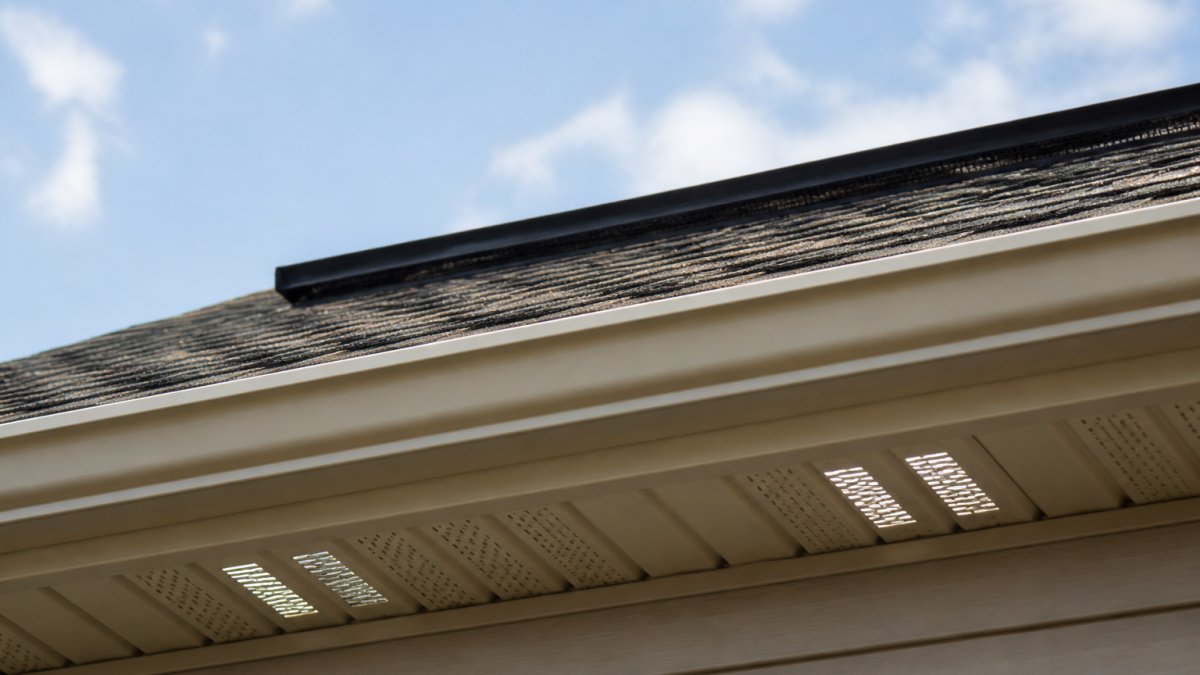
Airflow depends on temperature differences and wind pressure: hot days drive air upward and out, while wind pressure dominates on cooler or calm days. A properly designed system accounts for both.
Many homeowners overlook intake vents when upgrading attic ventilation. Even the most powerful exhaust stalls without adequate intake area.
Attic Ventilation Systems: Types and Performance
Different ventilation approaches suit different roof configurations and climates.
Ridge vents paired with soffit vents create the most balanced system: uninterrupted exhaust along the peak and distributed intake across the soffit line, minimizing dead zones.
Gable vents alone are insufficient for most homes. They create one-directional airflow and short-circuit ventilation without soffit vents, wind pushes air in one gable vent and out the other without ventilating the whole attic.
Ridge Vents vs. Roof Turbines: Which System Performs Better
Neither is universally better, the right choice depends on roof geometry, climate, and intake.
How each exhaust type actually moves air
- Ridge vents are passive, relying on stack effect and wind over the ridge to draw air out along the entire peak, distributing exhaust rather than concentrating it.
- Roof turbines (whirlybirds) are semi-active: wind spins the vanes, creating suction that scales with wind speed, strong on a breezy day, near zero on a still one.
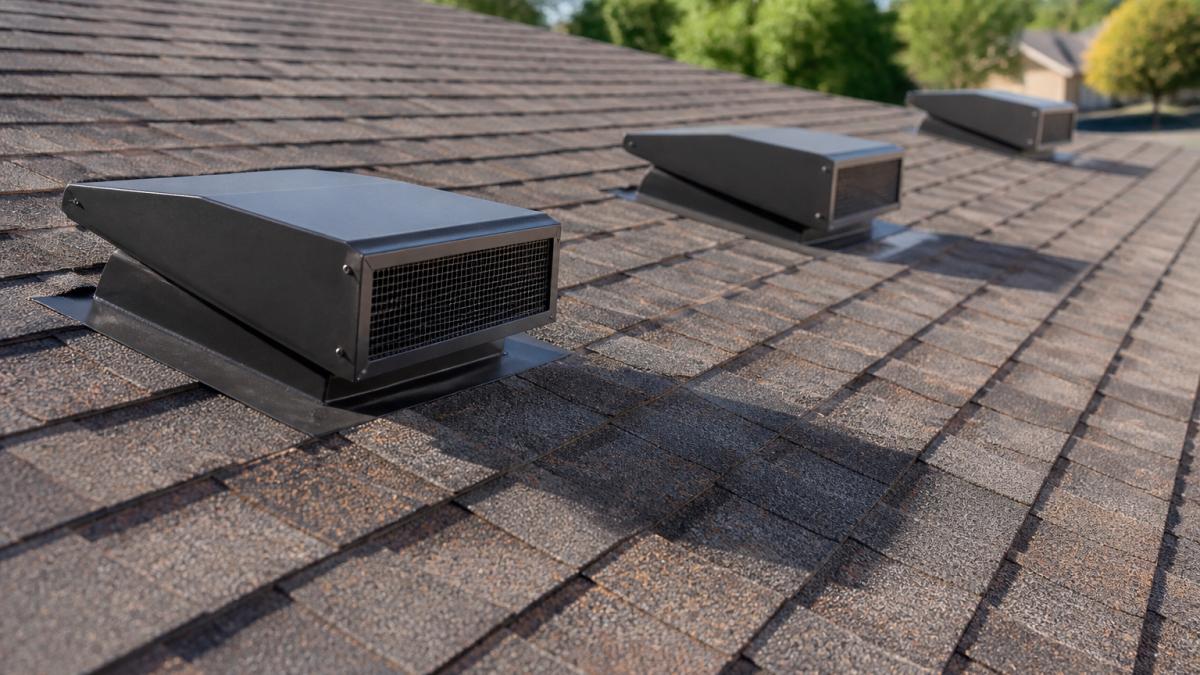
- Static box vents (pop vents) are cheap passive exhaust points near the upper roof, but concentrate exhaust in a small area and can short-circuit near intake.
- Powered attic ventilators (PAVs) move the most air per unit of vent area, but consume electricity, can be noisy, and can depressurize the attic and pull conditioned air out of the house if intake is inadequate.
- Gable vents are exhaust-only end-wall openings that work in cross-wind conditions but short-circuit easily and are a poor primary exhaust in most homes.
Side-by-side trade-offs
| Factor | Ridge vent | Roof turbine | Powered ventilator | Static box vent |
|---|---|---|---|---|
| Drive | Passive (stack + wind) | Wind-driven spin | Electric fan | Passive |
| Noise | None | Slight hum in high wind | Fan noise, varies by model | None |
| Operating cost | None | None | Electricity, ongoing | None |
| Maintenance | Essentially none | Bearing lubrication, seal checks | Motor and bearing service | None |
| Aesthetics | Low profile, hidden | Visible from ground | Visible, plus wiring | Visible |
| Best when | Full ridge available, balanced intake | Windy sites, supplemental exhaust | Large attic, inadequate passive exhaust | Budget retrofit |
| Worst when | No continuous ridge, blocked intake | Calm climate, still air | Intake is undersized | Attic is large or complex |
When ventilation can make things worse
- Unbalanced intake and exhaust. A strong exhaust without matching intake depressurizes the attic, pulling conditioned air out of living space and increasing energy use.
- Blocked or missing intake. Soffit vents clogged with insulation or never installed defeat any exhaust strategy. Verify intake before upgrading exhaust.
- Conditioned (sealed) attics. If your attic is inside the thermal envelope, ventilation is the wrong move, these assemblies are designed to be sealed, and ventilating them can introduce moisture problems.
- Cold, dry climates with high interior moisture. A leaky ceiling can pull warm humid air into a cold attic and worsen frost and condensation. Air sealing comes first.
- Powered ventilators in tight homes. In a well-sealed house, a PAV can create backdrafting risk on combustion appliances, a code and safety issue, not just efficiency.
Decision criteria
Work through these in order:
- Is the attic vented or sealed? If sealed, stop, ventilation is not the answer.
- Is there adequate intake? If not, fix intake before choosing exhaust.
- Is there a continuous ridge? If yes, a ridge vent paired with soffit intake is usually best.
- Is the site windy and the ridge unavailable? Turbines are a reasonable substitute.
- Is the attic large, complex, or hot despite passive ventilation? A powered ventilator may be justified, but only after intake is verified and backdrafting risk assessed.
- Is budget the constraint? Static box vents are cheapest but least effective; treat them as a minimum, not a target.
For most residential roofs with a continuous ridge and functioning soffit intake, a ridge vent paired with soffit vents outperforms turbines on reliability, maintenance, and aesthetics. Turbines earn their place as supplemental exhaust or where ridge installation is impractical.
U.S. building code requirements for attic ventilation sets the minimum net free vent area and intake-to-exhaust balance that any of these systems must satisfy.
How Many Roof Vents Do I Need for Proper Coverage
Ventilation sizing depends on attic square footage and system type.
Net free area is the actual air passage area after accounting for louvers, screens, and baffles, a 12-by-12-inch vent opening might have only 60 square inches. Always check manufacturer specs rather than visual size.
The number of vents depends on their size and design.
Undersizing is a common mistake: a couple of roof turbines may provide only 500-800 CFM when the home needs 2,000 CFM. Proper sizing prevents heat buildup, moisture accumulation, and premature roof failure.
Energy Savings and Cooling Cost Reduction
Ventilation changes attic conditions, but how much reaches your utility bill depends on where the attic boundary sits, how well the house is sealed, and your climate.
Attic temperature reduction is not the same as energy savings
A well-designed intake-to-exhaust system commonly drops peak attic air temperature by 20-30°F on a sunny afternoon versus a sealed, unventilated attic.
In a typical vented attic with a well-sealed ceiling and R-38 or better insulation, the ceiling blocks most attic heat, so ventilation savings are modest. With a leaky ceiling, recessed lights, unsealed top plates, attic ductwork, the attic communicates with the house far more directly, and ventilation plus air sealing produces a much larger effect.
Ventilation is a heat-removal tool, not a substitute for insulation or air sealing. The biggest cooling-cost reductions come from fixing the ceiling boundary first, then optimizing ventilation.
Realistic savings ranges by climate and home type
Exact savings depend on too many variables to promise a single number, but practitioners see these patterns:
- Hot-humid and hot-dry climates (much of the South and Southwest): Homes with leaky ceilings and attic ductwork often see cooling-season savings in the high single digits to low teens as a percentage of cooling energy after a balanced ventilation upgrade; whole-home savings are typically a few percent.
- Mixed climates: Savings are seasonal and modest, largest in July and August, almost none in shoulder months.
- Cold climates: Cooling savings are negligible; the value is moisture and ice-dam control, not energy.
- Homes with attic-mounted HVAC ducts: Largest potential gains, because duct losses scale with attic temperature.
- Homes with sealed, well-insulated ceilings and no attic ducts: Smallest gains. Ventilation still protects the roof, but don’t expect a dramatic bill change.
Where the savings actually come from
Three mechanisms drive most of the benefit:
- Reduced ceiling heat flux. A cooler attic means a smaller temperature difference across the insulation, reducing heat flow into the house.
- Reduced duct heat gain. If supply ducts run through the attic, cooler attic air means cooler air at the register and less compressor runtime.
- Reduced HVAC runtime and wear. Lower load means shorter, less frequent cycles, extending equipment life.
A transparent payback framework
Rather than quoting a single payback period, work through these steps:
- Measure your current cooling energy use from prior summer utility bills.
- Estimate the share attributable to attic heat gain, the hard part, and why a home energy audit is worth the cost before a ventilation project.
- Apply a conservative savings assumption (a few percent of cooling energy for most homes, more with attic ducts or a leaky ceiling).
- Compare that annual dollar figure to the installed cost of the upgrade.
- If payback exceeds the expected remaining roof life, treat the project as roof protection and moisture control rather than an energy investment.
Be skeptical of any claim that a ventilation upgrade will cut your total energy bill by a large double-digit percentage. That outcome is rare and usually reflects a project that also included air sealing, insulation, or duct work, not ventilation alone.
What to measure before and after
To verify your system is delivering, record attic air temperature at the ridge and near the soffit, attic relative humidity, and outdoor conditions at the same time of day across several days, before and after the upgrade. If attic temperature drops but your utility bill doesn’t, the ceiling boundary, not the ventilation, is the limiting factor.
Signs of Poor Attic Ventilation and When to Upgrade
Poor attic ventilation creates visible warning signs: moisture stains on rafters or insulation, black or green mold or mildew discoloration, peeling paint on exterior soffits, water stains on interior ceilings, and ice dams in winter.
High attic temperatures are another indicator: if your attic feels significantly hotter than outdoor air on a sunny day, ventilation may be insufficient. Many homeowners discover the problem only after higher-than-expected AC bills or premature roof aging.
Upgrade your ventilation if you’re experiencing any of these issues, planning a roof replacement, or adding attic insulation. Increasing insulation without upgrading ventilation worsens moisture problems by trapping warm, humid air.
Moisture Control, Roof Protection, and Lifespan Benefits
Moisture is the enemy of roof longevity: wood framing rots, metal fasteners rust, and shingles deteriorate faster under persistent humidity.
Condensation forms when warm, humid air contacts cold surfaces, common in poorly ventilated attics during winter.
Properly ventilated roofs protect the entire attic assembly, trusses, decking, and insulation. When you invest in energy efficient roof ventilation, you’re protecting the largest structural component of your home.
Upgrading ventilation costs far less than replacing rotted framing, mold remediation, or premature roof replacement.
Proper attic ventilation is one of the most cost-effective investments you can make in your home’s longevity and comfort.
| Ventilation Type | Best Climate | Maintenance | Cost | Lifespan |
|---|---|---|---|---|
| Ridge vents with soffit intake | All climates | Minimal | Moderate | 20+ years |
| Roof turbines | Calm climates | Regular lubrication | Low | 15-20 years |
| Gable vents only | Small attics only | Minimal | Low | 15+ years |
| Mixed systems | Variable | Moderate | Higher | 20+ years |
Frequently Asked Questions
What are the main benefits of energy efficient roof ventilation?
Energy efficient roof ventilation reduces attic heat buildup, which lowers cooling system workload and energy bills. It removes excess moisture and humidity, preventing mold, mildew, and wood rot that damage roof structure and shorten roof lifespan. Proper airflow also improves indoor comfort and air quality. The system works year-round: in summer it exhausts hot air, in winter it removes moisture that causes condensation and ice dams.
How many roof vents do I need for my attic?
Ventilation sizing follows building codes that typically require 1 square foot of net free area per 150 square feet of attic space (or 1 per 300 with balanced intake and exhaust). A 2,000 square-foot house generally needs 13-27 square feet of total vent opening, split between intake (soffit vents) and exhaust (ridge or gable vents). Your exact requirement depends on attic size, roof pitch, and local code. A professional inspection determines your specific needs.
What are the signs my attic has poor ventilation?
Poor attic ventilation shows as excessive heat in upper rooms during summer, moisture stains or dark spots on roof decking, visible mold or mildew on framing, sagging or warped roof sheathing, ice dams along the eaves in winter, and higher-than-normal cooling bills. You may also notice musty odors or see moisture condensation on nails and fasteners. These signs indicate inadequate airflow and moisture removal.
Do ridge vents work better than roof turbines?
Ridge vents are generally more effective than roof turbines. Ridge vents span the entire roof peak, providing continuous, balanced exhaust without moving parts. They work passively using natural convection and wind. Roof turbines (whirlybirds) rely on wind rotation and can fail in calm weather. Ridge vents also integrate seamlessly with soffit intake vents for balanced airflow. Turbines are noisier, require maintenance, and can allow rain or debris entry if damaged.