



What if the lowest bid for your building’s new roof actually ends up costing you double before the decade is out? In Tulsa, where scorching summer heat and intense hailstorms are the norm, choosing a material based solely on the initial cost of commercial roof replacement per square foot can be a risky gamble. You likely already know that a roof is your property’s first line of defense, but the fear of hidden tear-off costs or choosing a material that won’t survive the next Oklahoma spring can make budgeting feel like guesswork.
We’re here to replace that uncertainty with clear, honest information tailored to our local community. This guide provides a reliable breakdown of current market variables to help you secure long-term protection for your investment. You’ll learn which “cool roofing” systems offer the best ROI, such as how reflective surfaces can reduce peak cooling demand by up to 15%. We’ll also explore why 80-mil TPO membranes are becoming a local favorite for hail resistance in 2026 and how to find a partner who handles the insurance process for you. By the end, you’ll have the confidence to choose a solution that fits both your budget and our unique climate.
Key Takeaways
- Understand how 2026 market trends and local demand in Tulsa are currently shaping the cost of commercial roof replacement per square foot.
- Compare the upfront affordability of TPO and EPDM membranes against the long-term durability of metal roofing for Oklahoma’s climate.
- Learn how Tulsa’s specific wind load standards and hail frequency influence the ROI of high-performance, impact-rated materials.
- Identify potential hidden expenses like roof deck repairs and local code restrictions that can impact your total project budget.
- Discover how professional guidance through the insurance claim process can maximize your coverage and simplify the replacement journey.
Understanding Commercial Roof Replacement Costs in 2026
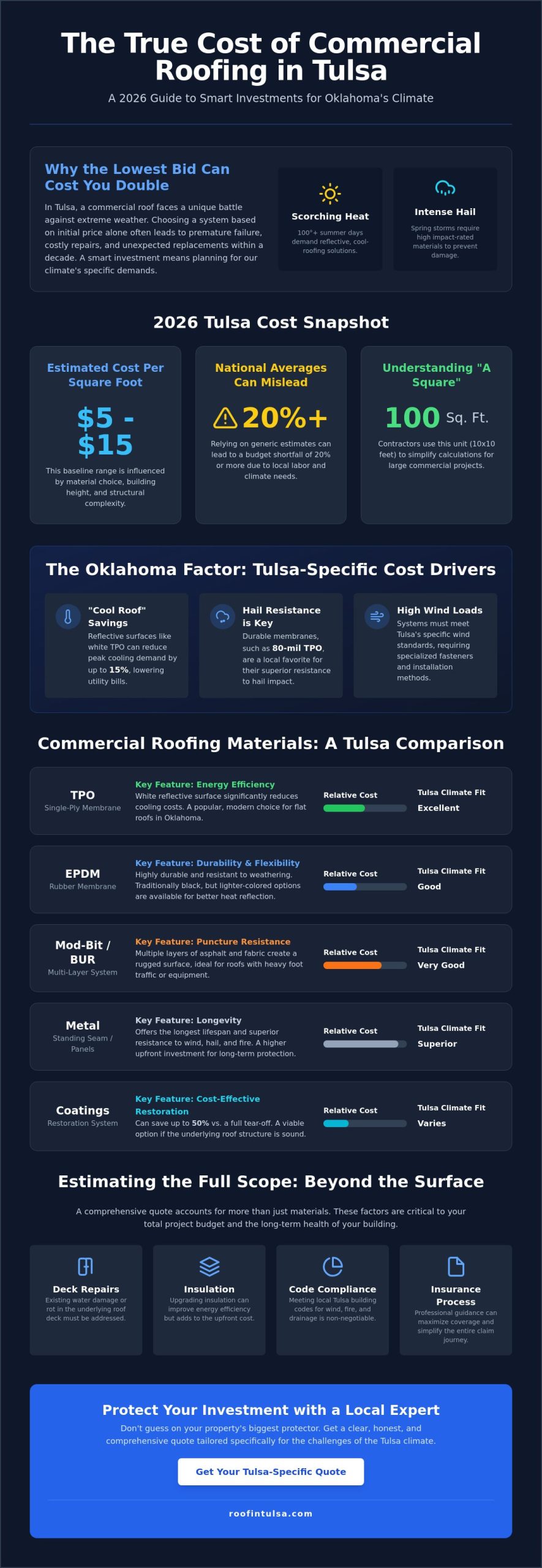
Planning for a major property investment requires clarity and precision. The cost of commercial roof replacement per square foot represents the total investment of your project divided by the actual surface area. In 2026, the market in Tulsa is influenced by a unique combination of material price shifts and high local demand for storm-hardened systems. While residential projects often focus on curb appeal, commercial roofing involves complex logistics, heavy machinery, and specialized safety protocols. You can generally expect a baseline range between $5 and $15 per square foot, though factors like building height and structural complexity will influence your final quote.
The 2026 landscape shows that supply chains have found a new rhythm. Prices for specialized components like high-density insulation and wind-rated fasteners remain sensitive, but availability is stable. Commercial projects require a different level of expertise than a standard home. Several factors drive this cost difference:
- Scale and Equipment: We often use cranes for material staging and advanced heat-welding tools for seams.
- Safety Standards: Rigorous OSHA requirements and specialized fall-protection systems are mandatory on commercial sites.
- Material Specialization: Commercial systems must withstand chemical exposure, ponding water, and extreme thermal expansion.
Beyond the roofing materials themselves, managing a commercial job site involves coordinating essential services for your crews. To help budget for these logistical requirements on Oklahoma-based job sites, you can explore Weekly and Per-Event Equipment Rental Fees for portable restrooms to ensure your project remains compliant and efficient.
The Difference Between a Square and a Square Foot
A ‘square’ is a term you’ll hear throughout your consultation. It simply refers to 100 square feet of roofing area. Contractors use this unit because it simplifies large-scale calculations for massive commercial footprints. For example, a 10,000-square-foot office building is calculated as 100 squares. This standard helps us ensure accuracy when ordering commercially available roofing materials and scheduling our crews. Understanding this terminology helps you read your estimate with confidence and compare options clearly.
Why National Averages Often Fail Tulsa Business Owners
National averages are a helpful starting point, but they rarely tell the whole story for an Oklahoma business owner. Local labor rates and the logistics of transporting materials to the Tulsa metro area create specific price points that national data misses. Our regional climate also demands more from a roofing system. A roof designed for a mild climate won’t survive a Green Country hailstorm or high-velocity winds. Relying on a generic internet estimate can lead to a budget shortfall of 20% or more. A local site visit is the only way to account for your building’s specific orientation, drainage needs, and structural integrity.
Commercial Roofing Material Breakdown: Price vs. Performance
Choosing the right material is a delicate balance between your immediate budget and the future protection of your building. While the initial cost of commercial roof replacement per square foot is a primary concern, the total cost of ownership over two decades often reveals the true value of an investment. In Tulsa, your material choice must withstand 100-degree summer days and the sudden, violent impact of spring hailstorms. Selecting a system that isn’t rated for our local climate can lead to premature failure and unexpected repair bills.
Single-ply membranes like TPO and EPDM are the most frequent choices for flat commercial structures in Oklahoma. TPO is especially popular because its white, reflective surface helps manage internal temperatures. For business owners prioritizing Energy-Efficient Cool Roof Products, these membranes offer a clear path to reducing monthly utility overhead. If your roof is structurally sound but nearing the end of its life, a liquid-applied roof coating might be an option. These restorations can sometimes save you up to 50% compared to a full tear-off and replacement. It’s always a good idea to schedule a professional inspection to see if your current system is a candidate for restoration.
For buildings with heavy rooftop traffic or complex mechanical units, multi-layer systems like Modified Bitumen or Built-Up Roofing (BUR) provide extra layers of asphalt and fabric. These “sandwich” designs offer superior puncture resistance and durability. While they are more labor-intensive to install than single-ply membranes, their rugged nature is ideal for industrial environments where maintenance crews frequently access the roof surface.
TPO and EPDM: The Efficiency Leaders
Most commercial property owners choose between 45-mil and 60-mil thicknesses for their membranes. However, as of 2026, we’ve seen a significant shift toward 80-mil TPO in the Tulsa area. This thicker material provides enhanced protection against large hail and extended warranty terms. You can typically expect a lifespan of 15 to 25 years from these systems. Regular maintenance is the key to ensuring they reach their full potential without developing leaks at the seams or flashings.
Metal and Asphalt Shingles for Commercial Use
Asphalt shingles are a practical, cost-effective choice for multi-family housing or retail centers with sloped roofs. If you’re looking for a “forever roof,” standing seam metal systems are unmatched. A properly installed metal roof can last 50 to 60 years with very little maintenance. When you compare the per-square-foot cost over a 30-year period, metal often proves more affordable than membranes that may require a full replacement twice in that same window.
The Oklahoma Factor: Tulsa-Specific Cost Drivers
Tulsa business owners know that our weather is anything but predictable. Being situated in the heart of the plains means your roof must do more than just shed water. It has to stay attached during high-velocity wind events and withstand the punishing force of seasonal hail. These regional requirements are why national price estimates usually fall short of reality. When calculating the cost of commercial roof replacement per square foot, we must account for specific structural reinforcements mandated by local conditions. These aren’t just extra expenses; they’re essential investments in the safety of your staff and the longevity of your property.
We strictly follow the International Building Code (IBC) standards enforced by the City of Tulsa. These codes dictate specific insulation R-values, drainage slopes, and fire ratings that directly influence your final budget. Timing also plays a significant role in your project’s bottom line. If you schedule your replacement during the peak spring storm season, you’ll likely face higher labor costs due to extreme local demand. Planning your project for the late fall or early winter can often lead to a more predictable timeline and better crew availability. Our team helps you navigate these variables to find the most logical window for your installation.
High-Wind Fastening and Perimeter Security
Oklahoma roofs require a higher density of fasteners per square compared to states in more sheltered regions. This increased fastener count prevents the membrane from billowing or tearing away during a severe wind event. We also focus heavily on enhanced edge metal and heavy-duty flashing, which act as the primary anchors for your entire system. Wind uplift rating refers to the roof’s ability to resist the suction force created by high winds passing over the building surface. By prioritizing these structural details, you ensure your roof stays put when the sirens go off.
Impact Resistance and Your Bottom Line
Investing in Class 4 impact-rated materials is one of the smartest financial moves a Tulsa building owner can make. While these high-performance materials might slightly increase the initial cost of commercial roof replacement per square foot, the long-term ROI is undeniable. Many local insurance providers offer significant premium discounts for properties with certified impact-resistant roofs. You’ll also save on your bottom line by avoiding high deductibles and the administrative headache of filing claims after every minor hail event. We can help you identify which materials qualify for these local incentives and insurance breaks.
Estimating the Full Scope: Beyond the Surface Material
Estimating the true cost of commercial roof replacement per square foot requires looking deep into the layers of your current system. It’s easy to focus on the visible membrane or metal panels, but the components you don’t see often dictate the project’s long-term success. In Tulsa, we deal with specific logistical hurdles and building codes that can shift a budget once the work begins. Whether your property sits in a dense downtown lot with limited staging space or an expansive industrial park, understanding these variables helps prevent financial surprises. Our goal is to provide a clear picture of what lies beneath the surface so you can budget with total confidence.
Many of our clients are facing these decisions after a significant Oklahoma storm. Because wind and hail damage are so common in our region, we specialize in insurance claim assistance to ensure your policy covers the full scope of necessary repairs. This includes mandatory code upgrades and the replacement of damaged decking that only becomes visible after the old materials are removed. We act as your advocate, working directly with adjusters to make sure no hidden damage is overlooked during the inspection process.
The Tear-Off Process and Disposal Fees
While an “overlay” (installing a new roof over an old one) might seem like a way to save money, Tulsa building codes typically follow the International Building Code (IBC) which limits a structure to two roofing layers. If your building already has two layers, a full tear-off is mandatory. This process is labor-intensive and involves environmental disposal fees for commercial materials at local Oklahoma facilities. Removing the old system is usually the best path forward; it provides a clean deck for the new installation and is almost always required to secure a valid manufacturer warranty. A clean start ensures that fasteners pull tight and adhesives bond perfectly to the substrate.
Insulation and Energy Code Compliance
Modern commercial buildings in Tulsa must meet specific R-value requirements for thermal resistance. This often means installing thick polyisocyanurate (polyiso) insulation boards during the replacement process. While these materials add to the initial quote, they drastically reduce your “total cost of ownership” by lowering monthly HVAC expenses. Proper insulation keeps your building’s interior stable during our 100-degree July afternoons and sub-zero winter nights. Investing in high-quality insulation today prevents your heating and cooling systems from overworking, which extends the life of your mechanical equipment.
Finally, we must consider the “topography” of your roof. Every HVAC unit, skylight, and vent pipe requires specialized flashing and detailing. Buildings with numerous rooftop obstructions require more detail work, which impacts the labor portion of your estimate. We also evaluate site access; a tight downtown Tulsa location may require specialized permits or crane services that wouldn’t be necessary for an open-access warehouse. We account for all these logistical details upfront to ensure our professional quote is as accurate as possible.
Maximizing Your Investment with Rescue Roofing Tulsa
How do you ensure your commercial property remains a safe, productive space for years to come? While the initial cost of commercial roof replacement per square foot is a vital part of your budget, the true value lies in the partnership you choose. At Rescue Roofing Tulsa, we understand that a roof isn’t just a building component. It’s the shield that protects your inventory, your equipment, and your people. Our team brings deep local expertise to every project, ensuring your new system is engineered specifically for the extreme thermal expansion and high-velocity winds common in Green Country. We don’t just install materials; we build long-term reliability.
Why Local Expertise Matters for Commercial Projects
Our roots in the Tulsa community run deep. We aren’t a national chain; we’re your neighbors who understand the specific environmental challenges of the plains. This local focus means we’re here long after the installation is complete. Our 24/7 emergency repair team is always ready to protect your investment following severe weather events, providing a sense of calm confidence when you need it most. For a deeper look at how we approach these projects, you can explore our Commercial Roofing in Tulsa guide.
Navigating Insurance and Financing
One of the most stressful parts of a roof replacement is the administrative burden. We specialize in documenting storm damage with precision to ensure your insurance assessment is fair and comprehensive. We act as your guide through the entire claim process, removing the bureaucratic headache from your plate. Beyond insurance, we can help you understand local financial incentives. For example, under Section 179 of the tax code, some business owners may be able to deduct the full cost of a commercial roof replacement in the year of installation. We also stay informed about PACE (Property Assessed Clean Energy) financing options for high-efficiency upgrades.
Ready for an accurate estimate from a team that knows Tulsa? Get your free commercial roofing quote today!
Secure Your Property’s Future with Confidence
Budgeting for a major capital improvement doesn’t have to be a source of stress. You now have a clearer understanding of how material selection, energy code compliance, and local weather patterns influence your total investment. We’ve explored how the cost of commercial roof replacement per square foot is shaped by Tulsa’s specific wind-load requirements and the long-term ROI of impact-resistant materials. Choosing a system that balances upfront value with Oklahoma-specific durability is the most effective way to protect your bottom line and your peace of mind.
As an A+ Rated Local Tulsa Contractor, Rescue Roofing Tulsa is committed to being your trusted advisor. We provide specialized insurance claim assistance and employ certified installers of hail-resistant systems to ensure your building is ready for whatever the next season brings. Our transparent process removes the administrative burden so you can focus on running your business. When you’re ready for a reliable budget estimate and professional guidance from a neighbor who understands our climate, we’re here to help.
Request Your Free Commercial Roof Inspection and Quote
Investing in your roof is an investment in your property’s long-term safety. We look forward to helping you build a stronger, more resilient future for your Tulsa business.
Frequently Asked Questions
What is the average cost to replace a 20,000 sq. ft. commercial roof in Tulsa?
The total investment for a 20,000 sq. ft. roof is determined by your choice of material and the complexity of the structure. Most commercial projects in our region fall within a baseline range of $5 to $15 per square foot. A simple TPO installation on an open warehouse will sit on the lower end of that range. Conversely, a complex metal system or a multi-layer built-up roof will require a higher initial investment.
Can I install a new commercial roof over my old one to save money?
You can only install a roof overlay if your building currently has only one layer of roofing material. Tulsa building codes follow International Building Code standards, which strictly prohibit more than two roofing layers on a single structure. If your property already has two layers, a full tear-off is mandatory. Removing the old system is often the best choice anyway; it allows us to inspect the decking for hidden damage.
How long does a commercial roof replacement typically take for a Tulsa business?
Most commercial roof replacements are completed within one to three weeks. The exact timeline depends on the size of your building, the weather conditions, and the number of rooftop obstructions like HVAC units or skylights. We understand that your business needs to remain operational. Our crews work methodically to minimize noise and staging disruptions so you can focus on your daily work while we secure your property.
Does insurance cover the cost of commercial roof replacement after a hail storm?
Yes, most commercial insurance policies cover the replacement of a roof if it was damaged by a sudden peril like wind or hail. The cost of commercial roof replacement per square foot may be largely offset by your policy after you meet your deductible. We provide specialized insurance claim assistance to ensure all storm damage is documented correctly. This helps you receive the full coverage you’re entitled to under your policy.
What is the best commercial roofing material for Oklahoma’s extreme heat and wind?
TPO and standing seam metal are the top performers for our unique climate. TPO is highly reflective and can bounce back up to 80% of solar radiation, which significantly lowers your cooling costs during 100-degree summer days. Standing seam metal offers unmatched wind resistance and longevity, often lasting over 50 years. Both systems can be installed with Class 4 impact-rated materials to provide the best possible protection against seasonal hailstorms.
How much does the thickness of a TPO membrane affect the price per square foot?
Choosing a thicker membrane, such as 80-mil TPO instead of the standard 45-mil, will increase your material costs but provides a much better return on investment. Thicker membranes offer superior resistance to hail punctures and extreme weather wear. While this choice increases the initial cost of commercial roof replacement per square foot, it often includes longer manufacturer warranties. It’s a smart way to ensure your building stays protected for two decades or more.
Are there tax incentives for installing an energy-efficient commercial roof in 2026?
Yes, business owners can often take advantage of Section 179 of the tax code to deduct the full cost of a roof replacement in the year of installation. You might also be eligible for PACE financing or local utility rebates if you choose an energy-efficient “cool roof” system. These incentives are designed to make high-performance upgrades more affordable. We recommend consulting with your tax professional to see how these federal and local programs apply to your specific property.
Why is commercial roofing more expensive than residential roofing?
Commercial roofing requires specialized materials, heavy equipment, and more rigorous safety protocols than a standard residential job. Flat commercial roofs must be engineered to handle ponding water and chemical exposure, which shingles aren’t designed to do. We also utilize specialized tools like heat-welders and cranes for material staging. The complexity of working around large-scale HVAC systems and adhering to strict OSHA safety standards also contributes to the difference in price points.