


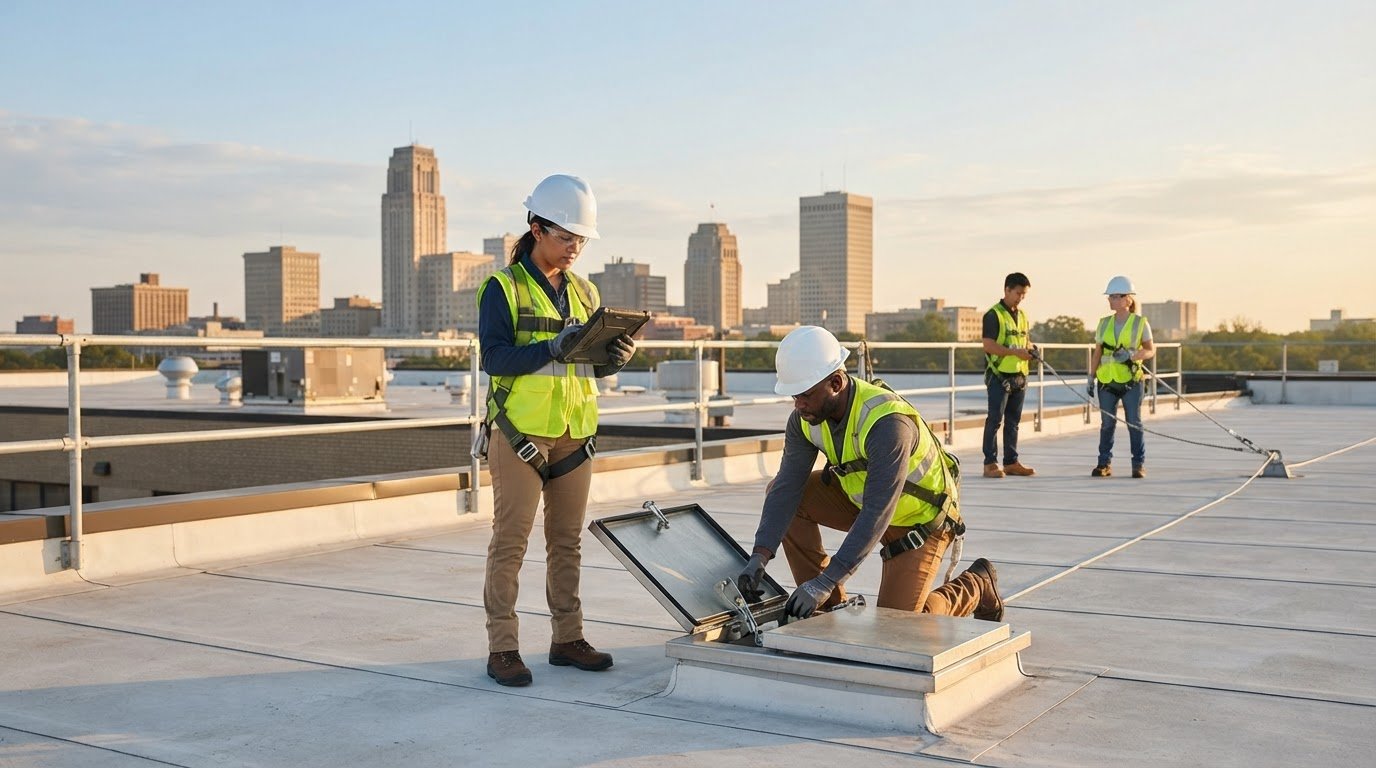

Commercial roof safety requirements depend on the work being done, the roof’s layout, and the hazards workers may encounter. A generic checklist can miss important risks, because OSHA’s fall-protection rules differ for construction work and routine maintenance or inspections.
Before a crew steps onto your building, identify the hazards, determine which controls fit the work, and coordinate roof access with everyone involved. For example, OSHA generally sets a 6-foot fall-protection threshold for covered construction work and a 4-foot threshold for general-industry work. Which standard applies depends on the activity.
This practical 2026 guide covers key requirements, common rooftop hazards, and steps for building a site-specific plan. Use it to organize hazard checks, access arrangements, worker briefings, and project coordination. A professional roof inspection can also help identify visible conditions before planned repairs or replacement begin.
Key Takeaways
- Start by identifying the work, roof conditions, access points, and people involved. These details shape a site-specific safety plan.
- Commercial roof safety requirements vary by task. Determine which OSHA rules apply before selecting fall-protection controls.
- Compare guardrails, personal fall-arrest systems, travel restraint, and warning lines against the roof’s specific risks and applicable requirements.
- Use a repeatable pre-work sequence: assess hazards, control access, brief workers, check conditions, monitor the work, and close out the area.
- A commercial roof inspection can help identify visible conditions before planned repairs or replacement work begins.
Commercial Roof Safety Requirements: Start With the Hazards and Responsibilities
Commercial roof safety requirements combine applicable workplace rules, hazard controls, worker training, and emergency planning. The right approach depends on the task, the roof’s design and condition, how workers access it, and each person’s role. A routine inspection, for example, may involve different tasks and exposures from a repair or replacement project.
A site-specific safety plan connects the hazards, controls, access arrangements, and emergency steps to the actual roof and work. A generic checklist cannot do that on its own. Hazards may be hidden or vary across one roof. A professional roof inspection can help identify visible conditions before planned work, but the work team still needs to assess hazards and select controls for its specific tasks.
Which hazards should a commercial roof assessment identify?
Start by identifying places where workers could fall or encounter an unstable surface. Check roof edges, openings, skylights, fragile areas, and changes in elevation. Map ladders, roof hatches, and access routes. Then note equipment placement, trip hazards, and areas where tools or materials could fall onto people below. This overview of roof edge protection explains common approaches, but the suitable controls depend on the roof and applicable rules.
Conditions can change during the workday. For Tulsa-area sites, include heat, wind, storms, and lightning in the site-specific review. Consider how weather could affect access, footing, visibility, materials, and whether work should pause. Include building occupants and anyone who may pass near the work area in the planning.
Who is responsible for planning safe roof work?
Employers and contractors have responsibilities under the workplace safety rules that apply to their work. They need to plan for hazards, communicate controls, and ensure workers understand the procedures relevant to their tasks. Requirements depend on the nature of the work and workplace, so verify current OSHA rules for the job rather than relying on a general summary.
Property representatives can support coordination without taking the place of the employer’s safety planning. Share relevant site information, arrange access, coordinate schedules, and help manage effects on occupants and nearby activity. For repair or replacement work, clarify access arrangements and work areas before the crew arrives.
Before work begins, make sure the plan identifies hazards, who controls each part of the work, how access will be managed, and what happens if conditions change. Clear responsibilities help everyone understand the plan before the crew reaches the roof.
OSHA Commercial Roof Safety Rules: Match Requirements to the Work
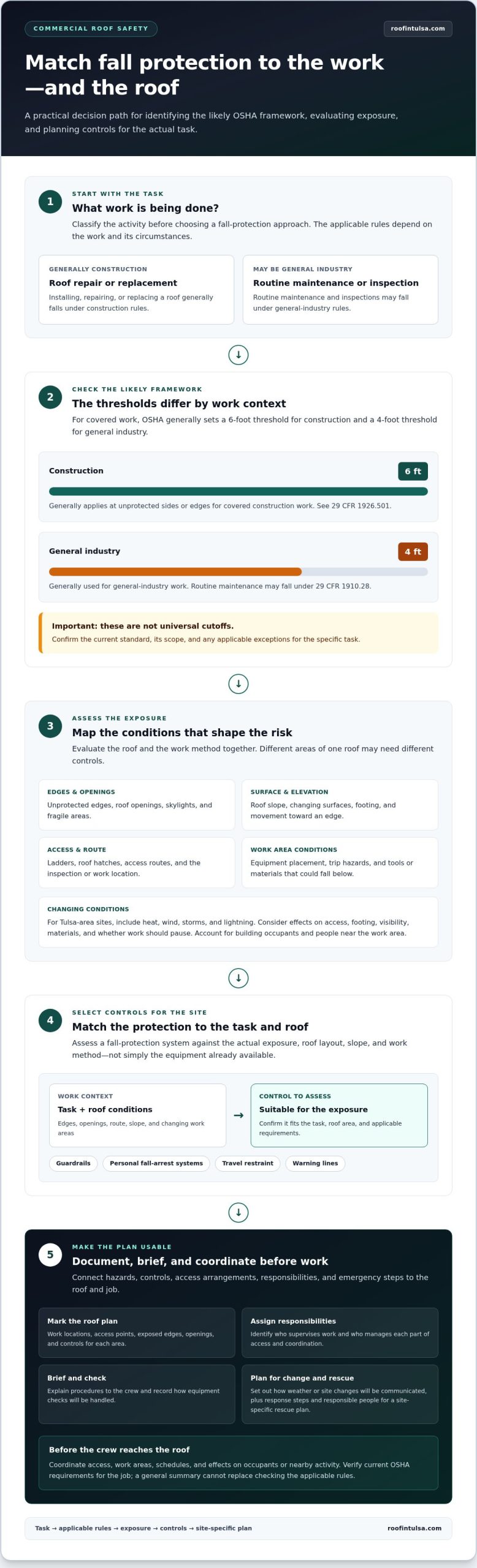
OSHA requirements depend in part on whether the job is construction or general-industry work. Installing, repairing, or replacing a roof generally falls under construction rules, while routine maintenance and inspections may fall under general-industry rules. The distinction matters: OSHA’s construction fall-protection provisions generally set a 6-foot threshold for covered work at unprotected sides or edges, while general-industry rules generally use a 4-foot threshold. These are not universal cutoffs for every task or circumstance. Check the current standards, their scope, and any applicable exceptions before work begins.
When do fall-protection rules apply to commercial roof work?
Start with the task, then consider roof slope, edge exposure, openings, work location, and work method. A repair crew working near an edge may face different exposures from an inspector following a designated route. OSHA’s fall protection standard, 29 CFR 1926.501, addresses construction work. Routine maintenance may instead fall under 29 CFR 1910.28. The right standard and control depend on the actual work, so don’t assume one height or system applies to every roof activity.
| Work context | Likely hazard | Control to assess | Verify |
|---|---|---|---|
| Roof repair or replacement | Unprotected edges, openings, changing work areas | Fall-protection system suited to the task and roof | Applicable construction provisions and exceptions |
| Routine inspection or maintenance | Edge exposure along access or inspection routes | Controls matched to the route and task | Whether general-industry requirements apply |
| Work on sloped or changing surfaces | Loss of footing or movement toward an edge | Controls suited to slope, exposure, and work method | Standard scope and site conditions |
What does a site-specific safety plan need to address?
Make the plan practical enough to guide the work. Mark work locations, roof access points, exposed edges, openings, and the controls selected for each area. Record who supervises the work, how workers will be briefed, how equipment checks will be handled, and how weather or site changes will be communicated. A control that works in one roof area may not suit another.
Include a rescue plan that fits the task and can be carried out at that site. Identify response steps and responsible people, then review the plan with the crew before work starts. For planned commercial repairs or replacement, a commercial roof inspection can help identify visible roof conditions to consider during work planning.
Fall Protection Options for Commercial Roofs: Compare Controls by Risk
Choose fall-protection methods based on the exposure, not just the equipment already on hand. A roof with a clear perimeter, skylights, fragile sections, and rooftop units presents different challenges from an open, unobstructed surface. Roof slope, the task, worker movement, and applicable OSHA provisions all affect which controls are suitable. Assess the exposure, feasibility, and applicable requirements before selecting controls.
How do guardrails, restraint, and fall arrest differ?
Each option works differently, and none is automatically right for every job:
- Guardrails provide passive edge protection when properly suited to the roof and work area. Workers don’t need to connect to a system as they move within the protected area.
- Travel restraint uses a configured system to limit a worker’s movement so they can’t reach a fall hazard. Its effectiveness depends on the system’s design and the worker’s route.
- Personal fall arrest is intended to stop a fall. It relies on compatible equipment and a suitable setup, and the work plan must address how a worker would be rescued after a fall.
- Warning lines mark a boundary and may be permitted only in specific situations. Under the construction rules described by OSHA, a warning line combined with a safety monitor is an option on low-slope roofs, meaning a slope of 4:12 or less. It must be set at least 6 feet from the edge. Warning lines aren’t permitted for steep-slope roofs under those rules.
These descriptions don’t replace checking the standard that applies to the task. A parapet may appear protective, but don’t assume it qualifies as a guardrail without assessing whether it meets applicable requirements. Rooftop equipment can narrow walkways or change where workers need to move, which may affect the control selected.
How should teams address skylights and fragile roof surfaces?
Treat skylights and suspected fragile surfaces as hazards until their capacity is established. An intact-looking skylight isn’t necessarily safe to step on. Mark these areas clearly and plan routes that keep workers away from them where possible. Depending on the site and applicable requirements, controls may include covers, guarding, barriers, access restrictions, or warning methods used as part of a broader protection plan.
Check whether equipment, materials, or work activities could direct workers toward a skylight or fragile section. A control that protects an edge won’t necessarily protect someone from falling through a roof opening. Include each hazard in the assessment and review the selected measures with workers before the task starts. This roof-specific approach turns commercial roof safety requirements into controls people can follow.
A Pre-Work Commercial Roof Safety Checklist for Tulsa Sites
A repeatable workflow turns commercial roof safety requirements into coordinated actions. Before work begins, move through six steps: assess the site, plan the controls, manage access, brief the crew, monitor the work, and close out the area. Keep a written record so workers and property representatives can follow the same plan.
What should happen before workers access the roof?
- Assess: Review the planned work area, roof access points, walking routes, edges, openings, and visible roof conditions. Note areas that need restricted access or additional controls.
- Plan: Identify the selected controls, responsible supervisors, communication method, and emergency actions. Check forecasts and conditions for heat, wind, lightning, and rapidly changing storms. Set clear triggers for pausing work based on the site and task.
- Control access: Coordinate roof hatches or ladders, occupant activity, deliveries, rooftop equipment, and restricted areas. Plan ground-level protection where workers, tools, or materials could affect people below.
- Brief: Before anyone goes up, review hazards, routes, controls, weather triggers, communication, and emergency actions with the workers involved. Make sure everyone knows how to report a changed condition.
Property coordination matters, too. Let affected occupants know about planned access and work areas, and coordinate schedules so rooftop tasks don’t conflict with deliveries or other activity. For broader project considerations, see this commercial roofing guide for Tulsa business owners.
How should teams respond when roof conditions change?
A pre-work review is useful only if the plan can adapt. Reassess after weather shifts, equipment moves, new damage or openings become visible, or the work scope changes. Wind, heat, lightning, and storms can affect footing, materials, visibility, and safe access. Don’t treat the morning briefing as a substitute for checking conditions as work progresses.
Pause or adjust the work if the controls no longer address the hazard, access becomes unsafe, or workers encounter an unplanned condition. The responsible supervisor should review what changed, revise the controls as needed, and communicate the updated plan to affected workers before work resumes. Record the change and briefing so the revised plan is clear to the crew.
Early coordination around visible roof conditions and work areas can help organize planned commercial repairs or replacement. Plan your commercial roof work with Rescue Roofing Tulsa.
Plan Commercial Roof Work With a Tulsa Roofing Professional
A clear project plan starts with four steps: identify the work, assess roof and access hazards, document controls, and coordinate site access. This helps property teams and roofing crews share relevant information before repairs or replacement begin. It also keeps commercial roof safety requirements tied to the actual roof and work, rather than assumptions.
When can a roofing inspection support safer project planning?
A commercial roof inspection can help identify visible conditions that may affect planned work, such as damaged areas, openings, or access concerns. Those findings can inform project coordination and help the crew understand the roof’s condition. An inspection is not a substitute for the employer’s task-specific safety assessment or a determination that the work complies with workplace rules. If repairs are part of the project, see the commercial roof repair services guide.
How can property teams prepare for a commercial roofing project?
Before mobilization, gather details that help the roofing team plan around the building and its occupants. Share known problem areas, roof access points, rooftop equipment locations, restricted areas, and occupancy or scheduling constraints. Then coordinate the work area, deliveries, communication, and safety responsibilities with the people involved. Rescue Roofing Tulsa provides commercial roof repairs and replacements with project-specific coordination. The commercial roofing solutions guide for Tulsa offers additional project-planning context.
- Identify: Define the repair or replacement work and the areas it will affect.
- Assess: Review visible roof conditions, access routes, and hazards relevant to the project.
- Document: Record selected controls, responsibilities, and communication steps in the site plan.
- Coordinate: Align access, scheduling, occupant communication, and work-area arrangements before work begins.
Good coordination makes it easier to address questions before crews arrive and adjust plans if site conditions change. For commercial roofing work in Tulsa, talk with Rescue Roofing Tulsa about your commercial roof.
Make Your Next Commercial Roof Project Safer
Safer roof work begins before anyone climbs a ladder. Identify the task and site hazards, determine which OSHA requirements apply, and document controls that fit the roof, access points, and work method. Keep the plan active: changes in weather, roof conditions, or project scope may call for a pause and a fresh review.
Clear coordination helps property teams and roofing crews understand access, schedules, responsibilities, and site conditions. A commercial roof inspection can also help identify visible concerns before planned repairs or replacement. These steps make commercial roof safety requirements a practical process tailored to the work, rather than a checklist on paper.
Rescue Roofing Tulsa provides commercial roofing services in Tulsa and surrounding areas, including roof inspections, repairs, and replacements. For help planning your commercial roofing project, talk with Rescue Roofing Tulsa about your commercial roof.
Frequently Asked Questions
What are commercial roof safety requirements?
Commercial roof safety requirements are workplace rules and practical controls used to protect workers from hazards such as falls, openings, fragile surfaces, and unsafe access. The right measures depend on the task, roof conditions, and applicable standards. Before work begins, assess the site, select controls that address identified hazards, clarify responsibilities, and plan for emergencies. A written, site-specific plan helps the crew understand how those measures apply to the roof and work at hand.
Does OSHA require fall protection on every commercial roof?
Fall-protection requirements depend on the work, worker exposure, roof conditions, and applicable OSHA standard. Construction and general-industry activities may be covered by different provisions, so one height threshold or control shouldn’t be treated as universal. Roof repair and routine inspection, for example, may fall under different rules. Review the current standard’s scope and exceptions for the specific task, then document how the selected protection addresses the actual hazards.
Are skylights considered fall hazards on commercial roofs?
Yes, skylights can be fall hazards, even if they look intact or blend into the roof surface. Don’t assume one can support a person. Identify skylights and other openings during the site assessment, and plan controls that fit the location and work. Depending on applicable requirements and site conditions, options may include covers, guardrails, barriers, or restricted access. Tell workers where these hazards are and explain the protections before roof access.
What fall-protection systems can be used on a commercial roof?
Depending on the task and applicable rules, fall-protection options may include guardrails, travel restraint, personal fall-arrest equipment, or other permitted controls. Suitability depends on roof layout, edges and openings, worker movement, and the work being performed. A task-specific assessment should also address equipment compatibility, inspection, worker understanding, and rescue planning where relevant. No single system fits every roof, so select controls based on the exposure and verify they meet applicable requirements.
Who is responsible for commercial roof safety during a roofing project?
Employers and contractors have workplace safety responsibilities under the rules that apply to their work. Property owners and facility managers can support coordination by sharing site information, arranging access, communicating known hazards, and planning around occupants. Roles and responsibilities may depend on the project arrangement and applicable law. Property coordination doesn’t replace the employer’s safety planning, and one party shouldn’t assume another’s duties remove its own responsibilities.
Can roofers work on a commercial roof during bad weather?
Weather can affect footing, visibility, worker exposure, and roofing activities, so teams should assess conditions before and during the job. For Tulsa-area work, consider heat, wind, lightning, and storms that may change quickly. The site plan should identify conditions that require work to pause or controls to change. Follow applicable workplace rules and equipment manufacturers’ instructions, and reassess if conditions shift enough that planned protections may no longer be effective.
What should a commercial roof safety plan include?
A useful plan identifies the work area, access routes, roof edges, openings, fragile surfaces, and other relevant hazards. It should record selected controls, responsible supervisors, worker briefing and communication methods, equipment checks, and emergency response steps. Make the plan specific to the roof and task, not just a reusable checklist. Review it again if the work scope, access arrangements, or site conditions change, and communicate revisions before work resumes.