



Table of Contents
- Roof Repair vs. Replacement: Which Is Actually Cheaper?
- Budget-Friendly Roofing Materials and Their Repair Costs
- The Roof-Over Method: A Cheaper Alternative to Full Replacement
- DIY vs. Professional Repair: What You Need to Know
- Signs of Storm Damage on Roofs and How to File a Roof Insurance Claim
- Financing Options for Roof Replacement and Government Assistance Programs
- Extending Roof Lifespan with Maintenance and Warranties
- Frequently Asked Questions
Last Updated: September 26, 2026
Roof Repair vs. Replacement: Which Is Actually Cheaper?
The cheapest roof repair is almost always a targeted repair rather than a full replacement, provided the roof’s structure is still sound. A repair fixes the problem area for a fraction of the cost of rebuilding the whole system. At Rescue Roofing, we tell homeowners the same thing every time: patch what you can, replace only what you must.
So how do you know which one you’re facing?
When a Repair Makes Sense
Repair makes sense when the damage is small and contained, a missing shingle, cracked flashing, or one leaky spot after a storm. Look for these signs:
- The roof is under 15 years old
- Damage covers less than 30% of the surface
- The leak comes from one clear spot
- The decking and structure feel solid
- You have no widespread sagging or rot
When Replacement Is Unavoidable
Replacement is unavoidable when the roof is failing everywhere at once. If shingles curl, crack, or go bald across the whole surface, patching just delays the inevitable.
Watch for these red flags:
- The roof is 20+ years old
- More than a third of the surface is damaged
- You see sagging, rot, or soft spots
- Repairs keep piling up every season
Budget-Friendly Roofing Materials and Their Repair Costs
Asphalt shingles are the most budget-friendly roofing material for most homes, and the cheapest to repair. Material choice drives repair cost more than almost anything else, a flashing repair on an asphalt roof might run a few hundred dollars, while the same repair on tile can cost several times more because of fragile material and specialized labor. Here’s how the common options stack up.
Asphalt Shingles
Asphalt shingles dominate residential roofs because they’re affordable and easy to patch. A small shingle replacement, a few tabs, new underlayment, and nails, is one of the least expensive repairs you can make, typically in the low hundreds of dollars, driven by roof pitch, accessibility, and whether the leak traveled.
Rolled Roofing and Roofing Panels
Rolled roofing (mineral-surfaced roll roofing) is a low-cost option for flat or low-slope roofs. Repairs are sealant-and-patch jobs: clean the area, apply roofing cement, embed reinforcing fabric, and cover with a new strip. Because the material is cheap, labor is often the bigger cost.
Wood Shakes and Tile
Wood shakes and tile are the high-cost repair materials. Shakes split and rot; tile cracks and is brittle underfoot. Both require a specialist and often matching aged material that’s hard to source. A single cracked tile can be swapped, but walking a tile roof to find the leak can crack more tiles, a cascading repair. Here’s how each material handles repairs:
| Material | Typical Repair Scope | Cost Level | Repair Difficulty | Lifespan |
|---|---|---|---|---|
| Asphalt shingles | Replace tabs, reseal flashing | Low | Easy | Moderate |
| Rolled roofing | Patch with cement and fabric | Low | Easy | Shorter |
| Metal panels | Replace panel, reseal fasteners | Medium | Moderate | Long |
| Wood shakes | Replace split shakes, treat rot | High | Hard | Moderate |
| Tile | Swap cracked tiles, reseal | High | Hard | Long |
On flat roofs, rolled roofing and sealants handle most small leaks well. On steep roofs, matching the existing shingle type matters more than saving a few dollars, because mismatched patches fail faster, and can void a manufacturer’s warranty that requires approved components.
Why Material Choice Drives the Bill
Three factors explain most of the spread:
- Labor skill required. Asphalt and roll roofing can be patched by a general roofer. Tile and shake often need a specialist.
- Breakage risk. Walking a tile or shake roof to reach the leak can damage surrounding material.
- Material availability. Matching discontinued shingles, shakes, or tiles can mean custom sourcing or a larger patch area.
The cheapest repair is almost always on the cheapest roof, but that’s also the roof you’ll repair most often.
The Roof-Over Method: A Cheaper Alternative to Full Replacement
A roof overlay, sometimes called a roof-over, installs new roofing material directly over the old layer instead of tearing it off, skipping the tear-off labor that’s often the biggest line item in a replacement. The upside: lower cost and less disruption. The downside: it only works if the existing structure is solid and local codes allow it, and too many layers can trap heat and hide damage.
DIY vs. Professional Repair: What You Need to Know
DIY repair can save money on small, low-risk fixes, but it’s a bad idea for anything involving height, structure, or your insurance claim. The real question isn’t whether you can, it’s whether you should.
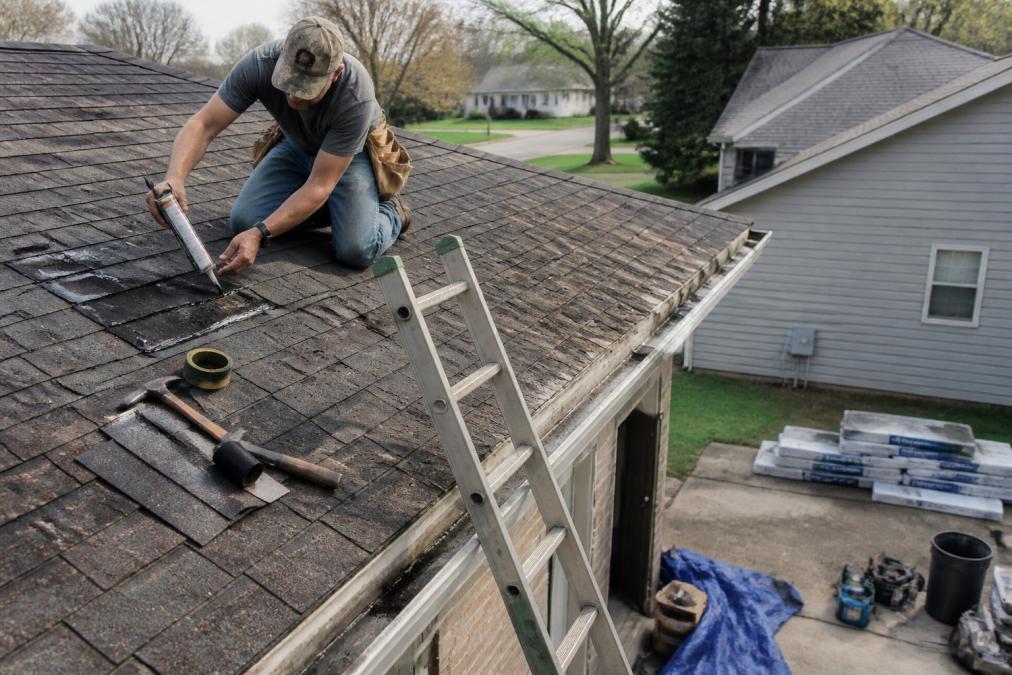
DIY makes sense for:
- Replacing a few missing shingles
- Sealing a small, reachable crack
- Clearing debris from valleys and gutters
Call a pro for:
- Any leak you can’t pinpoint
- Structural sagging or soft decking
- Storm damage tied to an insurance claim
- Anything on a steep or high roof
Emergency Temporary Repair Techniques
When a leak is active and you can’t get a contractor out immediately, temporary fixes limit water damage rather than solve the problem. Try these stop-gap moves:
- Lay a tarp over the damaged area and secure it with boards
- Apply roofing sealant to small cracks
- Use butyl tape around flashing gaps
- Patch small holes with roofing cement and mesh
Never climb onto a wet, steep, or storm-damaged roof. Falls cause serious injuries, and a temporary fix isn’t worth the risk. If you can’t reach the leak safely from the ground or a stable ladder, wait for a professional.
Tools and Materials for DIY Repairs
A basic DIY kit covers most small jobs:
- Roofing sealant or cement
- Replacement shingles or rolled roofing
- Butyl tape for flashing
- A pry bar and hammer
- Galvanized nails
- A utility knife and gloves
Signs of Storm Damage on Roofs and How to File a Roof Insurance Claim
Signs of storm damage include missing shingles, dented flashing, granule loss, and new leaks after a storm. Catching these early makes your claim stronger and your repair cheaper. Check for:
- Shingles scattered in the yard
- Dents on vents, gutters, or flashing
- Granules collecting in gutters
- Dark spots or water stains on ceilings
Documenting Damage for Your Claim
- Photograph all damage from the ground and up close
- Note the date of the storm and the damage
- Keep receipts for any emergency repairs
- File your claim promptly
- Meet the adjuster and walk the roof with them
Never start permanent repairs before an adjuster inspects the roof. Doing so can void part of your claim, because the insurer can no longer verify the original damage.
The Oklahoma Insurance Department’s storm claims guidance explains how to document damage and what your policy may cover. For federal disaster help, the FEMA disaster assistance program lists what aid may be available after a declared event.
Financing Options for Roof Replacement and Government Assistance Programs
Financing options for roof replacement spread the cost when you can’t pay upfront. The right path depends on your budget, credit, and whether the repair is tied to a disaster or hardship.
Standard Financing Paths
Common options include:
- Contractor payment plans. Many roofers offer in-house financing or partner with a lender. Compare the APR, not just the monthly payment.
- Home equity loans or lines of credit. Often the lowest-rate option for homeowners with equity, since the loan is secured. A HELOC lets you draw only what you need.
- Personal loans from a bank or credit union. Unsecured, so rates are higher, but approval is faster and the roof isn’t collateral.
- Credit cards. Workable for small repairs if you pay the balance before interest compounds. For a full replacement, interest can dwarf the savings.
- Cash-out refinance. Replaces your mortgage with a larger one and takes the difference in cash. Best when rates are favorable and you’re staying long-term.
Ask any contractor for a written roofing estimate that separates labor from materials. It’s the easiest way to compare financing options and spot inflated labor charges, and some lenders require a detailed estimate before approving a home improvement loan.
Government Grants and Assistance Programs
If your income is limited or the damage followed a declared disaster, you may qualify for help that doesn’t need to be repaid.
Government assistance rarely covers a full roof replacement outright, and most programs have income limits, waiting lists, and inspection requirements. Apply early and keep documentation of the damage and your income.
How to Stack Assistance with Insurance
If a storm caused the damage, file the insurance claim first. Government programs generally step in only for what insurance doesn’t cover, and some require proof of a denied or underpaid claim. Keep every receipt for out-of-pocket emergency repairs.
Extending Roof Lifespan with Maintenance and Warranties
Regular roof maintenance is the cheapest repair strategy of all, because it prevents expensive repairs in the first place. A twice-yearly inspection catches small problems before they grow. Keep your roof alive longer with these habits:
- Schedule a professional roof inspection each spring and fall
- Clear gutters and valleys of debris
- Trim tree branches away from the surface
- Replace cracked sealant and flashing early
- Fix small leaks the moment you spot them
Frequently Asked Questions
What do I do if I can’t afford to fix my roof?
If you can’t afford a full repair, start with emergency temporary fixes like tarps or sealants to prevent further damage. Then explore financing options for roof replacement, such as home equity loans or contractor payment plans. Government grants and assistance programs may also help low-income homeowners. Rescue Roofing offers flexible financing and can assist with insurance claims to reduce out-of-pocket costs.
Can you repair a roof without replacing it?
Yes, many roof issues can be repaired without a full replacement. The cheapest way to repair a roof often involves patching damaged shingles, resealing flashing, or using the roof-over method if your existing roof structure is sound. However, if the damage covers more than 30% of the roof or the underlayment is compromised, replacement may be more cost-effective long-term. A professional inspection can determine the best route.
Are there government grants available for roof repairs?
Yes, some government grants and assistance programs exist for low-income homeowners, seniors, and veterans. These programs vary by state and locality. The USDA offers loans and grants for rural homeowners, and HUD provides resources through local agencies. Rescue Roofing can help you identify applicable programs and assist with the application process for insurance claims or financing.
How do I know if my roof needs a repair or a full replacement?
Look for signs like missing shingles, granules in gutters, water stains on ceilings, or daylight showing through the attic. If your roof is over 20 years old or has widespread damage, replacement is likely more cost-effective. For isolated issues like a single leak or damaged flashing, a repair is the cheapest way to fix the problem. A professional roof inspection provides a definitive answer.
Roof trouble rarely waits for a convenient moment, and the cost anxiety is real. Rescue Roofing helps homeowners and property managers across the Tulsa area with accurate aerial quotes, thorough inspections, and hands-on help filing insurance claims and talking to adjusters. We also offer flexible financing options and 24-hour availability for emergencies, so you’re never stuck waiting. Get started with Rescue Roofing and protect your roof with a repair plan that fits your budget.