


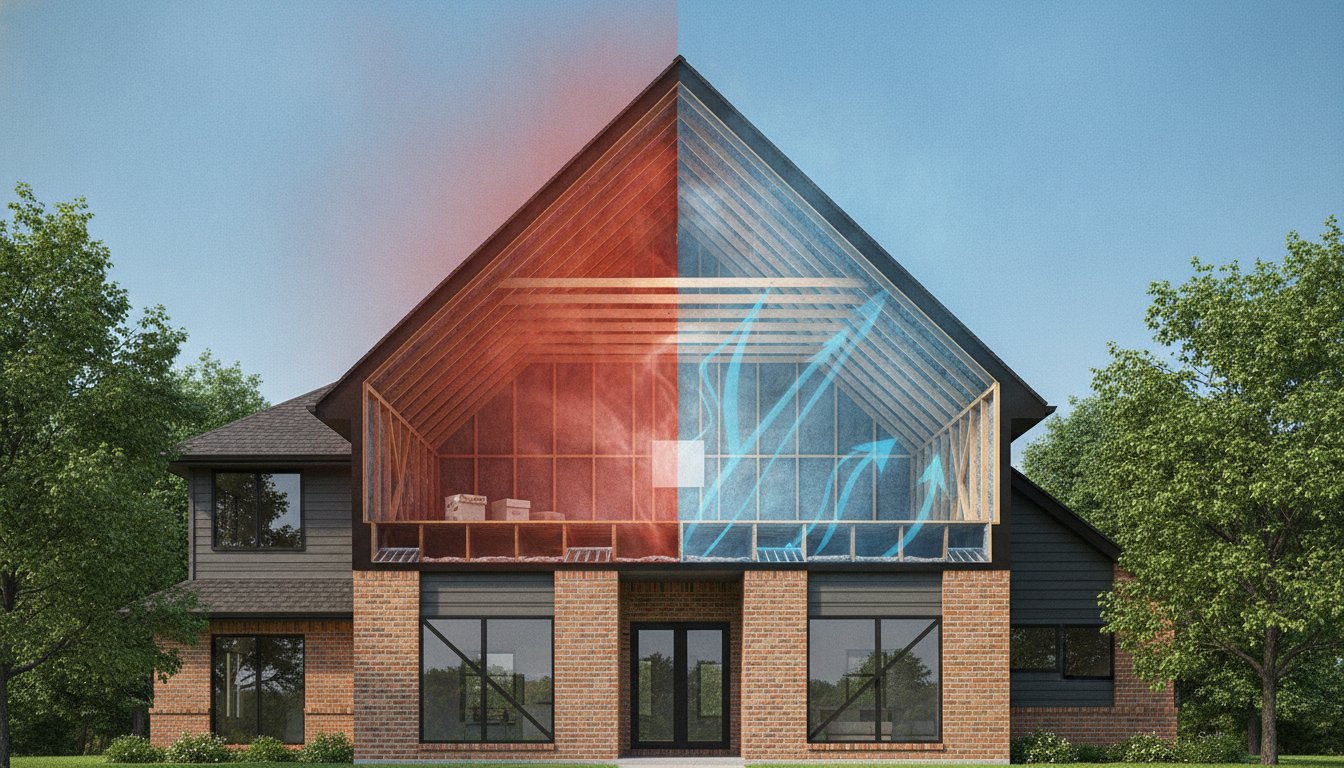

Did you know an unventilated attic in Tulsa can reach a staggering 160°F on a typical 100°F summer afternoon? That is hot enough to bake your shingles from the inside out and force your air conditioner to work overtime. Most Oklahoma homeowners assume their high utility bills are just an unavoidable part of July. However, these spikes are often the first signs of poor attic ventilation that could be shortening your roof’s lifespan by five to ten years.
It’s stressful to worry about hidden mold growth or whether your roof will survive the next storm season. We believe you deserve a home that stays cool and a roof that lasts for 25 years or more. In this guide, we’ll show you exactly how to identify the subtle red flags in your attic before they turn into expensive repairs. You’ll learn how a balanced ventilation system works and how new 2026 initiatives like the Strengthen Oklahoma Homes grant can help you secure a more resilient, energy-efficient home.
Key Takeaways
- Learn how a balanced system uses the “Stack Effect” to naturally pull heat out of your home.
- Discover how to spot the common signs of poor attic ventilation, including “internal baking” that causes shingles to curl and age prematurely.
- Understand the critical 50/50 rule for intake and exhaust vents to prevent airflow short-circuiting.
- See why Tulsa’s local humidity levels often require a 1:150 ventilation ratio rather than the standard 1:300 building code.
- Find out how a professional ventilation audit safeguards your manufacturer’s shingle warranty and lowers summer cooling bills.
What is Roof Ventilation? The Science of Attic Airflow in Oklahoma
Roof ventilation is a balanced system designed to keep your attic’s temperature and humidity levels close to the conditions outside. It isn’t just about letting heat out; it’s about creating a continuous cycle where fresh air enters and stale air exits. Understanding What is Roof Ventilation? starts with viewing your home as a living, breathing system. This process relies heavily on the “Stack Effect.” Because hot air is less dense than cool air, it naturally rises. In a properly designed Tulsa home, cool air enters through intake vents at the eaves or soffits. As this air warms up, it travels upward and escapes through exhaust vents located at the highest point of the roof ridge.
When this cycle breaks down, you’ll quickly notice the common signs of poor attic ventilation, such as rooms that won’t stay cool or a roof that seems to be aging too fast. Maintaining this balance creates a “Cool Roof” ecosystem. This setup doesn’t just lower your bills; it protects the structural integrity of your roof decking by preventing heat from warping the wood from the inside out. Without this constant movement, your attic becomes a stagnant box of trapped energy that puts immense pressure on your shingles and your HVAC system.
Passive vs. Active Ventilation Systems
Most homes in our community use passive ventilation. These systems don’t require electricity; they rely entirely on the natural Stack Effect and wind pressure to move air. Ridge vents and soffit vents are the most common examples. However, larger Tulsa homes or those with complex rooflines might need active ventilation. These systems use powered fans, often solar or electric, to pull air through the attic at a higher volume. When choosing vents, we always look at the Net Free Area. Net Free Area is the actual amount of open space available for air to move through a vent, excluding the space taken up by grates or screens. Getting this calculation right is the difference between a cool home and a mounting repair bill.
Why Year-Round Airflow Matters
There’s a common myth that you only need to worry about your attic during a 100 degree Oklahoma July. In reality, year round airflow is vital. During our humid winters, daily activities like showering or cooking send moisture into the attic. Without proper exhaust, this moisture clings to the roof deck, leading to wood rot and mold. Effective ventilation also prevents thermal stratification. This happens when air sits in stagnant layers of different temperatures, which can cause uneven heating in your home and lead to ice dams during rare winter freezes. Proper airflow ensures your roof stays dry and durable regardless of the season.
7 Signs of Poor Attic Ventilation Every Tulsa Homeowner Should Know
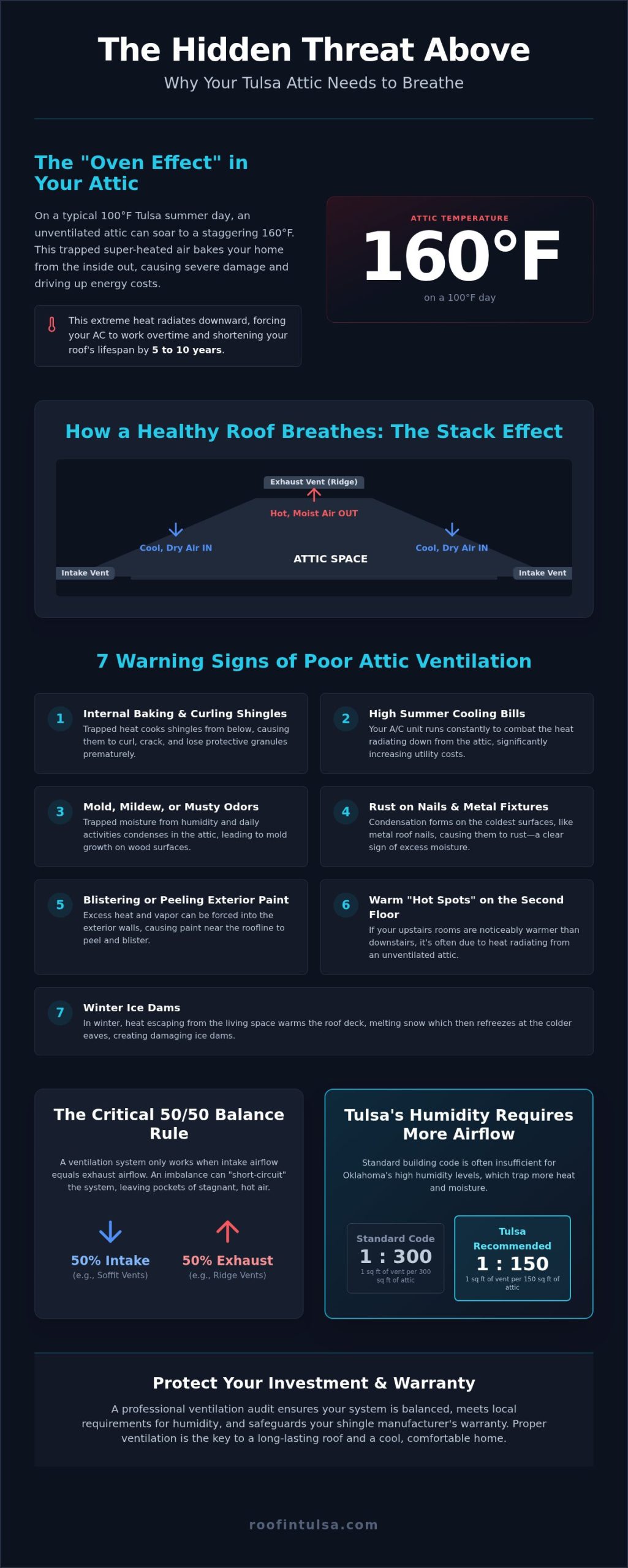
Tulsa homeowners face a unique double threat: intense Oklahoma sun and high humidity. When your roof can’t breathe, these elements combine to create several unmistakable signs of poor attic ventilation. The most dramatic is what we call the “Oven Effect.” On a 100°F day in Green Country, an unventilated attic can easily climb to 160°F. This trapped heat doesn’t just stay in the attic; it radiates downward through your ceiling, forcing your air conditioner to run constantly and driving up your utility costs.
Internal baking is another serious concern for your property’s longevity. When heat has no escape route, it literally cooks your shingles from the underside. You’ll see premature aging like curling edges or excessive granule loss filling your gutters. Trapped humidity also leaves its mark in ways you might not expect. If you see rusty nails or orange streaks on your attic hardware, it’s a clear sign of condensation issues. This moisture eventually leads to dark mold stains on your plywood or a persistent musty smell in your upstairs hallway. According to The Science of Attic Airflow, managing this moisture is just as critical as managing heat to prevent structural rot.
Visual Red Flags on Your Roof’s Exterior
Keep an eye out for shingle blistering. These small, bubble-like pops occur when moisture trapped inside the shingle expands due to extreme attic heat. It’s often mistaken for hail damage, but it’s actually a ventilation failure. You might also notice peeling or flaking paint on your home’s trim or siding near the roofline. This happens when high heat and vapor levels migrate through the wall’s structure. If you are noticing these issues during a roof replacement Tulsa project, it’s the perfect time to upgrade your ventilation system to ensure your new investment lasts its full 25 to 30 year lifespan.
Interior Comfort and Utility Warning Signs
Do you have “hot spots” in your house? If the second floor feels significantly warmer than the first, or if specific rooms never seem to reach the temperature set on the thermostat, your attic is likely the culprit. This heat forces your HVAC system to work harder, leading to those sky-high energy bills we all dread. Additionally, check your insulation. Poor airflow allows moisture to settle, making fiberglass insulation feel damp or look matted. Once insulation becomes wet, it loses its R-value and can no longer effectively block heat. If you suspect your home is suffering from these issues, a quick professional audit can reveal exactly where your airflow is failing. Scheduling a professional inspection is a proactive way to catch these problems before they require a full roof replacement.
The Anatomy of a Balanced System: Intake vs. Exhaust Vents
Think of your attic like a set of lungs. For your home to breathe properly, it needs a continuous cycle of inhaling cool air and exhaling hot air. This is what professionals call a “balanced system.” The gold standard for this process is the 50/50 rule. This means you should have exactly 50 percent intake ventilation at the lowest part of your roof and 50 percent exhaust ventilation at the highest point. When this balance is off, the signs of poor attic ventilation we discussed earlier, such as shingle curling and high energy bills, start to appear almost immediately.
A balanced system creates a natural vacuum effect. As hot air rises and escapes through the top vents, it creates a low-pressure zone that pulls fresh, cooler air in through the bottom. However, this process is easily disrupted by “short-circuiting.” This happens when air finds a path of least resistance that bypasses the rest of the attic. For example, if you place two different types of exhaust vents too close together, air might enter through one and exit through the other. This leaves the rest of your attic air stagnant and humid. According to research on Understanding Attic Ventilation, maintaining this specific airflow path is the only way to effectively regulate temperature and moisture across the entire roof deck.
Intake Vents: The Foundation at the Eaves
Intake begins at your eaves, usually through soffit vents. These are the small grates or perforated panels located under your roof’s overhang. Their job is to provide the “inhale” for your attic. A common failure in roof maintenance occurs when homeowners or contractors accidentally block these vents with thick layers of blown-in insulation. Without this intake, your exhaust vents can’t function. For Tulsa homes with narrow eaves or no overhangs at all, we often recommend drip edge vents. These specialized vents sit right at the roof’s edge to ensure air can still enter the system without structural changes to the home.
Exhaust Vents: Releasing the Heat
Exhaust vents are the “exhale” of your roof. Ridge vents are often the preferred choice for Tulsa’s high-wind storms because they sit low to the roofline and are less likely to be damaged by gusts than “Whirlybird” turbines or “Turtle” box vents. While Whirlybirds are excellent at pulling air out, they rely on moving parts that can wear down over time. Gable vents, located on the flat ends of the house, are another option, but they often conflict with ridge systems. If you have both, the ridge vent may pull air from the gable vent instead of the soffits, leaving your lower roof deck to bake in the Oklahoma sun.
How Much Ventilation Do You Need? The 1:300 Rule for Tulsa
The International Residential Code sets a baseline for attic airflow known as the 1:300 rule. This standard requires one square foot of net free ventilation area for every 300 square feet of attic floor space. While this works in drier climates, Tulsa’s heavy humidity often makes this minimum requirement insufficient. We frequently see signs of poor attic ventilation in local homes that technically meet the 1:300 code but still suffer from moisture buildup. For our region, we generally recommend a 1:150 ratio. This provides double the airflow to combat Oklahoma’s thick summer air and damp winters.
Let’s look at a typical 2,000 square foot ranch home in Tulsa. Under the 1:300 rule, you would need about 6.7 square feet of total ventilation. However, using the 1:150 ratio, that requirement jumps to 13.3 square feet. Remember that this total must be split equally between intake and exhaust to stay balanced. Be careful not to over-ventilate, though. Adding too many holes in your roof can actually create wind pressure issues. During our intense spring thunderstorms, excessive venting can even invite wind-driven rain into your attic space if the system isn’t engineered correctly.
Calculating Your Attic’s Needs
You don’t need to climb a ladder to get a rough estimate of your needs. Simply measure the length and width of your home’s footprint from the ground. Multiply those numbers to get your approximate attic square footage. When looking at vents, pay close attention to the Net Free Area (NFA) rating on the packaging. It is a common mistake to assume a 12-inch vent provides 12 inches of airflow. In reality, the grates and bug screens take up space. A 12-inch vent might only offer 50 to 60 square inches of actual NFA. This is why professional calculations are so important for long term roof health.
When Building Codes and Reality Clash
Many older homes in neighborhoods like Midtown or Florence Park were built before modern airflow science was fully understood. These properties often fall far short of today’s standards. If you’re already planning a roof repair Tulsa homeowners often find this is the most cost-effective time to cut in new vents. Upgrading now prevents the need for a full replacement later. Be cautious with high-powered attic fans, as they can sometimes pull conditioned air from your living space if your intake vents are blocked. This can lower your indoor air quality and increase your cooling costs.
If you aren’t sure if your current setup meets the 1:150 standard, we can help. Our team provides detailed airflow audits to ensure your home stays protected. Schedule a professional ventilation check with Rescue Roofing Tulsa to keep your roof healthy for years to come.
Professional Ventilation Audits with Rescue Roofing Tulsa
Identifying the signs of poor attic ventilation is the first step toward protecting your home. At Rescue Roofing Tulsa, we believe a professional inspection should look at more than just the shingles on top. Every free roof audit we perform includes a detailed ventilation check. We examine your intake and exhaust balance, check for blocked soffits, and measure your attic’s temperature against the outdoor air. This comprehensive approach ensures that your roof isn’t just shedding water but is also managing heat and moisture effectively.
Proper airflow is also a legal and financial necessity for your home. Most shingle manufacturers will void their warranties if they discover the attic was improperly ventilated. When shingles are “baked” from the inside out, they fail prematurely. By ensuring your system meets manufacturer standards, we protect your right to a warranty claim if a product defect ever occurs. Additionally, a well-ventilated roof helps you during the insurance process. Adjusters often look for reasons to classify roof damage as “wear and tear” or “neglect” rather than storm damage. Having a documented, code-compliant ventilation system proves you have maintained your property, making it much harder for insurance companies to deny a legitimate claim.
We prioritize the use of storm-resistant venting materials designed specifically for Oklahoma’s severe weather. Our ridge vents and high-profile exhausts are engineered to resist wind uplift and prevent rain from being driven into your attic during a spring supercell. We don’t just install vents; we install peace of mind.
Why a Local Specialist is Essential
Tulsa has unique building codes and environmental challenges that “storm chasers” or out-of-town contractors often ignore. A contractor from a drier or cooler climate might not understand why we push for a 1:150 ventilation ratio in Green Country. They may install a standard system that leaves your home vulnerable to our high humidity and 100 degree summer days. As a locally owned business, we are your neighbors. We understand the specific humidity patterns of the Arkansas River valley and how they impact your roof’s decking and shingles over 25 years.
Schedule Your Free Ventilation Audit
Don’t wait for your energy bills to skyrocket or for mold to take hold in your attic. A few small adjustments to your airflow today can prevent a costly full roof replacement tomorrow. Our team is ready to provide you with a clear, honest assessment of your attic health and a straightforward plan to fix any issues we find. We take the stress out of roof maintenance by handling the technical details for you. Contact Rescue Roofing Tulsa for a Professional Inspection and ensure your home is ready for whatever the Oklahoma sky brings next.
Protect Your Tulsa Home with a Healthier Attic
Your roof is more than just a layer of shingles; it is a complex system designed to breathe. By maintaining a balanced ratio of intake and exhaust, you can effectively shield your home from the destructive effects of Oklahoma’s intense humidity. Recognizing the early signs of poor attic ventilation allows you to take action before high utility bills or structural damage become permanent burdens on your family’s budget. Proper airflow is the most reliable way to extend the life of your materials and keep your indoor spaces comfortable year round.
As a locally owned and operated business in Tulsa, we understand that your property is your greatest investment. Our team specializes in high-performance residential roofing and insurance claim assistance to ensure your home remains a safe haven for decades to come. We are here to serve as your trusted neighbor and advisor, helping you navigate modern building codes and manufacturer warranty requirements with ease and confidence.
Are you ready to ensure your attic is performing at its best? Get Your Free Tulsa Roof & Ventilation Inspection today. Let us help you achieve a roof that lasts while keeping your monthly cooling costs under control. We look forward to helping you protect what matters most.
Frequently Asked Questions
Can I have too much roof ventilation in my home?
Yes, it is possible to over-ventilate your attic. Having too many exhaust vents can disrupt the balanced airflow and create entry points for wind-driven rain during intense Oklahoma storms. It can also cause “short-circuiting” where air only moves between the high vents, leaving the lower portions of your attic stagnant and hot. A professional audit ensures you have exactly the right amount of net free area for your specific roof size.
How much does it cost to add more vents to an existing roof?
The cost to upgrade your ventilation depends on the type of vents you choose and the complexity of your roofline. While we don’t provide specific pricing without an inspection, most homeowners find that adding vents is a small investment compared to the cost of a full roof replacement. This proactive step helps you avoid the common signs of poor attic ventilation that lead to expensive structural rot and shingle failure.
Do ridge vents leak during heavy Oklahoma thunderstorms?
High-quality ridge vents are engineered with internal baffles specifically designed to block wind-driven rain. When installed correctly by a local expert, they are one of the most weather-resistant options available for our climate. They sit low to the roofline, which makes them less vulnerable to high wind uplift than taller “Whirlybird” turbines or box vents. This makes them a very reliable choice for homes in the Tulsa area.
Should I close my attic vents during the winter months?
You should never close your attic vents in the winter. Airflow is necessary year-round to remove moisture generated by indoor activities like showering or cooking. If you block your vents, this humid air will condense on the underside of your roof deck. Trapped winter moisture is one of the most frequent signs of poor attic ventilation and often leads to mold growth and wood rot that stays hidden until it’s too late.
Will better roof ventilation actually lower my electric bill?
Yes, effective ventilation can reduce summer cooling costs by 10% to 15% according to industry statistics. By lowering the attic temperature by as much as 40 degrees, your air conditioner doesn’t have to fight against a massive heat source sitting right above your ceiling. This reduces the strain on your HVAC system and helps keep your home’s temperature more consistent throughout the day. To maximize these savings, HVAC specialists like E.R.S. Heating & Cooling recommend ensuring your cooling unit is also operating at peak efficiency.
What is the best type of roof vent for a home in Tulsa?
A balanced system using ridge vents paired with soffit vents is generally the best setup for Tulsa homes. This combination uses the natural “Stack Effect” to move air without needing electricity. It also offers a clean, low-profile look that stands up well to our frequent severe weather and hail. Every home is different, so we always recommend a custom audit to determine the best fit for your specific architecture.
Does a new roof replacement always include new ventilation?
A professional roof replacement should always include a comprehensive ventilation audit and necessary upgrades. While some contractors might try to save time by reusing old, damaged vents, a reputable local company will ensure your new system meets current building codes. Proper airflow is mandatory to protect your manufacturer’s shingle warranty and ensure your new investment lasts its full 25 to 30 year lifespan.
Can I install additional roof vents myself as a DIY project?
We strongly recommend against installing roof vents as a DIY project. Cutting into your roof deck requires precise measurements and expert flashing techniques to prevent future leaks. Any mistakes can void your shingle warranty and lead to structural damage that is far more expensive than a professional installation. It’s always safer to trust an experienced local partner who understands the technical requirements of a balanced airflow system.