


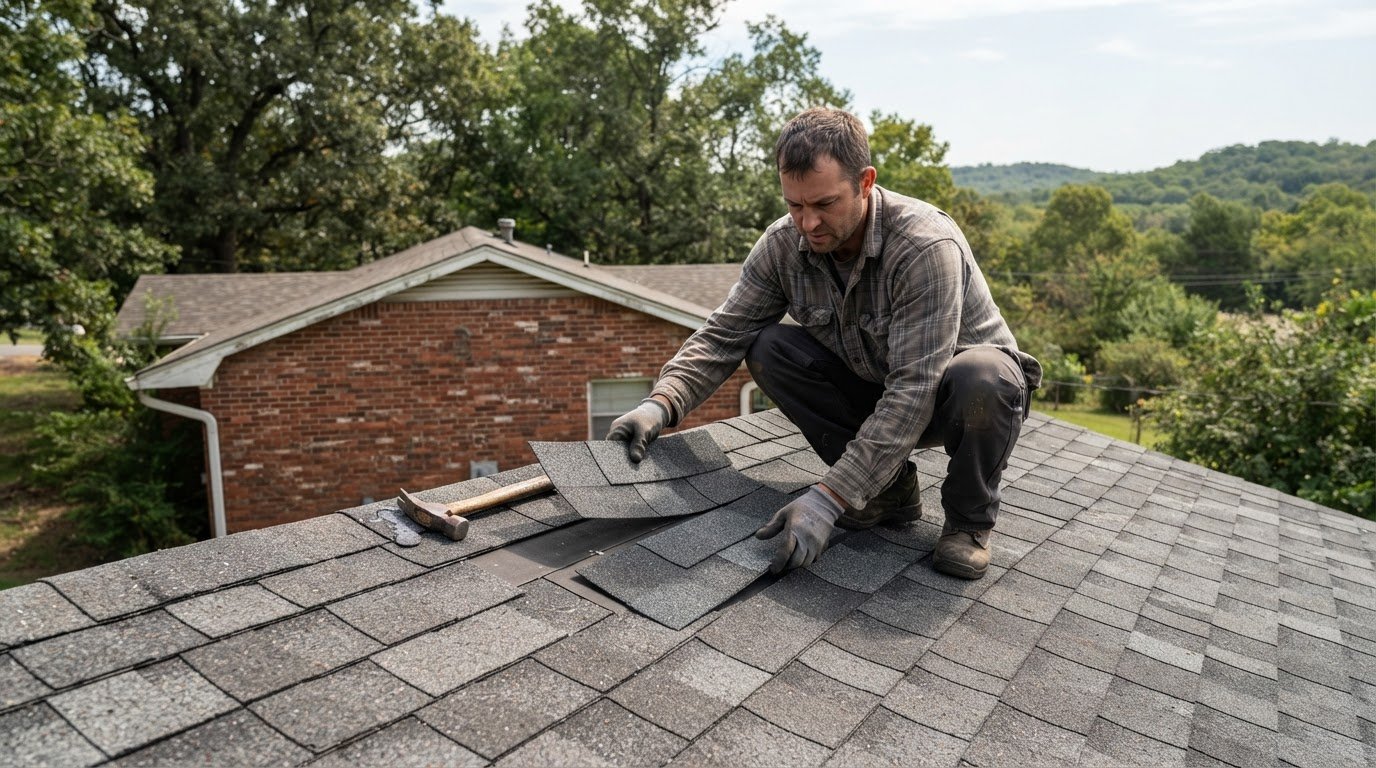

Wind can loosen or tear shingles away, and winds over 70-80 mph in Oklahoma can lift, crease, or tear shingles and expose the roof decking. A Skiatook wind-damage shingle repair assessment helps determine whether the affected area needs a repair or whether more extensive damage calls for roof replacement.
It’s understandable to want a clear estimate after a storm. For Skiatook wind damage shingle repair, the right scope depends on what the inspection finds, so start by having the roof assessed.
This guide explains how to spot possible wind and hail damage, what a professional roof inspection checks, and how to coordinate with an insurance adjuster. You’ll also learn how missing shingles are addressed and how repairs can help protect your home from further weather exposure.
Key Takeaways
- Learn which visible roof and interior clues can point to wind or hail damage, and what a professional inspection documents.
- Understand how an inspection assesses shingles, flashing, vents, valleys, roof edges, and other vulnerable areas.
- Know how a roofing contractor can support the inspection and documentation process while the insurance carrier makes coverage decisions.
- See what a professional missing-shingle repair involves and when broader roof damage may call for a different repair scope.
How can a professional inspection identify storm damage to my roof?
A professional roof inspection checks visible storm damage and records its location and extent. That evidence helps determine whether targeted repairs or broader work may be appropriate.
Storm Damage Documentation
A roofer documents storm damage with photographs of affected shingles, flashing, vents, valleys, roof edges, and roof penetrations. Close-up and wider photos show both the damaged material and its location. The inspection record can also describe lifted edges, creases, missing shingles, hail marks, and debris.
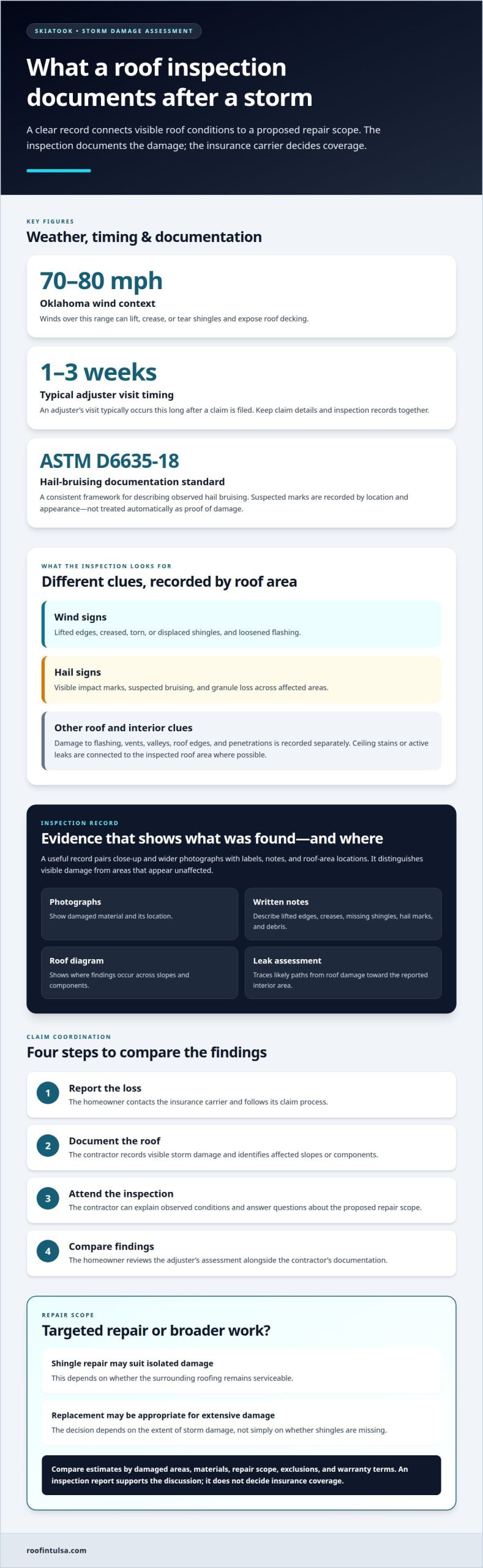
For adjusters, clear labels and consistent views make it easier to connect each image with a roof area. In Oklahoma, winds over 70-80 mph can lift, crease, or tear shingles and expose decking. A written report paired with photos helps distinguish individual damaged areas from wider roof concerns.
Leak Assessment and Repair Costs
A ceiling stain may signal a roof leak, but the entry point can be elsewhere. During an inspection, the roofer traces likely paths from damaged shingles or flashing toward the affected interior area. The assessment should connect visible roof conditions with reported leaks and document exposed decking or damaged vents.
Storm-damage repair costs depend on the damage, materials, roof access, and whether damage extends beneath the shingles. The estimate should describe the work and affected areas, rather than promise a price before assessment. Photos and a written scope give the homeowner and adjuster a shared record.
Repair Versus Roof Replacement
Shingle repair may suit isolated damage when the surrounding roofing remains serviceable. Roof replacement may be appropriate if the inspection finds extensive damage across multiple areas. The decision depends on the extent of the storm damage, not simply on whether shingles are missing.
To compare roofing estimates in Skiatook, review the same details in each: damaged areas, materials, repair scope, and exclusions. Compare warranty terms by what they cover, how long coverage lasts, and any stated conditions. Applicable Oklahoma requirements should be reflected in contract terms and approvals; an inspection report alone doesn’t establish compliance. Choose a roofer who documents wind damage clearly and explains the proposed work in writing.
Wind and hail damage inspections
After severe weather in Skiatook, a professional inspection can distinguish wind effects from hail impacts. The difference matters because each can affect different roof materials and locations. Wind may lift shingle edges, while hail can leave impact marks or dislodge protective granules. Oklahoma weather can bring both hazards to the same property.
A roofer examines the roof systematically, rather than relying on one obvious mark. The inspection includes shingles, flashing, vents, valleys, roof edges, and penetrations. It also considers debris that may have struck or scraped roofing materials. Findings are recorded by location, so the report can explain which slopes or components show damage.
- Wind: Look for creased, torn, or displaced shingles and loosened flashing.
- Hail: Document visible impact marks, bruising, and granule loss across affected areas.
- Roof components: Record damage to vents, valleys, edges, and penetrations separately.
- Interior clues: Connect ceiling stains or active leaks with the inspected roof area.
Hail size and impact patterns can vary. A roofer records the locations and appearance of suspected bruising instead of treating every mark as proof of damage. ASTM D6635-18 is a standard for documenting hail bruising. This gives the inspection a consistent framework for describing observed conditions.
Documentation should distinguish visible damage from areas that appear unaffected. Photos, notes, and a roof diagram can show where findings occur and support discussions about coverage. An adjuster can compare that record with the claim assessment. The inspection describes roof conditions; the insurance carrier decides coverage.
If severe weather leaves uncertain damage, a professional roof inspection can document the affected areas and clarify the next repair discussion.
How roofing contractors coordinate with insurance adjusters
After severe weather, Rescue Roofing Tulsa can document visible damage and prepare a repair scope for an insurance claim. Photos and notes help describe affected shingles, flashing, vents, and related roof areas. The insurance carrier, not the roofer, decides whether the damage is covered and what work the policy may pay for.
Oklahoma homeowners insurance coverage for wind-damaged shingles depends on policy terms and the carrier’s assessment. An adjuster’s visit typically occurs 1-3 weeks after a claim is filed. During that period, keep the claim details and inspection records together so the contractor and adjuster can discuss the same damage.
Coordination can follow a clear sequence:
- Report the loss: The homeowner contacts the insurance carrier and follows its claim process.
- Document the roof: The contractor records visible storm damage and identifies affected slopes or components.
- Attend the inspection: The contractor can explain observed conditions and answer questions about the proposed repair scope.
- Compare findings: The homeowner reviews the adjuster’s assessment alongside the contractor’s documentation.
Keep the discussion focused on evidence. For example, photos documenting lifted shingles on one roof slope can help clarify what the adjuster observed there. A separate note about damaged gutters or flashing can distinguish related exterior damage from roof repairs. Documentation supports the claim discussion, but it doesn’t guarantee coverage.
Once the carrier communicates its decision, review the repair scope before work begins. If approved work involves replacing shingles, confirm that the written scope describes the affected areas and materials. If the assessment points to a complete roof replacement, compare that scope with the documented damage. Clear records help everyone understand what the insurance claim addresses and what work remains outside it.
Missing-shingle repair
When wind removes shingles, a roofing professional assesses the opening before installing replacements. The inspection checks underlayment, decking, nearby shingles, and flashing for related damage. Missing shingles can expose the roof to water entry, so the repair scope should address visible gaps and any damage beneath them. A clear scope is central to effective Skiatook wind damage shingle repair, especially when a storm affects more than one roof area.
If rain is entering before permanent repairs begin, a roofer can temporarily cover the exposed area with protective material. This can limit further water entry while permanent repairs are arranged. Temporary protection doesn’t replace repairs to damaged roofing materials.
A professional repair typically follows a clear sequence:
- Assess the opening: Locate missing shingles and examine nearby courses, flashing, and roof edges.
- Check beneath the surface: Identify underlayment or decking damage that could affect the repair.
- Match replacement materials: Choose shingles suited to the existing roof’s material and appearance.
- Complete and document the work: Secure the repair and record the area addressed.
A missing shingle beside a roof penetration, for example, may require attention to nearby flashing. A gap along a roof edge may call for a different repair scope. The assessment helps distinguish localized damage from wider storm effects, rather than treating every missing shingle alike. For homeowners arranging Skiatook wind damage shingle repair, a written scope makes the proposed work easier to understand.
Near Skiatook Lake, homeowners can review whether the repair plan identifies affected areas, underlying damage, and replacement materials. Keep inspection records with claim paperwork to connect documented conditions with completed work.
For missing shingles or exposed roofing, arrange professional shingle repair to assess the damage and plan the next step.
Rescue Roofing Tulsa: Roof Repair
Rescue Roofing Tulsa helps property owners assess storm-damaged shingles and plan appropriate roof repairs. Arrange a professional assessment when shingles are missing, flashing is loose, or a leak appears after severe weather. An inspection can clarify whether damage is limited to a repairable area or extends across the roof.
Discuss the affected areas and arrange an inspection as the next step. The findings help shape the repair scope; if damage is extensive, residential or commercial roof replacement may be more suitable. Recommended work depends on the roof’s condition.
If wind has damaged your roof, contact Rescue Roofing Tulsa to arrange a roof inspection or discuss repairs.
Take the Next Step Toward a Protected Roof
A clear repair plan gives you a practical way to move forward after storm damage. Keep the inspection findings, repair scope, and claim correspondence together. These records can help you track what was assessed and what work was completed, especially if you need to discuss the roof again after future weather.
For Skiatook wind-damage shingle repair, match the work to the roof’s condition. Rescue Roofing Tulsa provides roof repair, as well as residential and commercial roof replacement when broader work is appropriate. A professional assessment connects the damage to a suitable solution without assuming every missing shingle calls for the same repair.
When you’re ready to discuss the roof’s condition and possible next steps, contact Rescue Roofing Tulsa. A thoughtful repair decision can help you feel more prepared to protect your property.
Frequently Asked Questions
Do you offer free estimates for storm damage roofing?
Yes. Rescue Roofing Tulsa offers free roof inspections and no-obligation quotes for storm-related roofing concerns. An inspection helps identify the work your roof may need, while a quote outlines the proposed scope. For example, an assessment can distinguish a localized shingle repair from more extensive roof work. Review the proposed work before deciding how to proceed.
Should I schedule a roof inspection before filing an insurance claim?
A professional inspection can help you understand and document visible damage before discussing next steps with your insurer. It doesn’t replace the carrier’s claim process or determine coverage. If you notice active leaking, tell the insurer about the condition and ask about its reporting procedure. Keep the inspection findings available so you can describe the roof’s condition accurately.
How can a roofing professional identify wind-damaged roof shingles after a storm?
A roofer looks for shingles that are creased, torn, lifted, displaced, or missing, then checks surrounding roofing for related damage. A lifted edge may look intact from the ground but show damage on closer inspection. The roofer also considers whether the pattern aligns with wind exposure, rather than assuming every worn shingle resulted from the latest storm.
What is the typical shingle repair cost in Skiatook, Oklahoma?
There isn’t one typical repair price for every Skiatook roof. Cost depends on the number and location of damaged shingles, roofing materials, roof access, and any damage beneath the surface. A quote can be prepared after the roof is assessed and the repair scope is clear. Rescue Roofing Tulsa offers free quotes so you can review the proposed work before deciding.
How can a roofing professional document wind damage for a homeowners insurance claim?
A professional can organize findings by roof slope and component, with captions showing where each image was taken. A written scope can connect the observed damage to the proposed work. Keep these records with claim correspondence and note when you first observed the damage. An organized file makes it easier to discuss specific findings with the insurance adjuster.
How long can you wait to repair wind-damaged shingles before leaks develop?
There’s no dependable waiting period: water may enter through exposed roofing during the next rain, depending on the opening and weather. Arrange a professional assessment promptly, especially if you see water stains or active dripping indoors. Tell the roofer whether the ceiling is wet and which room is affected. That information helps focus attention on the likely area of concern.