


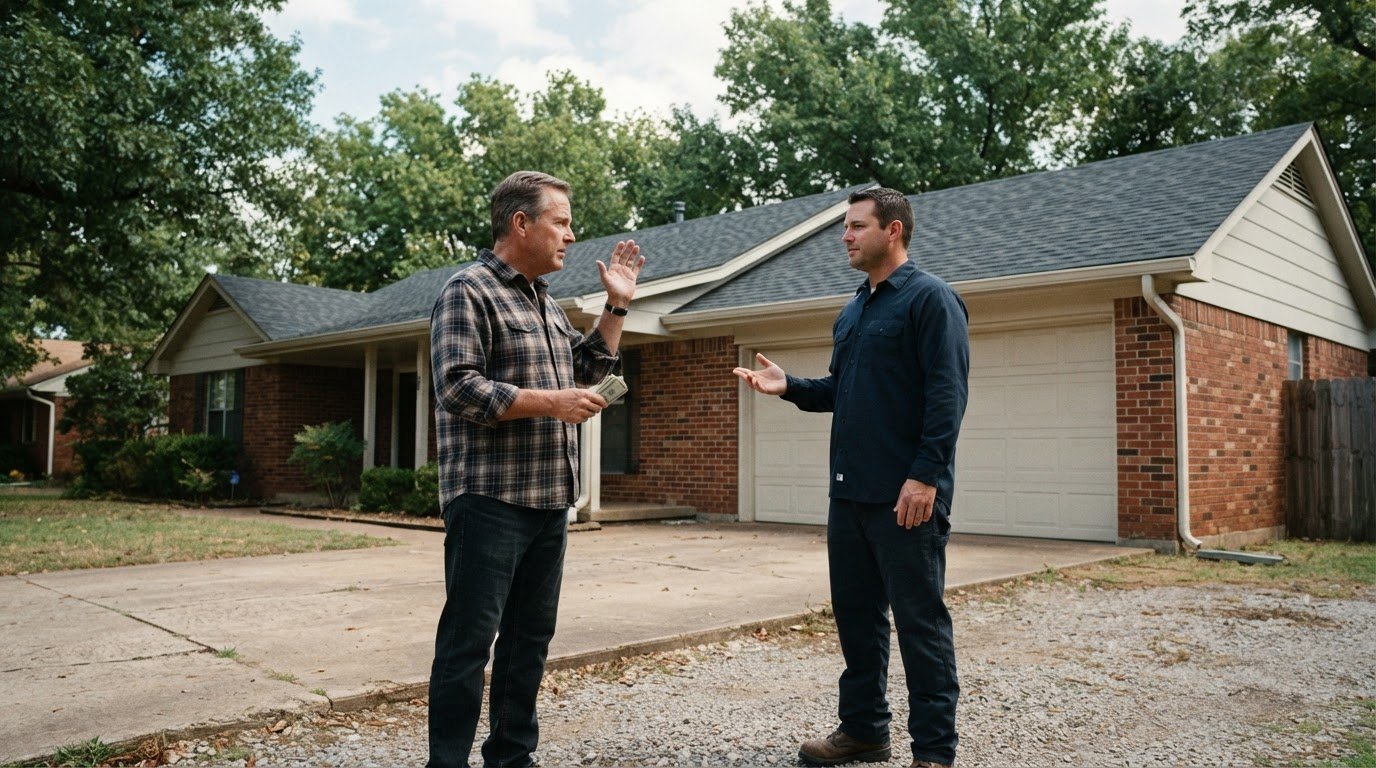

A deposit can be reasonable, but cash-only demands and large upfront payments deserve caution. Knowing what to do if a roofer asks for cash starts with reviewing the written terms: roofing deposits in the United States are typically 10% to 30% of the project total, while a deposit over 50% may be a warning sign. Don’t pay the full project amount before work begins.
It’s reasonable to want a clear record of where your money goes and what you’re agreeing to. Cash can be difficult to document if a payment dispute arises, so a check, card, or bank transfer can provide a clearer record.
This guide explains how to assess a cash request, evaluate a deposit, and agree on payment timing and methods before work starts. You’ll also learn what to put in writing so both you and the roofer understand the payment plan.
Key Takeaways
- Put the payment amount, due dates, and any progress payments in the written agreement before roofing work starts.
- Watch for pressure to pay cash without a written quote or invoice, and pause before handing over money.
- If you suspect a payment scam, stop further payments, keep records and photos, and contact your bank promptly.
- Use a consultation to clarify the work scope, materials, and labor so you can assess the estimate and payment plan together.
1. Cash, upfront payments and bank transfers
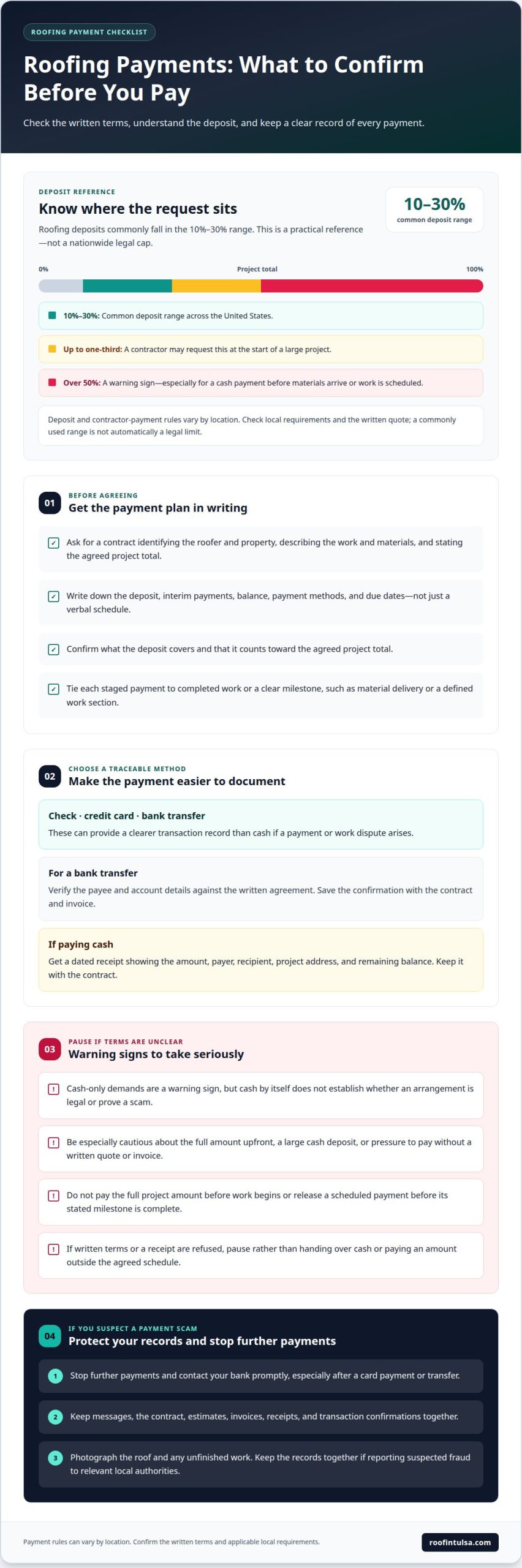
A roofer’s request for cash alone doesn’t establish whether the arrangement is legal. Rules can vary by location, so don’t assume cash is either required or prohibited. Before agreeing to the roofing work, ask for the proposed payment method and schedule in writing.
Paying cash can leave you without an independent transaction record, making it harder to prove payment if the work or amount is disputed. A check, credit card, or bank transfer to the roofing business creates a clearer record. For a transfer, verify the payee and account details against the written agreement, then save the confirmation with your contract and invoice.
Put payment dates and milestones in the contract, not just in a verbal conversation. The schedule should state the deposit, any interim payments, the balance due, and what work each payment covers. Tie staged payments to completed work or agreed project milestones. Don’t pay the full project amount before work begins or approve an extra payment that isn’t in the agreed schedule.
Cash isn’t automatically proof of a scam, but a roofer who insists on cash only is a warning sign. Be especially cautious if the roofer requests the full amount upfront, demands a large cash deposit, or won’t provide a written quote or invoice. Pause if payment pressure takes the place of clear paperwork.
Ask for a contract that identifies the roofer and property, describes the work and materials, states the agreed total, and lists payment methods, amounts, and due dates. For each cash payment, get a dated receipt showing the amount, payer, recipient, project address, and remaining balance. Keep the receipt with your contract. If the roofer won’t provide written terms or a receipt, don’t hand over cash.
Payment rules can vary by location, so don’t assume a particular method or schedule is legally required or prohibited.
2. Is it normal for a roofer to ask for a deposit?
Across the United States, roofing deposits commonly fall between 10% and 30% of the project total. For a large project, a contractor may request up to one-third at the start. A request above 50% can be a warning sign, especially when someone demands cash before materials arrive or work is scheduled.
State laws on roofing deposits and contractor payments vary, so there isn’t one percentage that applies uniformly nationwide. A commonly used deposit range isn’t necessarily a legal cap. Start with the written quote, then make sure the amount and timing comply with the requirements where the property is located.
Should you pay upfront? A deposit can be reasonable when its purpose and amount are written down. The typical 10% to 30% range is a practical reference, not an automatic rule. Consider a smaller deposit or staged payments if the requested amount exceeds one-third, especially if someone insists on cash.
A roofer may need advance funds for materials and workers, so the quote should explain what the deposit covers. Confirm that it counts toward the agreed project total rather than being a separate charge. For staged payments, connect each installment to a clear milestone, such as material delivery or completion of a defined section of work.
Before paying, compare the deposit with the written scope, materials, labor, and payment schedule. If the quote describes the project but doesn’t explain the deposit’s purpose, you have little basis for evaluating the request. Ask for a revised breakdown that connects the amount to project needs.
To protect your deposit during a re-roofing project, keep the quote, contract, and payment records together. Use a traceable payment method where possible, and don’t release another installment before its agreed milestone is complete. If the roofer requests a large cash advance without clear written terms, pause rather than paying under pressure.
3. Can you negotiate roofing payment terms with a contractor?
Yes. Discuss the schedule before signing or paying upfront. If you prefer to pay when agreed work is complete, say so directly and propose milestones both sides can identify. Put the final amounts, due dates, and conditions in the contract so a later conversation doesn’t change the agreement.
If you’re deciding what to do if a roofer asks for cash, start by discussing the payment method. Suggest a check, card, or bank transfer that creates a transaction record. Then tie each installment to a clear milestone, such as materials arriving, a defined work stage, or completion. Don’t release a scheduled payment before its stated condition is met.
A written estimate should explain how the project total relates to materials, parts, and labor. Roofing labor and material needs depend on the roof’s condition and the agreed scope. If the listed work doesn’t explain the charges, ask for a clearer breakdown. That lets you discuss the terms based on the actual project rather than a broad cost comparison.
If you suspect a payment scam, stop further payments and contact your bank promptly, especially after a card payment or transfer. Save messages, the contract, estimates, invoices, and transaction confirmations. Photograph the roof and any unfinished work. Keep these records together if you report suspected fraud to the relevant local authorities.
Knowing what to do if a roofer asks for cash also means keeping the conversation factual. Refer to the written schedule, explain which milestone has or hasn’t been completed, and state which payment method you can document. If the roofer demands an unagreed payment, don’t send it just to end the pressure. Record the request and speak with your bank before taking another payment step.
4. Assessing a roofer during a consultation
Use the consultation to connect the proposed payment plan to the actual work. Ask for a written estimate describing the roof problem, repair scope, materials, parts, and labor. For example, “repair damaged shingles” is less useful than a clear description of the affected area and proposed work. A defined scope makes it easier to understand what each payment covers.
To check whether a roofer is licensed, insured, and legitimate, ask for the business’s license details and proof of insurance. Confirm licensing with the appropriate state or local agency, and contact the insurer named on the certificate to verify coverage. Requirements differ by location, so follow the rules that apply where your property is located.
Compare at least two written quotes for the same scope of work. If one estimate includes materials and cleanup while another describes repairs only, their totals don’t represent the same job. Ask the roofer to clarify differences in materials, labor, and payment milestones before comparing the proposed terms.
Review the company’s reputation on named platforms such as Google, Houzz, the Better Business Bureau, and Angie’s List. Look for patterns in comments about communication, completed work, and how concerns were handled. A roofer may protect customer privacy and decline to share a past customer’s home address, so ask about other examples of completed projects instead.
Before agreeing, make sure the estimate, contract, and payment schedule describe the same project. Note any mismatch, such as a quote listing one repair area while the contract lists another, and ask for corrected paperwork. Keep the signed version and any later changes with your invoices and payment records.
If a roof problem needs a closer assessment, schedule a roof repair consultation to discuss the visible damage and proposed work.
Rescue Roofing Tulsa
Rescue Roofing Tulsa provides residential and commercial roofing services, including repairs, inspections, and roof replacement. If you’re weighing a cash request, a roof inspection can clarify the work scope before you settle on payment terms. A clear description of the work helps you understand what the estimate covers and how payments relate to the project.
For roof damage or a planned replacement, discuss your concerns about the proposed work and payment schedule. Rescue Roofing Tulsa provides roof repair, inspection, and replacement services. Contact Rescue Roofing Tulsa to discuss your roofing project and request a free roof inspection or quote.
Make Your Next Roofing Decision With Confidence
Keep the roof’s condition and the proposed work at the center of your decision. If you’re deciding what to do if a roofer asks for cash, don’t let the payment request become your only measure of the project. Consider whether the recommended work addresses the problem and whether you understand what you’d be agreeing to. This keeps the financial discussion connected to your home’s needs.
Use your consultation to explain what matters most, from resolving a leak to planning a replacement. A direct conversation can help you choose a course that fits your property and your comfort with the agreement. Focus on a clear plan for the roof and payment terms you understand. A careful decision is more useful than a rushed one.
For a conversation about your roofing needs, contact Rescue Roofing Tulsa. Take the next step when you’re ready to move forward with greater clarity.
Frequently Asked Questions
Is it normal for a roofer to ask for a deposit?
A deposit is common for roofing projects, but the amount and timing should match the project and written agreement. Before paying, ask how the deposit will be applied if the start date changes or the project scope is revised. For example, the paperwork can state whether an approved change affects the remaining balance, helping prevent confusion later.
Can you negotiate roofing payment terms with a contractor?
You can discuss payment terms before signing the agreement. Bring a specific proposal, such as dividing payments between a materials milestone, a defined work stage, and completion. Ask for the agreed schedule to appear in the contract, including how changes to the scope affect payment. Clear terms make it easier to resolve questions without relying on a verbal understanding.
Do Roofing Companies Take Credit Cards?
Some roofing companies accept credit cards, while others use different payment methods. The accepted options should appear in the estimate, contract, or invoice. Before paying, confirm the payee name and keep the transaction confirmation with your project documents. If card payment matters to your decision, include it in the written payment discussion before signing.
Do You Pay a Roofer Upfront or Upon Completion?
Payment timing depends on the written agreement. Some projects involve an initial deposit or payments tied to project stages, while other contracts may set payment after completion. Don’t assume every roofer uses the same arrangement. Read the schedule before work begins and make sure it explains what triggers each payment and what happens if the work changes.
What payment methods are safest when hiring a roofer?
Checks, credit cards, and bank transfers can provide a clearer payment record than cash. Choose a method that shows the recipient, amount, and date, then save the receipt or confirmation with your contract. For a transfer, match the account name to the business named in your agreement. Avoid sending money to an unexpected payee or account.
What payment schedule should a roofing contract include?
A roofing contract should identify the deposit, each interim installment, and the final balance, along with the date or project milestone that makes each payment due. It should also explain how approved changes affect the total and schedule. For example, if a payment depends on material delivery, name that milestone clearly so both parties understand when it applies.