




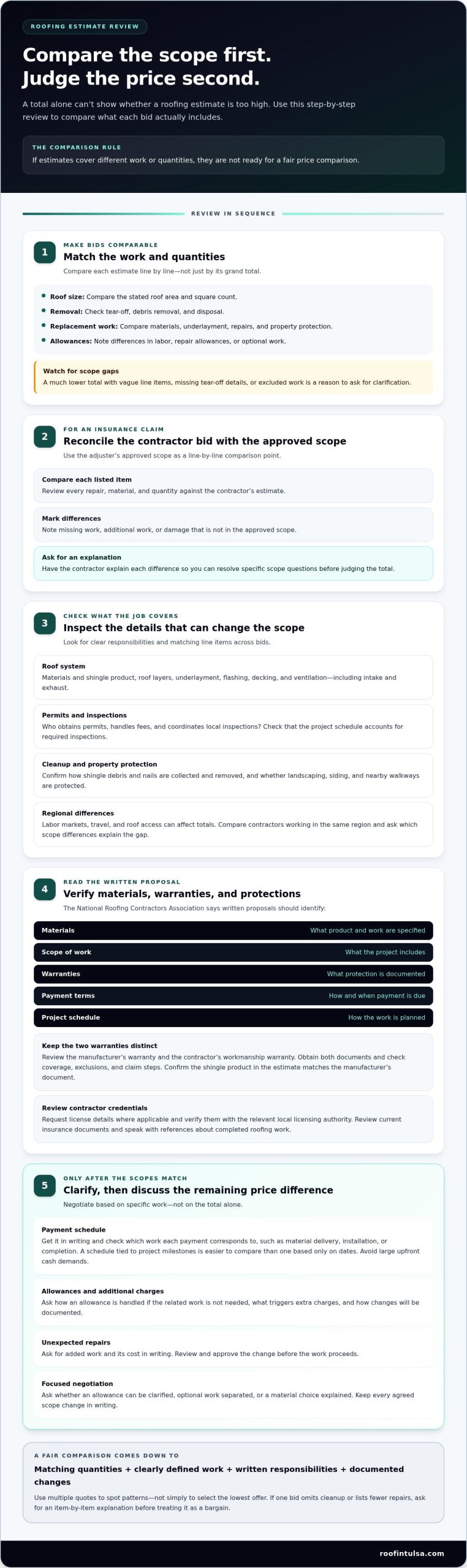
A single total can’t show whether a roofing estimate is too high; the scope behind it matters just as much as the price. To tell how to tell if a roofing estimate is too high, compare estimates line by line, including roof measurements, materials, tear-off and disposal, and the work included. The National Roofing Contractors Association says written proposals should identify materials, scope of work, warranties, payment terms, and project schedule.
It’s reasonable to question a quote that gives you one number without explaining what it covers. A higher total may reflect a more complete scope, while a lower one may leave important work unclear. This article shows you how to compare materials and labor, review fees and warranties, and decide when to ask for clarification or negotiate. You’ll also learn which scope details can change the total, so you can make a fair comparison before choosing your next step.
Key Takeaways
- Compare each estimate with the insurance scope line by line, and ask for clear explanations of differences in work or materials.
- Review who handles permits, debris removal, property protection, and warranty documents before agreeing to a proposal.
- Get the payment schedule in writing and make sure unexpected repairs require your approval before work proceeds.
- Check roof layers, underlayment, flashing, and decking details to spot scope gaps that can affect the final total.
1. Can I negotiate after comparing estimates?
There’s no single normal range for price differences between roofing bids. Costs depend on scope, materials, roof access, and local labor. A much lower total paired with vague line items, missing tear-off details, or excluded work is a red flag. To tell if a roofing estimate is too high, compare what each proposal actually covers before judging the total.
Start by matching the work descriptions and quantities in each estimate. Check that each covers the same roof area, removal and disposal, replacement materials, underlayment, and property protection. Compare the stated roof square count, then note differences in materials, labor, or repair allowances. If one estimate includes new underlayment and another excludes it, the totals aren’t comparable yet. Ask for a revised scope or a written explanation.
For an insurance claim, compare the adjuster’s approved scope with the contractor’s estimate. Review each listed repair, material, and quantity, then note missing or additional work. Ask the contractor to explain each difference, including whether the estimate covers damage that isn’t in the approved scope. This gives you specific questions to resolve instead of negotiating based on the total alone.
Once the scopes match, discuss any remaining price difference directly. Ask whether the contractor can clarify an allowance, separate optional work, or explain how a material choice affects the total. Negotiate scope changes only when you understand what they remove or alter. Keep any agreed changes in writing so both sides have the same work description.
Local labor costs and regional prices affect replacement estimates because labor markets, travel, and job access vary by area. Similar materials and roof dimensions can still produce different totals. Compare bids from contractors working in the same region, and ask which differences in scope explain the gap.
If you’re figuring out how to tell if a roofing estimate is too high, use multiple quotes to spot patterns, not just the lowest offer. If one bid omits cleanup or lists fewer repairs, ask for an item-by-item explanation before treating it as a bargain. A clear, matching scope helps you negotiate based on evidence and judge whether the price difference reflects included work.
2. Permit, cleanup, disposal, and warranty details
Review the estimate for line items covering permits, debris removal, disposal, underlayment, flashing, and ventilation. It should state who handles permit fees and coordinates local inspections. Cleanup details should explain how roofing debris is collected and removed. Ventilation should address both intake and exhaust, while the materials section should describe underlayment and flashing work. Compare these details across bids before judging whether the price is reasonable.
Shingle specifications matter because the product type and warranty coverage affect what the estimate includes. Check that the written proposal identifies the roofing materials and describes the work covered by each warranty. The National Roofing Contractors Association says written roofing proposals should identify materials, scope of work, warranties, payment terms, and project schedule. Missing details make proposals harder to compare accurately.
Separate the manufacturer’s warranty from the contractor’s workmanship warranty. Before signing, obtain both warranty documents and read their coverage terms, exclusions, and claim steps. A warranty line item alone doesn’t explain what protection applies. Check that the shingle product named in the estimate matches the product covered by the manufacturer’s document.
To review credentials and protections, request the contractor’s license details where applicable, and verify them with the relevant local licensing authority. Review current insurance documents, speak with references about completed roofing work, and read the written warranty documents before accepting the estimate. Ask who obtains permits, who pays related fees, what disposal includes, and how ventilation or flashing work is handled.
Also compare payment terms with the listed work. The proposal should identify the payment schedule and any allowance, including how it is handled if the related work isn’t needed. Ask what triggers additional charges and how changes are documented. If the estimate involves storm damage, insurance claim assistance can help you compare the contractor’s scope with the approved insurance scope.
3. Cleanup, permits, and payment schedules
A detailed estimate should explain how cleanup and disposal fit into the job. Look for a line item covering shingle debris, nails, and removal from the property. Check whether the plan includes protection for landscaping, siding, and nearby walkways. If the estimate mentions a dumpster but says nothing about final cleanup, ask what happens after installation. Compare the same cleanup tasks across bids.
Permits can affect both the work plan and the total. The proposal should identify who coordinates permits and local inspections, and whether related charges are included. Compare that line item with the project schedule. If an inspection is needed before work continues, the schedule should account for it. Without a clear permit responsibility, homeowners may not know who handles coordination.
Review payment terms as closely as materials. Avoid large upfront cash demands, and get the payment schedule in writing. Check which work each payment corresponds to, such as material delivery, installation, or completion. A schedule tied to clear project milestones is easier to compare than one based only on dates. Keep the estimate, payment terms, and any agreed changes together.
Unexpected conditions can change the work once old materials come off. Damaged decking, for example, may need replacement, or flashing may require additional attention. The estimate should explain how extra work is documented and approved before it proceeds. Ask for the added scope and cost in writing, then review the change before authorizing it. An unclear process is a red flag, even if the original total looks competitive.
Compare every bid for cleanup, permit coordination, disposal, and payment timing. A lower estimate may leave these tasks out, while a higher one may include them clearly. Don’t assume missing line items are covered. Ask for a revised description that makes responsibilities and milestones clear. Consider whether the schedule allows time for inspections and site cleanup, rather than ending at installation. If contractor identification or license details conflict across documents, resolve the discrepancy before signing.
4. Materials and scope details in a roofing estimate
Start with the work description, not the material label. An estimate should distinguish full tear-off, partial replacement, and repair, then state how many existing layers will be removed. If a tear-off estimate prices two roof layers as one, that gap could lead to a change order. Ask for the layer count and removal work in writing.
Roof pitch, valleys, penetrations, and other complex features affect labor and installation steps. A steeper roof or intricate layout can require additional access and careful flashing work. Compare these details across estimates alongside the roof square count. When deciding if a roofing estimate is too high, check whether every bid describes the same roof shape and work.
Asphalt shingles, metal roofing, tile, and slate differ in materials and installation requirements. Installed prices depend on the selected product, roof design, tear-off needs, and labor; the price depends on the case and is given after a quote request. The estimate should name the chosen materials and describe their scope, rather than grouping them under a vague label.
Check how the proposal handles underlayment, ice-and-water shield, flashing, and pipe boots. It should identify the underlayment type, where protective membrane will go, and whether flashing and pipe boots will be replaced or reused. Ventilation needs both intake and exhaust. Knowing how to tell if a roofing estimate is too high starts with comparing how each proposal covers these components.
Decking is another key detail. Look for a per-sheet replacement price, evidence supporting any allowance, and written approval before change orders proceed. Ask whether unused allowance is credited if the decking is sound. One estimate example lists 24 squares of material before adding 10% extra for waste, showing why quantities and waste assumptions should be compared.
Finally, match materials and work to the workmanship warranty, permits, payment terms, and timeline. The National Roofing Contractors Association says written proposals should identify materials, scope, warranties, payment terms, and project schedule. For a clear roof replacement scope review, compare each component and its installation requirements before accepting the total.
Rescue Roofing Tulsa: Residential Roof Replacement
Rescue Roofing Tulsa offers residential roof replacement when comparing estimates shows that a full replacement is the right next step. If the roof’s condition or proposed scope is unclear, a roof inspection can help clarify whether repair or replacement fits the issue. For isolated damage, roof repair may be more appropriate than replacing the entire roof. Comparing the inspection findings with written estimates helps you understand which work addresses the roof’s needs. The goal is a clear scope, not simply choosing the lowest total. If you’re ready to discuss your roof, contact Rescue Roofing Tulsa or visit roofintulsa.com.
Move forward with a clear roofing decision
Knowing how to tell if a roofing estimate is too high gives you a stronger basis for deciding what to do next. Use the written scope to determine whether the proposed work fits your roof’s condition, and keep your estimates and insurance documents together. If you’re unsure whether repair or replacement makes sense, a roof inspection can help you understand the roof’s condition before moving ahead.
Rescue Roofing Tulsa provides residential and commercial roof replacement, along with roof repair. The right service depends on your roof and the work it needs. Bring your questions and compare the written scope with the proposed roofing work. A clear decision starts with understanding what your roof needs, rather than reacting to the total alone.
Contact Rescue Roofing Tulsa today to discuss your roofing needs. Take the next step with a clearer view of your options and a plan that fits your property.
Frequently Asked Questions
What should I do if my roofing estimate is just one number?
Ask for a written, itemized proposal before deciding whether to accept it. Request separate descriptions for labor, materials, removal, disposal, and expected repairs. A single total, for example, doesn’t show whether the contractor included new flashing or only resealing. If the estimate remains vague after you request details, you can’t make a meaningful comparison with another proposal.
Can I negotiate after comparing estimates?
Start with a specific difference in scope. Ask whether an estimate can include the same material or cleanup work as another bid, or request an explanation for a separate allowance. Focus on changes that preserve the work your roof needs rather than simply asking for a lower total. Put any agreed adjustment in the revised written proposal.
How Do I Know If My Roofing Quote Is Too High?
Judge the quote by its documented scope, not the total alone. Compare roof measurements, materials, removal, repairs, and included services with another estimate for similar work. Then ask the contractor to explain any major difference you can’t connect to a specific task or material. If key work is unclear, request clearer terms before deciding.
How can I tell if a roofing contractor is overcharging me?
Look for unexplained charges or a mismatch between the listed work and the proposed total. If the estimate includes a decking allowance but gives no basis for it, for example, ask what condition would trigger replacement and how any unused allowance is handled. Compare the explanation with the actual scope. A difference in totals alone doesn’t establish overcharging.
Is a higher quote always a bad sign?
No. A higher quote may cover more complete work, different materials, or installation details missing from another proposal. One estimate may include replacing pipe boots while another reuses them, for example. Compare those choices and their effect on the finished roof before drawing a conclusion. A higher total is easier to assess when each difference is clearly explained.
Line 1: Is the square count stated?
Check whether the estimate gives the roof’s square count so you can compare the measured area between proposals. If one bid lists a different quantity, ask how the contractor measured the roof and whether the figure includes waste. A mismatch may reflect different measurement assumptions rather than a pricing problem. Keep measurements and material quantities together when reviewing the scope.