




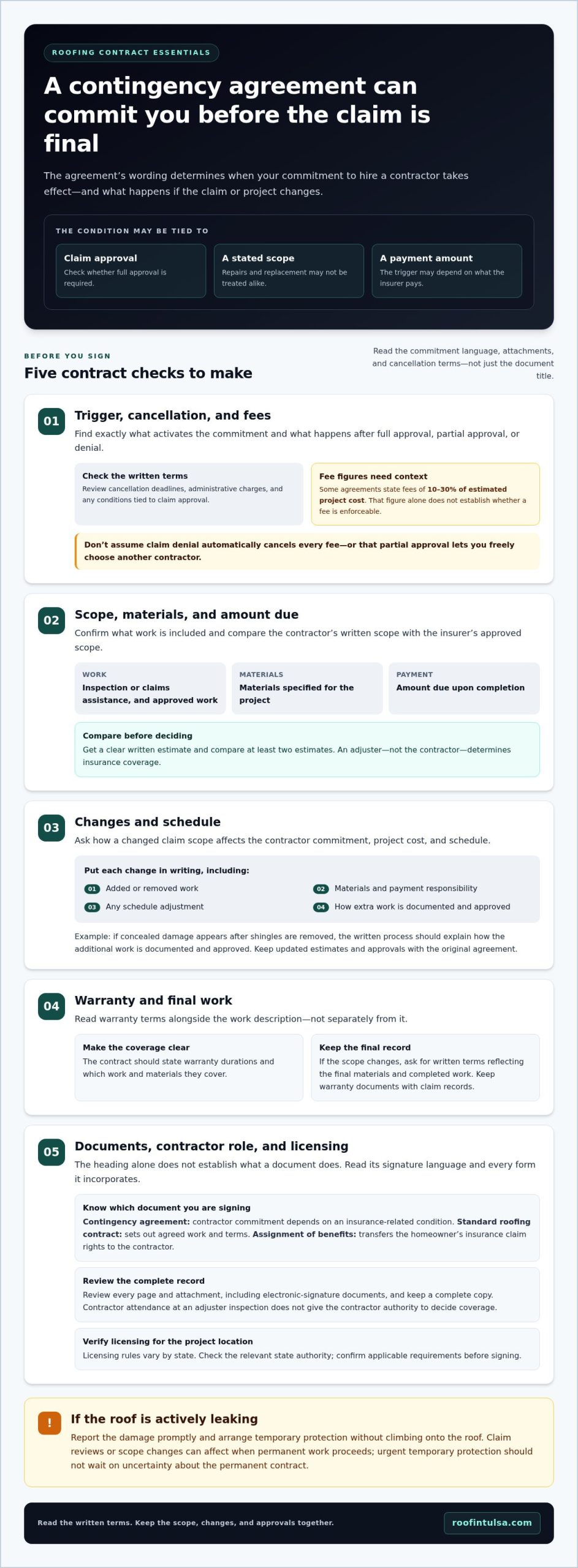
A roofing contingency agreement can make a homeowner’s commitment to hire a contractor depend on an insurance-related condition, such as claim approval, an agreed scope of work, or a specified payment amount. That is what a contingency agreement for roofing means: the contractor’s role depends on the condition set out in the agreement. The title alone does not explain how the terms may affect your choices.
It is understandable to focus on addressing roof damage, especially when an insurance claim is involved. But the agreement can also shape what happens if the claim is denied or only partly approved, or if the work, schedule, or warranty needs to change.
This article explains what these agreements may cover, how their conditions can affect project decisions, and which cancellation, legal, and ethical risks deserve attention. You will also learn why clear written terms matter, so you can understand your commitment before signing.
Key Takeaways
- A contingency agreement can make hiring a roofer conditional on an insurance claim being approved or meeting stated terms. Read the commitment language, not just the document’s title.
- Before signing, look for a clear written scope, materials, completion amount, and warranty terms so you can understand what the agreement covers.
- Changes to claim approval or project scope can affect the work and schedule. Make sure the agreement explains how those changes will be handled.
- Review cancellation terms and deadlines carefully. Don’t assume a claim denial or a delay while waiting for an adjuster automatically ends your obligations.
What Is a Roofing Contingency Agreement?
A roofing contingency agreement makes a homeowner’s commitment to hire a contractor depend on an insurance-related condition. The precise commitment depends on the agreement’s wording, including what happens if the claim is only partly approved.
Contract Details and Licensing
A detailed roofing contract describes the inspection or claims assistance, approved work, materials, warranty terms, and amount due upon completion. These details help you compare the proposed work with the insurer’s scope and understand what signing commits you to. Get a clear written estimate and compare at least two estimates before deciding. Relying on an unbiased evaluation from a qualified firm such as A Premier Home Inspection can help clarify your property’s condition, though an adjuster determines insurance coverage; a contractor’s presence at an inspection does not give them that authority.
Licensing rules vary by state, so use the relevant state authority to verify a contractor’s license. The Louisiana State Licensing Board for Contractors advises homeowners in Louisiana to use the board to verify a contractor’s license. For a Mississippi project, confirm the applicable licensing requirements through the state authority before signing.
Agreement and Contract Differences
A contingency agreement makes the contractor commitment depend on an insurance-related condition, while a standard roofing contract directly sets out the agreed work and terms. An assignment of benefits is different: it transfers the homeowner’s insurance claim rights to the contractor. This distinction matters because a document’s heading alone does not establish its legal effect. Review the signature language and any documents it incorporates.
Some contingency arrangements involve the contractor in claim negotiations. This can complicate settlements, delay approval, or contribute to disputes, but it does not give the contractor authority to decide coverage. If the insurer approves a particular scope or payment amount, check whether the agreement requires you to hire that contractor and what work will follow. A commitment based on the payout may not provide a competitive bid or a clear scope comparison.
Fees and Cancellation Charges
Cancellation charges depend on the agreement’s written terms and applicable rules. Some roofing contingency agreements state fees of 10 to 30 percent of the estimated project cost; that figure alone doesn’t establish whether a fee is enforceable. Read the cancellation clause before signing, including any administrative charges and conditions tied to claim approval.
Do not assume a claim denial automatically cancels every fee, or that partial approval lets you freely choose another contractor. The agreement should state what happens in each situation and identify any inspection or claims assistance already provided. Review every page and attachment, including electronic-signature documents, and keep a complete copy. That record can clarify your stated obligations if a cancellation or scope dispute arises.
Changes, schedules, and warranties
Insurance approval can differ from the damage or work described in an initial estimate. Compare the approved scope with the contractor’s written scope before permanent work begins. If the insurer approves repairs but the agreement describes replacement, clarify the difference in writing. A contingency agreement should explain how changes affect the contractor commitment, project cost, and schedule. Don’t rely on a verbal promise to resolve a scope difference later.
Ask for written change terms before signing. Each change should identify added or removed work, materials, payment responsibility, and any schedule adjustment. For example, if concealed damage appears after shingles are removed, the written process should explain how the additional work is documented and approved. Keep updated estimates and approvals with the original agreement so everyone is working from the same scope.
Schedules depend on the approved work, material selection, and conditions at the property. A claim review or change to the scope can affect when permanent work proceeds. Uncertainty about the permanent contract should not delay urgent temporary roof protection or communication with the insurer. If water is entering your home, report the damage promptly and arrange temporary protection without climbing onto the roof.
Before signing, read the warranty terms alongside the work description. The contract should state warranty durations and clarify which work and materials they cover. If the scope changes, ask for the written terms to reflect the final materials and completed work. An inspection of roof damage can help document existing conditions before decisions about permanent work. Keep the final contract and any warranty documents with your claim records.
What a roofing contingency agreement is
Understanding what a contingency agreement for roofing does starts with its condition: a homeowner agrees to hire a contractor if an insurance claim is approved or reaches a stated scope or payment amount. The signature may commit you before claim decisions are final. Read the operative language, not just the heading, because attached forms may add terms.
That condition may be narrower or broader than it sounds. One document may activate only after full approval; another may tie the commitment to a particular scope or whatever amount the insurer pays. If an insurer approves repairs but not replacement, the agreement’s trigger determines what work the contractor expects. A clause tied to insurer payment can also make the work’s value depend on the payout rather than a separate competitive bid.
The insurer’s claim process is separate from the contractor’s contract. A roofer may participate in discussions, but attending an adjuster inspection does not give them authority to decide what coverage applies. Extensive contractor involvement in negotiations can delay approval, complicate settlement, or lead to disputes. Ask the insurer what access, documents, or authorizations it needs; do not assume it requires the contractor’s signature form.
Before signing, read every page and attachment, including electronic-signature documents, and save a complete copy. Look for the condition that activates the hiring commitment, the exact work that follows, and what happens after full, partial, or denied approval. Do not assume a denial automatically cancels the agreement unless its terms support that result. An assignment of benefits is separate: it transfers claim rights to the contractor, so review it apart from the hiring condition.
A practical safeguard is to connect the condition to a specific written outcome. If repairs are approved, state whether repair or replacement is authorized and how any scope change requires written agreement before the work expands. This makes the commitment easier to understand before a claim decision changes the project.
Can a homeowner cancel a roofing contingency agreement, and what are the deadlines?
Cancellation rights depend on the agreement and applicable law. Start by finding the cancellation clause, deadline, required notice method, and address. Check every signed page and attachment, including electronic documents. Waiting for an adjuster does not extend a contract deadline. Unfinished work alone also does not prove that cancellation is free or the agreement unenforceable.
For sales covered by the Federal Trade Commission’s Cooling-Off Rule, consumers generally have until midnight of the third business day to cancel. Under the rule’s counting method, Saturdays count as business days, while Sundays and federal holidays do not. The rule does not cover every roofing agreement. Whether it applies depends on the transaction, with exceptions that include sales made entirely online or by phone and certain emergency transactions.
If the FTC rule applies, use the cancellation form or send a cancellation letter within the deadline. Follow the contract’s notice instructions as well, and keep proof of mailing and a copy of the notice. Do not rely on a phone call alone when written notice is required. Record when and how you sent the cancellation, and keep any response with your contract papers.
A denied insurance claim doesn’t automatically settle every fee question; the agreement’s language and applicable cancellation rules matter. A denied claim does not by itself determine what you owe; review the agreement’s terms and applicable cancellation rules. If the claim is partly approved, read the terms before choosing another contractor. Ambiguous cancellation language, automatic assignment clauses, or legal threats deserve careful attention. For claim-related roof concerns, get help reviewing roof damage alongside your insurance paperwork.
For covered sales, the federal FTC Cooling-Off Rule may govern cancellation, but the agreement and applicable law also matter. Whether the rule applies depends on the facts of the transaction.
Rescue Roofing Tulsa: Residential Roof Replacement
Rescue Roofing Tulsa helps homeowners assess roof damage and determine the appropriate work. If an inspection shows that a repair may address the problem, roof repair may be suitable; extensive damage may call for residential roof replacement. A roof inspection can also help document the roof’s condition as you review an insurance-related scope and contract terms.
Before work begins, make sure the written agreement describes the approved work, materials, schedule, and warranty terms. If the insurer’s scope differs from the proposed project, clarify the change in writing. This helps keep the work aligned with the decision you make for your home.
For help with a roof inspection, repair, or replacement, contact Rescue Roofing Tulsa to discuss your roofing needs.
Make Your Next Roofing Decision With Care
Understanding what a contingency agreement for roofing means can help you approach your next decision with a clearer sense of your commitments. Before moving ahead, identify the work your roof needs and keep your claim documents and contract terms together. A practical next step is to match the property’s condition to the right scope of work, rather than letting paperwork alone dictate the project.
Rescue Roofing Tulsa offers residential and commercial roof replacement and roof repair. The right roofing work depends on the building and the damage involved. If you’re ready to discuss your roof and possible next steps, contact Rescue Roofing Tulsa. A clear conversation can help you move forward with greater confidence and care.
Frequently Asked Questions
Do You Have to Sign Before the Insurance Adjuster Arrives?
No. Do not assume an insurer requires a contractor’s signature before an adjuster arrives. Ask the insurer what access, documents, or authorizations it needs for the inspection. You can arrange for a roofer to attend, but their attendance does not give them authority to decide coverage. Keep claim communications and any proposed agreement separate, so a request for inspection access is not mistaken for a hiring commitment.
What Is a Contingency Contract?
A contingency contract makes an obligation depend on a stated condition. In roofing, that condition may involve insurance claim approval, an agreed scope, or a specified payment amount. For example, a homeowner’s commitment to hire a contractor may take effect only after the insurer approves the claim. Read the full contract to identify the trigger and any duties that apply before or after it occurs.
What is a contingency agreement for roofing?
It is an agreement that may commit a homeowner to use a roofer if a defined insurance-related condition occurs. The condition could be claim approval or approval of a particular scope. For example, a document might treat partial approval differently from full approval. The key question is what the signed terms require in each outcome, including whether the contractor’s work and the homeowner’s commitment are clearly described.
How does a roofing contingency agreement work with an insurance claim?
The agreement ties the roofing commitment to a claim event specified in its terms. The contractor may inspect the roof or discuss damage during the claims process, while the insurer evaluates coverage. For example, if the insurer approves repairs rather than replacement, the written condition determines whether the agreement applies and what work is contemplated. Keep claim decisions and contract changes documented separately.
What terms should a roofing contingency agreement include?
Look for the condition that activates the commitment, the inspection or claims assistance promised, and the work required after approval. The agreement should also identify materials, warranty terms, the amount due upon completion, and how scope changes are documented. For example, if hidden damage changes the planned work, written terms should explain how approval is recorded before that additional work proceeds.
Is a roofing contingency agreement legally binding in the United States?
It can be binding, but the outcome depends on the agreement’s wording and the law that applies where the property is located. A heading alone does not settle its legal effect. For example, unclear cancellation terms or documents incorporated by reference can affect what the parties agreed to. Review the signed language, attachments, and relevant state requirements before assuming the agreement is enforceable or can be cancelled.