


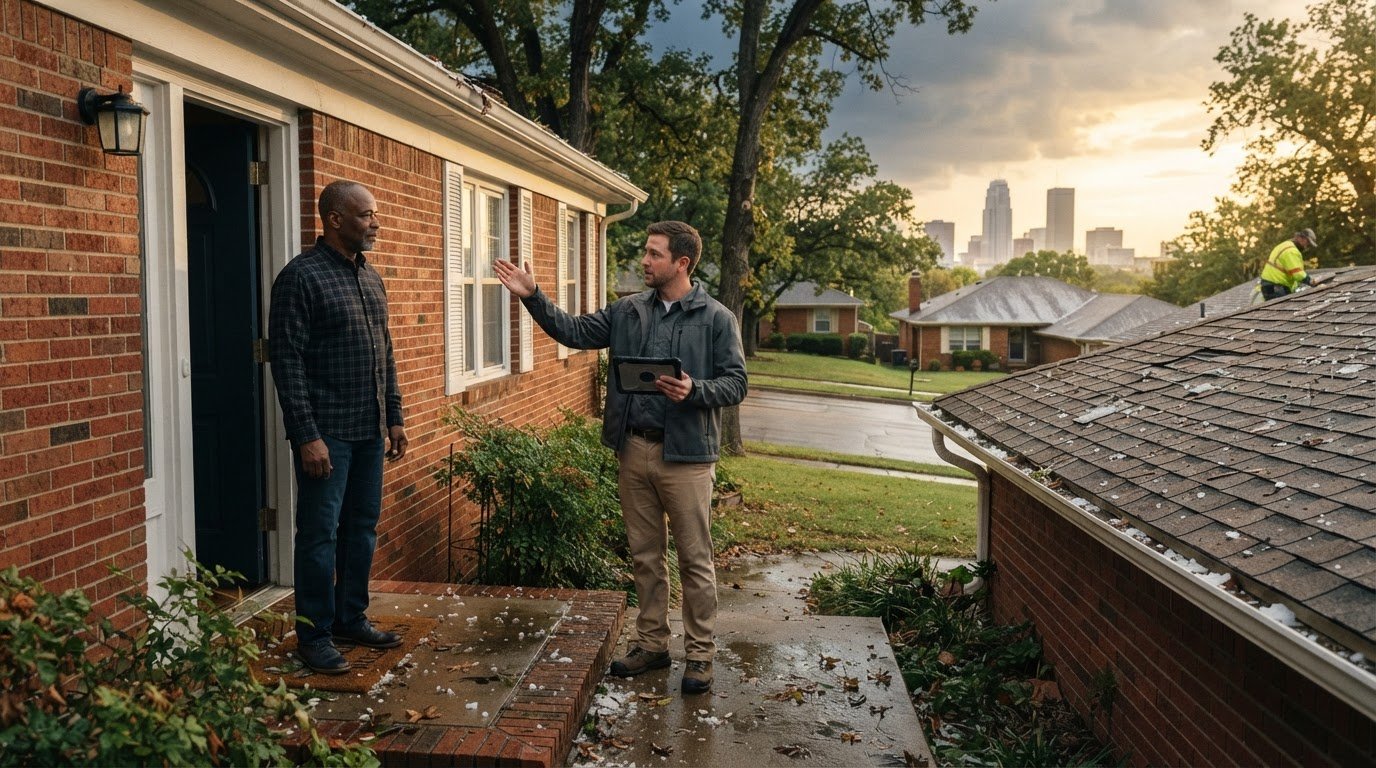

What if the best response to an unexpected roofing offer is simply to slow the conversation down? After a Tulsa storm, it’s natural to worry about hidden damage and feel pressure to act quickly. If you’re asking what to do about storm chasers in my neighborhood, remember that a door-to-door pitch isn’t proof of dishonesty, but you don’t have to make a decision at the door.
You deserve time to understand who’s offering work, what they’re proposing, and how insurance may fit into the process. Be cautious of pressure to sign paperwork immediately or promises that sound too easy, including offers to cover your deductible.
This guide explains how to respond calmly, recognize warning signs without making assumptions, and arrange a clear roof assessment in Tulsa. You’ll also learn how an inspection can help clarify your roof’s condition and how Rescue Roofing Tulsa’s Insurance Claim Assistance can support you as you consider next steps, without promising an insurance outcome.
Key Takeaways
- An unsolicited roofing visit alone doesn’t prove a contractor is dishonest, but you can take time to understand the offer before deciding.
- Watch for pressure signals, such as demands for an immediate signature or unclear explanations of the proposed work.
- If you’re wondering what to do about storm chasers in my neighborhood, pause, note what the visitor says, and keep any written information they provide.
- Compare claims of urgent damage with documented findings that explain what was observed and what work is proposed.
- A professional roof inspection can help clarify next steps. Rescue Roofing Tulsa offers free, no-obligation roof inspections and quotes.
Storm chasers in your Tulsa neighborhood: understand the situation before deciding
After severe weather, an unfamiliar roofer may knock on your door and offer to inspect your roof. The timing can make the offer feel urgent, especially if you’re concerned that hail or wind may have caused damage you can’t see from the ground. But a visit alone doesn’t establish whether your roof is damaged, whether work is needed, or whether the person offering help is trustworthy.
In this article, “storm chaser” refers to a roofing contractor canvassing neighborhoods after severe weather to offer inspections or roofing work. The phrase can also refer to people who follow storms to observe or study the weather. The Storm chaser (disambiguation) page outlines these different meanings. Here, the focus is on roofing offers, not weather enthusiasts.
A contractor approaching homeowners after a storm isn’t automatically dishonest, and the label “storm chaser” alone isn’t evidence of poor workmanship. Focus on the details behind the offer: what the visitor observed, what work they recommend, and whether they explain it clearly without pressuring you.
Why roofing offers may appear after a Tulsa-area storm
Roofers may contact residents in Tulsa neighborhoods where a storm could have affected homes. A canvasser might be asking whether homeowners want an inspection or introducing a roofing service. The timing explains why someone is at your door, but it doesn’t confirm damage to your roof or show how serious any damage might be. Nearby homes can experience different conditions, so a neighbor’s experience isn’t a diagnosis of your roof.
What homeowners should avoid assuming
Don’t assume every door-to-door roofer is a scammer. At the same time, don’t treat a confident pitch or a quick glance from the ground as a complete assessment. Some roof areas aren’t easy to evaluate from a driveway, and a verbal claim doesn’t document what was observed. If you’re asking what to do about storm chasers in my neighborhood, separate the approach from the evidence. You can listen, ask for information in writing, and take time to understand the recommendation before deciding.
A measured response lets you consider a possible roofing concern without giving up your ability to choose. You don’t need to diagnose the roof during a doorstep conversation. Note what prompted the visitor’s recommendation and whether they can explain it plainly. Then compare that explanation with a roof assessment. Clear findings give you a firmer basis for deciding whether to pursue repairs, seek another evaluation, or take no immediate action.
How to spot pressure tactics from storm chasers after an Oklahoma storm
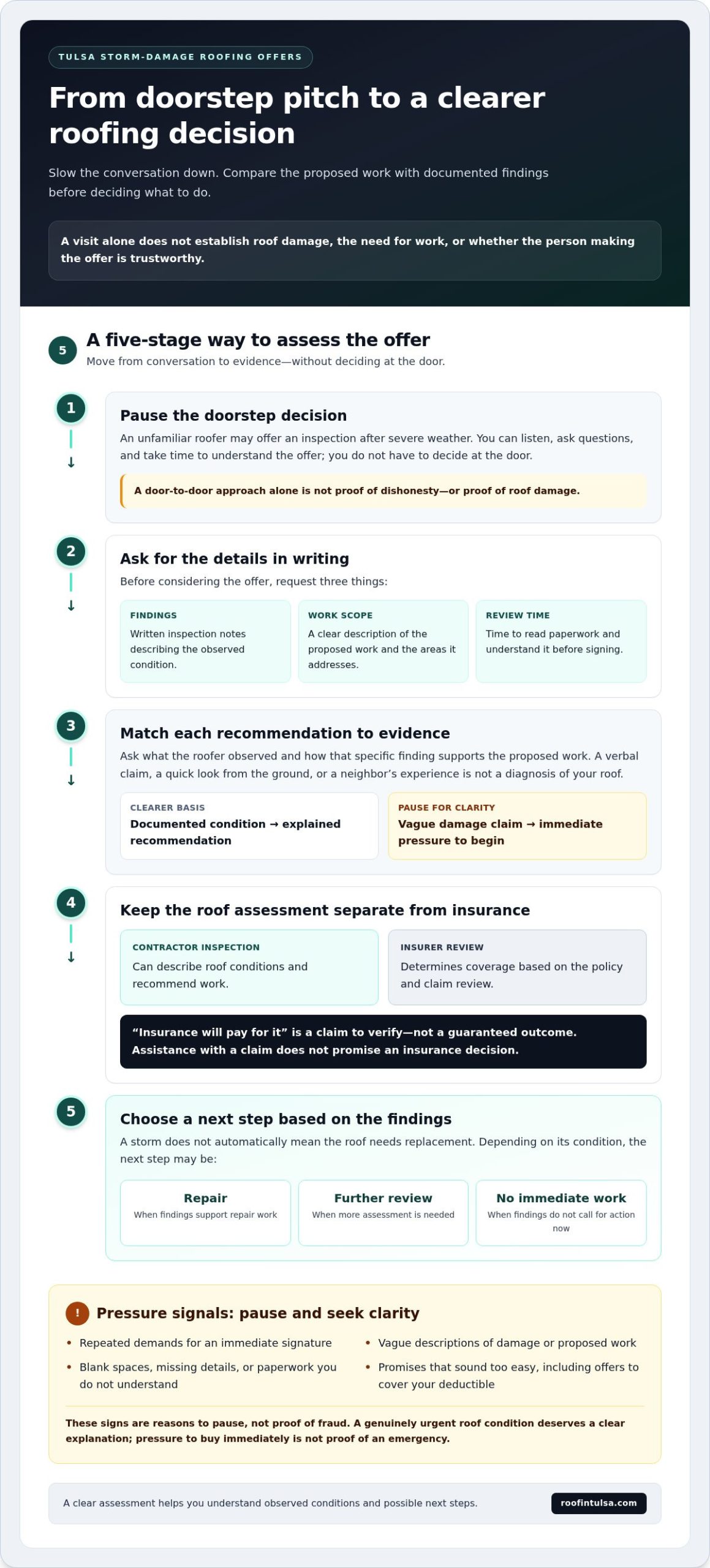
A roofing offer after a storm isn’t automatically a cause for alarm. Pay attention to whether the person gives you clear information and respects your decision-making time. Repeated demands for an immediate signature, vague descriptions of damage, or paperwork you can’t review are reasons to pause and seek clarity. These signs aren’t proof of fraud by themselves, but you don’t have to proceed while important details remain unanswered.
A genuinely urgent roof condition deserves a clear explanation. Pressure to buy immediately is a sales tactic, not proof of an emergency.
Sales behavior that deserves a closer look
Notice how the visitor responds when you ask for time. They may explain that they’re working nearby, but repeated attempts to rush your decision can make it harder to understand what you’re agreeing to. Be especially careful with forms that have blank spaces, missing details, or language you don’t understand. Don’t sign simply because someone says the paperwork is routine.
You can keep your response polite and firm: “I’m not ready to sign. Please leave the written information so I can review it.” If the visitor won’t respect that request, end the conversation. A reasonable roofing discussion should give you room to read the proposed work, ask questions, and consider the information without pressure at your door.
Before considering an offer, ask for:
- Written inspection findings that describe the observed condition.
- A clear scope of proposed work, including the areas it addresses.
- Time to review any paperwork before signing.
Claims about storm damage and insurance
A contractor’s inspection can describe roof conditions and recommend work. It doesn’t determine what your insurance policy covers. Treat a statement such as “insurance will pay for it” as a claim to verify, not a guaranteed outcome. Coverage decisions belong to your insurer and depend on the policy and claim review. Keep those steps distinct, even if a contractor offers Insurance Claim Assistance.
A storm in Tulsa doesn’t automatically mean your roof needs replacement. Depending on its condition, the right next step might be a repair, further review, or no immediate work. Ask the roofer to connect each recommendation to a specific finding and put the proposed work in writing. Compare that explanation with what you can observe rather than relying on a verbal claim that the whole roof must be replaced.
If you’re weighing what to do about storm chasers in my neighborhood, choose clarity over urgency. A professional roof inspection in Tulsa can help you understand observed conditions and possible next steps before you decide how to proceed.
How to assess a storm-damage roofing offer in Tulsa
A useful roofing offer connects what the roofer observed to the work they recommend. Look for more than a statement that “the storm damaged your roof” or that repairs must begin immediately. Written findings should identify the affected area or roofing component and explain in plain language how the proposed work addresses it. If the recommendation is broad or only verbal, ask for details before deciding.
An inspection finding and a sales recommendation aren’t the same thing. A roofer may describe a concern, but you still need to understand whether the suggested response is repair, replacement, or another step. A Tulsa roofing and insurance guide can provide additional context as you consider how roof conditions and insurance questions relate.
What a useful roof inspection should explain
Ask which parts of the roof were inspected and what condition was observed. Findings should be specific enough to distinguish an observed issue from a general concern. For example, “damage was found” gives you little to evaluate. A description that identifies the affected area and explains the visible condition is more useful. Request the findings in writing, along with a proposed scope that describes the recommended work.
Use the following comparison to identify details that may need clarification:
| Offer detail | Useful evidence | Questions to resolve |
|---|---|---|
| Claim of storm damage | Written description of the observed roof area and condition | What was seen, and where? |
| Suggested repair | Scope identifying the work and the affected area | How does this work address the finding? |
| Recommendation for replacement | Explanation connecting the roof’s observed condition to the recommendation | Why is repair not the proposed option? |
| Urgent timing | Specific explanation of the condition that makes prompt attention important | What could happen if I take time to review the findings? |
What to review before agreeing to roofing work
Before signing, read the complete written scope, make sure the contractor’s identity and contact details are clear, and keep a copy of every document. Check that the paperwork describes the work discussed with you. If wording is unclear or an important detail is missing, ask for a written explanation or correction before agreeing. For repair-related context, the Tulsa roof repair guide may help you understand common considerations.
If you’re still weighing what to do about storm chasers in my neighborhood, use the written evidence to compare the claimed damage with the proposed work. A clear connection between findings and scope helps you decide based on your roof, not just the urgency of an offer.
What to do when storm chasers approach your Tulsa home
A simple sequence can help you stay in control after an unexpected roofing visit: pause, document, review, then arrange an inspection. You don’t need to make a roofing or insurance decision during a doorstep conversation. Keep a record of the information and decide what to do once you’ve had time to understand the concern.
- Pause. Thank the visitor, but don’t agree to work or sign paperwork on the spot. If you feel rushed, say you need time to review the details.
- Document. Write down the date, the visitor’s name and company if provided, what they said they observed, and the work they proposed. Keep any estimate, business card, message, photograph, or other written material they leave.
- Review. Read any documents carefully and note what remains unclear. Separate the visitor’s observations from their recommendation, and keep copies of everything you receive.
- Arrange an inspection. A professional roof inspection can help you understand the visible conditions and whether repair or replacement may be appropriate.
Document the approach and visible concerns
Make a brief record while the conversation is fresh. If the visitor points out a concern, note the location they identify and why they recommend work. You can look at the roof from the ground, such as from your yard or driveway, but don’t climb onto it. A street-level view may show obvious concerns, but it can’t establish the roof’s full condition. Save any photos or messages you receive with your notes so you can review them alongside written inspection findings.
If the visitor provides an estimate or proposed scope, keep the complete document, not just a page or summary. This record can help you compare what was discussed with what’s in writing and identify missing details before deciding.
Take time to understand the next step
Ask for inspection findings and proposed work in writing, then review them at your own pace. For policy questions or claim procedures, contact your insurance company directly. A contractor can inspect the roof and provide information about its condition, but that inspection is separate from an insurer’s coverage decision. Keep those roles clear as you consider what to do next.
If you see an urgent issue, such as water entering the home, focus on addressing the immediate concern safely. The emergency roof repair steps can help you understand practical next actions. For a calm, documented assessment, request a free, no-obligation roof inspection from Rescue Roofing Tulsa. A clear evaluation can help you make an informed decision instead of relying on pressure or guesswork.
Get a clear roof assessment and next steps from Rescue Roofing Tulsa
After a storm, it can be difficult to know whether a roof concern needs attention or what kind of work may be appropriate. A professional inspection can help clarify visible conditions, identify areas that may need further attention, and explain possible next steps. That gives you a documented starting point instead of leaving you to weigh an unsolicited pitch against uncertainty about your roof.
Rescue Roofing Tulsa is a locally owned Tulsa roofing contractor offering free, no-obligation roof inspections and quotes. An inspection can help you understand your roof’s condition and consider whether repair or replacement may be suitable. It doesn’t determine what an insurance policy covers, but it can provide useful information as you discuss claim questions with your insurer.
What Tulsa homeowners can expect from Rescue Roofing Tulsa
Licensed and certified roofing professionals provide the company’s roofing services. An assessment can give you a clearer picture of observed conditions and the work that may address them. Use that information to ask questions, review a proposed scope, and decide what makes sense for your home. The inspection and quote are no-obligation, so you can take time to consider the information rather than feeling pressured to commit.
If you’re also dealing with insurance questions, Rescue Roofing Tulsa offers Insurance Claim Assistance. This can help you navigate the process, but it doesn’t guarantee coverage or claim approval. Your insurer makes coverage decisions based on your policy and claim review.
Choose a clear next step after a storm
A useful next step is to arrange an inspection focused on your roof’s condition, not on rushing you into a sale. Keep any notes, photos, or written recommendations you’ve already received. Sharing those details can help keep the discussion focused on what was observed and what you need to understand. Ask questions if the findings or suggested work aren’t clear, and take the time you need to review the quote.
Rescue Roofing Tulsa is Open Daily – 24 Hours. The company also states: “Get a quote within 15 minutes!”. Call or text 918-407-4834, or request a free, no-obligation roof inspection and quote when you’re ready to understand your roof’s condition and possible next steps.
Move forward with confidence, one clear step at a time
A roofing decision doesn’t have to be made at the doorstep or under pressure. Give yourself room to understand the information in front of you and choose a next step that feels right for your home. If you’re still asking what to do about storm chasers in my neighborhood, focus on getting a clear picture of your roof before committing to work. An informed decision starts with understanding your roof’s condition and which options make sense.
Rescue Roofing Tulsa can help you begin with a professional assessment. Request a roof inspection and quote to get a clearer understanding of your roof and possible next steps. There’s no need to rush. With reliable information in hand, you can move forward at a pace that feels comfortable and protect your home with confidence.
Frequently Asked Questions
Can I refuse a storm chaser’s request to inspect my roof?
Yes, you can decline an unsolicited inspection and ask the visitor to leave. You’re not required to discuss roofing work at your door, and you can choose whether to schedule an inspection later. If you’re wondering what to do about storm chasers in my neighborhood, a simple response such as “No, thank you” is enough. If you later arrange an inspection, ask which areas will be examined and request the findings in writing.
Should I sign a roofing contract immediately after a storm?
No. Don’t sign just because someone says you need to act immediately. Read the entire document, including the scope of work and any terms you don’t understand, before agreeing. Keep a copy for your records. If a detail is unclear, pause and seek appropriate guidance rather than relying on a verbal explanation. An assessment can help you understand the roof’s condition without obligating you to replace it.
Can a roofer guarantee that my insurance will pay for storm damage?
No roofer can promise that an insurer will approve coverage. A contractor can inspect the roof and describe observed damage, while your insurer reviews your policy and claim to make coverage decisions. Direct policy or claim-process questions to your insurance company. Keep inspection findings, photographs, estimates, and insurer communications together so you can refer to the same information as you consider what to do next.
Does every storm mean my Tulsa home needs a new roof?
No. A storm alone doesn’t establish that replacement is necessary. Depending on the roof’s observed condition, the appropriate next step could be a repair, another assessment, or no immediate work. A concern limited to one area, for example, doesn’t automatically mean the entire roof needs replacing. Ask for an explanation tied to specific findings rather than deciding based on a broad neighborhood-wide claim.
What should I do if a storm chaser has already inspected my roof?
Ask the contractor for written findings and a separate description of any proposed work. Save those documents and related messages, then review the scope at your own pace. You can contact your insurer with policy questions, but you don’t have to accept the first recommendation. If you want another opinion, arrange a separate assessment and compare the documented observations, not just the conclusions or urgency of either pitch.
How can I tell whether storm damage is visible from the ground?
From a safe spot on the ground, you may notice fallen debris or visible changes along the roofline, but those observations can’t show the roof’s full condition. Don’t climb onto the roof to investigate. Note what you can see from your yard or driveway, and take a photo from a safe position if useful. If something concerns you, a professional inspection can assess areas that aren’t visible from below.