

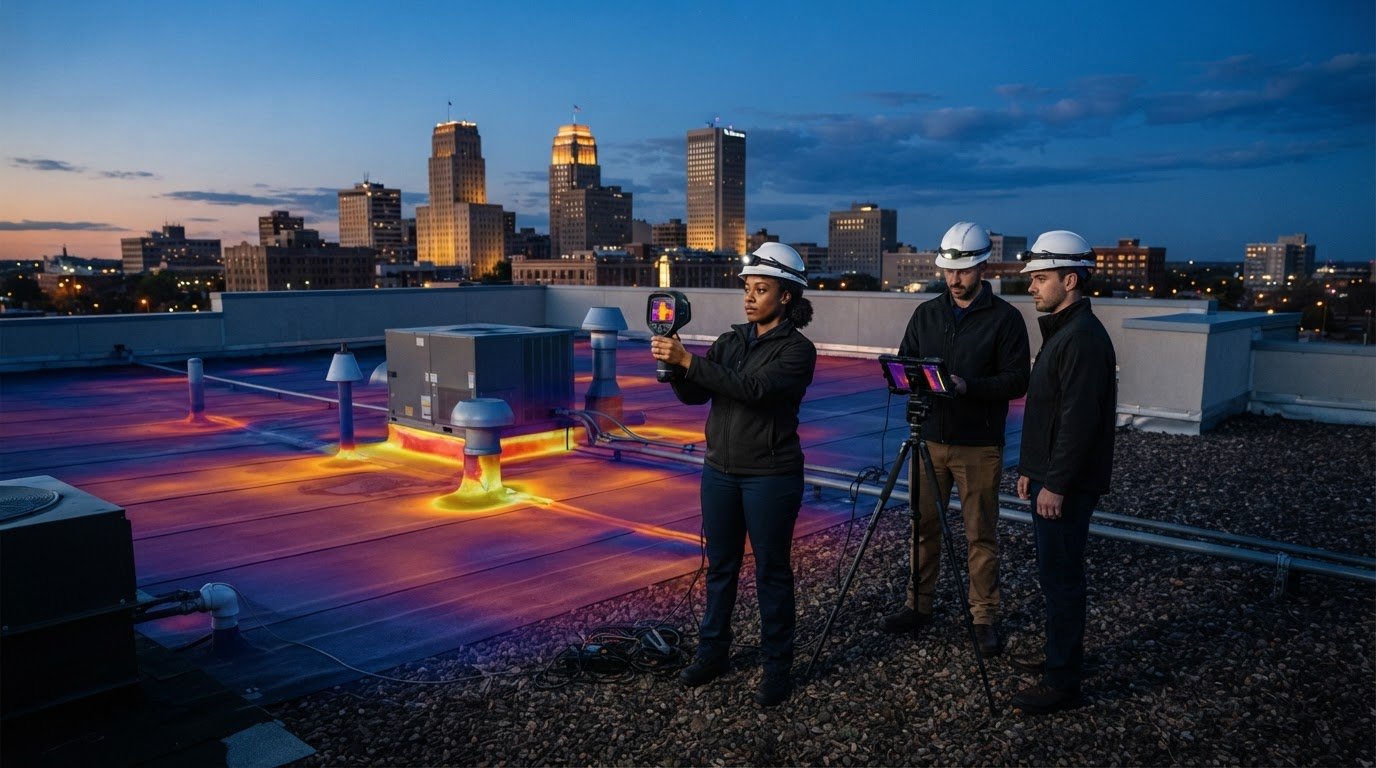

What if a warm spot on a roof image points to a concern but doesn’t prove there’s moisture? That distinction matters when a hidden roof issue could interrupt building operations. A commercial roof infrared scan tulsa property owners review can flag unusual temperature patterns, but the camera detects heat differences, not water itself.
Thermal patterns can be influenced by moisture, HVAC equipment, structural components, and roofing materials. Treat an image as a lead, then use documented roof findings to guide your decision.
This guide explains what infrared scanning can and can’t show, which details make a report useful, and how to weigh flagged areas. You’ll also learn when a roof inspection can provide the condition context needed to choose a next step, whether that means monitoring, further assessment, repair, or replacement.
Key Takeaways
- A commercial roof infrared scan tulsa report maps temperature patterns that can flag areas for closer review, but it doesn’t confirm a specific roof defect.
- Scan conditions and building features can affect images. Interpret findings in context rather than treating every unusual pattern as proof of moisture.
- Review mapped locations, supporting images, written observations, and stated limitations to understand what the report documents.
- Thermography records temperature patterns; a visual roof inspection documents observable roof conditions. The two provide different information.
- Arrange a roof-condition assessment when flagged areas need more context. Rescue Roofing Tulsa offers commercial Roof Inspection and Roof Repair services.
What a Commercial Roof Infrared Scan Can Reveal in Tulsa
A commercial roof infrared scan tulsa property managers review can map roof areas with different surface temperatures. The patterns may point to places that need closer attention, especially when a concern isn’t visible from the ground. An image is a starting point for assessment, not a diagnosis or proof of a leak.
A roof infrared scan records surface-temperature patterns that can guide further investigation; it does not, by itself, confirm moisture or identify a specific defect. Keeping that distinction clear helps ground maintenance decisions in evidence rather than assumptions.
What does an infrared roof scan measure?
An infrared camera records differences in heat across a surface and displays them as a thermal image. Colors or shades make warmer and cooler areas easier to compare. Thermography is the process of measuring and interpreting those temperature patterns. For a plain-language overview of the method, see What is Infrared Thermography?
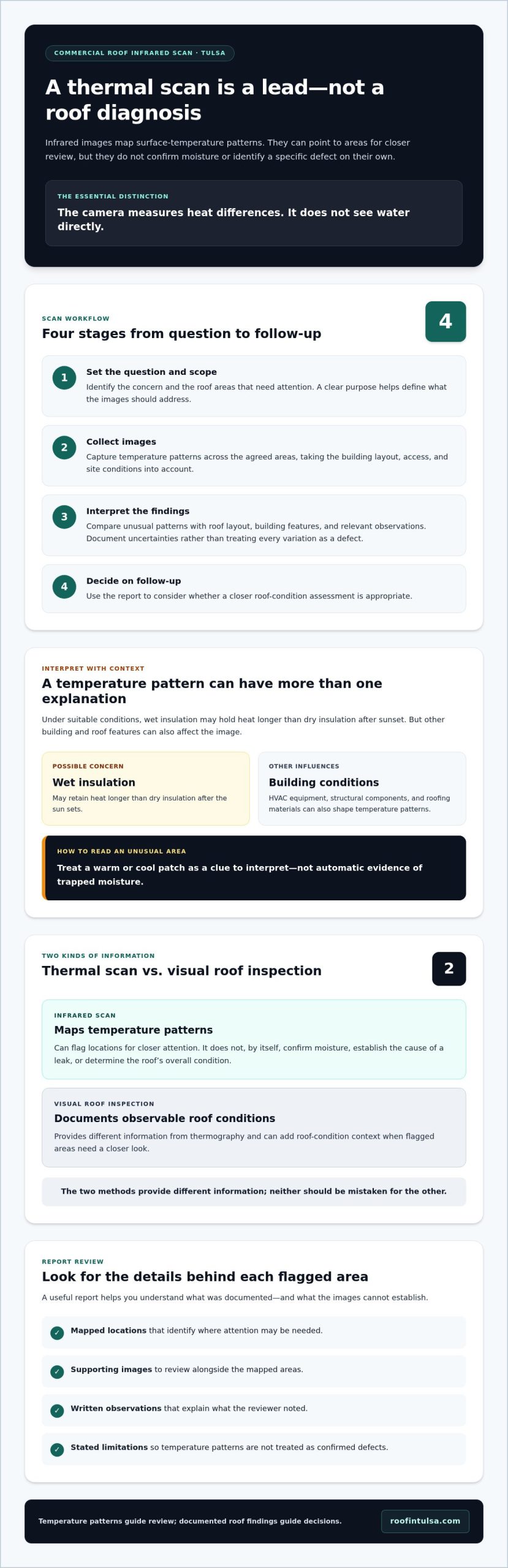
The camera doesn’t see water directly. Under suitable conditions, wet insulation may hold heat longer than dry insulation after the sun sets, creating a pattern that draws attention to a possible concern. But HVAC equipment, structural components, and changes in roofing materials can also affect temperature patterns. A warm or cool patch is a clue to interpret, not automatic evidence of trapped moisture.
Context matters. A useful assessment considers where a pattern appears, what’s beneath or around that area, and whether other observations support the same concern. If an image identifies an unusual area, follow-up may help determine whether it reflects moisture, another building feature, or a harmless variation.
When Tulsa property managers may consider a scan
Property managers may consider infrared information when investigating a concern that isn’t readily apparent from the ground or documenting roof conditions for maintenance planning. On a commercial building with a broad roof area, a mapped temperature pattern can help focus attention on specific locations instead of treating the entire roof as an unknown.
A scan may also add information when reviewing a suspected leak, assessing an area after a building or roof concern, or organizing maintenance records. It won’t establish the cause of a leak or determine the roof’s overall condition on its own. It can help identify where a closer look may be useful.
For Tulsa property owners, the practical questions are: Which locations need attention? Does the report explain what the image shows and what it cannot establish? Would a roof inspection provide the condition context needed to choose a next step? Keeping these questions in view helps make thermal imagery more useful for maintenance planning.
How a Commercial Roof Infrared Scan Works on a Tulsa Building
A useful scan starts with a clear question. Are you investigating a reported leak, reviewing an area of concern, or documenting roof conditions for maintenance planning? Defining the purpose helps set the scope and makes it easier to judge whether the images answer the question. A commercial roof infrared scan tulsa property managers review involves information gathering and assessment, not a single image that delivers a final repair decision.
What happens before and during scanning?
Before image collection, identify the roof concern and the areas to review. The building’s layout, safe access, and site conditions help shape the process. If there’s a known leak location or a history of concerns in a particular area, recording that context can help relate the images to the building.
Image collection produces information about temperature patterns. The images then need interpretation: the reviewer considers the patterns alongside the roof layout and other relevant observations. The U.S. Federal Highway Administration describes thermography as a nondestructive evaluation method in its discussion of Infrared Thermography in Nondestructive Evaluation. That source addresses bridges, so it explains the general method, not a roof-specific inspection standard.
Keep the stages distinct:
- Set the question and scope. Identify the concern and roof areas that need attention.
- Collect images. Capture temperature patterns across the agreed areas.
- Interpret the findings. Compare unusual patterns with building and roof context, and document uncertainties.
- Decide on follow-up. Use the report to determine whether a closer roof-condition assessment is appropriate.
How scan conditions affect interpretation
A thermal image reflects conditions at the time it was captured. Sun exposure, weather, nearby equipment, building features, and differences in roof materials can all influence the patterns. A useful report explains relevant conditions and limitations instead of presenting every temperature variation as a confirmed defect. Exact scanning conditions depend on the method and purpose, so one rule of thumb won’t apply in every situation.
Interpretation also depends on the building. An unusual pattern near equipment, for example, may have a different explanation from a similar pattern in an open roof area. Image collection and interpretation are related but distinct tasks. Neither replaces a separate roof assessment when the findings need physical condition context.
If a report identifies an area of concern, use it to guide the next question, not to authorize repairs automatically. A commercial roof inspection can help assess roof conditions in context when scan findings need a closer look. This approach helps Tulsa property managers make maintenance decisions based on documented observations rather than a color pattern alone.
Infrared Scan vs. Visual Roof Inspection: What Tulsa Owners Can Compare
A thermal image and a visual roof inspection provide different kinds of information. One records temperature patterns across roof areas; the other documents conditions observed during an inspection. Used together, they can help clarify what deserves attention, but neither a scan image nor a single visible clue is a complete diagnosis.
What each assessment can tell a property owner
A visual inspection focuses on observable roof conditions. Findings may document visible damage, areas of wear, drainage concerns, or other conditions present at the time of inspection. Since the report is based on what could be observed, it should describe locations and findings clearly rather than make unsupported assumptions about hidden conditions.
Thermography adds a different layer of information. It records temperature patterns that may flag an area for further review, but interpretation depends on the roof and surrounding building conditions. For a commercial roof infrared scan tulsa property owners are considering, the key is to understand what the image documents and what still needs closer assessment.
A scan offers screening information that can point to areas for review; a roof inspection assesses observable roof conditions and helps put concerns in context. Neither method guarantees that every problem will be found, so conclusions should match the evidence documented.
| Comparison | Infrared scan | Visual roof inspection |
|---|---|---|
| Purpose | Map temperature patterns that may identify areas for closer review. | Observe and document visible roof conditions. |
| Information produced | Thermal images showing differences in surface temperature. | Written observations about roof conditions seen during the inspection. |
| Follow-up needs | Interpret patterns in context; assess flagged areas where needed. | Use documented findings to understand condition and consider maintenance or repair. |
When scan findings need follow-up
A suspicious pattern may warrant a closer roof inspection, especially if it overlaps with a reported leak or an area that already concerns building staff. That doesn’t mean the pattern proves a defect. It identifies a specific location where additional condition information may help guide a decision.
Match the report’s image locations to a roof plan or clearly identified roof areas. If the report labels a pattern near a unit, drain, seam, or other feature, make sure the location can be found on the building. Clear mapping helps an inspector compare the thermal finding with visible conditions and document whether the concern is supported.
Then consider what decision the assessment needs to inform. Is the goal to understand a suspected leak, document the current roof condition, or determine whether repair may be appropriate? A commercial roof inspection can provide useful context. Rescue Roofing Tulsa offers commercial Roof Inspection and Roof Repair services in Tulsa, helping property owners move from a flagged area toward a decision based on documented roof findings.
Tulsa Commercial Roof Infrared Scan Report: A Buyer’s Review Checklist
A report is useful when you can connect its observations to real areas of the building and understand what the findings do and don’t establish. When reviewing a commercial roof infrared scan tulsa report, look for clear documentation rather than dramatic language. The goal is to identify what may need attention and what information would support a sound next step.
What should a useful scan report include?
Use this checklist to assess whether the report gives you enough context to act on its findings:
- Clearly labelled images. Labels or references should help you distinguish one roof area from another.
- Locations you can find. References should correspond to a roof plan, building layout, or clearly described area. A finding that can’t be located is difficult to investigate.
- Written observations. Look for a plain-language explanation of the patterns shown and why the areas were flagged, not just a collection of images.
- Limits and uncertainty. The report should separate observed patterns from confirmed conclusions and explain limitations that may affect interpretation.
- A defined next step. Recommendations should describe an appropriate assessment or review instead of jumping straight to a repair decision.
These details help prevent overreading a thermal image. A mapped temperature difference may be noteworthy, but the report should explain what can be inferred and what remains uncertain. If a recommendation is unclear, note the specific finding and compare it with the evidence documented in the report.
How to prioritize findings without overreacting
Separate active concerns from patterns that need more assessment. A current interior leak or visible roof concern deserves prompt attention as a building issue. A thermal anomaly without related evidence may still merit review, but it isn’t automatically a confirmed defect or a reason for replacement.
Compare the report with records already available to your team. For each flagged location, consider whether it matches:
- A known leak or recurring concern inside the building.
- Past repair notes or maintenance records for the same roof area.
- Visible conditions documented during a roof inspection.
Matching locations can help focus an assessment. If an image points to one area while leak records identify another, that difference is useful context, not a reason to disregard either record. Note what aligns, what doesn’t, and what still needs evaluation.
Keep repair or replacement decisions tied to a roof inspection and documented roof condition, not to a thermal image alone. For a broader overview of commercial roof ownership and maintenance considerations, consult Commercial Roofing in Tulsa: A Complete Guide for Business Owners. When scan findings need on-site context, you can request a commercial roof inspection from Rescue Roofing Tulsa.
Next Steps After a Commercial Roof Infrared Scan in Tulsa
A scan report can help narrow down where to look, but the next decision should rest on the building’s documented roof condition. Review the report, connect flagged locations with reported symptoms, and arrange an assessment if the findings need more context. This makes a commercial roof infrared scan tulsa property managers receive a practical maintenance tool, not an automatic repair order.
Turn scan observations into a roof inspection plan
Start with the areas identified in the report. Match each location to the building’s roof plan or another clear reference, then compare it with information from staff, tenants, and maintenance records. A flagged area near a reported leak may deserve focused attention. A pattern without a related symptom may still warrant review, but it doesn’t establish the cause or the amount of work needed.
A roof inspection can provide additional context by assessing roof conditions and documenting visible findings. That information can help inform repair planning, including whether a reported concern corresponds with an observable roof condition. The scan alone can’t establish the scope of a repair or show that replacement is necessary. Tie any recommendation to the roof assessment findings.
For a clear handoff, gather the scan report, roof plan, leak notes, and relevant maintenance or repair records. Identify the locations that concern you and describe any symptoms, such as when or where water has appeared inside. These details help focus the inspection and distinguish what has been observed from what still needs evaluation.
Request local commercial roofing help in Tulsa
Rescue Roofing Tulsa offers commercial Roof Inspection and Roof Repair services. A free, no-obligation roof inspection and quote can be a straightforward next step when scan observations need roof-condition context. The inspection assesses the roof; thermal images remain supporting information rather than a substitute for that assessment.
If a leak is active, describe the affected area and any interior symptoms when arranging help. If there’s no active leak, identify the report locations that need review and provide the documentation you have. In either case, let the inspection findings guide the discussion about repair. For more on addressing roof damage, the related article Fast & Reliable Roof Repair in Tulsa, OK | Rescue Roofing offers further reading.
For local assistance, Rescue Roofing Tulsa is Open Daily – 24 Hours. CALL TEXT 918‑407‑4834. Get a quote within 15 minutes!
Put Your Roof Findings to Work
A scan report is most valuable when it leads to a clear maintenance decision. Use its documented locations to guide what your team tracks next, whether that means recording a concern, arranging a roof-condition assessment, or planning a repair based on inspection findings. Keep the report with your building’s maintenance records so future decisions can build on what’s already known.
If you’re weighing a commercial roof infrared scan tulsa finding, you don’t have to make the next decision from an image alone. Rescue Roofing Tulsa’s licensed and certified roofing professionals can help assess your commercial roof and discuss a sensible path forward.
For a free, no-obligation roof inspection and quote, Get a quote within 15 minutes! Choose a next step that gives your team clearer information and helps keep building maintenance moving with confidence.
Frequently Asked Questions
What is a commercial roof infrared scan?
A commercial roof infrared scan uses a thermal camera to record temperature patterns across roof areas. For a property manager, its practical value is helping identify locations that may deserve closer review, particularly where a concern isn’t apparent from inside or at ground level. It’s a screening tool, not a complete roof diagnosis. Interpret the commercial roof infrared scan tulsa property owners review alongside building information and other roof-condition observations.
Can an infrared roof scan detect a leak?
An infrared scan can help flag a roof area for investigation, but it can’t confirm a leak on its own. A thermal pattern near an interior water stain, for example, may help focus attention, but it doesn’t establish where water entered or what caused it. Compare the scan location with leak reports and visible conditions, then arrange a roof assessment if more evidence is needed to determine the issue.
How does an infrared scan identify possible moisture beneath a commercial roof?
The camera measures surface temperatures rather than sensing water. Under suitable conditions, insulation holding moisture may cool differently from surrounding dry areas, creating a pattern worth investigating. Roof materials, structural features, and nearby equipment can also influence the image. A scan can suggest where to look, not prove that moisture is present. Interpretation should account for the specific building and conditions during image collection.
When is the best time to schedule a commercial roof infrared scan in Tulsa?
Infrared roof scans are generally scheduled when conditions allow meaningful temperature patterns to be recorded. ASTM C1153, a standard practice for locating wet insulation with infrared imaging, describes nighttime scanning after the roof has absorbed daytime heat. The roof should also be dry, with low wind and adequate temperature contrast. Timing can vary with the building and conditions, so planning should follow the applicable scanning method rather than a calendar date alone.
Does an infrared roof scan replace a visual roof inspection?
No. The two approaches provide different information. A visual inspection can document observable roof conditions, while infrared imaging records temperature differences that may point to areas for review. A scan pattern may need to be compared with visible conditions at the same location before deciding what it means. Neither one observation nor one image establishes the entire roof’s condition, so use the evidence relevant to the decision at hand.
What should a commercial roof infrared scan report include?
A useful report makes its findings understandable and traceable to specific areas of the building. Look for a clear scope, labelled images, location references that match a roof plan or building layout, and written explanations of observed patterns. The report should distinguish possible concerns from confirmed conclusions and describe limitations that affect interpretation. Recommendations are most helpful when they state a practical follow-up, such as reviewing a flagged area during a roof assessment.
What should I do after an infrared scan finds a roof anomaly?
Identify the exact roof area and compare it with interior symptoms, leak notes, and past maintenance records. If there’s active water intrusion, report it promptly through your building’s maintenance process and document where and when it appears. For a flagged pattern without visible symptoms, arrange a roof-condition assessment before deciding on repairs. Keep the scan report with the inspection findings so future maintenance decisions reflect the documented history.