


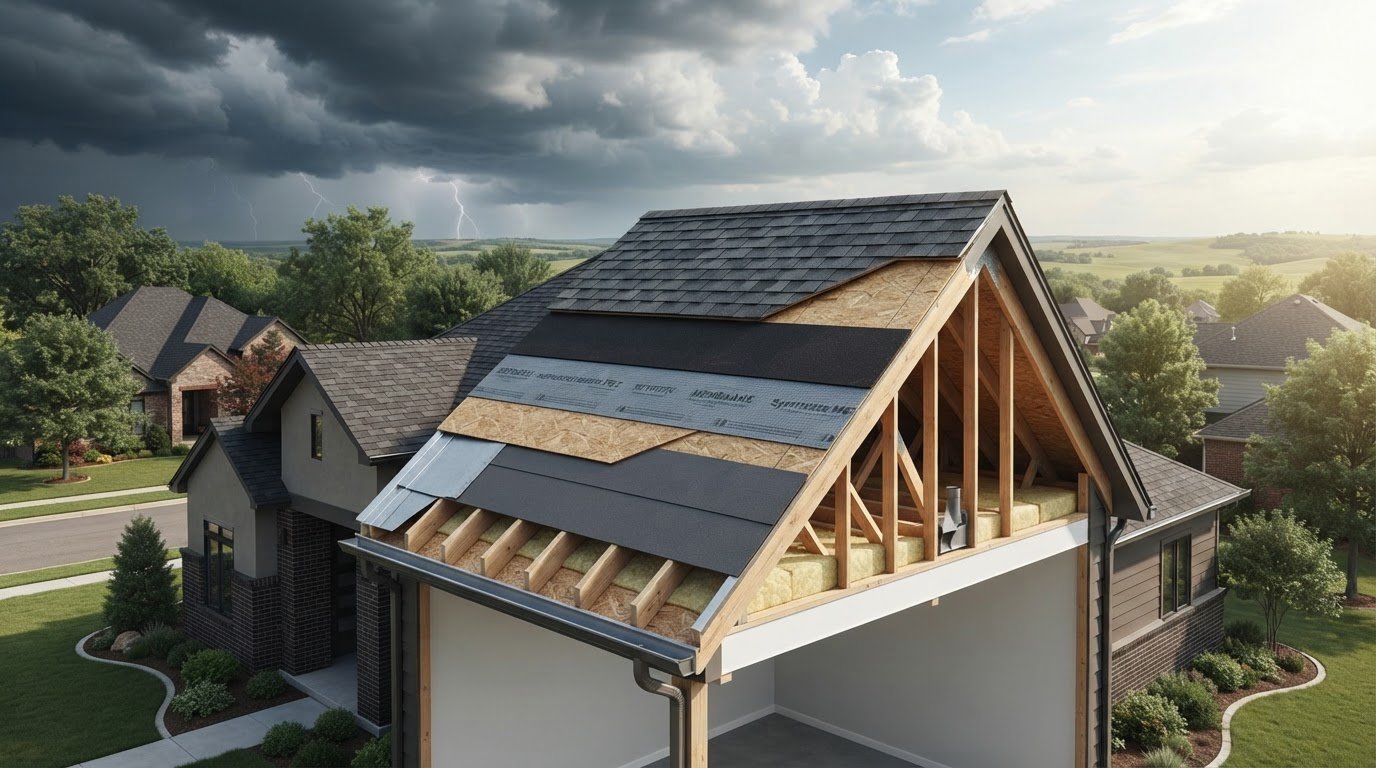

If you’re asking, “what is the best underlayment for a roof,” the answer depends on more than the material itself. Your roof covering, slope, deck condition, exposed areas, and installation details all help determine which underlayment fits the complete roof system.
Felt, synthetic, and self-adhered underlayments serve different roles, so comparing them by price or product label alone can be misleading. Tulsa’s wind, hail, rain, and summer heat make it especially important to consider how each option fits the roof and its local conditions. No single type is right for every home.
This guide explains the main underlayment categories, the factors that influence selection, and how underlayment works with the rest of the roof assembly. You’ll be better prepared to discuss materials during a roof inspection or replacement. Rescue Roofing Tulsa provides roof inspections and replacements, assessing underlayment as part of the complete roof system.
Key Takeaways
- Underlayment is a secondary water-shedding layer beneath the roof covering. It helps protect the roof assembly if water gets past the outer material.
- Felt, synthetic, and self-adhered products have different uses. Compare their specifications and installation requirements rather than relying on the category name.
- To answer “what is the best underlayment for a roof,” consider the roof covering, slope, deck condition, and exposure together.
- Manufacturer instructions and applicable Tulsa-area requirements can affect which products and installation methods suit a project.
- During a roof replacement, an inspection and review of system requirements help guide material selection, installation, and assessment of the finished roof.
What Is Roof Underlayment, and Why Does It Matter in Tulsa?
Underlayment is a protective layer installed over the roof decking and beneath shingles, metal panels, or another roof covering. It helps shed water if the outer material is damaged or water gets past it.
This backup layer matters because roofing materials and roof details are exposed to moisture over time. A shingle can crack or shift, for example, and wind-driven rain can test seams and edges. Underlayment helps protect the roof deck in these situations, but it does not replace sound shingles or metal roofing, properly fitted flashing, or careful installation. Each part has a distinct role in directing water away from the home.
If you’re asking, “what is the best underlayment for a roof,” start with the whole assembly rather than the underlayment alone. The roof covering, deck condition, flashing, seams, fasteners, and installation all affect how the system performs. An inspection or replacement assessment can identify conditions that shape the underlayment plan.
Where underlayment fits in a roof system
The roof deck is the structural surface beneath the roofing materials. Underlayment covers that surface, while flashing directs water around transitions and vulnerable areas such as roof edges, valleys, and penetrations. The visible roof covering sheds most rain. Underlayment provides a secondary layer below it.
Installation details matter. Overlapping seams, fastener placement, and transitions between roof sections affect how water moves across the surface. Even a suitable material may not perform as intended if it is poorly installed or incompatible with other parts of the roof assembly.
Why Tulsa weather belongs in the decision
Rain, strong winds, hail, and seasonal temperature changes are relevant exposure factors in the Tulsa area. Wind can drive rain toward seams and edges, while hail can damage the roof covering. Heating and cooling also put the roof system through changing conditions. These are reasons to assess how the roof’s parts work together, not to select a material based on its label alone.
No underlayment makes a roof storm-proof or guarantees that leaks will not occur. Its role is more specific: as part of a properly installed roof system, it helps manage water that gets beneath the primary covering.
Underlayment is a secondary water-shedding layer, not a replacement for sound roofing materials, flashing, or proper installation. Keeping that distinction in mind makes it easier to discuss underlayment during a roof inspection or replacement. Rescue Roofing Tulsa assesses the roof as a connected system and considers project conditions when evaluating replacement needs.
Roof Underlayment Types: Felt, Synthetic, and Self-Adhered Options
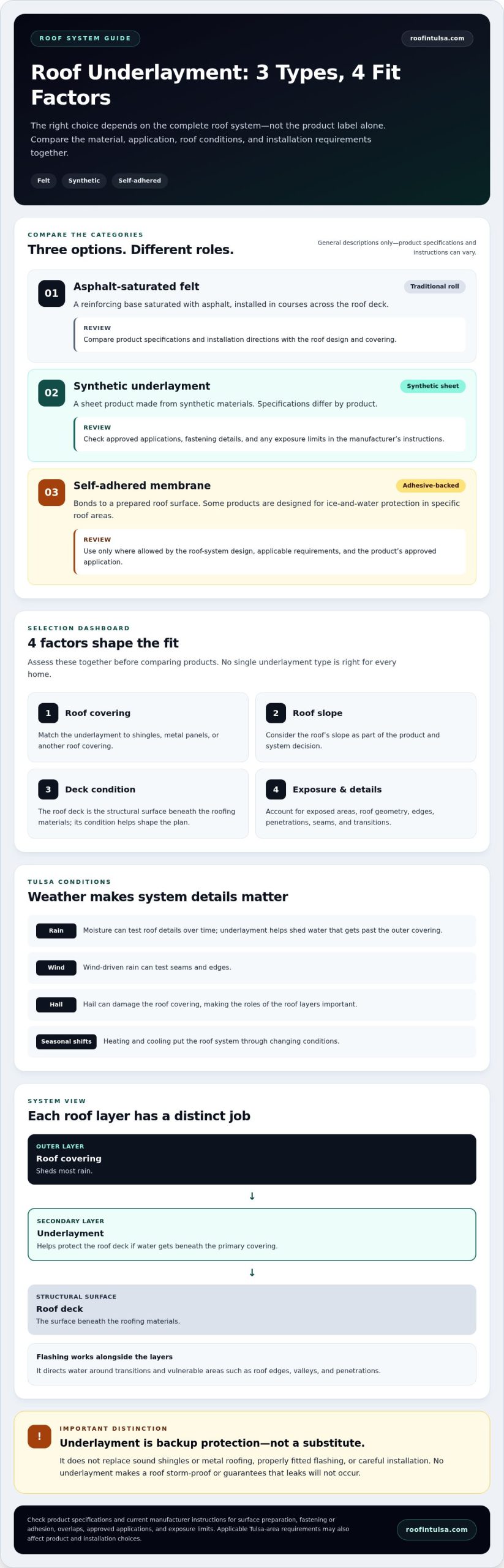
Felt, synthetic sheets, and self-adhered membranes are common underlayment categories, but they are not interchangeable in every roof system. Their materials and installation methods differ. Compare them against the roof covering, slope, exposure, and product instructions. The table provides a general overview, not a substitute for reviewing a specific product’s documentation.
| Type | General description | Typical consideration |
|---|---|---|
| Asphalt-saturated felt | A traditional roll underlayment made with a reinforcing base saturated with asphalt. | Compare the product’s specifications and installation directions with the roof design and covering. |
| Synthetic underlayment | A sheet product made from synthetic materials, with specifications that vary by product. | Review its approved applications, fastening details, and any exposure limits in the manufacturer’s instructions. |
| Self-adhered membrane | An adhesive-backed membrane that bonds to the prepared roof surface. | Consider it for the specific areas or purposes allowed by the roof-system design, code, and product instructions. |
How felt and synthetic underlayments differ
Felt is a traditional roll product installed in courses across the roof deck. Synthetic underlayment is also commonly supplied in rolls, but it uses a different material construction. The category name alone does not tell you how a product will perform. Thickness, surface, approved uses, fastening method, and handling instructions can vary even among products in the same category. Compare the actual specifications rather than assuming all felt or synthetic underlayments are alike.
Coverage and installation also depend on the roof’s shape and details. Course overlap, roof geometry, edges, and penetrations affect how material is laid and how much is needed. Follow the product’s stated overlap and fastening requirements; roll size or product category does not establish suitability. The National Roofing Contractors Association provides roofing-industry resources, while product-specific decisions should follow the manufacturer’s current instructions.
When self-adhered membranes may be considered
A self-adhered membrane has a sticky backing that bonds to the roof surface rather than relying only on mechanical fasteners. Some are designed for ice-and-water protection in specific parts of a roof system. That does not mean the same membrane belongs across every roof or that every roof needs blanket coverage. Placement depends on the roof design, local code requirements, and the product’s approved application.
Before choosing among these categories, match the underlayment to the roof covering and review the manufacturer’s instructions for surface preparation, fastening or adhesion, overlaps, and exposure limits. If you’re asking, “what is the best underlayment for a roof,” the useful answer is the option that fits the full roof system and its site conditions, not the category that sounds strongest in isolation.
Rescue Roofing Tulsa assesses how underlayment fits the roof assembly during inspections and replacement planning. A roof inspection can identify roof conditions that matter to that assessment.
What Makes One Roof Underlayment a Better Fit Than Another?
Underlayment selection starts with the roof it needs to work with. The roof covering, slope, deck condition, and weather exposure all affect which products and installation methods are suitable. Comparing labels such as “premium” or “heavy-duty” before reviewing those conditions can lead to a poor fit.
Asphalt shingles and metal roofing have different system designs, so their underlayment requirements may differ. A product suited to one roof covering is not automatically appropriate for another. Slope matters, too: it affects how quickly water runs off and can influence the system’s underlayment specifications. Choose materials to suit the complete assembly, not just the visible covering.
Start with the roof’s design and condition
Assess the deck as well as the roof surface. Damaged, uneven, or deteriorated decking may need attention before new materials are installed. Valleys, edges, penetrations, and transitions also shape the installation plan because each detail must work with the selected covering and underlayment. For an existing roof, an inspection can reveal conditions that are not visible from the ground.
Tulsa-area homes are exposed to wind-driven rain, hail, and changing seasonal temperatures. These factors make a careful roof assessment useful, but they do not prove that a particular underlayment will prevent damage. No material choice replaces sound roof design and proper installation.
| Project factor | Why it matters | Useful question |
|---|---|---|
| Roof covering | Shingles and metal systems may have different underlayment and installation requirements. | Is this product approved for the specific roof covering? |
| Slope | Slope affects water runoff and may change the required system details. | Do the product instructions address this roof’s slope? |
| Deck condition | The surface beneath the underlayment must be suitable for the planned installation. | Does the deck need repair or preparation first? |
| Exposure and roof details | Wind-driven rain and complex areas such as valleys or penetrations can affect placement and detailing. | Which areas need specific products or installation methods? |
| Instructions and local requirements | Manufacturer directions and applicable building code requirements help define acceptable materials and installation. | Do the product documentation and current Tulsa-area requirements align? |
Compare specifications, not just labels
Product documentation can specify approved roof coverings, application areas, fastening or adhesion methods, overlap details, and exposure limits. Review those details alongside applicable code requirements. Do not assume products in the same category have identical uses, or that a broad “premium” label means a product is a better match for your roof.
Compatibility and installation guide underlayment selection; a product label alone cannot determine the right fit. If you’re wondering what is the best underlayment for a roof, consider how the material works with the covering, slope, deck, and exposure as one system. A roofing professional can assess those project conditions during an inspection or replacement evaluation.
How to Choose Roof Underlayment for a Tulsa Home
Start with the roof, not a product label. In Tulsa, wind-driven rain and storm impacts make it useful to consider how underlayment fits the complete roof system. You do not need to select a specific product before an assessment. Gather the details that will help a roofing professional evaluate the project.
A practical underlayment decision checklist
Use this sequence to organize what you know about your roof. Assessing the condition of decking beneath the roof covering may require a professional inspection.
- Identify the roof covering. Note whether the roof has asphalt shingles, metal roofing, or another material. Underlayment must suit the covering and its system requirements.
- Record the slope. If you know the roof’s pitch, include it. Slope affects drainage and can influence underlayment instructions.
- Note any deck concerns. Record known signs of damage, soft spots, or past leaks. An inspection can assess conditions hidden beneath the visible roofing.
- Consider exposure. Note areas that may be more exposed to wind-driven rain and any history of storm or hail impacts.
- Compare documentation. Review candidate products’ current installation instructions and suitability for the roof covering, slope, and intended application.
This checklist makes the conversation more specific and explains why “what is the best underlayment for a roof” has no single answer for every home. The right choice depends on how the material fits the roof design and project conditions.
Include the layers beneath the visible roofing
When planning a replacement, visible shingles or panels are only part of the discussion. The roof deck, underlayment, and details such as transitions and penetrations all influence the material plan. An inspection can identify existing roof-system or decking conditions that affect the work. For broader guidance on choosing roof materials and planning a project, explore this Tulsa roof replacement guide.
If you’re weighing whether it’s time to plan a replacement, these signs a roof may need replacement can help you recognize issues to discuss during an inspection.
Base code-related decisions on current Tulsa-area requirements and applicable local amendments. Compare product compatibility, installation methods, and warranty conditions with current manufacturer documentation rather than assumptions about a whole product category. Rescue Roofing Tulsa assesses roof conditions during inspections and replacement planning.
Schedule a roof inspection to discuss your roof’s condition and the factors that may shape its replacement plan.
Underlayment During Roof Replacement: Inspection, Installation, and Next Steps
Underlayment is one part of a roof replacement plan, not a product choice made in isolation. The existing roof’s condition, planned roof covering, and project scope all influence the material plan. Reviewing these factors connects the layers beneath the visible roofing to the complete roof assembly.
What homeowners can expect the roofing discussion to cover
A project-specific discussion starts with the roof covering and slope, then considers the decking and the roof’s exposure. Some conditions may only become clear after the existing materials are removed. The assessment identifies what needs attention and which underlayment choices fit the planned roof system.
A practical decision sequence is:
- Assess the roof. Review the existing covering and visible signs of wear or damage, and determine whether the decking needs further evaluation.
- Confirm system requirements. Match the planned roof covering and project conditions with current manufacturer instructions and applicable local requirements.
- Select compatible materials. Choose underlayment as part of the full roof assembly, accounting for the roof’s design and project scope.
- Install according to the system plan. Follow the selected products’ documented installation directions and required details.
- Inspect the completed work. Review the finished roof as a connected assembly, including the visible covering and relevant details.
Not every replacement follows identical steps or uses the same materials. A roof with sound decking may need a different plan from one with damaged areas. The final decisions should reflect conditions found during the project, product documentation, and verified Tulsa-area requirements.
Underlayment belongs in the broader replacement conversation alongside the roof covering and other system components. If you’re considering a project, signs a roof may need replacement can help you identify what to discuss during an assessment.
Protecting the roof after installation
After a replacement, routine attention to the roof can help you notice visible changes early, such as displaced roofing materials or damage after severe weather. Maintenance cannot prevent every issue, but monitoring the roof may help you recognize when an inspection is appropriate. For practical post-installation care, see this Tulsa roof maintenance guide.
Rescue Roofing Tulsa assesses roof conditions during Tulsa-area inspections and replacement planning. To discuss your roof and underlayment as parts of the complete system, discuss a roof inspection with Rescue Roofing Tulsa.
Make Your Next Roof Decision With Confidence
The next step is not choosing a roll of underlayment by name. First understand what your roof needs as a complete system, then base decisions on the conditions found during an inspection and the requirements for the planned materials. That gives you a clearer basis for discussing options and keeps the replacement plan connected to your home.
If you’re still wondering “what is the best underlayment for a roof,” bring that question to a project-specific conversation. Rescue Roofing Tulsa provides roof inspections and residential roof replacement in the Tulsa area, assessing how each part of the roof fits together.
Talk with Rescue Roofing Tulsa about your roof inspection or replacement. A careful assessment can help you understand the roof’s condition and plan the next step.
Frequently Asked Questions
What is the best underlayment for an asphalt shingle roof?
There is no universal winner for every asphalt shingle roof. The suitable choice depends on the shingle manufacturer’s instructions, roof design, slope, exposure, and applicable local requirements. Felt and synthetic products are common sheet underlayments, while self-adhered membranes serve specific purposes in a roof system. Compare current product documentation with the complete roof plan so the underlayment works with the shingles and installation details.
Is synthetic roof underlayment better than felt?
Neither synthetic underlayment nor felt is automatically better for every roof. They are different material categories, and products within each category can have different specifications and installation needs. A synthetic product’s name or a felt product’s weight alone does not establish how well it suits a project. Consider the roof covering, design, and conditions, then compare the product instructions with the requirements of the specific roof system.
Can roof underlayment stop a roof leak?
Underlayment may help manage water beneath the main roof covering, but it is not a guaranteed leak fix. Water can enter through damaged roofing, flashing, or other roof details, so adding underlayment alone may not address the source. A leak near a chimney, for example, may involve flashing rather than a broad underlayment problem. An assessment of the leak and surrounding roof components can help determine the appropriate repair.
Does every roof need ice-and-water shield?
No single rule makes ice-and-water membrane necessary across every roof. These self-adhered products have specific applications, and placement can depend on roof design, local code, climate exposure, and manufacturer instructions. A membrane used in a particular area is not the same as underlayment covering the entire roof. For a Tulsa project, base the decision on current authoritative local requirements and documentation for the roofing products involved.
Can new underlayment be installed without replacing roof shingles?
Underlayment sits beneath the roof covering, so reaching it generally requires removing or lifting roofing materials in the affected area. Whether that approach is practical depends on the roof’s condition, the damage location, and how the existing materials and roof details fit together. It is not usually a simple surface-level fix. An inspection can determine whether a localized repair is suitable or broader replacement work should be considered.
How long does roof underlayment last?
There is no single service-life estimate that applies to every underlayment. Its condition depends on the product, installation, exposure, and whether the primary roof covering continues to protect it. A roof that has experienced storm damage may need closer assessment, even if its age is unknown. Check the specific product documentation and consider an inspection if you notice damage, signs of moisture, or changes in the roof’s condition.
Does roof underlayment need to meet local building codes?
Roofing work needs to follow the requirements that apply to the project. These can vary with roof type, slope, location, and scope of work, so do not rely on an old estimate or a general rule for another property. Tulsa-area requirements and amendments can change. For a compliance decision, review current official code information alongside the manufacturer’s installation instructions for the selected roofing system.