


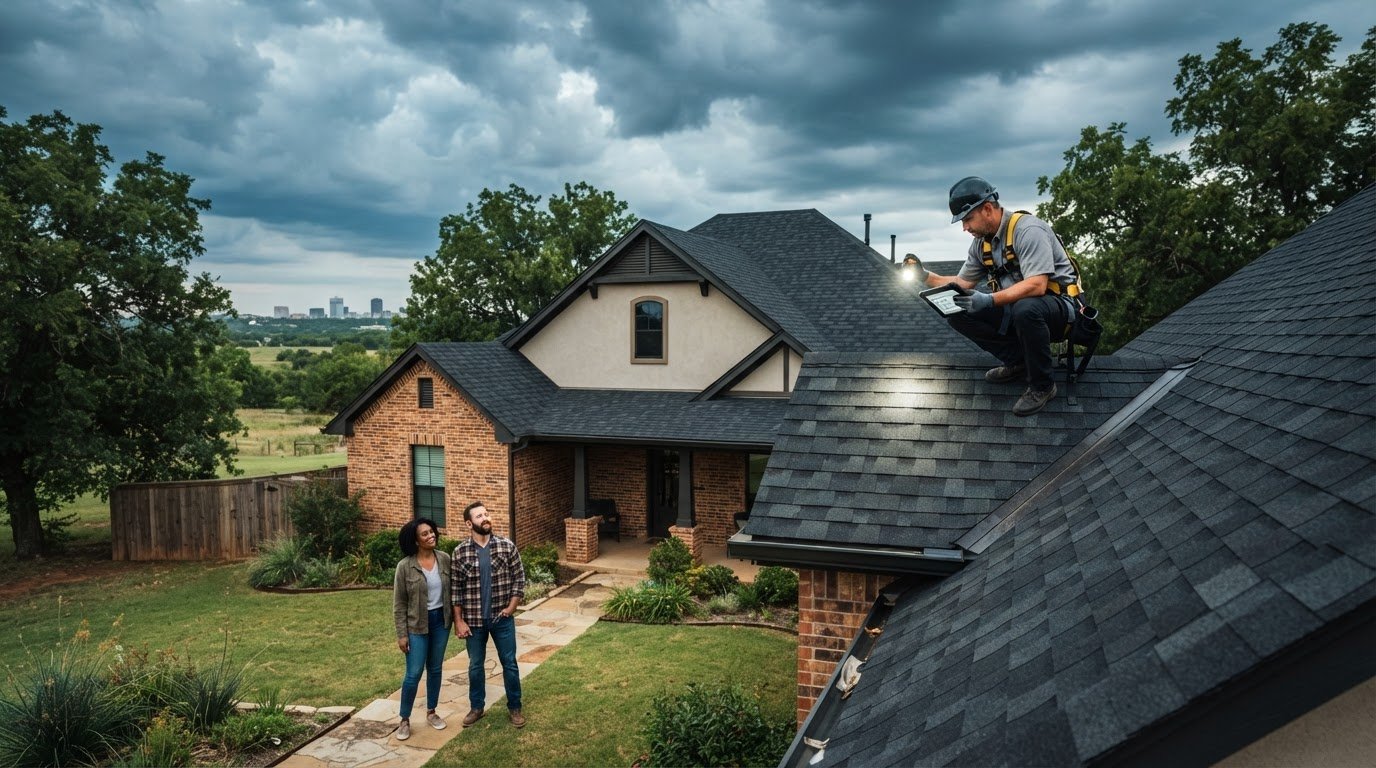

Did your general home inspector actually climb onto your roof, or did they simply glance at the shingles from the driveway through a pair of binoculars? You just poured your hard-earned savings into buying your Tulsa home, and the last thing you need is an unexpected ceiling leak during the first Green Country thunderstorm. It’s completely natural to wonder if you truly need a dedicated roof inspection after buying a house when you already received a general property report during escrow.
General home inspectors assess an entire property in a couple of hours, which means they rarely catch subtle hail bruising, hidden flashing leaks, or moisture building beneath the decking. In this guide, you’ll discover why a post-purchase evaluation is vital in Oklahoma, what dedicated roofing professionals look for, and how documented structural proof protects your investment against strict insurance requirements. Here is everything you need to know to establish an accurate baseline for your roof and face upcoming storm seasons with genuine peace of mind.
Key Takeaways
- Learn why general home inspections during escrow often overlook hidden moisture intrusion, compromised flashing, and hail damage.
- Understand how Green Country severe storm corridors inflict concealed fiberglass fractures beneath seemingly intact shingle granules.
- Discover the critical components of a 4-point evaluation, from drip edge alignment to attic ventilation balance.
- Find out how scheduling a professional roof inspection after buying a house safeguards your insurance policy against post-closing underwriting cancellations.
- See how partnering with a dependable local Tulsa roofing contractor gives you clear, documented proof of roof lifespan without high-pressure sales.
Why General Home Inspections Miss Critical Roof Defects
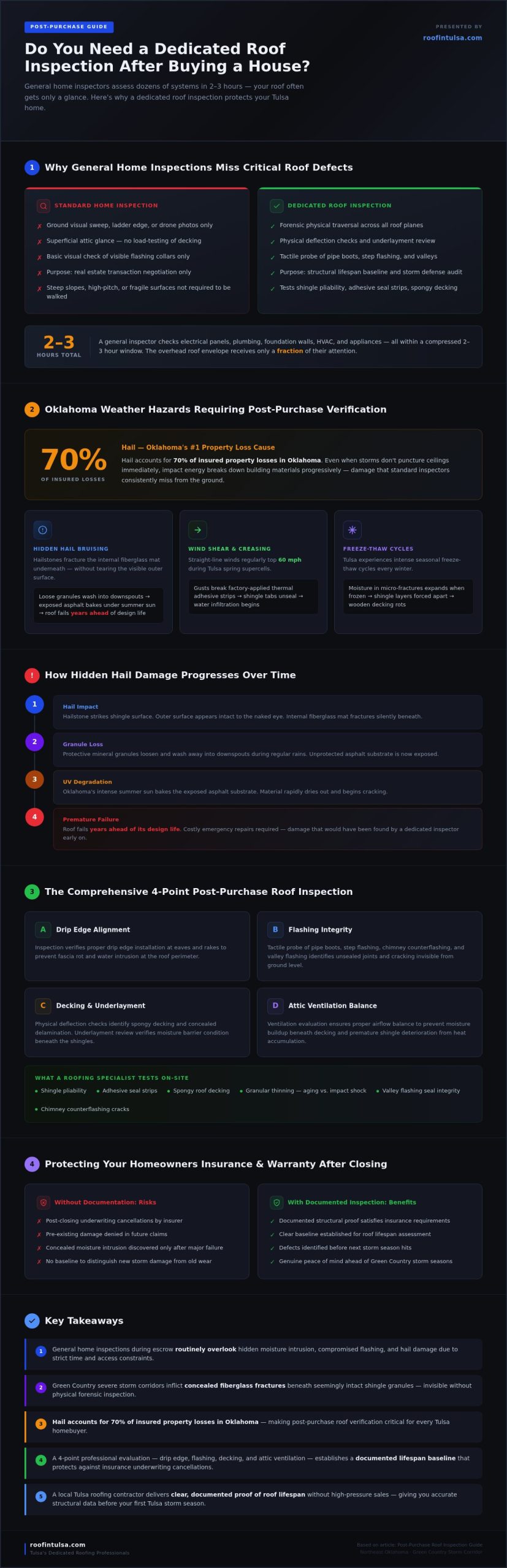
Most home buyers assume their standard real estate report provides a thorough clean bill of health for the entire structure. That assumption often leads to costly surprises. Understanding why general home inspections miss critical roof defects begins with recognizing their strict legal boundaries. A general home inspector conducts a non-invasive, visual examination across dozens of systems within a compressed two-to-three-hour window. They check electrical panels, plumbing fixtures, foundation walls, HVAC units, and appliances. Because their time and scope remain spread thin, the overhead envelope receives only a fraction of their attention.
Physical access is another major hurdle. Industry standards do not require general inspectors to walk steep slopes, high-pitch profiles, or fragile surfaces. Instead, they often observe the roof from the eave via an extension ladder, snap wide-angle photos using a drone, or scan the decking with binoculars from the front lawn. From that vantage point, subtle indicators of failure stay completely hidden.
| Inspection Dimension | Standard Home Inspection | Dedicated Roof Inspection |
|---|---|---|
| Inspection Method | Ground visual sweep, ladder edge, or drone photos | Forensic physical traversal across all planes |
| Decking & Membrane Analysis | Superficial attic glance without load-testing | Physical deflection checks and underlayment review |
| Penetration Diagnostics | Basic visual check of visible flashing collars | Tactile probe of pipe boots, step flashing, and valleys |
| Primary Purpose | General real estate transaction negotiation | Structural lifespan baseline and storm defense audit |
Limitations of Standard Real Estate Inspections
When general inspectors assess dozens of systems under tight schedules, fine structural details slip through. A quick visual look rarely catches micro-fractures in the underlying asphalt mat. Without physically handling the materials, an inspector cannot verify whether granular thinning stems from natural sun aging or recent impact shock. Seasoned buyer specialists, such as Lisa Hansen Realtor, routinely emphasize coordinating dedicated inspections during property purchases to ensure clients uncover any hidden structural issues before closing.
What Dedicated Roofing Contractors Do Differently
A specialized roofing contractor steps directly onto the structure to perform a forensic physical evaluation. They gently test shingle pliability, verify adhesive seal strips, and check for spongy roof decking underfoot. Scheduling a thorough roof inspection after buying a house ensures unsealed valley flashing, cracked chimney counterflashing, and concealed delamination get identified long before the next squall line hits Tulsa.
Oklahoma Weather Hazards That Require Post-Purchase Roof Verification
Northeast Oklahoma sits squarely inside some of the country’s most intense storm corridors. Severe weather patterns here expose residential properties to relentless mechanical stress throughout every season. While a roof might look uniform from the street, Green Country squall lines, microbursts, and rapid temperature swings take an aggressive toll on roofing assemblies. Scheduling a professional roof inspection after buying a house confirms whether recent weather events compromised your home’s exterior envelope before you took ownership.
Hail accounts for 70% of insured property losses in Oklahoma. Even when storms do not puncture ceilings right away, impact energy breaks down building materials progressively. Tulsa also experiences intense seasonal freeze-thaw cycles. When winter arrives, moisture trapped inside tiny, unseen micro-fractures expands as it freezes. This expansion forces shingle layers apart and rots the underlying wooden decking, turning subtle damage into an urgent repair.
Hidden Hail Bruising and Granule Erosion
Hailstones often strike shingles without tearing the visible outer surface. Instead, the force fractures the internal fiberglass mat underneath. Once this internal core breaks, protective mineral granules loosen and wash away into downspouts during regular rains. The unprotected asphalt substrate then bakes under Oklahoma’s intense summer sun, rapidly drying out, cracking, and failing years ahead of its design life.
Wind Shear and Creased Shingles in Green Country
Straight-line winds across Tulsa regularly top 60 miles per hour during spring supercells. These sudden gusts catch shingle edges, breaking the factory-applied thermal adhesive strips that seal tabs together. Once unsealed, shingles flutter, crease at the nail line, and allow wind-driven rain to blow directly under the felt underlayment. Review our guide on signs you need a new roof in Oklahoma to spot these critical warning indicators early.
Because these weather-related issues remain largely invisible from ground level, partnering with a dependable local neighbor like Rescue Roofing Tulsa gives you an honest, detailed structural assessment to keep your family protected.
The Comprehensive 4-Point Post-Purchase Roof Inspection Checklist
A durable roof relies on balanced engineering across multiple interconnected components. Looking solely at surface shingles gives you an incomplete picture of structural health. To guarantee complete protection, a professional roof inspection after buying a house evaluates the overhead building envelope through a systematic four-point diagnostic framework.
Every phase targets specific vulnerability points that directly affect durability and indoor comfort:
- Outer Surface Coverings: Shingles, hip caps, ridge vents, and eaves.
- Transition Seals: Pipe penetrations, step flashing, valley channels, and chimney counter-flashing.
- Internal Envelope Health: Plywood decking condition, truss alignment, and passive attic ventilation.
- Perimeter Drainage: Gutter pitch, downspout clearance, and fascia board attachment.
Step 1: Exterior Shingle and Penetration Assessment
Inspectors walk the entire roof plane to check for shingle curling, blistering, clawing, or missing tabs. Special care goes into examining roof penetrations. Neoprene rubber collars on plumbing vent pipe boots degrade under sun exposure, leading to slow interior leaks. Technicians also confirm that step flashing and masonry counter-flashing along dormers and brick chimneys remain tightly sealed against driving rain.
Step 2: Internal Attic Diagnostics and Decking Health
True structural evaluations require entering the attic space. Dark water stains or localized wood rot on the underside of the decking indicate active moisture intrusion. Rusty decking nail shanks point to chronic condensation buildup caused by restricted airflow. Inspectors examine intake soffits and exhaust vents to ensure balanced thermal circulation, preventing trapped humidity from cooking shingles from below.
Step 3: Perimeter Drainage and Gutter Infrastructure
An overhead system must channel bulk water away cleanly. A thorough roof inspection after buying a house always reviews gutter alignment, verifying that troughs pitch accurately toward downspouts without sagging or pulling away from the fascia. Heavy piles of mineral granules in gutters indicate advanced shingle aging. Ensuring proper discharge away from the exterior walls keeps foundation soil stable and protects basement crawlspaces.
Protecting Your Homeowners Insurance and Warranty Coverage After Closing
Closing on your new home doesn’t mean your property insurance details are settled permanently. Many homeowners don’t realize that insurance underwriters frequently send third-party inspectors to review the property two to four weeks after closing day. These independent inspectors photograph your roof from the street or alley looking for deferred maintenance. If they spot curling edges, granular loss, or minor shingle lift, the carrier can issue a repair demand, apply a restrictive cosmetic exclusion rider, or cancel your policy entirely on short notice.
Completing a dedicated roof inspection after buying a house eliminates this sudden administrative panic. A professional contractor provides an authoritative, photo-documented condition report that establishes an undeniable structural baseline on day one. Having this baseline protects you against accusations that future storm damage was actually pre-existing wear and tear.
Establishing an Insurance Baseline Before Storm Season
Oklahoma property carriers manage significant risk due to severe regional weather patterns, making them intensely vigilant during policy onboarding. When high winds or hail strike Green Country weeks after you move in, adjusters often attempt to classify torn shingles or bruised fiberglass as unaddressed defects from the prior owner. Having date-stamped photographic proof from your post-purchase inspection demonstrates that your roofing system was fully intact when your coverage began. Read our detailed guide on Tulsa roofing protection and repair to understand how proactive documentation safeguards your policy terms.
Navigating Manufacturer Warranty Transfers
If the previous homeowner installed a new roof prior to listing the property, that material warranty does not automatically transfer to you. Most major asphalt shingle manufacturers impose strict transfer protocols requiring formal notification within thirty to sixty days of the deed transfer date. To process that transfer, manufacturers routinely mandate proof of sound installation and confirmation that the materials are free from neglect. Securing an expert inspection report gives you the exact verification documents needed to register that existing warranty before the transfer window closes.
Don’t leave your coverage or warranty protections vulnerable to insurance underwriting surprises. Reach out to Rescue Roofing Tulsa to secure your certified baseline documentation today.
Partnering with Rescue Roofing Tulsa for Lifelong Roof Protection
Buying a home in Green Country represents a major life milestone. Protecting that investment shouldn’t involve pushy sales tactics or confusing jargon. Rescue Roofing Tulsa operates as an empathetic local neighbor, delivering steady guidance and honest structural evaluations to new property owners. We treat your home with the care it deserves, giving you dependable clarity rather than manufactured urgency.
Our evaluation process is built around transparency. When you schedule a post-closing assessment, our team conducts a thorough review that examines your entire roofing ecosystem. We inspect shingle surfaces, test penetration seals, assess attic intake and exhaust balance, and verify gutter alignment. Once the walk-through wraps up, you receive an unvarnished summary showing precisely where your roof stands today.
Honest Diagnostics: Repair vs. Replacement Guidance
We do not push for a full tear-off when targeted maintenance can safely preserve your roof. If your system has years of service remaining, we pinpoint straightforward fixes like resealing pipe collars or swapping loose tabs. Check out our solutions for fast & reliable roof repair in Tulsa to see how precision repairs extend roof life. When an aging structure genuinely reaches the end of its useful lifespan, we walk you through durable options in our comprehensive roof replacement guide for Tulsa.
The Rescue Roofing Tulsa Post-Purchase Assurance
Booking a dedicated roof inspection after buying a house gives you documented confidence. You receive clear photographic evidence detailing every plane, flashing seam, and ventilation component. If previous hail or wind storms left hidden structural damage that justifies an insurance claim, our team helps compile the exact diagnostic records your carrier needs to review the file fairly.
Our deep local roots mean we build relationships designed to last well past closing day. We understand regional building codes and Green Country weather patterns inside and out. Connect with our neighborly team at Rescue Roofing Tulsa to schedule your comprehensive assessment and enjoy lasting peace of mind under your new roof.
Protect Your New Investment with Confidence
Your new house is more than just an asset; it’s the backdrop for your family’s next chapter. While standard purchase walk-throughs offer a helpful starting point, they simply cannot reveal the micro-fractures, failing sealant strips, or attic ventilation imbalances common across Green Country. Scheduling a dedicated roof inspection after buying a house bridges that critical gap. It establishes documented proof of your roof’s condition, keeps your homeowners insurance policy secure against underwriting cancellations, and eliminates costly weather surprises.
As a locally owned Tulsa contractor, we provide transparent evaluations without aggressive sales pressure. Whether your home needs minor preventative maintenance, insurance claim guidance, or long-term replacement planning, we stand ready to help as your dependable neighborhood partner. Take control of your home’s overhead defense before the next storm cloud rolls across northeastern Oklahoma. Schedule your post-purchase roof inspection with Rescue Roofing Tulsa today, and settle into your new home with genuine peace of mind.
Frequently Asked Questions
Is a roof inspection necessary after buying a house if I had a general inspection?
Yes, scheduling a specialized inspection remains essential. General real estate inspectors assess dozens of internal and external home systems in a single visit, often evaluating roofs strictly from ground level or ladder eaves. A dedicated roofing specialist physically walks the slopes, tests shingle adhesion, checks roof penetrations, and inspects the attic structure to detect subtle defects that standard purchase sweeps routinely overlook. For buyers navigating transactions in the wider Midwest region, you can visit Arrowhead Realty Company to connect with real estate professionals who advocate for thorough due diligence before closing.
Can a professional roofer detect hail damage that a home inspector missed?
A professional contractor detects microscopic hail impact damage that untrained eyes easily pass over. Severe hailstones frequently fracture the underlying fiberglass mat without tearing the top asphalt layer right away. Experienced roofers perform tactile checks across shingles to identify soft bruising, localized granule detachment, and compromised seal strips that standard visual appraisals simply fail to catch.
What happens if a post-purchase roof inspection reveals severe damage?
Discovering severe issues allows you to take immediate, structured action before interior water leaks develop. Your roofing contractor provides an itemized photographic report detailing whether targeted repairs or a complete replacement makes the most practical sense. If the defects stem from recent weather occurrences, your contractor can provide documentation and insurance claim assistance to help you navigate coverage discussions smoothly.
How long does a thorough post-purchase roof inspection typically take?
A comprehensive residential evaluation generally requires 45 to 90 minutes on site. This timeframe depends on home size, pitch steepness, and roof complexity. The contractor inspects all exterior slopes, assesses metal flashings and valleys, checks gutter drainage, and enters the attic space to examine structural decking, nail penetration patterns, and passive ventilation airflow balance.
Will my homeowner’s insurance cancel my policy if roof defects are found?
Underwriters can cancel a policy or exclude roof coverage if their post-closing assessment discovers unaddressed, pre-existing wear. Scheduling a professional roof inspection after buying a house protects you against this outcome. Having date-stamped documentation proves the system’s baseline condition immediately after purchase, allowing you to complete minor repairs promptly and satisfy underwriting guidelines.
Can missing shingle granules lead to interior water leaks?
Missing granules expose the core asphalt substrate to rapid weather deterioration, which eventually triggers water leaks. These mineral granules shield shingles against intense ultraviolet sunlight and physical impact. Once bald spots form, sun exposure dries out the raw asphalt, causing it to crack, curl, and allow wind-driven rain to reach the roof underlayment and decking below.
What attic signs indicate that a newly purchased home needs roof repairs?
Dark moisture stains, localized fungal mildew, and soft decking boards underfoot signal active roofing issues inside an attic. Blackened timber around chimney framings or plumbing stacks points directly to failed exterior flashings. Rusty decking nail shanks and damp insulation indicate poor attic ventilation, which traps humid air that rots framing and degrades overhead shingles prematurely.