


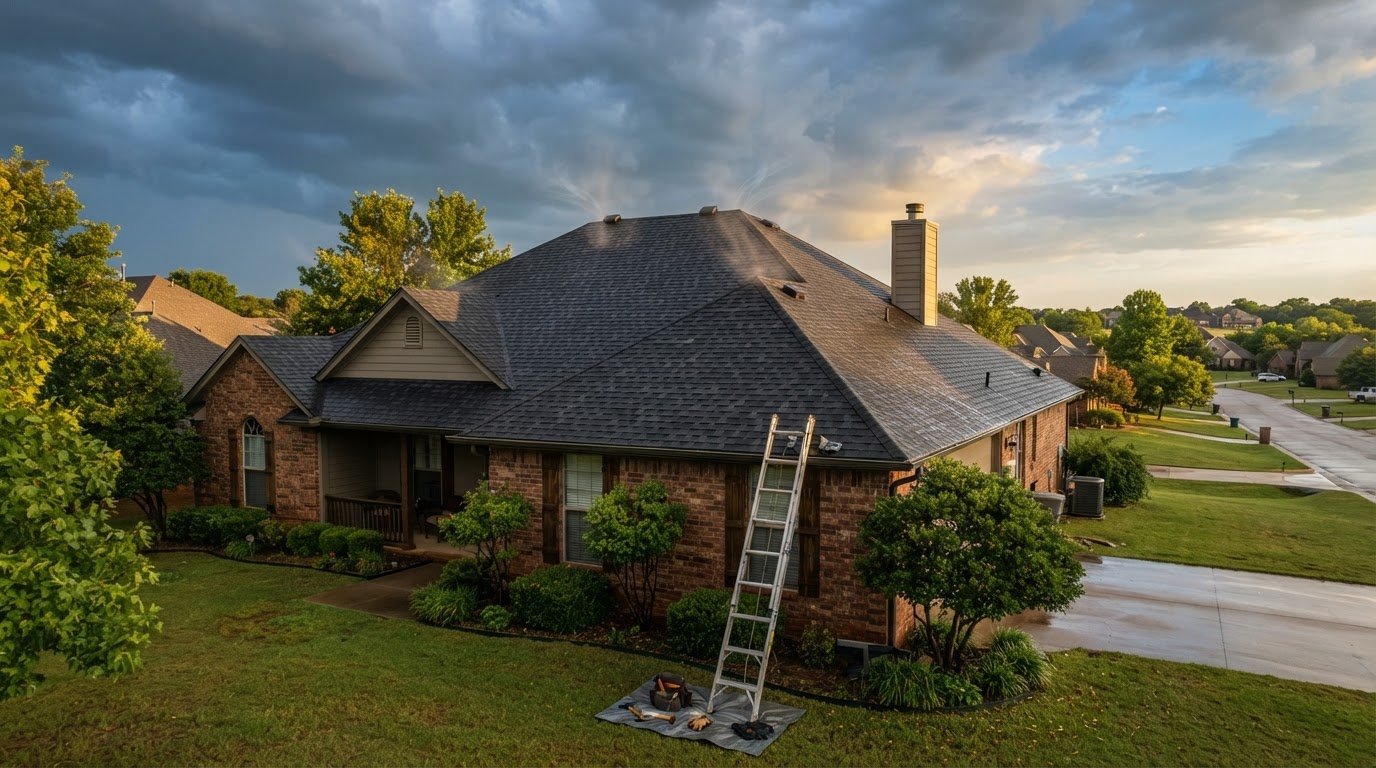

Did you know that 68% of premature roof failures stem from hidden ventilation issues rather than natural shingle aging? When severe Oklahoma weather rattles your neighborhood, it’s only natural to wonder how to make my roof last longer without facing a sudden, budget-draining replacement. Watching storm after storm roll through can leave any homeowner feeling uneasy about what’s quietly happening overhead.
Replacing a roof is a major investment, and you shouldn’t have to carry the stress of unexpected structural repairs during uncertain economic times. Fortunately, protecting your home doesn’t require dangerous guesswork or risky climbs up a steep ladder. With consistent seasonal care, balanced attic airflow, and routine post-storm checks, you can reliably extend your shingles’ lifespan and keep your property safe.
In this guide, you’ll discover a practical maintenance checklist, clear guidance on proper attic moisture control, and the know-how to spot subtle warning signs before minor wear turns into an expensive leak.
Key Takeaways
- Learning how to make my roof last longer starts with proactive seasonal habits that prevent premature shingle deterioration.
- Balanced attic ventilation protects your roofing system from the inside out by preventing superheated air and moisture buildup.
- Simple maintenance tasks, like keeping gutters clear and trimming overhanging branches, stop water pooling and physical damage before they start.
- Conducting prompt ground-level checks after Oklahoma storms helps you spot minor shingle displacement before hidden leaks develop.
- Scheduling periodic professional roof inspections preserves manufacturer warranties and catches subtle waterproofing issues early.
Understanding Roof Lifespans: Why Do Shingles Deteriorate Prematurely?
Under balanced laboratory conditions, a standard multi-layered asphalt shingle system can easily protect a home for 20 to 30 years. Real-world conditions, however, rarely mirror the lab. Across Green Country, intense summer heat and frequent hailstorms constantly test your roof’s protective boundaries. When learning how to make my roof last longer, you have to understand what causes this degradation. Mineral granules shield the underlying waterproof bitumen layer from ultraviolet radiation. Once these granules wash away, UV rays bake the exposed asphalt, leading to cracking, brittleness, and premature system failure.
Tulsa Climate Challenges: Sun, Hail, and Wind
Oklahoma weather presents unique hazards that shorten roofing lifespans faster than ordinary wear and tear. Thermal shock happens when sweltering 100-degree summer afternoons suddenly yield to cool evening thunderstorms. This rapid shift forces roofing materials to expand and contract abruptly, weakening adhesive bonds. Meanwhile, gusty spring winds lift shingle tabs and break critical factory sealant strips. Even small hail impacts can bruise the internal fiberglass mat without puncturing it immediately, creating micro-fissures that allow moisture penetration over subsequent months.
Visual Symptoms of Accelerated Shingle Aging
Spotting early warning signs from the safety of your yard helps you take action before water enters your living spaces. You do not need to walk the roof to spot trouble; simply keep an eye out for these clear indicators:
- Granule accumulation: Heavy amounts of mineral granules washing into gutter troughs or collecting around downspout splash blocks.
- Distorted edges: Shingle tabs curling upward, cupping in the center, or appearing distinctly brittle along the edges.
- Bald patches: Noticeable dark spots across the slopes where protective ceramic granules have scrubbed off completely.
Catching these symptoms early gives you the power to address isolated issues before they spread, protecting your home against costly structural repairs down the road.
Optimize Attic Ventilation and Moisture Control
Many homeowners focus exclusively on exterior weather, but roofing systems often deteriorate from the inside out. When an attic traps superheated air, temperatures can climb past 150 degrees Fahrenheit on a typical summer afternoon. This intense thermal load bakes asphalt shingles from below, degrading volatile waterproofing oils decades ahead of schedule. During winter months, household moisture rises into the unconditioned space, creating condensation that rots structural plywood decking and rafters. If you want to know how to make my roof last longer, managing attic climate is essential. Balanced ventilation stabilizes deck temperatures, protects structural framing, and keeps manufacturer warranties fully intact.
Balancing Intake and Exhaust Airflow
Effective ventilation requires continuous, passive circulation across the entire underside of your roof deck. Continuous soffit vents draw cooler exterior air into the lowest points of the eaves. At the peak, ridge vents or high-profile louvers exhaust warm, buoyant air into the atmosphere. For this circulation loop to work, air channels must remain open. Homeowners should verify that attic floor insulation has not shifted over the eaves or blocked the airflow baffles.
Preventing Moisture Build-Up and Wood Rot
Trapped interior moisture causes silent, severe structural decay. Everyday activities like cooking and showering generate gallons of water vapor that naturally drift upward. Exhaust fans must always vent directly outdoors rather than discharging into unfinished attic spaces. You can easily check your attic for moisture warning signs:
- Nail conditions: Check the exposed tips of shingle nails piercing the roof deck. Rusty fasteners reveal chronic interior humidity levels.
- Sheathing health: Look for dark water stains, mildew spots, or signs of localized wood rot along the plywood seams.
- Rafter alignment: Watch for bowing, spongy surfaces, or persistent dampness across the main support framing.
If you spot rust or suspect your intake vents are compromised, a quick assessment by a trusted local roofing professional can help restore balanced airflow and protect your roof deck.

Step-by-Step Maintenance Routine to Extend Roof Life
A reliable maintenance schedule protects your investment and spares you the hassle of early replacements. When homeowners ask how to make my roof last longer, the answer lies in simple, methodical upkeep rather than dangerous DIY tasks. Focusing on water flow and physical clearance keeps small outdoor hazards from evolving into serious ceiling leaks. Here is a practical five-step routine you can follow every spring and autumn:
- Step 1: Clear leaves, silt, and twigs from gutter troughs to stop standing water along your roofline.
- Step 2: Trim tree boughs back at least six feet away from the roof plane.
- Step 3: Safely clear dense debris mats out of low-slope valleys using an extended pole or leaf blower from the ground.
- Step 4: Check metal flashing seals around chimneys, vent pipes, and skylights for cracks or separation.
- Step 5: Treat black algae stains or moss growth using gentle, manufacturer-approved solutions.
Managing Runoff with Functional Gutters
Your gutters are your home’s front line of defense against pooling water. When clogs back up downspouts, rainwater overflows behind the gutter edge, soaking wooden fascia boards and softening roof deck edges. Ensure your downspouts discharge runoff at least five feet from foundation walls to prevent soil shifting. In heavily treed Tulsa neighborhoods, professionally installed gutter systems or covers drastically reduce seasonal debris buildup. For properties with metal profiles, you can explore Corrugated Roof Type Gutter Guard Kits to keep channels clear and prevent overflow.
Trimming Branches and Clearing Valleys
High winds cause nearby branches to scour shingle surfaces, scraping off granular surfacing with every gust. Hanging limbs also offer squirrels, raccoons, and rodents an easy ramp right onto your roofline. Meanwhile, leaves and pine needles gather quickly in natural roof valleys. These damp dams hold moisture against delicate seams, eventually driving water sideways beneath underlayment layers during heavy rain.
Safe Algae and Moss Removal Techniques
Some online guides suggest pressure washing dirty shingles, but this is a destructive mistake. High-pressure water immediately strips away mineral granules, permanently voiding warranties and ruining weather resistance. Instead, apply a biodegradable algaecide with a garden hose sprayer, allowing rainfall to rinse away residue naturally. For long-term prevention, installing narrow zinc or copper strips along ridgelines releases protective ions during storms that stop moss growth.
Managing Oklahoma Storm Recovery and Timely Shingle Repairs
Severe weather in Green Country can leave behind subtle damage that goes unnoticed until water drips through your ceiling. When you consider how to make my roof last longer, timely post-storm triage is just as vital as clearing leaves or balancing attic vents. High winds frequently tear shingle tabs, leaving the underlying asphalt-saturated felt exposed to direct rain. Once this secondary water barrier gets compromised, moisture migrates into the decking within days. Taking fast action on minor damage stops structural degradation before moisture can spread.
Ground-Level Post-Storm Inspection Checklist
Climbing onto a steep, damp roof after a storm presents unnecessary hazards. You can complete an accurate preliminary check right from your lawn using a sturdy pair of binoculars:
- Missing shingle sections: Search across all roof planes for exposed nail heads, lifted corners, or clean gaps where tabs blew off entirely.
- Impacted flashing: Examine the metal transitions along sidewalls, dormers, and vent pipes for obvious dents or displaced sealant collars.
- Collateral damage: Check your air conditioning condenser fins, metal mailboxes, and vinyl window screens for round spatter marks left by driven hail.
The Danger of Delaying Small Roof Repairs
Postponing an inexpensive shingle repair often triggers extensive interior destruction. Water rarely moves straight down; it follows rafter lines, soaking attic insulation and rotting structural framing before leaking through sheetrock several feet away. Delaying action can also complicate the claims process with your homeowners insurance provider, as policies typically require prompt mitigation to prevent progressive water decay. Documenting visible changes immediately after severe weather keeps your home fully protected and strengthens your paperwork trail.
If you spot displaced shingles or notice impact dings on your gutters after a severe storm, schedule a reliable roof inspection and repair assessment right away to secure your property before the next line of severe weather arrives.
When to Schedule Professional Inspections and Maintenance Tune-Ups
What a Comprehensive Professional Tune-Up Covers
A maintenance tune-up goes far beyond a casual walk across the shingles. Certified inspectors focus on standard failure points where moisture inevitably tests exterior defenses:
- Resealing metal flashing: Applying high-grade commercial sealants along chimney counterflashing, wall transitions, and exposed mechanical fasteners.
- Replacing worn pipe boots: Swapping out sun-baked neoprene plumbing vent collars that crack under intense Oklahoma ultraviolet radiation.
- Securing lifted shingles: Rebonding wind-compromised shingle tabs with specialized asphalt adhesives before storms rip them off.
Choosing a Dependable Local Roofing Partner
Hiring a contractor who understands the Green Country climate is essential for genuine long-term protection. Look for an established business that operates in full compliance with Oklahoma building codes and carries both comprehensive general liability and workers’ compensation coverage. A reputable professional treats maintenance as a way to preserve your existing roof and warranty, not an excuse to push an unnecessary replacement.
When you need straightforward advice from a team that values your home’s security, connect with Rescue Roofing Tulsa. Our certified inspectors provide honest assessments, thorough tune-ups, and reliable repairs to keep your roof strong through every storm season.
Protect Your Home with Proactive Roof Care
Extending your roof’s lifespan comes down to deliberate, consistent care. When you focus on how to make my roof last longer, simple habits like balancing attic airflow, keeping drainage lines clear, and checking for storm impacts make all the difference. These small efforts protect your wood decking from unseen rot and help you avoid the stress of a sudden, expensive replacement.
You don’t have to handle your home’s exterior alone. As a dedicated local Tulsa contractor serving Green Country families, Rescue Roofing Tulsa is here to help with everything from minor repairs and gutters to complete replacements and storm insurance claim assistance. If severe weather rolled through your neighborhood recently, schedule a comprehensive roof inspection with Rescue Roofing Tulsa today. A little proactive maintenance now ensures your roof protects your home for years to come.
Frequently Asked Questions
How many years can proper maintenance add to an asphalt roof?
Consistent maintenance typically adds three to seven years to the useful life of an architectural shingle roof. Staying ahead of debris buildup, resealing brittle flashings, and managing moisture helps the underlying materials reach their full design potential. If you want practical strategies for how to make my roof last longer, catching small issues early avoids premature failure and keeps your system performing well past the two-decade mark.
Can I power wash my roof to remove black algae streaks?
No, you should never use a power washer on asphalt shingles. High-pressure water blasts away the protective ceramic granules, exposing the underlying asphalt core to rapid UV degradation. This damage often voids manufacturer warranties immediately. Instead, apply a gentle, specialized cleaning solution designed to dissolve algae safely. A standard garden hose with normal water pressure is all you need to rinse the surface clean.
How often should I clean my gutters to protect the roof?
Clean your gutters at least twice a year, ideally in late spring and late autumn. Homes surrounded by mature oak or pine trees may need attention every few months. Keeping channels clear stops water from backing up beneath your lower shingle courses and soaking the fascia boards. Free-flowing drainage ensures heavy seasonal rainfall moves safely away from roof edges and building foundations.
What happens if my attic does not have enough ventilation?
Inadequate attic ventilation traps extreme heat and humidity directly beneath your roof deck. During summer, heat builds up and literally bakes shingles from the underside, causing early blistering, cracking, and curling. In winter, trapped household vapor condenses on uninsulated rafters, promoting wood rot and mold. Addressing airflow balance is one of the most critical steps when planning how to make my roof last longer.
Can missing shingles be repaired without replacing the whole roof?
Yes, individual blown-off or damaged shingles can easily be replaced without tearing off the entire roofing system. A skilled roofer carefully breaks the sealant bond on adjacent tabs, removes the damaged piece, and installs fresh shingles secured with new nails and adhesive. As long as the surrounding roof remains structurally sound and pliable, localized spot repairs provide dependable, budget-friendly protection.
Is it safe for homeowners to walk on their own roofs for maintenance?
Walking on your roof is generally unsafe and can easily damage the shingles. Steep slopes, morning dew, and loose granules create severe slip-and-fall hazards for anyone without proper fall-arrest equipment. Foot traffic also scuffs away granules and breaks fragile sealant strips. It is far safer to conduct visual checks from the ground with binoculars and hire trained professionals for hands-on work. For routine ladder-height chores like gutter clearing and minor exterior repairs, homeowners can turn to providers such as handyman services Knoxville TN to manage seasonal maintenance safely.
How soon after a hailstorm should I have my roof inspected?
Schedule an inspection within a few days to a couple of weeks following any significant hailstorm. Hail bruising weakens shingle mats, creating slow leaks that worsen over subsequent months before becoming visible indoors. Prompt documentation is also essential because most homeowners insurance policies enforce strict filing deadlines for weather-related claims. A timely assessment gives you clear photographic evidence before subsequent storms complicate the damage.