


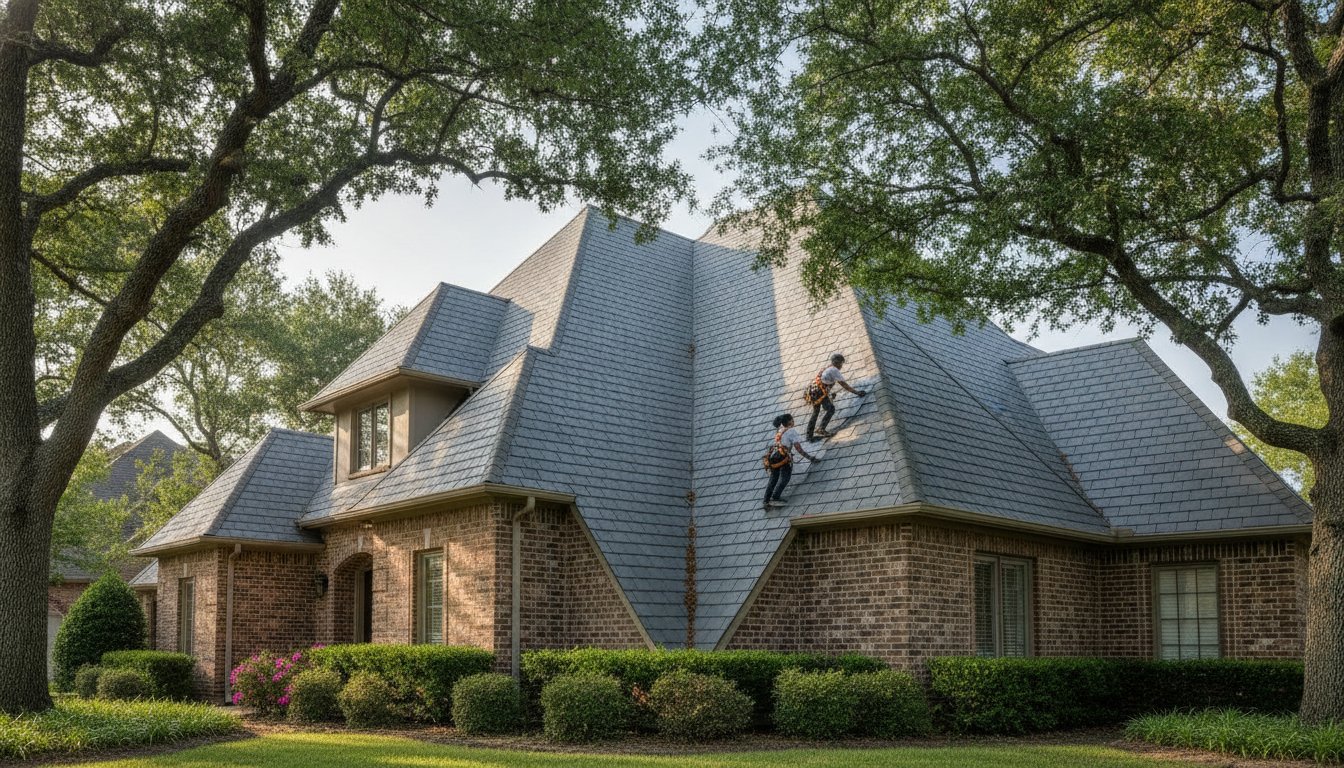

A complex roofline isn’t just a design choice; it’s a sophisticated engineering puzzle that most standard installation crews aren’t trained to solve. You likely invested in your home because of those beautiful gables, deep valleys, and unique architectural details. It’s natural to feel stressed that a typical contractor might overlook the technical precision needed to seal difficult valleys or accidentally ruin the curb appeal you’ve worked hard to maintain. You deserve a roof that preserves your home’s beauty while offering total peace of mind during Oklahoma’s severe storm seasons.
Finding a qualified tulsa roofer for complex roof lines is the difference between a home that looks stunning and one that stays leak-proof for twenty years or more. We believe your roof should be as durable as it is attractive, especially with the 2026 building codes requiring stricter standards for ventilation and sealed decks. In this guide, we’ll break down why intricate designs require specialized engineering, how to navigate the “25% rule” for repairs, and what to look for in a contractor who treats your home’s architectural integrity as a top priority.
Key Takeaways
- Understand how Oklahoma’s high winds and heavy rains create unique pressure points on multi-plane roofs and complex architectural intersections.
- Identify critical failure points like “dead valleys” and learn why these areas require specialized membrane solutions rather than standard shingles.
- Discover why hiring a specialized tulsa roofer for complex roof lines is essential for hand-sealing intricate turrets and gables to ensure a leak-proof finish.
- Learn the specific questions to ask when vetting a contractor, including requests for a portfolio of architecturally similar projects and proof of steep-slope insurance.
- Find out how precision engineering and premium materials can preserve your home’s unique beauty while providing reliable protection for 20 years or more.
The Challenge of Complex Roof Lines in Tulsas Climate
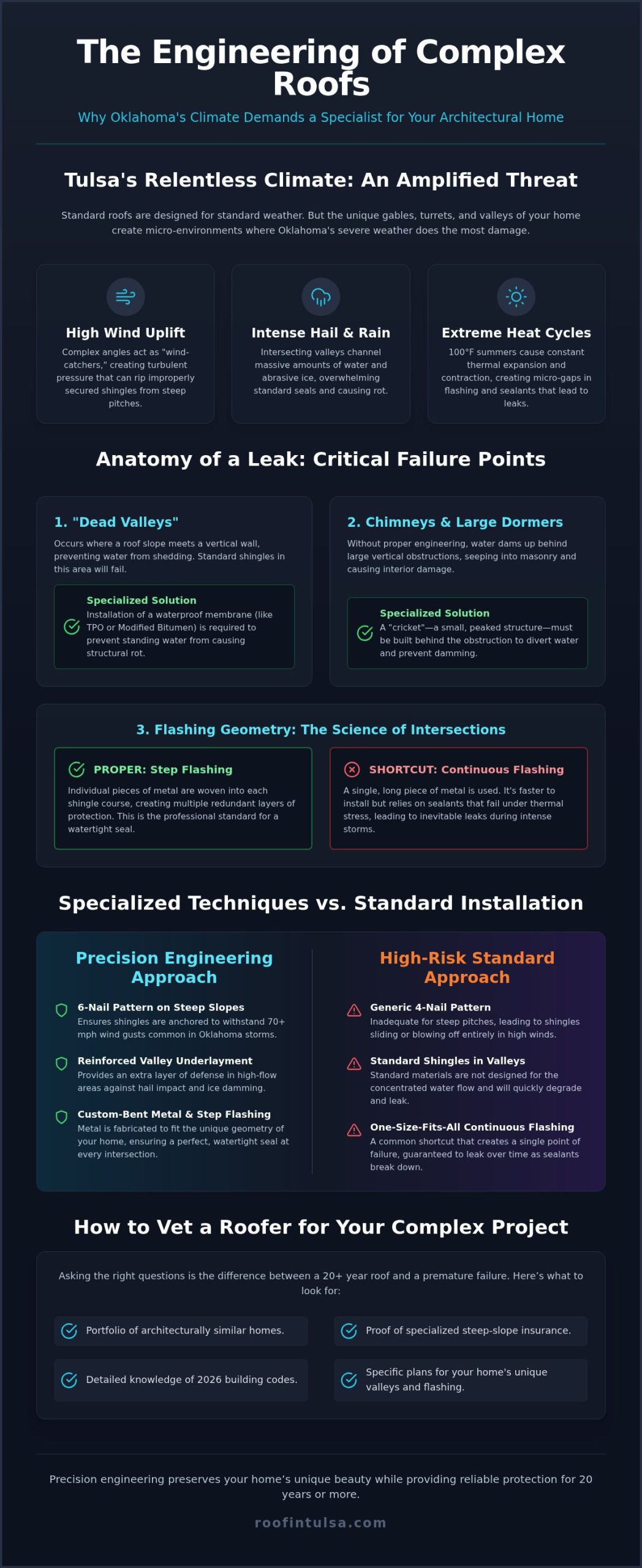
Tulsa weather is relentless. High winds, intense humidity, and scorching summer heat put immense pressure on every home. When your property features an intricate design, these environmental factors are amplified. Finding an expert tulsa roofer for complex roof lines isn’t just about aesthetic maintenance; it’s about understanding the unique physics of your home. A complex roof acts as a collection of natural wind-catchers. While a standard ranch-style roof allows wind to pass over it smoothly, homes with common types of complex roof lines like cross-gables or turrets experience turbulent air. During a typical Oklahoma spring storm, wind swirls into corners and creates uplift pressure under eaves that standard crews often overlook.
Standard roofing materials often reach their limit at the intersection of three or more planes. These “transition zones” are where most leaks begin. In Tulsa, our 100-degree summers cause significant thermal expansion. Metal flashing expands in the sun and contracts as temperatures drop at night. Without precision engineering and high-quality sealants, this constant movement creates micro-gaps. What started as a beautiful architectural feature can quickly become a liability. If a complex section suffers damage, Oklahoma’s “25% rule” may require the entire roof section to be brought up to 2026 building codes, including mandatory drip edges and sealed roof decks. Precision installation today prevents these massive administrative and financial burdens tomorrow.
Wind Uplift and Steep Pitches
High-pitched roofs face massive wind-load challenges that flatter roofs don’t encounter. Standard installation crews might use a generic four-nail pattern, but steep architectural slopes require a specialized six-nail approach. We focus on specific nail placement to ensure shingles stay anchored during 70-mph gusts. Generic installation is a gamble. On complex angles, even a slight misalignment in the nailing strip leads to shingles sliding or blowing off entirely. Our team treats every slope as a unique engineering task to ensure your home remains secure.
Hail Impact on Intersecting Valleys
Valleys are the natural drainage paths for your roof, but they are also the most vulnerable points during a Tulsa hailstorm. These areas take a double hit: direct impact from the sky and the abrasive force of ice rushing down multiple roof planes. Poorly designed intersections lead to water pooling or “ice damming” during our harsh winter freezes. This trapped moisture can rot your decking if the seal isn’t perfect. We use reinforced underlayments in these high-traffic valleys to provide an extra layer of protection against the elements.
Technical Anatomy: Critical Failure Points in Complex Roofs
“Dead valleys” are one of the most common issues we see in Midtown Tulsa. These occur where two roof slopes meet a vertical wall or where the geometry creates a flat area that prevents water from shedding. Standard asphalt shingles aren’t designed to handle standing water. An experienced tulsa roofer for complex roof lines will install a specialized waterproof membrane, such as TPO or modified bitumen, in these areas to prevent structural rot. Without this technical adjustment, water eventually seeps under the shingles during heavy Oklahoma rains.
Chimneys and large dormers also present significant risks. Without a “cricket”—a small, peaked structure built behind a large obstruction—water traps against the brick or siding. This creates a dam effect that leads to masonry damage and interior leaks. Starter shingles and hip-and-ridge caps are more than just finishing touches; they provide essential reinforcement at the roof’s most vulnerable edges. These components ensure your architectural lines remain crisp while defending against the high winds typical of our region. If you’re concerned about how these elements were handled on your home, a detailed roof inspection can provide the clarity you need.
The Science of Flashing Geometry
Step flashing is the professional standard for complex intersections. It involves individual pieces of metal “stepped” into each shingle course to create a redundant water barrier. Some contractors take shortcuts with continuous flashing, which often fails during Tulsa’s intense storm cycles. Adhering to the building code requirements for roof flashing ensures that every dormer and wall intersection is watertight. Custom-bent metal is often necessary for older Tulsa homes with unique angles that pre-manufactured parts simply cannot match. Precision at these points is what separates a long-lasting roof from a temporary fix.
Ventilation Challenges in Non-Standard Roofs
Non-standard roof shapes often create “dead air” pockets in your attic. When heat gets trapped in these sections, it bakes your shingles from the inside out, significantly shortening their lifespan. Integrating ridge vents into complex gables requires careful planning to maintain balanced airflow. If standard intake vents aren’t an option due to your home’s unique design, we look for alternative solutions to ensure your attic stays cool. Proper ventilation is vital for preventing moisture buildup and keeping your energy bills manageable during the humid Tulsa summers.
Specialized Techniques vs. Standard Installation
Many roofing companies in Oklahoma operate on a high-volume model. They focus on speed and finishing jobs as quickly as possible. While this approach might work for a simple, single-plane roof, it often leads to failure on more intricate designs. Choosing a tulsa roofer for complex roof lines means prioritizing precision over production speed. Architectural roofing requires a “measure twice, cut once” philosophy to ensure every angle is protected. For example, complex turrets and steep gables often require hand-sealing each shingle. This extra step ensures that wind cannot catch the edges of the shingles, providing a level of security that standard pneumatic nailing simply cannot match.
We also understand that your home’s value extends beyond the roof itself. High-end Tulsa properties often feature mature landscaping and intricate garden beds. To protect these investments, we use specialized equipment like the Equipter. This mobile debris management trailer allows us to catch old shingles and nails at the roofline, preventing them from falling into your bushes or onto your lawn. It’s part of our commitment to treating your property with the respect it deserves while handling the technical demands of a complex installation.
Underlayment and Ice/Water Shields
Complex roofs demand more than a single layer of protection. On steep slopes and intersecting planes, we utilize premium synthetic underlayments. Unlike traditional felt paper, these modern barriers are tear-resistant and won’t degrade when exposed to the intense Tulsa sun during a project. We often apply a double layer of protection in valleys and around dormers where water volume is highest. Ice and water shields serve as the primary defense against Tulsa winter leaks by creating a self-sealing barrier around nails and penetrations. This ensures that even when ice builds up in your gutters, moisture cannot migrate backward into your home’s structure.
Custom Metal Work for Architectural Integrity
Standard, off-the-shelf flashing rarely fits the unique angles of a custom-designed home. We often utilize onsite metal fabrication to create perfect, custom-bent flashing for chimneys, skylights, and wall intersections. This ensures a watertight seal that pre-manufactured parts can’t provide. For Tulsa’s historic neighborhoods, we offer a choice between classic copper and durable galvanized steel. Copper is a favorite for preserving the timeless look of Midtown estates, while galvanized steel provides a sleek, modern finish for newer builds. Regardless of the material, our goal is to create a seamless transition where different roofing materials meet, ensuring your home stays dry for decades.
How to Vet a Tulsa Roofer for Complex Projects
Choosing the right partner for your home is the most critical step in the roofing process. A standard contractor might be great for a simple ranch house, but a complex architectural design requires a specialist. When you look for a tulsa roofer for complex roof lines, start by asking for a portfolio of local projects with similar geometry. If they haven’t successfully managed steep slopes or intricate gables in neighborhoods like Midtown or Maple Ridge, they might not be prepared for the technical demands of your property. We take pride in our local roots and our ability to handle the most challenging architectural puzzles in the Tulsa metro area.
Specialized insurance is another non-negotiable factor. Steep-slope work carries higher risks; you must verify that your contractor has specific coverage for this type of project. Additionally, look for manufacturer certifications from brands like GAF or Owens Corning. These credentials often require advanced technical training that standard crews simply don’t have. While a low bid might be tempting, it’s often a red flag for a complex roof. Lower prices usually mean the contractor is cutting corners on high-quality underlayment or custom flashing, which leads to expensive leaks down the road.
Questions to Ask During the Estimate
During the initial walkthrough, pay close attention to how the contractor discusses technical details. You should ask specific questions to gauge their expertise:
- “How do you plan to handle the dead valleys on my specific roof to prevent water pooling?”
- “Will you be using custom-bent metal flashing or pre-fabricated kits that might not fit my home’s unique angles?”
- “What is your process for protecting my gutters and high-end landscaping during a multi-day job?”
If you want an expert who understands these nuances and treats your property with care, schedule a professional consultation to discuss your home’s unique needs.
Reviewing the Scope of Work
A detailed, written contract is essential for complex architectural work. It should explicitly mention high-quality starter strips and ridge caps, as these are often omitted in generic bids to save costs. Ensure the roofer has accounted for Tulsa’s 2026 building codes, specifically regarding proper ventilation and the requirement for metal drip edges on all eaves and rakes. A thorough estimate protects your investment and ensures your home’s architectural beauty is preserved for years to come. We believe in transparency and providing a clear roadmap for every project we undertake.
Rescue Roofing Tulsa: Precision Engineering for Complex Homes
Rescue Roofing Tulsa treats every project as a unique engineering task. When you have an intricate home, you need more than just a crew; you need a tulsa roofer for complex roof lines who operates with a “measure twice, cut once” philosophy. We understand that your roof is a protective shield for your family and a defining feature of your property. That’s why we exclusively use premium materials designed to survive the high winds and hail of Oklahoma’s intense storm seasons. Our local ownership means we live in the same neighborhoods we serve. We care deeply about preserving the architectural integrity and long-term beauty of the Tulsa metro area.
Our Process for Architectural Roofs
Our work begins with a meticulous initial inspection. We don’t just look at the shingles; we dive deep into the hidden valleys and flashing intersections where leaks are most likely to hide. To ensure our estimates are as precise as the installation itself, we utilize advanced digital imaging. This technology captures the exact measurements of every gable, turret, and dormer, eliminating the guesswork often found in standard bids. For homeowners who want to understand the full scope of what a professional installation looks like, we recommend exploring our Tulsa Roof Replacement: A Homeowner’s Guide. This resource provides a broader view of how we manage every step of the replacement process.
Stress-Free Insurance Assistance
Securing a fair settlement for a high-value architectural roof replacement is much simpler when you work with a tulsa roofer for complex roof lines who knows how to document intricate damage. Adjusters don’t always recognize the specialized labor and materials required for complex geometry at first glance. We step in to bridge that gap. Our team thoroughly documents the specific damage to your valleys, crickets, and custom flashing to ensure the full scope of work is represented. We take the administrative burden off your shoulders by handling the technical communication with your insurance provider. This allows you to focus on your daily life while we manage the bureaucratic details. Our goal is to make the experience as methodical as possible, giving you complete confidence in the final result. If you’re ready to protect your home with precision engineering, you can schedule your expert roof inspection with Rescue Roofing Tulsa today. We’re here to serve as your trusted advisor and neighbor.
Securing Your Home’s Architectural Future
Your home’s unique roofline is a point of pride, but it also requires a higher level of technical care to remain watertight. You’ve seen how precision engineering and specialized materials like custom-bent flashing are essential for protecting complex geometries. By prioritizing expert installation over the lowest bid, you ensure your property is ready to withstand Oklahoma’s intense storm seasons. Finding the right tulsa roofer for complex roof lines is the most important step you can take to preserve your home’s long-term value and beauty.
Rescue Roofing Tulsa is a locally owned and operated team that understands the specific environmental demands of our community. We specialize in complex storm damage insurance claims to simplify the process for you. If you ever face an urgent issue, our 24/7 emergency support is ready to handle high-risk leaks at a moment’s notice. We are committed to being the neighborly expert you can rely on for honest advice and professional results.
Ready to protect your investment? Get a Free Estimate for Your Complex Roof Project and enjoy the peace of mind that comes with professional craftsmanship. We look forward to helping you keep your home safe and dry for years to come.
Frequently Asked Questions
What makes a roof line considered “complex” in the roofing industry?
A roof is complex if it features multiple planes, steep pitches, or intricate architectural elements like turrets and dormers. These designs create more valleys and intersections than a standard gable or hip roof. In the industry, we look for any geometry that requires specialized flashing or non-standard installation techniques. These features add significant beauty but demand a higher level of engineering precision to stay watertight for decades.
Do complex roofs cost more to replace in Tulsa?
Complex roofs typically involve higher costs because of the increased labor and specialized materials required for the job. Intricate designs mean more waste during shingle cutting and more time spent on precision flashing at every intersection. Safety equipment for steep slopes also adds to the project scope. While we don’t provide set prices, a detailed inspection will help determine the specific technical needs and material requirements for your home’s unique geometry.
How long does it take to replace a roof with multiple gables and dormers?
A complex roof replacement usually takes longer than a standard job, often spanning three to five days depending on the weather. Each gable and dormer requires careful hand-sealing and custom metal work that simply can’t be rushed. We prioritize a “measure twice, cut once” approach to ensure every detail is perfect. Our team uses specialized debris management equipment to keep the job site clean even during these extended multi-day projects.
Can I use standard asphalt shingles on a very steep roof?
You can use asphalt shingles on steep slopes, but they require a specialized installation method to stay secure. For steep architectural pitches, we use a six-nail pattern instead of the standard four-nail approach to prevent shingles from sliding. Choosing a tulsa roofer for complex roof lines ensures your contractor understands these technical requirements. High-quality starter strips and reinforced ridge caps are also essential for maintaining the roof’s integrity on sharp angles.
Why do complex roofs leak more often than simple gable roofs?
Complex roofs have more “transition zones” where different planes meet, creating more opportunities for water penetration. Every valley, chimney, and dormer is a potential failure point if the flashing isn’t installed with precision. In Tulsa, our intense heat and humidity cause materials to expand and contract. This movement can open micro-gaps in poorly sealed intersections. Precision engineering at these critical points is what keeps your home dry during severe Oklahoma storms.
Will my insurance cover the extra labor costs for a complex roof replacement?
Insurance policies typically cover the cost to replace your roof with “like kind and quality,” which includes the labor for complex features. However, adjusters sometimes miss the technical nuances of architectural designs during their initial walk-through. We specialize in insurance claim assistance and provide detailed documentation of every dead valley and custom flashing point. This ensures the adjuster sees the full scope of work required to restore your home’s architectural integrity properly.
How do I know if my Tulsa roofer is actually qualified for architectural work?
A qualified roofer should provide a portfolio of local projects with similar architectural complexity. Ask if they have specialized insurance for steep-slope work and check for manufacturer certifications from brands like GAF or Owens Corning. These credentials indicate they have received advanced technical training. A reputable tulsa roofer for complex roof lines will be transparent about their process and won’t shy away from explaining how they handle difficult engineering puzzles.
What is a “dead valley” and why is it a problem for my roof?
A dead valley is a flat area where two roof slopes meet a vertical wall, preventing water from draining naturally. These spots are notorious for trapping water and debris, which leads to rot and leaks. Because standard shingles aren’t waterproof under standing water, we install specialized membranes in these areas. Addressing these failure points during a full replacement is vital for the long-term health of your home’s structure and interior ceilings.